Leh Apex Body Refuses to Sign MHA Minutes Over Missing APR Clause, Deepening Ladakh Governance Dispute
By: Javid Amin | 01 June 2026
Ladakh’s Push for Administrative Autonomy Faces New Test as LAB Accuses Centre of Omitting Key Agreement
A fresh controversy has emerged in Ladakh’s ongoing negotiations with the Union Government after the Leh Apex Body (LAB) refused to sign the official minutes of a recent meeting with the Ministry of Home Affairs (MHA), alleging that a crucial clause related to the Annual Performance Appraisal Reports (APRs) of officers was deliberately left out.
The development has once again brought into focus the larger struggle over Ladakh’s political future, administrative autonomy, and constitutional safeguards nearly seven years after the region was carved out as a separate Union Territory.
What appears on the surface to be a technical bureaucratic disagreement is, in reality, a significant political dispute that strikes at the heart of Ladakh’s long-standing demand for greater control over its own governance system.
According to LAB leaders, the omitted provision was not a minor detail but a central component of discussions held with the Centre regarding the future administrative structure of Ladakh.
Why the APR Clause Has Become a Major Political Issue
The disagreement revolves around the Annual Performance Appraisal Reports (APRs) of government officers.
In India’s administrative framework, APRs play a decisive role in determining an officer’s career progression, promotions, transfers, postings, and disciplinary assessments. Whoever controls the appraisal process effectively influences administrative accountability.
LAB leaders argue that if officers serving in Ladakh continue to be evaluated primarily through external bureaucratic structures, local elected institutions will have limited authority over governance despite promises of democratic empowerment.
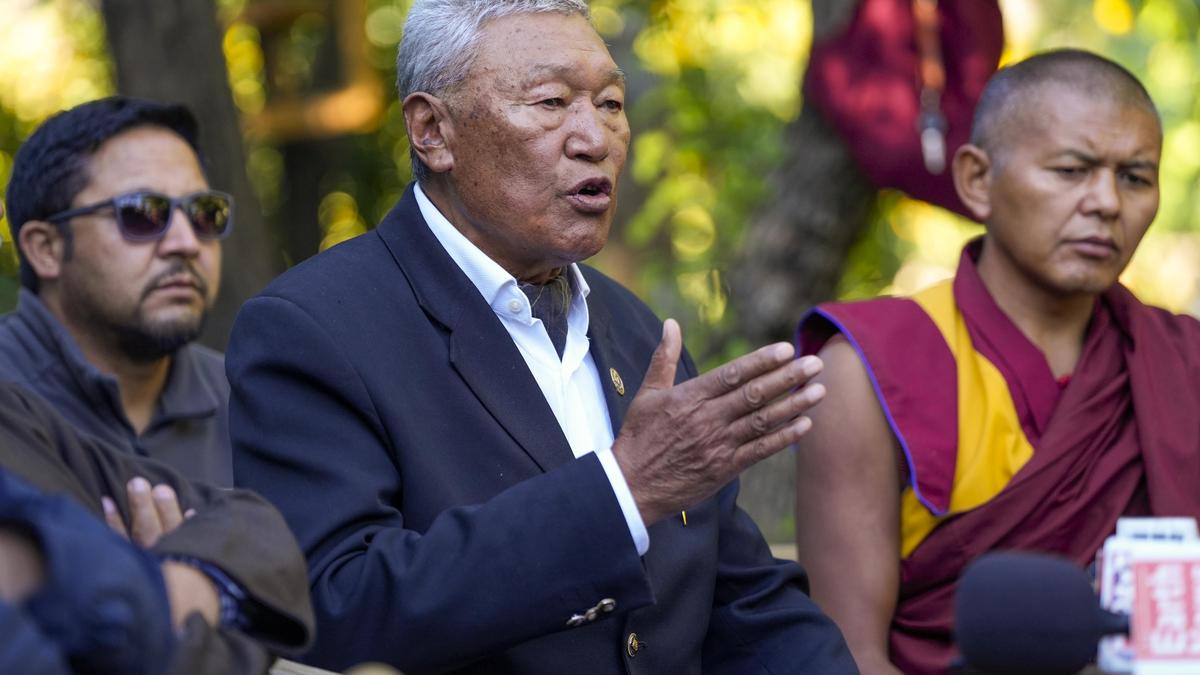
LAB Co-Chairman Chering Dorjay Lakruk stated that the understanding reached during the May 22 discussions included a provision that officers, including those up to the level of Chief Secretary, would have their performance reports written by a locally elected authority under the proposed governance framework. According to him, the clause was suggested during the discussions themselves and formed part of the consensus reached.
However, when the official draft minutes arrived, LAB leaders found no reference to that commitment.
That omission was enough for the organization to refuse signing the document.
What Exactly Happened During the MHA-Ladakh Talks?
The dispute originates from a series of negotiations between the Centre and Ladakh’s principal representative bodies — the Leh Apex Body (LAB) and the Kargil Democratic Alliance (KDA).
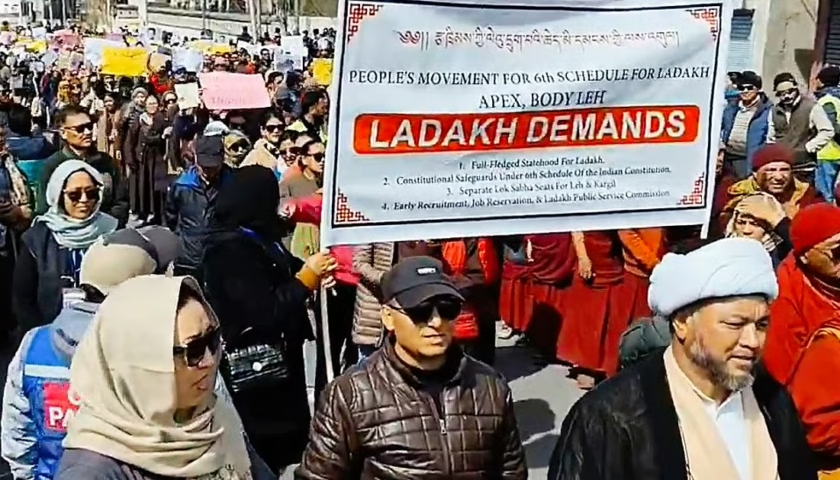
For months, both organizations have been pressing New Delhi on four major demands:
- Statehood for Ladakh
- Constitutional safeguards under the Sixth Schedule
- Separate parliamentary representation
- Greater local control over administration and recruitment
The May 22 meeting in New Delhi was widely viewed as one of the most significant rounds of dialogue since Ladakh became a Union Territory in 2019.
Following the meeting, LAB and KDA announced that an “in-principle understanding” had been reached regarding a future governance framework that could provide constitutional protections similar to those available under Articles 371A, 371F and 371G in states such as Nagaland, Sikkim and Mizoram.
The proposed arrangement reportedly envisioned:
- A Union Territory-level elected legislative body.
- Legislative, executive and financial powers resting with elected representatives.
- Bureaucratic accountability to an elected government.
- Movement toward eventual statehood subject to future arrangements.
The APR provision was considered by Ladakh leaders to be one of the practical mechanisms that would ensure real administrative control rather than symbolic decentralization.
Centre’s Response: “Minutes Are Not a Verbatim Record”
The Ladakh administration has sought to calm the controversy.
Chief Secretary Ashish Kundra clarified that the document circulated among stakeholders was intended as a summary of conclusions rather than a word-for-word transcript of discussions.
According to Kundra, meeting minutes are designed to capture outcomes and broad understandings rather than every point raised during deliberations.
He maintained that the draft was shared in good faith and emphasized that stakeholders remain free to communicate concerns regarding omissions or inaccuracies through official channels.
Nevertheless, LAB leaders remain unconvinced.
For them, the issue is not whether minutes should be exhaustive but whether a critical agreement related to administrative authority was removed from the final record.
The Bigger Story: Ladakh’s Long Battle for Self-Governance
The APR dispute cannot be understood in isolation.
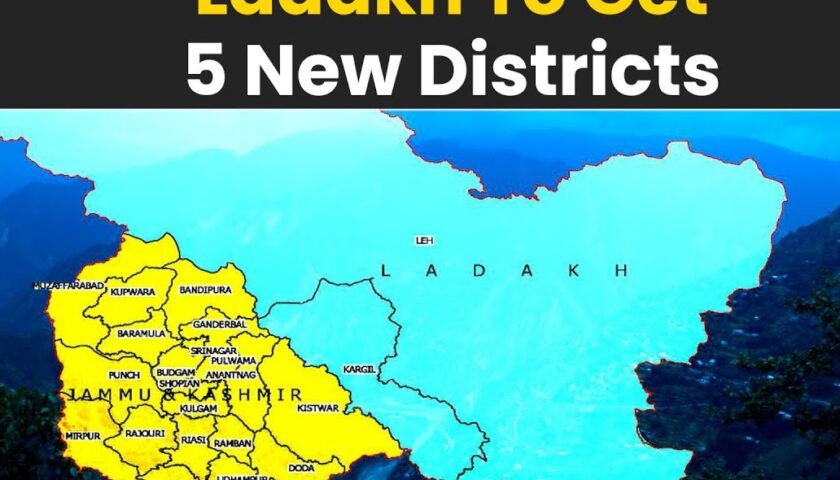
It is part of a larger political movement that has shaped Ladakh’s public discourse since August 2019, when the former state of Jammu and Kashmir was reorganized and Ladakh was granted Union Territory status.
Initially, many residents welcomed direct Union Territory administration. However, concerns soon emerged regarding political representation, land rights, employment protections, and local decision-making powers.
Over the years, LAB and KDA — organizations representing diverse political, religious, social and civil society groups from Leh and Kargil — have united around a common agenda seeking stronger constitutional guarantees.
Their primary demands include:
1. Statehood
Leaders argue that statehood would provide democratic accountability through an elected legislature and government.
2. Sixth Schedule Protection
The Sixth Schedule of the Constitution offers safeguards for tribal regions by granting greater autonomy over land, resources, and cultural preservation.
3. Local Cadre Control
Ladakh’s leadership wants recruitment, postings and administrative oversight to be more responsive to local realities.
4. Institutional Safeguards
Mechanisms such as locally controlled officer evaluations are viewed as essential tools for ensuring accountability.
The current APR controversy touches directly upon the fourth demand.
Why Local Leaders Consider APR Control So Important
Ladakh presents unique governance challenges.
With extreme weather conditions, remote villages, difficult terrain, and sparse population density, administration in the region requires long-term commitment and deep local understanding.
Many local stakeholders argue that officers serving in Ladakh should be answerable to institutions that directly understand regional priorities.
According to this perspective, centralized appraisal systems often fail to capture local performance realities and can encourage short-term administrative approaches.
Advocates of local oversight believe that when elected representatives participate in evaluating officials, governance becomes more responsive to citizens’ concerns.
Critics, however, argue that central oversight remains necessary to maintain administrative neutrality and national standards across Union Territories.
This tension lies at the center of the current dispute.
Growing Frustration Over Delayed Constitutional Safeguards
The disagreement also comes against a backdrop of stalled negotiations.
Several rounds of talks between Ladakh representatives and the Centre have ended without a final breakthrough on statehood or Sixth Schedule demands.
Earlier discussions reportedly saw the Centre expressing concerns regarding:
- Financial sustainability of statehood.
- Administrative feasibility of Sixth Schedule implementation.
- Alternative governance models such as territorial council structures.
LAB and KDA have repeatedly rejected proposals they believe fall short of genuine democratic empowerment.
The latest dispute over meeting minutes has therefore reinforced existing skepticism among sections of Ladakh’s leadership regarding the pace and sincerity of the dialogue process.
Public Sentiment and Political Risks
Political observers warn that disagreements over procedural matters can often have wider consequences.
For many residents, the controversy reinforces concerns that Ladakh’s aspirations may be acknowledged in principle but diluted during implementation.
The perception of exclusion can be politically significant in a region where demands for representation and constitutional protection have become deeply linked with identity, governance and regional development.
Activists, community leaders and political organizations have repeatedly stressed that any future governance arrangement must provide meaningful participation rather than symbolic consultation.
If trust between local stakeholders and the Centre weakens further, analysts believe future negotiations could become increasingly difficult.
Expert Analysis: A Debate About Power, Not Paperwork
Governance experts say the dispute highlights a fundamental question facing Ladakh:
How much authority should remain with the Centre, and how much should be devolved to local institutions?
The argument over officer appraisal systems is essentially a debate over power.
Who evaluates bureaucrats?
Who determines accountability?
Who ultimately governs Ladakh?
These questions have remained unresolved since the region’s transition into a Union Territory.
While New Delhi seeks administrative coherence and national oversight, local organizations increasingly demand institutional mechanisms that translate political promises into practical authority.
The APR clause has become a symbol of that larger struggle.
What Happens Next?
At present, negotiations remain open.
The Ladakh administration has indicated willingness to continue discussions, while LAB leaders insist that previously agreed points must be accurately reflected in official records.
Whether the controversy is resolved through revised minutes, fresh negotiations, or broader constitutional discussions remains uncertain.
What is clear, however, is that the disagreement has transformed a bureaucratic document into a politically charged issue with implications far beyond officer evaluations.
As Ladakh continues its search for a governance model that balances regional aspirations with national oversight, the battle over one omitted clause may prove to be another defining chapter in the Union Territory’s evolving political journey.