Kargil Rejects ‘Council Model’: KDA Pushes for Statehood, Sixth Schedule in Fresh Talks Demand
By: Javid Amin | 16 April 2026
A Clear Rejection: Kargil Draws the Line
In a strong political assertion, the Kargil Democratic Alliance (KDA) has outrightly rejected the Centre’s proposed “council model” for Kargil, reiterating that its long-standing demands for statehood and Sixth Schedule safeguards remain non-negotiable.
The alliance has simultaneously called for the early resumption of dialogue with the Centre, signaling that while it is open to negotiations, it will not dilute its core political and constitutional demands.
What Is the ‘Council Model’—And Why KDA Opposes It
The council model under discussion is believed to propose enhanced administrative powers for local hill councils within Ladakh, without granting full-fledged legislative autonomy or statehood.
KDA’s Key Objections
- Limited Powers: Councils lack legislative authority, reducing them to advisory or administrative bodies.
- No Constitutional Safeguards: Unlike the Sixth Schedule, the council model does not guarantee protection over land, jobs, and cultural identity.
- Centralized Control: Decision-making would largely remain with the Union government.
Between the Lines
KDA’s rejection is not just about governance structure—it reflects a deeper concern:
the fear of political marginalization under a system perceived as administratively empowered but constitutionally weak.
Statehood Demand: A Question of Political Identity
Since Ladakh was carved out as a Union Territory in 2019, demands for full statehood have steadily intensified in Kargil.
Why Statehood Matters to Kargil
- Ensures an elected विधानसभा with law-making powers
- Provides greater fiscal and administrative autonomy
- Reduces dependency on bureaucratic governance from New Delhi
Underlying Sentiment
For Kargil, statehood is not merely administrative—it is about restoring democratic agency in decision-making processes that directly impact the region.
Sixth Schedule: The Core of the Demand
At the heart of the agitation lies the demand to bring Ladakh under the Sixth Schedule of the Indian Constitution, which provides special protections to tribal regions.
What Sixth Schedule Would Offer
- Autonomous District Councils with legislative powers
- Protection of land rights and local resources
- Safeguards for cultural and tribal identity
- Greater control over development planning
Why It’s Non-Negotiable
Kargil’s leadership sees the Sixth Schedule as a constitutional shield against:
- External demographic pressures
- Land alienation
- Cultural dilution
Reading Between the Lines
The insistence on Sixth Schedule reveals a deeper anxiety:
without legal safeguards, rapid policy shifts could alter Ladakh’s socio-economic fabric irreversibly.
Call for Talks: Urgency with Conditions
Despite rejecting the council model, KDA has emphasized the need for early resumption of talks with the Centre.
What KDA Wants from Dialogue
- A time-bound negotiation framework
- Clear agenda focused on statehood and constitutional safeguards
- Assurance that discussions are outcome-oriented, not symbolic
Strategic Messaging
By keeping the door open for talks, KDA positions itself as:
- Firm but not inflexible
- Negotiation-ready but principle-driven
Larger Context: Ladakh’s Growing Political Assertion
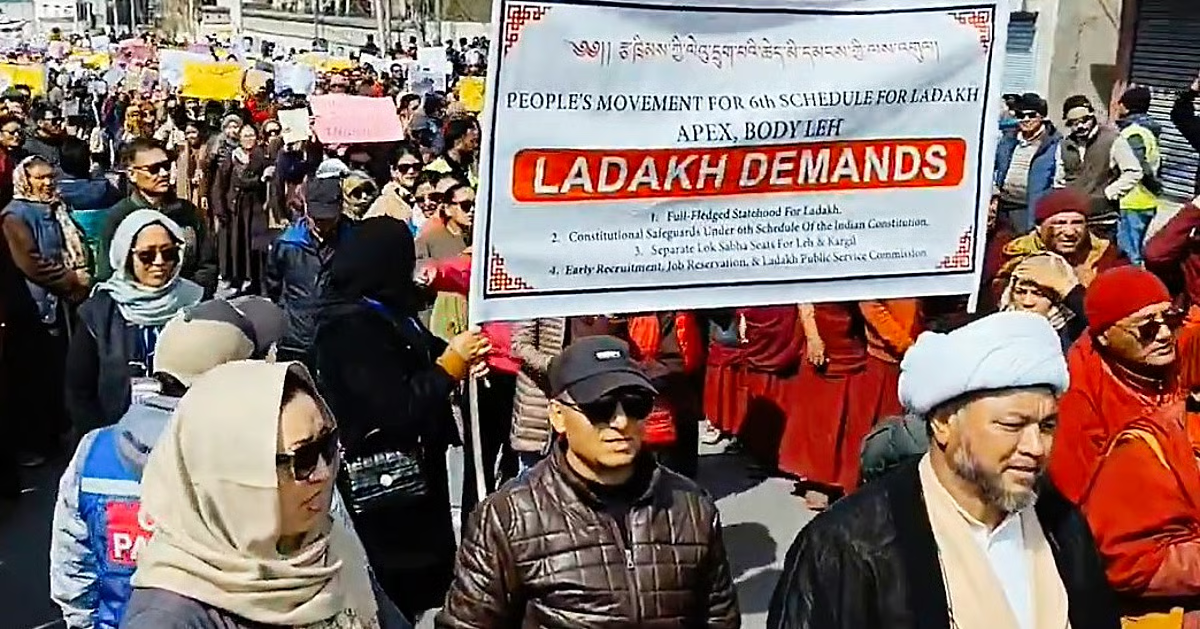
The developments in Kargil mirror a broader political churn across Ladakh, where multiple groups—including those in Leh—have been demanding:
- Constitutional safeguards
- Job and land protections
- Greater local participation in governance
Emerging Reality
What began as administrative restructuring in 2019 has evolved into a full-fledged political movement for rights, representation, and recognition.
What Lies Between the Lines
Beyond official statements, three critical dynamics are shaping this standoff:
1. Trust Deficit with the Centre
Repeated assurances without concrete outcomes have deepened skepticism in Kargil. The rejection signals eroding patience.
2. Fear of Administrative Tokenism
The council model is viewed as a half-measure—offering visibility without real power.
3. Strategic Timing
With national elections approaching in the coming years, KDA’s assertiveness is also about maximizing bargaining leverage.
The Bottom Line
The rejection of the council model by the Kargil Democratic Alliance is not a routine political disagreement—it is a defining moment in Ladakh’s post-2019 political trajectory.
At stake are fundamental questions:
- Who governs Ladakh—and how?
- What safeguards exist for its people and identity?
- And how far is the Centre willing to go in addressing regional aspirations?
The next round of talks, if held soon, will be crucial—not just for Kargil, but for the future constitutional and political architecture of Ladakh.
FAQs
Q1. Why did KDA reject the council model?
Because it lacks legislative powers and constitutional safeguards, making it insufficient to address Kargil’s core concerns.
Q2. What are KDA’s main demands?
Statehood for Ladakh and inclusion under the Sixth Schedule of the Constitution.
Q3. What is the Sixth Schedule?
A constitutional provision granting autonomy and protections to tribal regions, including control over land and governance.
Q4. Is KDA open to talks?
Yes, it has called for early resumption of dialogue, but insists on a focused agenda and concrete outcomes.
Q5. What does this mean for Ladakh’s future?
It signals growing political assertion and could shape future governance and constitutional arrangements in the region.