Sunil Sharma Says Omar Government Won’t Last, Calls NC a ‘Broken Party’ as J&K Politics Heats Up
By: News Desk | 13 September 2026
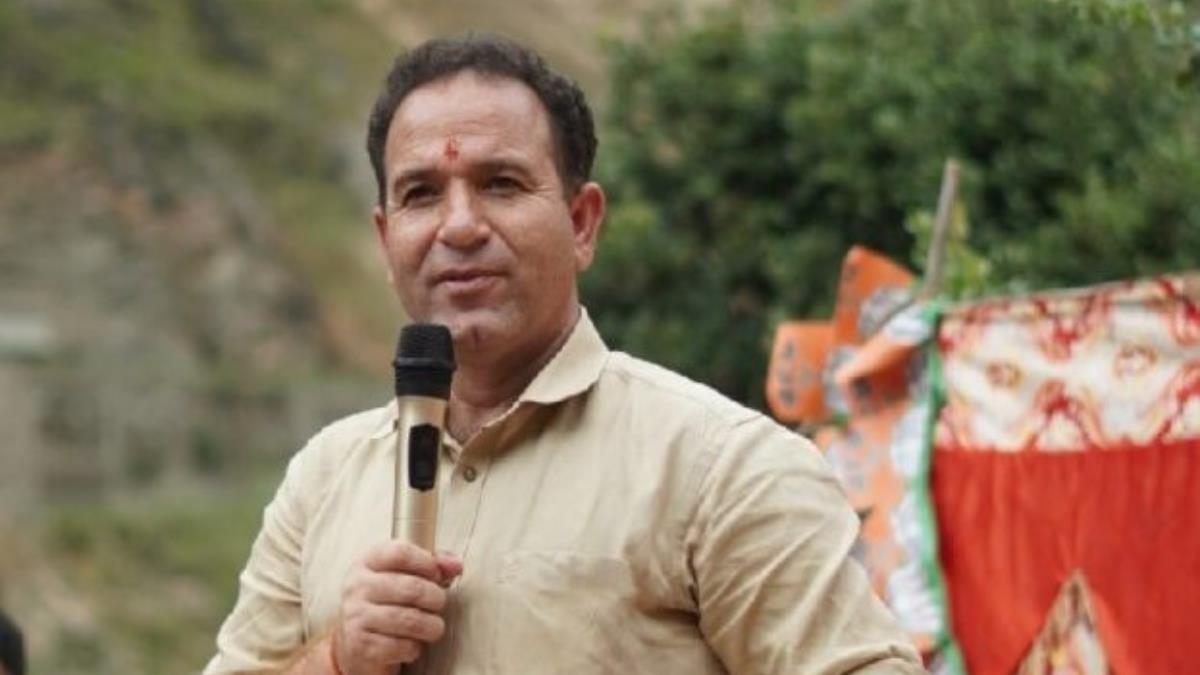
Jammu: Jammu and Kashmir’s political temperature has risen again after Leader of Opposition Sunil Sharma predicted that the Omar Abdullah-led government would not complete its five-year term, accusing the ruling National Conference of being a “broken party” and alleging growing dissatisfaction within its ranks.
Speaking during a visit to Reasi, the BJP leader pointed to three vacant ministerial positions and claimed that only five ministers were currently running the government despite the administration being nearly two years old. He argued that the vacancies reflected deeper problems inside the ruling party and government.
“This government is not going to run for a long time,” Sharma said when asked whether the NC-led government would complete its term.
The remark is significant, but it should be read primarily as an opposition assessment rather than as confirmation of an imminent change of government.
The National Conference remains the largest party in the 90-member Jammu and Kashmir Assembly, having won 42 seats in the 2024 election. Omar Abdullah took oath as chief minister on October 16, 2024, heading the first elected government of the Union Territory after the 2019 constitutional changes.
The latest confrontation therefore reflects a broader political battle over three interconnected questions: whether the NC can maintain political cohesion, whether it can demonstrate effective governance under the Union Territory framework, and whether the Centre will restore statehood.
Why Sunil Sharma is predicting an early end
Sharma’s argument rests on what he portrays as signs of internal weakness.
The most immediate issue he raised was the continued vacancy of three ministerial positions. He argued that nearly two years into the government’s tenure, the failure to fill them indicates something is wrong within the government and the party.
But vacant ministerial posts by themselves do not establish that a government is about to collapse.
The more politically relevant question is whether disagreements inside the NC have reached the point where legislators could withdraw support, cross the floor or otherwise make the government unable to command a majority.
There is no evidence in the current reporting that such a development has occurred.
Sharma’s statement is therefore better understood as an attempt by the BJP opposition to turn visible administrative and political frustrations into a larger narrative of instability.
The numbers matter
The NC entered the 2024 Assembly election with a strong mandate.
It won 42 of the 90 Assembly seats, emerging as the single largest party. Congress won six seats, while other parties and independents accounted for the remainder. Omar Abdullah subsequently formed the government, with the Congress choosing not to join the council of ministers at the outset.
That electoral arithmetic matters when assessing Sharma’s prediction.
For the government to actually collapse, dissatisfaction would have to translate into a loss of majority support in the Assembly or another constitutional or political mechanism capable of ending its tenure.
Political criticism, vacant portfolios and internal disagreements do not automatically produce that outcome.
So far, the available evidence establishes political pressure, not government collapse.
Why the “broken party” label matters
Sharma’s description of the NC as a “broken party” is designed to attack the party at its organisational core.
The National Conference has traditionally presented itself as one of J&K’s principal regional political institutions, with a political history stretching back decades.
After 2019, however, the party faced a fundamentally altered political environment.
Article 370 was abrogated in August 2019 and the former state was reorganised into the Union Territories of Jammu and Kashmir and Ladakh. The Supreme Court later upheld the constitutional changes in its December 2023 judgment.
The NC then had to contest an Assembly election in a political system where Jammu and Kashmir had lost its former statehood and where the elected government operates within a Union Territory framework.
Its return to power in 2024 was therefore a major political achievement.
But governing under those altered circumstances has also exposed the limits of what the elected administration can control.
Statehood remains the biggest political pressure point
The unresolved statehood question is perhaps the most important factor shaping the NC government’s relationship with both its supporters and the BJP-led Centre.
Omar Abdullah has repeatedly demanded a clear timetable for restoration of statehood.
In April 2026, he challenged the Centre’s repeated formulation that statehood would be restored “at the right time”, asking what that phrase actually meant and why no definite roadmap had been provided.
The chief minister has argued that the Centre had outlined a sequence involving delimitation, elections and then restoration of statehood, but that the final step remains unresolved.
The political difficulty for the NC is obvious.
It can demand statehood, pass resolutions and campaign for restoration, but the final decision rests with the Union government.
This creates a structural vulnerability for the elected administration.
The party can tell voters that it is fighting for statehood, while opponents can ask why it has not been able to secure it.
That tension is likely to remain central to J&K politics.
Sharma’s attack goes beyond statehood
During his Reasi visit, Sharma also focused on everyday governance.
He cited complaints about water shortages, electricity curtailment and protests by different categories of employees, arguing that people were facing problems on multiple fronts and that the government had failed to provide clear timelines for resolving them.
These are politically potent issues because they are not abstract constitutional questions.
Electricity bills, water supply, government recruitment and employee grievances affect households directly.
The BJP’s strategy is therefore increasingly to connect larger political arguments about NC’s leadership with everyday administrative frustrations.
That is a more effective opposition strategy than relying exclusively on the Article 370 or statehood debate.
Electricity has become a particularly sensitive issue
The government’s handling of electricity has become politically complicated.
Jammu and Kashmir introduced a new tariff structure in September 2026, including Time-of-Day billing for eligible consumers. The tariff revision has triggered concern among businesses and consumers over peak-hour surcharges, billing systems and awareness.
The wider tariff order also raised electricity rates, giving the opposition another avenue to question the government’s ability to protect consumers from rising costs.
For the NC government, the challenge is that electricity policy is influenced by the broader financial condition of the power sector and regulatory decisions, while the political cost is borne by the elected administration.
That makes the issue especially useful to opposition parties.
Employment remains the other major pressure point
Unemployment has long been one of J&K’s most politically sensitive issues.
The NC’s 2024 campaign placed youth employment prominently in its manifesto, including a commitment to create a major employment package and fill government vacancies.
By 2026, opposition parties have increasingly used the gap between those commitments and the employment situation as evidence of underperformance.
But there is an important distinction between employment generation and government recruitment.
A government cannot solve youth unemployment simply by expanding its own payroll. Sustainable improvement requires private investment, tourism, industry, entrepreneurship and a functioning labour market.
The government’s Mission YUVA and other initiatives are therefore relevant to the broader employment debate, even if they cannot be treated as equivalent to the NC’s original promise of one lakh jobs.
The Abdullah family’s political legacy is again under attack
Sharma also criticised the Abdullah family over local democracy.
He specifically objected to reported remarks by NC president Farooq Abdullah linking panchayat elections with restoration of statehood.
Sharma argued that people seeking to contest local elections should not be forced to wait for statehood and accused the Abdullah family of treating Jammu and Kashmir as its political domain.
This is a familiar BJP line of attack.
The BJP has repeatedly portrayed the NC as a dynastic political organisation whose leadership is concentrated within the Abdullah family.
For the NC, however, the Abdullah family’s centrality is also part of its political continuity and organisational identity.
The question is whether voters increasingly view that continuity as stability or as political stagnation.
The NC’s internal debate is more complicated than the BJP’s narrative
There are genuine differences inside the NC and among its supporters, but describing the party simply as “broken” would be an oversimplification.
The party has faced criticism from within its own political ecosystem over questions of leadership, strategy and the pace at which it has pursued its political agenda.
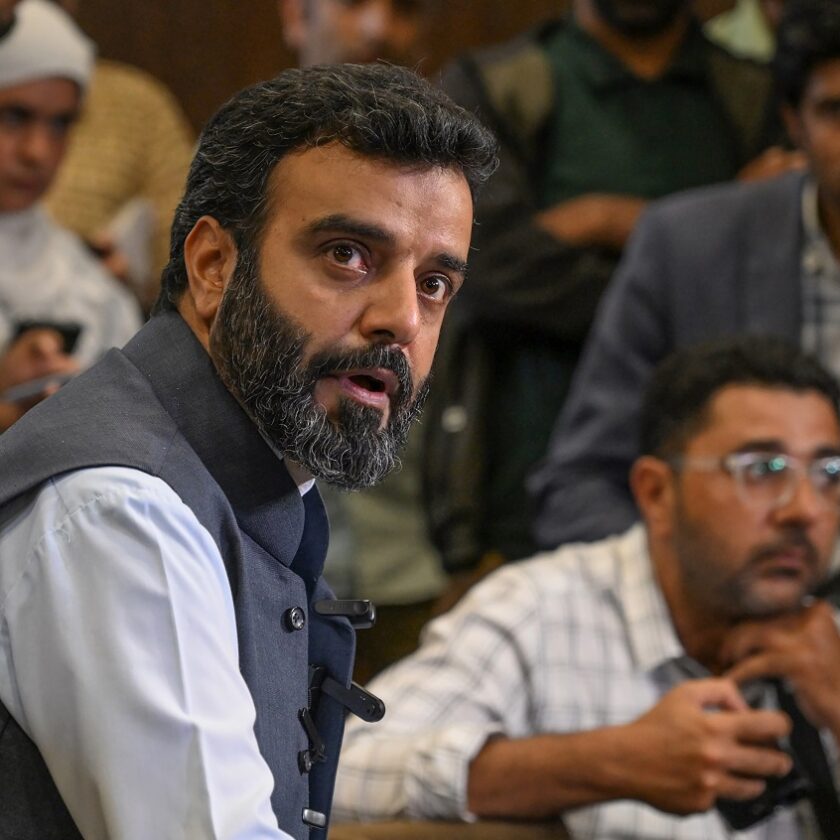
Aga Ruhullah Mehdi, for example, has emerged as one of the NC figures whose public positions have sometimes reflected sharper criticism of aspects of the government’s approach.
But internal disagreement is normal in a large regional party.
The crucial question is whether disagreement remains within the party or develops into organised rebellion.
At present, the available evidence does not establish that the NC has reached the latter stage.
2019 changed the NC’s political battlefield
The NC’s current difficulties cannot be understood without going back to August 2019.
The abrogation of Article 370 and reorganisation of Jammu and Kashmir fundamentally changed the constitutional and political environment in which the party operates. The Supreme Court upheld those changes in December 2023 and directed that Assembly elections be held by September 30, 2024.
The 2024 election consequently became a test of whether the NC could rebuild itself under the new system.
It succeeded electorally.
But winning an election and exercising power are different challenges.
The NC now governs without the powers that came with full statehood and must operate within a framework in which the Lieutenant Governor and the Union government retain substantial authority.
That structural limitation has become a recurring source of political friction.
A timeline of the NC’s post-2019 political journey
| Year | Turning point | Political significance |
|---|---|---|
| 2019 | Article 370 abrogated; J&K reorganised as a Union Territory | NC’s traditional constitutional and autonomy politics fundamentally altered |
| 2020-21 | Gupkar alliance and all-party engagement over J&K’s future | NC sought a broader political platform and clarity on constitutional issues |
| 2022 | Delimitation exercise completed; Assembly seats reorganised | Opposition questioned the political and regional consequences of delimitation |
| 2023 | Supreme Court upheld Article 370 changes and directed elections | NC shifted focus toward electoral restoration and statehood |
| 2024 | NC emerged as largest party with 42 seats; Omar Abdullah became CM | First elected J&K government after 2019 |
| 2025 | Opposition intensified criticism over jobs, governance and statehood | Delivery became a major test of NC’s mandate |
| 2026 | Statehood remains unresolved; BJP attacks government’s performance | Political contest increasingly centred on governance and Centre-state relations |
| Sept 2026 | Sunil Sharma predicts government will not complete its term | Fresh opposition offensive focuses on alleged NC divisions |
Is the government really in danger?
At this stage, there is no verified evidence that the Omar Abdullah government is about to fall.
Sharma has made a political prediction, and his allegations about internal dissatisfaction are part of the opposition’s campaign.
The more useful question is whether the government faces vulnerabilities that could make such a prediction politically effective.
It does.
There is frustration over employment.
There is continuing uncertainty over statehood.
There are disputes over electricity and public services.
There are disagreements over local elections.
And there is an increasingly aggressive BJP opposition seeking to consolidate its position, particularly in Jammu.
But these factors do not automatically translate into loss of majority.
The government remains in office and continues to function.
Jammu versus Kashmir remains an underlying fault line
Another dimension of Sharma’s attack is regional.
The BJP has sought to position itself as the principal political voice of Jammu, frequently accusing the NC of pursuing Kashmir-centric politics.
The NC, meanwhile, has tried to counter this perception by emphasising representation for both regions.
When Omar Abdullah took office in October 2024, the initial council of ministers included representatives from Jammu as well as Kashmir, an effort explicitly described as balancing the two regions.
But representation in the ministry is only one part of regional politics.
Questions over jobs, development projects, administrative postings, infrastructure and political representation continue to influence perceptions in Jammu.
That gives the BJP a durable political opening.
What the next phase of J&K politics could look like
The immediate political contest is unlikely to be decided by one speech.
For the NC, the priority will be to demonstrate that the government can deliver tangible improvements while continuing its campaign for statehood.
For the BJP, the objective will be to turn dissatisfaction into an argument that the NC is both politically weak and administratively ineffective.
The opposition will likely continue targeting:
- unemployment and recruitment;
- electricity and utility costs;
- infrastructure and urban services;
- local elections;
- corruption allegations;
- regional imbalance;
- and the unresolved statehood issue.
The NC will have to answer not merely with political rhetoric but with measurable outcomes.
The real test for Omar Abdullah
The biggest challenge for Omar Abdullah is not whether Sunil Sharma predicts the government’s collapse.
It is whether the government can demonstrate enough progress to make such predictions irrelevant.
A government with nearly two years behind it can reasonably be judged on its direction.
If unemployment remains a dominant grievance, electricity becomes more expensive, local governance remains weak and statehood remains without a clear roadmap, the opposition’s narrative will gain strength.
But if the government can demonstrate measurable progress in recruitment, infrastructure, public services, investment and welfare delivery, the “broken party” label may remain what it currently is: an opposition slogan.
The NC’s electoral victory in 2024 gave it political legitimacy.
The next challenge is converting that mandate into public confidence.
And that will ultimately be decided not by speeches in the Assembly or claims of imminent collapse, but by what people in Jammu and Kashmir experience in their daily lives.
Editorial correction to the supplied timeline
A few elements in the original timeline should not be presented as established facts:
- The claim that a specific August 2026 “audit” proved gaps in electricity, jobs and urban governance appears to refer to a partisan performance audit rather than an official government audit. It should be labelled as an editorial or independent assessment, not an official finding.
- Sharma’s claim that the NC is “broken” and the government will not last is his political assessment, not an independently verified indication of imminent government collapse.
- The 2022 delimitation did not simply “increase assembly seats from 83 to 90” in a straightforward manner. The post-delimitation Assembly has 90 elected seats, with the overall composition also affected by reserved seats and the reorganisation framework. This should be described carefully.
- The Supreme Court’s December 2023 ruling did not merely “uphold abrogation and direct elections.” It upheld the constitutional changes and directed that elections be held by September 30, 2024, with statehood to be restored “at the earliest.”
- Omar Abdullah’s April 2026 criticism of the Centre over statehood is well documented, but saying he accused the BJP of “deliberately delaying” statehood is stronger than the wording supported by the available reporting. His criticism centred on the lack of a clear timeline and the Centre’s repeated “right time” formulation.