Ladakh Talks Split Leadership: Thupstan Chhewang Says Progress Made, Wangchuk Calls It a Disappointment
By: News Desk | 12 September 2026
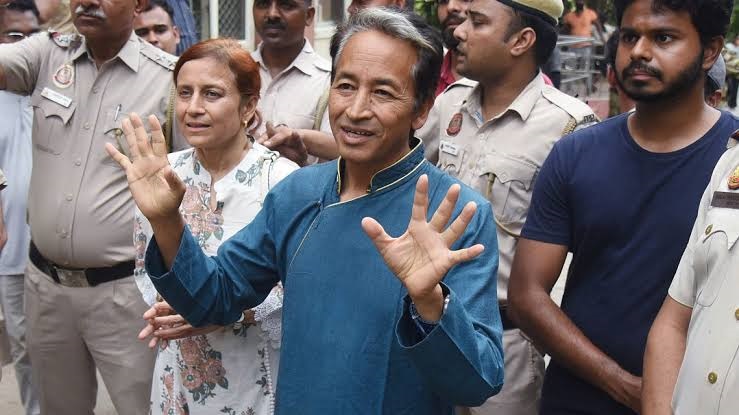
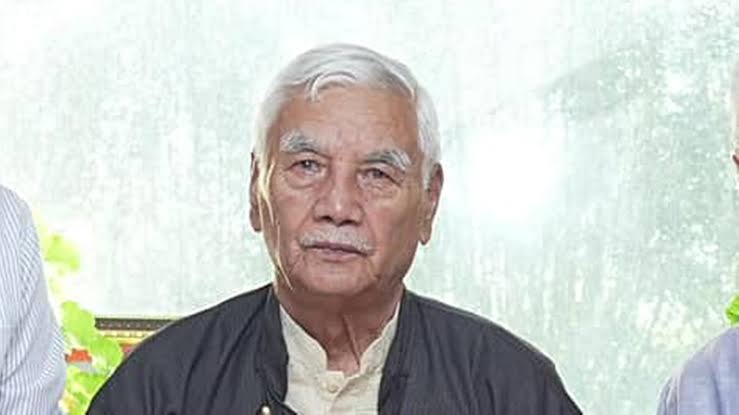
Leh/New Delhi: A fresh political divide has emerged within Ladakh’s civil society movement after former BJP MP Thupstan Chhewang defended the September 9 talks with the Union Ministry of Home Affairs, describing the meeting as fruitful and accusing sections of the leadership, including activist Sonam Wangchuk, of failing to present the positive developments discussed with the Centre.
Chhewang’s assessment directly contradicts the public reaction of the Leh Apex Body and Kargil Democratic Alliance, which described the meeting as disappointing and said the Centre had failed to provide the much-awaited concrete framework for an elected Union Territory-level body.
Wangchuk subsequently warned that Ladakh could return to agitation if the Centre failed to provide assurances within a week.
The disagreement is no longer simply about Ladakh’s demands. It is increasingly about how those demands should be pursued, what has actually been achieved through negotiations and whether dialogue or renewed mobilisation offers the better route forward.
Chhewang’s version: talks produced meaningful movement
Chhewang, who participated in the September 9 meeting after being invited by the MHA, said discussions had moved beyond the positions publicly highlighted by LAB and KDA.
According to his account, the talks examined a possible elected UT-level institution with legislative, executive and financial powers, along with its composition, electoral mechanism and areas of authority.
He also pointed to discussions concerning land, culture, environment and mineral resources, as well as representation reflecting Ladakh’s tribal character.
The former MP argued that these developments represented progress after several rounds of negotiations.
He particularly highlighted discussions around constitutional safeguards under Article 371, strengthening district-level councils and establishing an institutional structure through which Ladakh could exercise greater control over matters affecting its people.
Chhewang’s argument is essentially that negotiations should be judged by the substance of discussions and areas of emerging consensus, rather than solely by whether the Centre presented a final draft on September 9.
The biggest disagreement: was there a concrete outcome?
This is where Chhewang’s account collides directly with Wangchuk’s.
After the meeting, Wangchuk said there had been “hardly anything new” compared with the previous round held four months earlier.
He said the MHA had not presented the expected draft, had not responded to the list of non-negotiable demands submitted by Ladakh’s representatives and had not assured the groups that major changes to governance or land policies would be deferred until an elected democratic government was established.
LAB co-chairman Tsering Dorjay Lakrook similarly said the representatives had expected a concrete draft from the Centre but instead received a reiteration of positions discussed previously.
The disagreement, therefore, is not necessarily over whether issues were discussed. It is over whether discussion itself should be counted as substantive progress.
For Chhewang, the emerging institutional framework represents movement.
For Wangchuk and the LAB-KDA leadership, movement without a written proposal or concrete commitment is insufficient.
What is being discussed under Article 371?
Article 371 has become increasingly important in the negotiations because Ladakh’s civil society groups are seeking constitutional protection for the region’s distinct demographic, cultural and ecological characteristics.
Chhewang said the talks had moved towards exploring a practical constitutional mechanism rather than relying exclusively on the demand for Sixth Schedule status.
That does not mean the Sixth Schedule demand has disappeared.
The demand remains central to the wider movement, alongside statehood, land protection, employment safeguards and stronger democratic representation. But negotiations with the Centre have increasingly focused on finding a model that could provide constitutional and administrative safeguards specifically suited to Ladakh.
This is potentially one of the most consequential developments in the dialogue.
Instead of simply asking whether Ladakh will receive the Sixth Schedule, the emerging question is whether a Ladakh-specific constitutional arrangement can deliver comparable protections through a different institutional mechanism.
The proposed elected UT body
One of the most important issues discussed in the September 9 meeting was the proposed elected body for Ladakh.
The Centre and Ladakh representatives have been discussing a unique institutional model that would operate at the Union Territory level and have legislative, executive and financial responsibilities.
Chhewang said direct elections were among the mechanisms discussed, while questions of constituencies and representation were also examined. He stressed that Ladakh’s tribal character would have to be reflected in the final arrangement.
The proposed structure is significant because Ladakh became a Union Territory without a legislature in 2019.
That created a democratic gap that has remained at the centre of the region’s political debate.
The demand now is not merely for administrative decentralisation. Ladakhi leaders want an institution through which elected representatives can exercise meaningful authority over local affairs.
District councils become another point of contention
Chhewang also highlighted the sequencing of elections to the existing district-level councils.
His account suggests that one option under discussion is to hold elections to the existing councils before establishing the proposed UT-level body.
This sequencing is contentious.
Sections of LAB and KDA, along with Wangchuk, have argued that an elected UT-level democratic structure should be established first and that major decisions affecting land, governance and demographics should not be taken by the existing administration before that happens.
Chhewang, however, says this disagreement over sequencing is one of the reasons progress has slowed.
He places greater emphasis on building the institutional structure incrementally rather than waiting for every element to be settled before elections and administrative reforms move forward.
Wangchuk’s response: promises are not enough
Wangchuk’s criticism reflects a different calculation.
For the activist and LAB member, the central issue is whether the Centre is prepared to make concrete commitments before the next round of talks.
Following the September 9 meeting, he gave the government one week to provide assurances on key issues.
Among his concerns was that the present UT administration should not take major decisions involving governance, land or demographic matters before an elected democratic structure is established.
He also warned of renewed agitation from September 19 to 24 if the Centre failed to provide the required assurances.
That threat represents a significant shift from dialogue back towards pressure politics.
It also creates a difficult choice for the Ladakh movement: whether to give the negotiation process more time or return to street mobilisation to force quicker decisions.
Why Chhewang is opposing another agitation
Chhewang’s criticism of renewed protests is rooted partly in the events of September 24, 2025.
Four people were killed during violent protests in Ladakh last year, making the possibility of renewed confrontation particularly sensitive. Chhewang has warned against actions that could create another tense situation.
His message is therefore not simply that the government should be trusted.
It is that Ladakh has already paid a heavy price for confrontation and that whatever gains have been made through negotiations should first be consolidated.
He has urged the leadership to concentrate on finalising the proposed UT-level body, strengthening district councils and securing constitutional safeguards instead of immediately returning to the streets.
But the split inside Ladakh’s movement is becoming difficult to ignore
The disagreement exposes a deeper problem.
LAB and KDA have historically provided a common platform for Leh and Kargil on issues such as constitutional safeguards, employment, land and political representation.
But the September talks have highlighted differences over representation, sequencing and strategy.
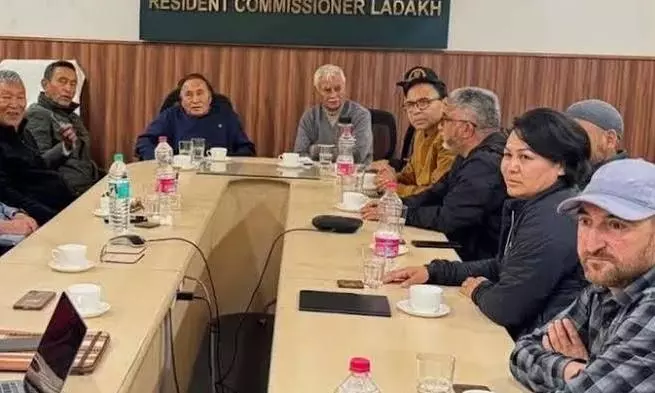
LAB and KDA had already objected to the participation of Chhewang and former Leh Hill Council chief executive councillor Tashi Gyalson in the MHA dialogue, questioning the capacity in which they were included.
Chhewang’s latest intervention makes that disagreement public.
KDA co-convenor Sajjad Kargili has argued that Chhewang is no longer part of the LAB and pointed to differences over his political positioning, including his support for the BJP.
This matters because the Centre is negotiating not with a single political party but with a collection of civil society and political representatives.
The stronger their internal unity, the clearer their negotiating mandate.
The more divided they become, the easier it becomes for different participants to present competing versions of what Ladakh actually wants.
The Centre’s position remains the critical missing piece
There is also an important limitation in Chhewang’s argument.
Even if the September 9 meeting produced several areas of agreement, the final institutional arrangement has not yet been enacted.
Wangchuk’s criticism therefore cannot simply be dismissed as opposition to dialogue.
His demand is for written commitments and concrete safeguards.
That is especially relevant because the principal demands concern constitutional and institutional questions that cannot be resolved through informal assurances alone.
Until the Centre places a concrete proposal before Ladakh’s representatives, both interpretations can coexist:
There may have been genuine progress inside the negotiating room, while there may also have been insufficient concrete progress from the perspective of those waiting for an enforceable political settlement.
That is the central tension now facing Ladakh.
Statehood and Sixth Schedule remain unresolved
The latest dialogue should also not be mistaken for a settlement of Ladakh’s original demands.
Statehood remains a major demand of the agitation.
The Sixth Schedule remains an important aspiration for sections of Ladakh’s civil society.
The Centre, meanwhile, has been exploring alternative constitutional and administrative safeguards rather than agreeing to the entire package sought by the movement.
The difference between these positions remains substantial.
Chhewang’s approach appears to favour securing workable safeguards through a negotiated Ladakh-specific model.
Wangchuk and sections of LAB continue to insist that the Centre must address the fundamental political and constitutional demands before the movement can regard the process as successful.
What happens next?
The next round of talks is expected to be held in October, with Kargil reportedly being considered as the venue.
That gives both sides some time to reduce the temperature.
But Wangchuk’s September 19-24 agitation deadline means the political pressure may return much sooner.
The coming days will therefore test whether the disagreement can remain within the negotiating process or whether Ladakh again moves towards confrontation.
The Centre’s ability to put a written framework on the table could be decisive.
So could the ability of LAB, KDA and other Ladakhi representatives to agree on what they are prepared to accept.
A movement now facing a test of unity
The dispute between Chhewang and Wangchuk is more than a personality clash.
It represents two competing strategies for Ladakh.
One favours incremental institutional gains through negotiation, even if the final settlement takes time.
The other argues that without concrete guarantees, continued dialogue risks becoming an endless cycle of meetings without implementation.
Both positions carry political risks.
For Chhewang, excessive patience could weaken public pressure and allow the Centre to delay decisions.
For Wangchuk and LAB-KDA, renewed agitation could deepen political divisions and risk another confrontation after the deaths of September 2025.
For Ladakh’s people, the stakes are much larger than the latest exchange between leaders.
They concern who will govern the region, who will control land and resources, how employment will be protected, how Ladakh’s fragile ecology will be safeguarded and how its distinct tribal and cultural identity will be constitutionally protected.
The September 9 meeting may therefore prove important not because it resolved those questions, but because it exposed the next major challenge: whether Ladakh’s leadership can agree on what progress looks like before it asks the Centre to deliver it.
The competing narratives at a glance
| Issue | Thupstan Chhewang’s position | LAB/KDA-Wangchuk position |
|---|---|---|
| September 9 talks | Fruitful, with meaningful discussions | Disappointing, little beyond earlier meetings |
| UT-level body | Significant progress on structure and powers | No concrete draft presented |
| Article 371 | Emerging consensus around safeguards | Needs concrete constitutional protection |
| District councils | Elections can precede UT-level body | Priority should be a democratic UT-level structure |
| Statehood/Sixth Schedule | Broader demands, but practical safeguards can be pursued | Remain important core demands |
| Agitation | Could destabilise Ladakh and reverse gains | Necessary if Centre fails to provide assurances |
| Main disagreement | Delay is partly due to internal differences | Centre has not made sufficient concrete commitments |