Tanvir Sadiq Targets BJP and PDP Over ‘Dirty Politics’, Says NC Alone Is Fighting for Jammu & Kashmir’s Future
By: Javid Amin | 13 June 2026
NC Intensifies Political Offensive as Statehood Debate Returns to Centre Stage
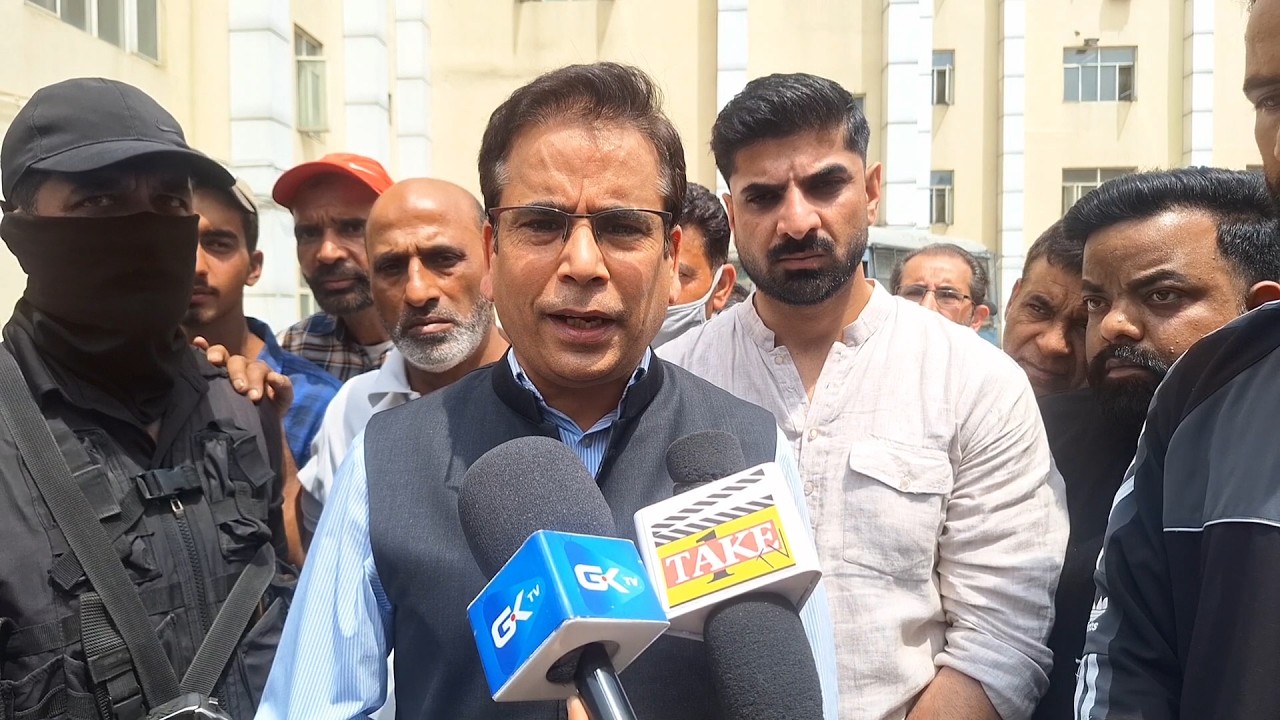
The political temperature in Jammu & Kashmir has once again risen after National Conference (NC) leader Tanvir Sadiq launched a sharp attack on both the Bharatiya Janata Party (BJP) and the Peoples Democratic Party (PDP), accusing them of indulging in what he termed “dirty politics” at the expense of the people of the Union Territory.
Sadiq’s remarks come at a politically sensitive moment when demands for the restoration of Jammu & Kashmir’s statehood have regained momentum and political parties are attempting to reposition themselves ahead of future electoral contests.
The NC leader argued that while political rivals continue to engage in blame games and opportunistic alliances, his party remains focused on restoring democratic rights, protecting the identity of Jammu & Kashmir, and securing the return of full statehood.
His comments are being viewed as part of the National Conference’s broader effort to strengthen its political narrative and consolidate public sentiment around issues of dignity, constitutional rights, and democratic representation.
‘Dirty Politics’ Allegation: NC Draws a Sharp Line Against Rivals
Speaking on the current political landscape, Sadiq accused both the BJP and PDP of exploiting the vulnerabilities and aspirations of the people for political gain.
According to him, Jammu & Kashmir has suffered significantly because of political decisions taken over the past decade, and citizens have become increasingly frustrated with what they perceive as opportunistic politics.
The NC leader suggested that political parties should focus on addressing public concerns such as governance, employment, development, democratic representation, and statehood rather than engaging in divisive rhetoric.
By using the phrase “dirty politics,” Sadiq sought to portray both parties as being driven more by political expediency than by the long-term interests of the people.
Political observers note that such messaging is designed to create a clear distinction between the National Conference and its rivals, particularly among voters who are disillusioned with repeated political confrontations and shifting alliances.
BJP Under Fire: NC Accuses Ruling Party of Polarisation Politics
A significant portion of Sadiq’s criticism was directed at the BJP.
He alleged that the party’s political strategy relies heavily on polarization and centralised control, arguing that such an approach has deepened political divisions in Jammu & Kashmir rather than fostering reconciliation and democratic empowerment.
According to the National Conference’s narrative, the BJP has consistently attempted to divert public attention away from pressing issues such as unemployment, economic challenges, administrative accountability, and the delayed restoration of statehood.
For the NC, the statehood issue remains central to the political discourse.
The party has repeatedly maintained that restoring statehood is not merely an administrative exercise but a matter of democratic dignity and constitutional commitment. By highlighting the delay in fulfilling this promise, NC leaders are seeking to keep pressure on the Centre while presenting themselves as the principal political force advocating for the aspirations of the people.
PDP Faces Renewed Scrutiny Over Alliance With BJP
While attacking the BJP, Sadiq also turned his attention to the PDP, reviving criticism of the party’s past alliance with the BJP.
The BJP-PDP coalition government, formed in 2015, continues to be a contentious chapter in Jammu & Kashmir’s political history.
National Conference leaders have consistently argued that the alliance provided political legitimacy to policies that ultimately altered the constitutional and political landscape of the region.
Sadiq suggested that the PDP cannot distance itself from the consequences of that alliance and must answer questions regarding decisions that many Kashmiris continue to debate and scrutinise.
For the NC, reminding voters about the BJP-PDP partnership serves an important political purpose. It allows the party to challenge the PDP’s credibility while reinforcing its own claim that it consistently opposed policies that weakened Jammu & Kashmir’s special constitutional position.
The issue remains politically relevant because many voters continue to associate the coalition period with a turning point in the region’s political trajectory.
National Conference Positions Itself as Defender of Rights and Statehood
At the heart of Sadiq’s remarks was an effort to position the National Conference as the primary defender of Jammu & Kashmir’s constitutional rights.
The party has repeatedly argued that it has remained steadfast in advocating for democratic institutions, political representation, and the restoration of statehood.
NC leaders contend that their political struggle is rooted in safeguarding the rights of the people rather than pursuing short-term electoral calculations.
This narrative has gained renewed prominence under the leadership of Chief Minister Omar Abdullah, whose party continues to emphasise governance, democratic restoration, and institutional accountability.
By presenting itself as the consistent voice of constitutional politics, the National Conference hopes to attract voters who are seeking stability and clarity amid an increasingly fragmented political environment.
Why Statehood Remains the Most Powerful Political Issue
The restoration of statehood remains one of the most emotionally and politically significant issues in Jammu & Kashmir.
Since the reorganisation of the former state into two Union Territories in August 2019, demands for the return of statehood have been raised by multiple political parties, civil society groups, and sections of the public.
For many residents, the debate extends beyond administrative structures and touches upon questions of identity, representation, autonomy, and democratic participation.
Recognising this sentiment, the National Conference has made statehood restoration a cornerstone of its political messaging.
Sadiq’s latest remarks fit squarely within that broader strategy. By accusing rivals of engaging in opportunistic politics while highlighting the statehood issue, the NC aims to align itself with public aspirations and maintain pressure on political opponents.
Public Mood: Growing Fatigue With Political Opportunism
Political analysts suggest that Sadiq’s comments are also designed to tap into a growing sense of political fatigue among voters.
Many citizens across Jammu & Kashmir have witnessed years of shifting alliances, political confrontations, constitutional changes, and governance challenges.
As a result, there is a perception among sections of the electorate that political parties often prioritise power struggles over public welfare.
The National Conference appears to be attempting to channel this frustration by presenting itself as a stable and principled alternative.
Whether this strategy succeeds will depend on how effectively the party translates political rhetoric into governance outcomes and tangible improvements in people’s daily lives.
The Larger Political Battle Ahead
Sadiq’s attack on both the BJP and PDP underscores an increasingly competitive political environment in Jammu & Kashmir.
Rather than confronting each rival separately, the National Conference is attempting to place both parties within the same political frame—one defined by opportunism, inconsistency, and political self-interest.
This strategy allows the NC to present itself as the sole credible force fighting for dignity, democratic rights, and statehood restoration.
As political debates intensify in the coming months, the contest is likely to revolve around competing narratives of accountability, constitutional rights, governance, and the future relationship between Jammu & Kashmir and the Union government.
Conclusion
Tanvir Sadiq’s latest remarks represent more than a routine political attack. They reflect the National Conference’s broader effort to reshape the political conversation in Jammu & Kashmir around issues of statehood, constitutional rights, and democratic dignity.
By accusing both the BJP and PDP of engaging in “dirty politics,” the NC is seeking to draw a sharp distinction between itself and its rivals while positioning itself as the principal advocate of the people’s aspirations.
With statehood restoration continuing to dominate public discourse, such confrontations are expected to play a significant role in shaping Jammu & Kashmir’s evolving political landscape and the electoral battles that lie ahead.