Omar Abdullah Slams PDP Over ‘Baseless Allegations’ in Escalating NC-PDP Row
By: Javid Amin | 10 May 2026
NC-PDP Political Battle Intensifies as Omar Abdullah Launches Sharp Counterattack
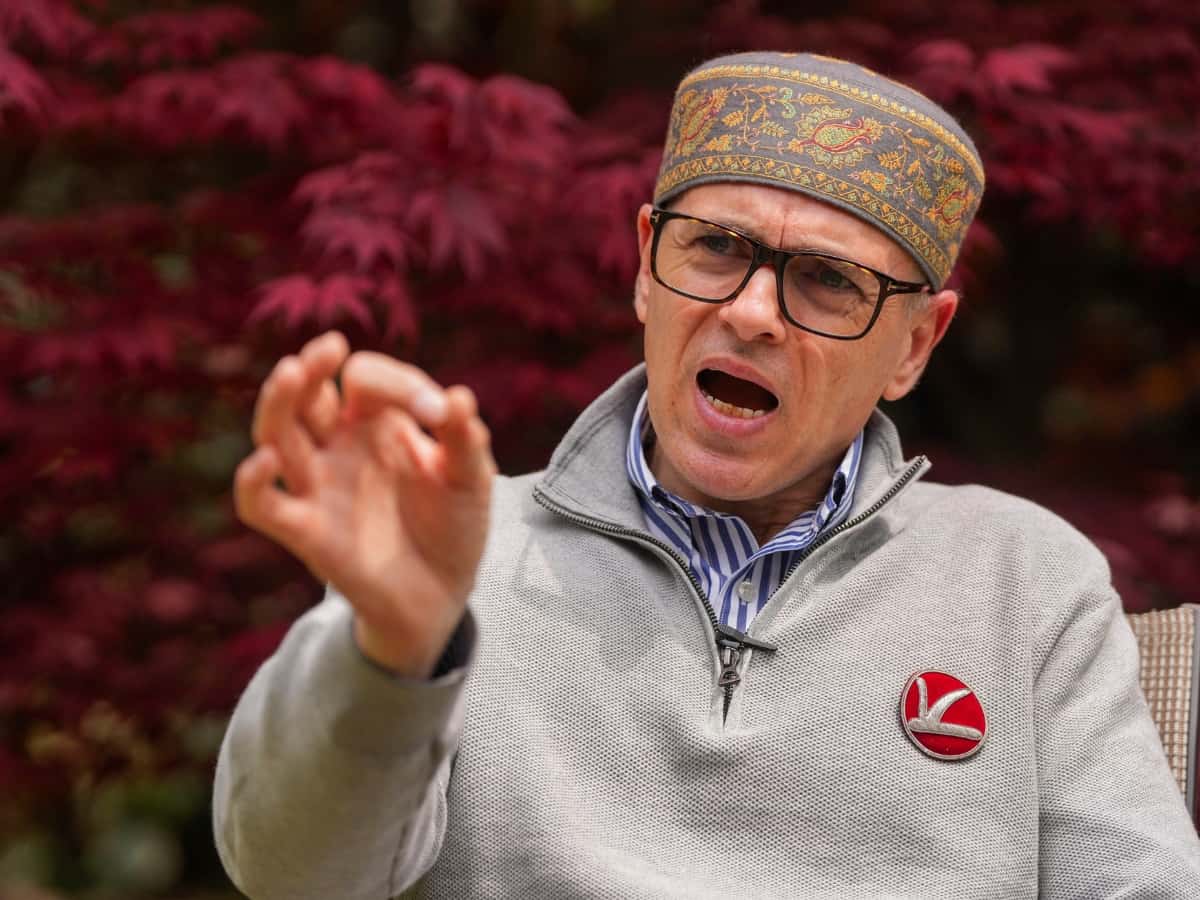
The political confrontation between the Jammu and Kashmir National Conference and the Peoples Democratic Party has escalated sharply after Chief Minister Omar Abdullah accused the PDP of making “baseless allegations” to distract from what he described as its own political failures and contradictions.
The remarks come amid growing exchanges between the two regional rivals over governance, corruption, education, and religious politics in Jammu and Kashmir.
As both parties intensify attacks ahead of a politically sensitive phase in the Union Territory, the latest confrontation signals that the battle for public credibility in post-Article 370 Kashmir is entering a more aggressive stage.
Omar Abdullah’s Counterattack: ‘People Know PDP’s Record’
Responding to repeated criticism from PDP leaders, Omar Abdullah rejected the allegations and accused the opposition party of attempting to rewrite its own political legacy.
“PDP is trying to cover up its sins by throwing false charges at us. The people of J&K know their record,” Omar said.
His statement reflects a clear attempt to shift the political conversation away from recent criticism directed at the NC government and instead focus attention on the PDP’s own tenure and controversies.
Why the NC-PDP Rivalry Is Intensifying
The exchange did not emerge in isolation. Over recent weeks, the political atmosphere in Jammu and Kashmir has grown increasingly confrontational.
Issues Fueling the Conflict
The two parties have clashed over:
- Governance and administrative transparency
- Outsourcing of recruitment and jobs
- Educational promises and university projects
- Religious and social reforms
- Corruption allegations and patronage politics
The PDP has accused the ruling government of:
- Failing youth aspirations
- Mismanaging institutions
- Exploiting religious sentiment
- Remaining silent on key public concerns
The NC, meanwhile, has responded by portraying the PDP as politically inconsistent and morally compromised.
Omar’s Strategy: Offense Instead of Defense
Political observers say Omar Abdullah’s latest remarks indicate a deliberate shift toward a more confrontational strategy.
Instead of remaining defensive against opposition attacks, the Jammu and Kashmir National Conference leadership appears intent on:
- Challenging PDP’s credibility directly
- Reopening debates around PDP’s governance record
- Framing criticism as political opportunism
This approach allows the NC to consolidate its own support base while attempting to weaken the PDP’s image as an alternative political force.
PDP’s Position Under Pressure
For the Peoples Democratic Party, the challenge lies in balancing opposition politics with its own historical baggage.
Critics of the PDP frequently point to:
- Past alliances and political compromises
- Governance controversies during its tenure
- Public dissatisfaction over earlier policy decisions
Omar Abdullah’s remarks appear designed to remind voters of those controversies whenever the PDP attempts to occupy moral or reformist ground.
This makes it harder for the PDP to fully project itself as a clean alternative without facing scrutiny over its own political history.
The Post-Article 370 Political Landscape
The exchange also reflects the changing dynamics of politics in post-Article 370 Jammu & Kashmir.
Since the constitutional changes of 2019:
- Regional parties have struggled to redefine narratives
- Political credibility has become central to electoral positioning
- Public trust remains fragmented and volatile
In this environment, both the NC and PDP are competing to emerge as:
- The primary regional voice of Kashmir
- The stronger defender of public rights and identity
- The more credible alternative to centralised governance structures
As a result, political rhetoric has become increasingly sharper and more personalized.
Public Perception: Rhetoric vs Governance
While party supporters remain deeply polarized, sections of the public are increasingly expressing frustration over the tone of political discourse.
Common Concerns Among Citizens
- Excessive focus on political accusations
- Limited discussion on policy implementation
- Rising unemployment and youth anxiety
- Lack of concrete governance outcomes
Many observers believe voters are looking for:
- Institutional reform
- Economic opportunities
- Educational development
- Transparent governance mechanisms
rather than prolonged political mudslinging.
Implications for Both Parties
| Party | Political Impact |
|---|---|
| NC | Aggressive rebuttal may energize supporters and reinforce leadership image |
| PDP | Continued attacks risk scrutiny of its own past governance record |
| Voters | Polarization deepens as politics becomes more personality-driven |
The confrontation may strengthen core voter bases for both parties, but it also risks widening political polarization in the region.
Kashmir’s Politics of Credibility
At its core, the NC-PDP confrontation is fundamentally a battle over credibility.
NC’s Narrative
The Jammu and Kashmir National Conference seeks to present itself as:
- Experienced and stable
- Politically consistent
- Capable of governance
PDP’s Narrative
The Peoples Democratic Party attempts to project itself as:
- A voice against corruption and neglect
- A defender of public rights
- A challenger to institutional failures
Both parties are therefore engaged not only in political competition, but in a struggle to define Kashmir’s regional political identity after Article 370.
Editorial Analysis
Omar Abdullah’s sharp response to the PDP reveals how intensely competitive Jammu & Kashmir’s regional politics has become. The battle is no longer confined to policy disagreements; it is increasingly centered on moral legitimacy, historical memory, and public perception.
By accusing the PDP of “hiding its sins,” Omar is attempting to shift scrutiny away from present criticism and back toward the opposition’s own political legacy.
But for ordinary citizens, the larger concern may be whether this escalating rhetoric translates into meaningful governance. In a region grappling with unemployment, institutional distrust, and developmental challenges, political credibility will ultimately depend less on accusations and more on delivery.
Key Highlights
| Aspect | Details |
|---|---|
| Main Statement | Omar accuses PDP of making baseless allegations |
| Political Context | Escalating NC vs PDP rivalry |
| Core Issue | Battle over credibility and governance |
| PDP’s Charge | NC accused of failures and exploitation |
| NC’s Response | PDP portrayed as hypocritical and compromised |
| Broader Impact | Increased political polarization |