Washington’s midterm earthquake, Israel’s coalition deadlock and Tehran’s confrontation with the United States are reshaping the geopolitical landscape as the world looks towards 2027
By: Javid Amin | 06 November 2026
New Delhi: Three major political developments are unfolding simultaneously, and their consequences may reach far beyond the countries directly involved.
In Washington, President Donald Trump has suffered a major electoral setback after Democrats captured both chambers of Congress. In Israel, Benjamin Netanyahu is facing his most serious coalition challenge in years, with former military chief Gadi Eisenkot emerging as the leading candidate to form the next government. Meanwhile, Iran is refusing to retreat from its demands despite mounting military and economic pressure, while Russia and China are stepping up their diplomatic engagement with Tehran.
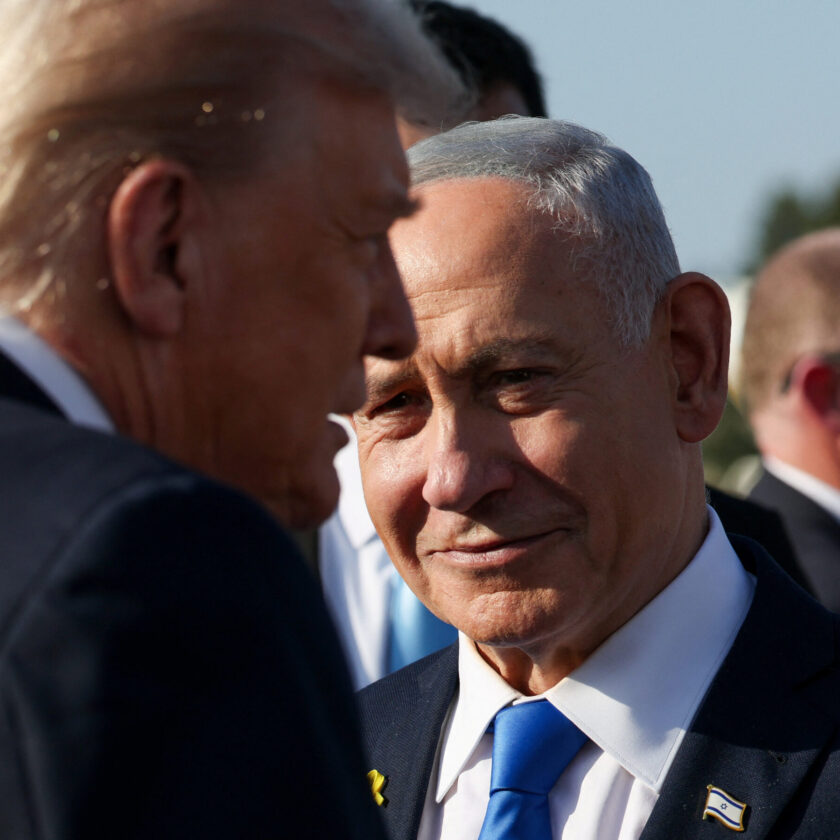
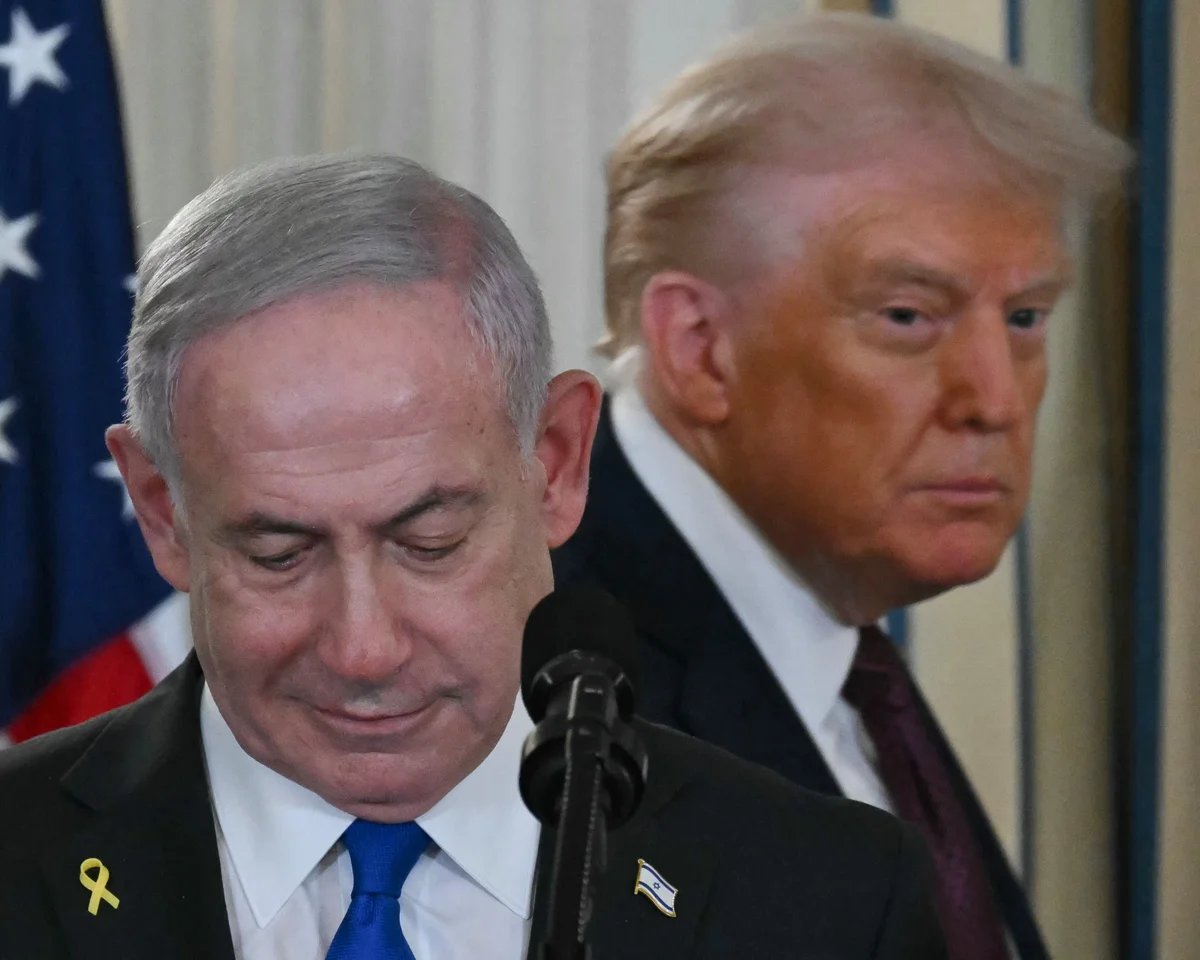
These developments are connected by more than timing. The US political shift could influence Washington’s approach to the Iran conflict. Israel’s uncertain leadership transition may affect regional military calculations. Iran, meanwhile, appears determined to demonstrate that it can withstand pressure and extract political concessions from its adversaries.
Yet the situation is not as straightforward as a simple story of weakening Western leadership and rising Iranian influence.
Trump remains President. Netanyahu has not formally lost power. Eisenkot has not yet formed a government. And neither Russia nor China has openly committed itself to entering the conflict on Iran’s side.
What is emerging is a period of political uncertainty in which domestic elections, regional military calculations and international diplomacy are increasingly influencing one another.
1. United States: Democrats Take Congress, Trump Faces a New Political Reality
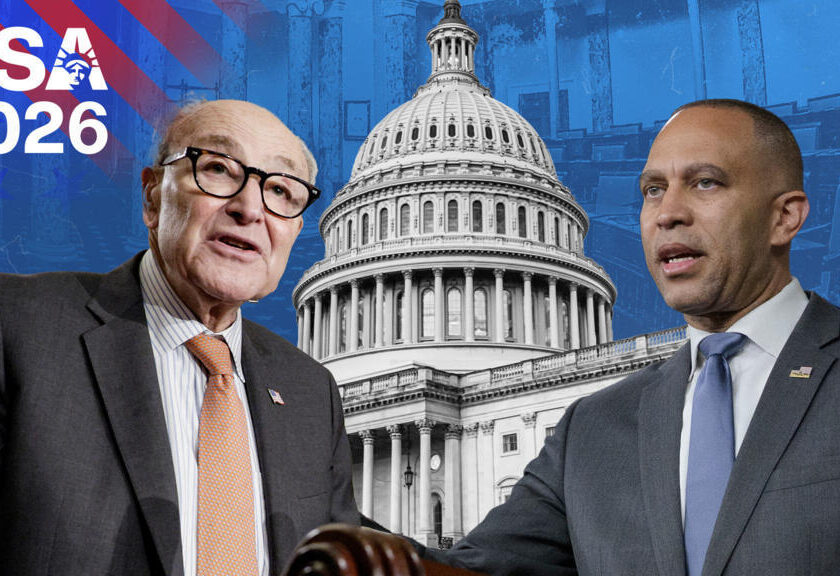
The November 3 midterm elections have delivered a significant setback to Donald Trump.
Democrats have won control of both the House of Representatives and the Senate, reversing the Republican hold on Congress and giving the opposition party a powerful institutional position for the second half of Trump’s presidency.
The Associated Press called the Senate for Democrats on election night and the House early on November 4. The result represents a major rejection of the administration’s political direction, although it does not remove Trump from office.
The scale of the setback is important. Democrats made gains in several states that had voted Republican in the 2024 presidential election, including Texas, South Carolina, Iowa and Kansas. The outcome suggests that the political coalition which helped Trump return to the White House has faced significant pressure.
What went wrong for Republicans?
The election results reflect several concerns that have been building among American voters.
Cost of living: Inflation and household expenses have remained central issues. For many voters, the economic experience of everyday life matters more than the administration’s broader claims about economic performance.
The Iran conflict: Military confrontation overseas has become another source of political pressure. The war’s costs, security consequences and uncertainty about its eventual outcome have given Democrats an additional line of attack.
Governance and accountability: Questions surrounding the administration’s conduct and allegations of corruption have also contributed to the political debate.
The election should not be interpreted as a referendum on a single issue. Voters rarely make decisions for only one reason. Economic concerns, candidate quality, local political conditions and national security all played a role.
What can Democrats do now?
Control of both chambers gives Democrats substantial power over congressional committees, investigations, legislative priorities and government spending.
The House can launch investigations into executive-branch decisions, demand documents and summon officials to testify. Senate control gives Democrats influence over committee proceedings and the confirmation of many presidential appointments.
The administration will also face greater difficulty advancing legislation without negotiating with the opposition.
However, a Democratic Congress does not mean that Trump has lost the powers of the presidency. He remains commander-in-chief, retains executive authority and can veto legislation passed by Congress. Overriding a presidential veto requires a two-thirds majority in both chambers, a much higher threshold than an ordinary legislative majority.
The result is likely to be a more confrontational Washington.
Could Trump face impeachment?
The possibility of impeachment is likely to become part of the political debate as Democrats take control of congressional committees.
But an investigation, an impeachment vote and removal from office are three different things.
The House has the constitutional authority to impeach a president through a majority vote. Removal requires conviction by a two-thirds majority in the Senate. Democrats would therefore need Republican support to remove Trump, even with control of the upper chamber.
The immediate consequence is more likely to be sustained congressional scrutiny than an automatic change in presidential leadership.
The international consequences
The most important question is how the election will affect American foreign policy, particularly towards Iran.
Democratic control of Congress could increase pressure on the administration to explain the objectives, costs and legal basis of military operations. It could also complicate funding decisions and force the White House to defend its strategy more publicly.
But it would be premature to assume that Democrats will automatically oppose every military measure against Tehran. American political divisions over Iran are complex, and opposition to Trump’s conduct does not necessarily translate into support for Iran.
The central point: Trump remains in the White House, but he will now have to govern with a Congress controlled by his political opponents. That changes the domestic political environment in which every major foreign-policy decision will be made.
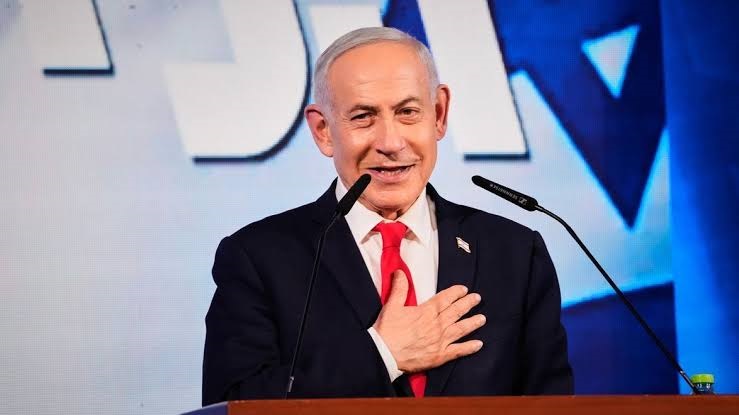
2. Israel: Netanyahu’s Political Grip Weakens as Eisenkot Gains Momentum
While Washington is dealing with the consequences of an electoral defeat, Israel is confronting a different kind of political crisis.
The October 27 parliamentary election produced no clear governing majority. Netanyahu’s Likud remained the largest individual party with 27 seats, but the bloc supporting him fell short of the 61 seats required to command a majority in the 120-member Knesset.
The opposition bloc led by Gadi Eisenkot secured 48 seats, while Arab-led parties won a combined 19.
For Netanyahu, the result was a major political setback. For Eisenkot, it created an opportunity to assemble a government capable of ending Netanyahu’s long period of dominance.
But the decisive developments came during the presidential consultations.
Eisenkot secures recommendations from 67 lawmakers
On November 5, President Isaac Herzog announced that representatives of factions comprising 67 members of the Knesset had recommended Eisenkot to form the next government.
By comparison, 46 lawmakers recommended Netanyahu.
This gives Eisenkot a significant advantage in the process of receiving the presidential mandate. It also demonstrates the importance of Arab-led parties, whose support has become central to the opposition’s attempt to replace Netanyahu.
Herzog, however, made an important qualification. The recommendations do not automatically establish that Eisenkot can form a stable government. Mutual political vetoes and disagreements between the factions remain major obstacles.
The president said he intended to designate a candidate on Sunday, November 8.
Why the Arab parties matter
The combined 19 seats held by Arab-led parties have become one of the most consequential features of the election.
Their support has helped Eisenkot assemble the largest group of lawmakers recommending a change of government. But political support for a candidate is not the same as joining a governing coalition.
Some Arab lawmakers may prefer to support a government from outside rather than accept ministerial positions. Their priorities could include civil rights, public investment, equality, policing and the treatment of Arab communities inside Israel.
Their participation also faces opposition from sections of the Jewish political establishment.
This creates an unusual political situation: the opposition may have enough parliamentary support to challenge Netanyahu, but building a durable coalition will require compromises that some of its own partners may find difficult.
Netanyahu’s remaining options
Netanyahu has not disappeared from the political picture.
His Likud remains the largest party, and he still has a substantial parliamentary base. He may attempt to persuade undecided factions, exploit disagreements within the opposition or promote a unity arrangement.
His position, however, has weakened further after the ultra-Orthodox United Torah Judaism party declined to recommend him during the presidential consultations.
The result is a more complicated political equation than a simple contest between Netanyahu and Eisenkot.
Can Eisenkot actually form a government?
Eisenkot has the advantage in recommendations, but his coalition arithmetic is fragile.
Avigdor Liberman, whose Yisrael Beiteinu party is part of the anti-Netanyahu camp, has resisted cooperation with Arab parties. Eisenkot also faces difficult negotiations over compulsory military service for ultra-Orthodox men, a particularly sensitive issue for religious parties.
The Joint List and Ra’am have both recommended Eisenkot, but their expectations and willingness to participate in government are not necessarily identical.
If the opposition cannot reconcile these differences, the numerical advantage could fail to translate into a functioning government.
The possible outcomes include:
- An Eisenkot-led government: The most immediate possibility, if the opposition and Arab parties can agree on a workable arrangement.
- A unity government: A compromise involving rival political camps, although personal and ideological differences make this difficult.
- A prolonged political deadlock: If negotiations fail, another attempt to form a government or eventually a fresh election could follow.
The probabilities sometimes circulated online for these outcomes should be treated cautiously. There is no reliable basis for assigning precise percentages while negotiations remain unresolved.
The central point: Netanyahu is under serious pressure, but his political exit is not yet complete. Eisenkot has gained the first major advantage in the coalition process, not the premiership itself.
3. Iran: Tehran Refuses to Retreat
The most dangerous dimension of these political developments remains the continuing confrontation involving Iran, the United States and Israel.
Iranian leaders are interpreting the American midterm results as evidence that their military strategy has imposed political costs on Washington.
In its November 4 assessment, the Institute for the Study of War and the Critical Threats Project reported that Iranian leaders viewed the Democratic victory as a political defeat for the Trump administration. Supreme Leader Mojtaba Khamenei and other senior officials portrayed the result as evidence that American voters had rejected the war.
This is Tehran’s interpretation of the election, not proof that American voters endorsed Iran’s position.
Iran’s leadership appears to believe that Washington’s domestic political difficulties could strengthen its negotiating position. But the same assessment also suggests that Tehran does not expect the change in Congress to fundamentally alter the American approach.
Strait of Hormuz remains the critical flashpoint
The Strait of Hormuz is central to the confrontation.
Iran has sought to use pressure on shipping as a strategic instrument, raising the risks for commercial vessels and international energy transportation.
The November 1 and November 3 assessments from the Institute for the Study of War reported incidents involving vessels and an attempted Iranian missile engagement against a US aircraft near Qeshm Island.
The November 4 assessment added that Iran was using systems to disrupt shipping, but that US military superiority was preventing Tehran from significantly reducing the transit of civilian tankers.
This distinction matters.
Iran can create uncertainty, raise insurance costs and threaten commercial traffic without necessarily achieving complete control over the waterway. The United States, meanwhile, retains considerable military capacity to protect shipping and respond to attacks.
The Strait is therefore not simply a geographical passage. It has become a central instrument of military pressure, economic leverage and diplomatic bargaining.
Iran’s domestic problems cannot be ignored
Tehran’s external defiance should not obscure the pressures inside the country.
Iran continues to face economic grievances, security challenges and opposition activity in some regions.
The Institute for the Study of War has reported activity by anti-government armed groups in Sistan and Baluchistan, including attempts to establish checkpoints and attacks involving security personnel.
These developments do not establish that the Iranian government is close to collapse. They do, however, demonstrate that the state faces internal security challenges while confronting external military pressure.
Iran’s leadership is therefore managing two connected struggles: maintaining its authority at home and preserving its strategic position abroad.
What does Tehran want?
The Iranian strategy, as assessed by the Institute for the Study of War, includes several objectives:
- Securing international recognition of its position in the Strait of Hormuz.
- Reducing the United States’ willingness to continue military operations.
- Restoring deterrence against Washington and its regional partners.
- Creating divisions between the United States, Israel and Arab states.
These are analytical assessments of Iran’s likely objectives, not a complete official list of Tehran’s negotiating demands.
The broader calculation appears to be that sustained pressure on shipping, regional security and American political stability could eventually force Washington to negotiate on more favourable terms.
Whether that strategy succeeds remains uncertain.
4. Russia and China: Two Different Approaches to Iran
Russia and China are both important to Tehran, but their interests and methods should not be treated as identical.
Both countries want to avoid a regional crisis that threatens their economic and strategic interests. Both also have reasons to oppose an American-dominated regional settlement.
Yet their latest diplomatic activity reveals different priorities.
Russia moves closer to Tehran
Russian President Vladimir Putin met Iranian senior security official Mohsen Rezaei on November 5.
According to Reuters, Rezaei delivered a message from Iran’s Supreme Leader, and discussions covered regional security, post-war arrangements and bilateral cooperation.
A proposed gas pipeline connecting Russia and Iran was also discussed, reflecting the economic dimension of the relationship.
The meeting comes amid continued confrontation with the United States and negotiations over the Strait of Hormuz, sanctions and Iran’s nuclear programme.
Russia’s relationship with Iran has grown more important as Tehran seeks military, diplomatic and economic support. But Moscow must also balance its relationship with other regional powers and avoid becoming directly involved in another costly confrontation.
Closer cooperation does not automatically mean that Russia will fight alongside Iran.
China seeks a diplomatic opening
China has adopted a more visibly diplomatic approach.
On November 2, Chinese Foreign Minister Wang Yi held separate meetings in Beijing with Iranian security official Ali Bagheri Kani and Saudi national security adviser Musaed bin Mohammed Al-Aiban.
Wang called for dialogue and negotiations, supported Iran’s sovereignty and security, and stressed the importance of protecting energy supplies and shipping routes.
Beijing also announced plans for its special envoy to visit Iran, Oman and Saudi Arabia.
This is significant because China has major economic interests in the stability of the Gulf. A prolonged disruption to energy transportation would affect its own commercial and strategic calculations.
China is seeking to position itself as a diplomatic actor capable of communicating with rival regional powers.
Are Moscow and Beijing working together against Washington?
There is no clear evidence that Russia and China are coordinating a joint strategy to exploit American political divisions or actively prolong the Iran conflict.
Both may benefit diplomatically from a United States facing domestic political pressure, but that does not mean their objectives are identical.
Russia appears focused on strengthening its strategic relationship with Tehran and expanding bilateral cooperation. China is emphasising regional diplomacy, energy security and its role as a mediator.
Their common interest is influence. Their preferred methods are not necessarily the same.
5. What Is Really Brewing? Five Larger Geopolitical Trends
The developments in Washington, Jerusalem and Tehran point towards several wider changes.
Trend One: Domestic Politics Is Influencing Foreign Policy
The American midterm results demonstrate how an overseas conflict can become a major domestic political issue.
Trump’s ability to pursue his Iran strategy without congressional scrutiny has become more complicated. Democrats will have greater opportunities to investigate military decisions, question officials and challenge spending priorities.
Israel faces a similar relationship between domestic politics and security. Netanyahu’s electoral setback has exposed the political limits of his current approach, while Eisenkot’s emergence has created uncertainty about the country’s future military and diplomatic direction.
Foreign policy is no longer insulated from domestic political pressure.
Trend Two: The Middle East Is Becoming More Fragmented
The region is not divided into two simple camps.
Arab governments have their own security interests, economic priorities and concerns about Iran. Some seek stronger American protection, while others want to avoid being drawn into a wider war.
The Arab parties’ influence in Israel’s coalition negotiations adds another layer to this complex picture.
Iran’s relationship with regional armed groups, the security concerns of Gulf states and the diplomatic ambitions of China all contribute to a more complicated regional balance.
Trend Three: Shipping Routes Have Become Strategic Weapons
The Strait of Hormuz demonstrates how a geographically narrow passage can influence global politics.
Disruption to commercial shipping can affect oil prices, insurance premiums, transport schedules and supply chains. It can also force outside powers to deploy military resources to protect international trade.
For Iran, maritime pressure offers a way to impose costs without necessarily engaging in a direct, full-scale confrontation with the United States.
For Washington and its partners, keeping shipping routes open has become a central security objective.
Trend Four: Russia and China Are Expanding Their Diplomatic Space
Moscow and Beijing are seeking greater influence in a region where American military power remains substantial but political outcomes are increasingly contested.
Russia’s engagement with Tehran is becoming more strategic, while China is attempting to expand its diplomatic role through contact with Iran, Saudi Arabia and Oman.
Neither country has demonstrated that it can independently resolve the confrontation. But both are positioning themselves to influence any eventual settlement.
Trend Five: 2027 Could Begin With Multiple Unresolved Crises
The coming year could open with several difficult questions still unanswered:
- Will the US Congress restrict or reshape Trump’s Iran policy?
- Can Eisenkot assemble a government capable of replacing Netanyahu?
- Will Iran continue using pressure around the Strait of Hormuz?
- Can Russia and China help create a diplomatic pathway?
- Will regional governments succeed in preventing another major escalation?
None of these questions has a guaranteed outcome. Their convergence, however, makes the coming months particularly important.
6. Why India Must Watch These Developments Closely
For India, the consequences are not merely diplomatic.
The Middle East is central to India’s energy imports, trade, investment and the welfare of millions of Indian nationals living and working across the Gulf.
A prolonged disruption around the Strait of Hormuz could raise crude oil prices, increase shipping costs and create pressure on domestic fuel prices and inflation.
Airspace restrictions and flight cancellations could also affect Indian passengers travelling between the Gulf, Europe and other international destinations.
India must also maintain working relationships with several countries whose interests do not always align: the United States, Israel, Iran and the Gulf Arab states.
New Delhi’s challenge is to protect its economic and strategic interests without becoming entangled in a wider regional confrontation.
A stable Middle East is therefore not simply a foreign-policy preference for India. It is an economic and national-security priority.
The Bottom Line: A World Facing Political Recalibration, Not an Inevitable Global War
The events of early November point towards a period of significant geopolitical adjustment.
Trump has lost control of Congress, but he remains President with substantial executive powers. Netanyahu’s position has weakened, but he has not yet been replaced. Eisenkot has secured the support of 67 lawmakers, but the coalition negotiations remain complicated. Iran is projecting confidence, yet it continues to face military, economic and domestic pressures.
Russia and China are expanding their engagement, but neither has committed to a direct military role in the confrontation.
The immediate danger is not necessarily a sudden global war. It is the possibility that several unresolved crises begin reinforcing one another.
A divided Washington could complicate decision-making. An uncertain Israeli government could change regional calculations. Iran could continue applying pressure through maritime disruption. Russia and China could seek greater influence as diplomacy becomes more complicated.
The next few weeks will be particularly important. Herzog’s decision on November 8 could determine who gets the first opportunity to form Israel’s government, while Washington’s new congressional balance will begin reshaping the domestic environment around Trump’s foreign policy.
The world is not necessarily moving towards one decisive confrontation. It is entering a period in which political uncertainty, military pressure and competing strategic interests are converging.
That is what is really brewing across the world.