Salman Ali Sagar accuses BJP of pushing Aga Syed Ruhullah Mehdi out of the National Conference, but the dispute raises a more difficult question: is the party confronting political engineering, or the consequences of its own internal contradictions?
By: Javid Amin | 04 November 2026
Srinagar: The National Conference’s response to Aga Syed Ruhullah Mehdi’s resignation has moved beyond damage control. A day after the Srinagar MP announced his departure from the party and submitted his resignation from the Lok Sabha, the NC launched a political counterattack, accusing the BJP of exploiting the dispute to weaken Kashmir’s oldest major regional political formation.
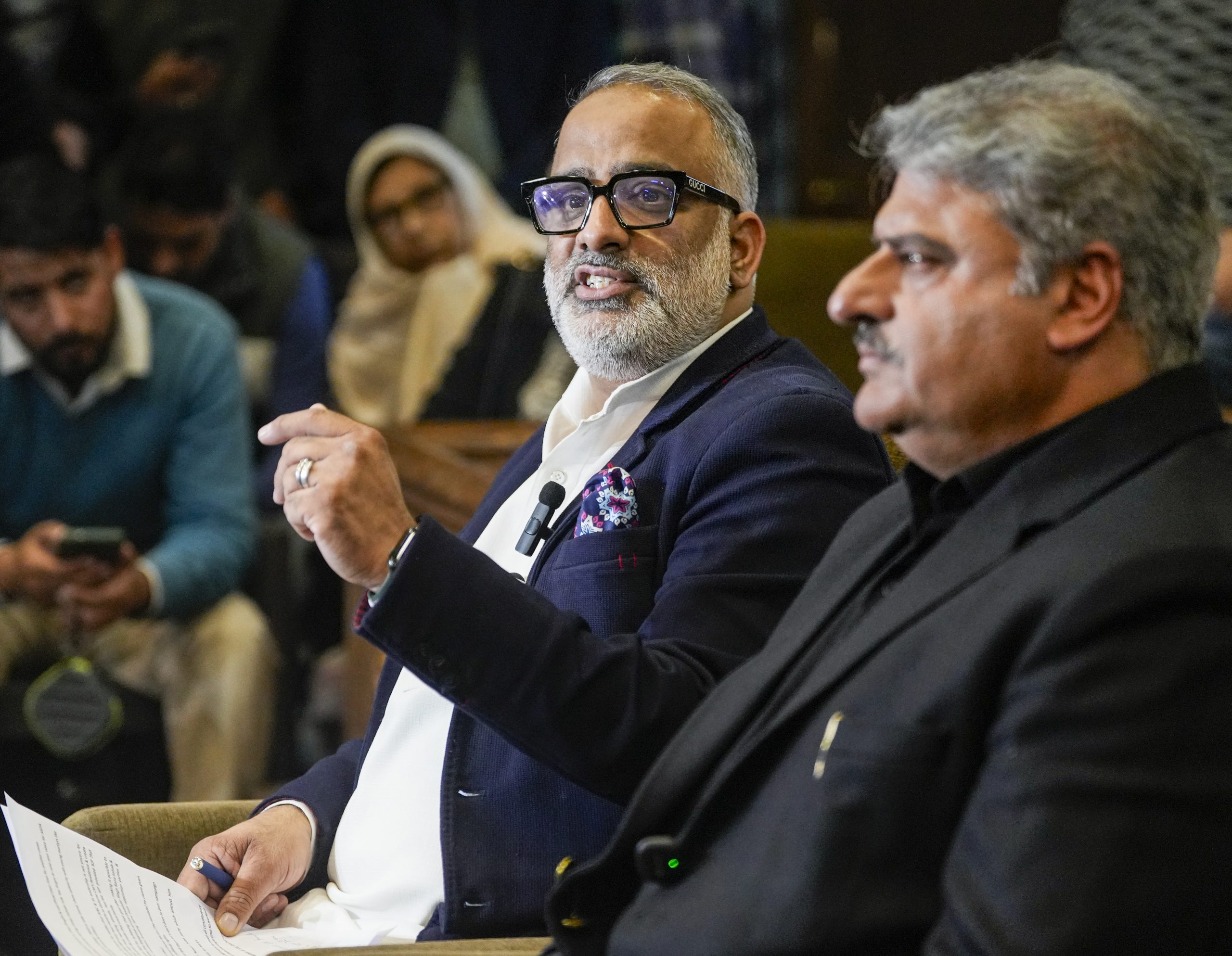
The charge was delivered publicly by senior NC leader and Hazratbal MLA Salman Ali Sagar, who described Ruhullah’s exit as the success of the BJP’s alleged “Operation Lotus” in Jammu and Kashmir.
Sagar’s argument was direct: the BJP had succeeded in pushing a prominent NC leader out, and his departure had served the interests of a political force that has long competed against regional parties in the Valley.
But the NC’s response contained another message. Sagar questioned why Ruhullah had not approached other party legislators to raise his grievances and argued that disagreements should have been addressed through internal party mechanisms rather than by walking away.
The intervention reveals the difficult position facing the NC. It must defend itself against Ruhullah’s charge that it has abandoned its political commitments, while also preventing his departure from becoming a symbol around which other dissatisfied leaders, workers and voters might mobilise.
The question is no longer simply why Ruhullah left. It is whether the NC can persuade its supporters that his exit represents an isolated rupture rather than evidence of a larger political and organisational problem.
What Salman Ali Sagar actually alleged
On November 4, Sagar addressed a press conference at the National Conference headquarters, Nawa-e-Subah, alongside Banihal MLA Sajad Shaheen.
He accused the BJP of successfully executing what he called Operation Lotus by pushing Ruhullah out of the NC.
Sagar said the development was unfortunate for both the party and the people of Jammu and Kashmir. He also questioned why Ruhullah, after spending nearly 24 years in the National Conference, had not sought support from other legislators to raise his concerns within the organisation.
His criticism was not that Ruhullah lacked the right to disagree. Rather, Sagar argued that a leader who had been part of the party for so long should have used its internal democratic channels before deciding to resign.
The argument was significant because it attempted to shift the debate from the substance of Ruhullah’s allegations to the manner in which he chose to leave.
The NC was effectively asking: if the disagreement was genuinely about the party’s political direction, why was the final answer resignation rather than an internal campaign for change?
Sagar’s remarks were reported by The Tribune, WION, Kashmir Reader and other news organisations.
Why the NC invoked Operation Lotus
The expression “Operation Lotus” has become a familiar political accusation in India. Opposition parties commonly use it to describe alleged attempts by the BJP to weaken rival governments or political organisations through defections, inducements, political pressure or the movement of elected representatives.
In Jammu and Kashmir, the NC is now applying that language to Ruhullah’s departure.
The party’s argument rests on a broader political concern: whenever influential leaders leave regional formations, their organisational networks and electoral influence can become available to competing political forces.
Sagar also referred to the BJP’s efforts to expand its influence in the region and the earlier departures of prominent NC figures, including Devender Singh Rana and Surjit Singh Slathia, who joined the BJP in 2021.
For the NC, these developments represent a pattern of political losses that have weakened its presence, particularly in parts of Jammu.
However, there is an important distinction between a party losing influential leaders and proving that a rival party engineered every departure.
Rana and Slathia left the NC in a different political context. Ruhullah has publicly offered his own explanation, centred on disagreements over Article 370, constitutional rights and the NC leadership’s political approach after the 2024 Assembly elections.
The earlier defections may explain why the NC is suspicious of the BJP’s intentions. They do not, by themselves, establish a direct connection between the BJP and Ruhullah’s decision.
The other side: what actually led Ruhullah to resign?
Ruhullah’s resignation letter provides the clearest account of his stated reasons.
In his November 3 letter, he argued that the abrogation of Article 370 and Article 35A in 2019 had created an opportunity for the National Conference to lead a political struggle for the restoration of Jammu and Kashmir’s rights.
He said he had aligned himself more actively with the party because he believed its leadership was committed to that struggle.
But, according to Ruhullah, the party changed its approach after securing a substantial mandate in the 2024 Assembly elections. He accused the leadership of prioritising the administration of government over the political struggle it had promised to pursue.
He described this as a betrayal of public expectations and said he could no longer remain associated with a party whose political direction he believed had moved away from its commitments.
The resignation letter was not merely an expression of personal disappointment. It was an indictment of the NC’s post-election strategy and its handling of the political questions that continue to dominate Kashmir.
At his Budgam gathering, Ruhullah also spoke about constitutional rights, reservations, political prisoners and the need to bring together committed young people.
He maintained that his intention was not simply to leave one party and join another. He wanted to build a broader political platform or movement.
His exit interview with The Indian Express further indicated that he was already speaking to potential associates and looking for people who could contribute to a different style of politics.
These statements do not independently establish whether every criticism of the NC is justified. But they do provide a consistent public explanation for his decision, one that is rooted in political disagreement rather than any publicly demonstrated arrangement with the BJP.
Two competing narratives — and a missing piece of evidence
The dispute has produced two sharply different political interpretations.
The National Conference’s version: The BJP wanted to weaken the NC, and Ruhullah’s departure has helped advance that objective. The party argues that his grievances could have been raised internally and that his resignation has given its political opponents an opportunity to portray the regional party as divided.
Ruhullah’s version: The NC failed to honour the political expectations on which it sought votes in 2024. He believes the leadership abandoned the struggle over constitutional rights and chose accommodation with the Centre over a more assertive political position.
Both narratives are now part of the public political debate. But neither should be treated as a complete explanation without examining the available evidence.
The most important missing element in the NC’s allegation is publicly verifiable proof of BJP involvement.
There has been no publicly established evidence in the reports reviewed showing that the BJP directed Ruhullah’s resignation, offered him an inducement, negotiated a political arrangement with him or coordinated his departure.
The BJP, for its part, has denied involvement in the NC’s internal dispute, according to the Hindustan Times report.
This does not mean political engineering is impossible. It means the allegation has not yet been substantiated.
Equally, Ruhullah’s claim that the NC abandoned its commitments remains a political assessment that must be examined against the party’s manifesto, public statements and actions in government.
The difference between an allegation and an established fact matters particularly in a politically sensitive region where every major development is quickly interpreted through competing narratives.
What is the NC really worried about? The possibility of political contagion
The immediate loss of one MP is only part of the problem.
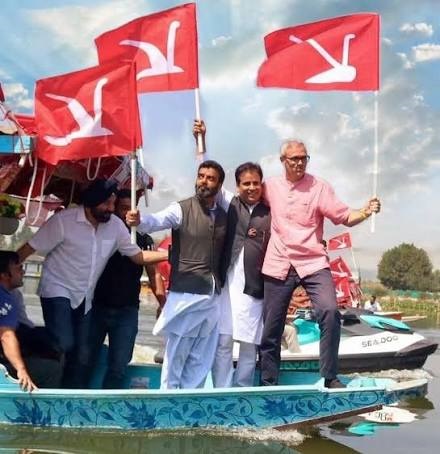
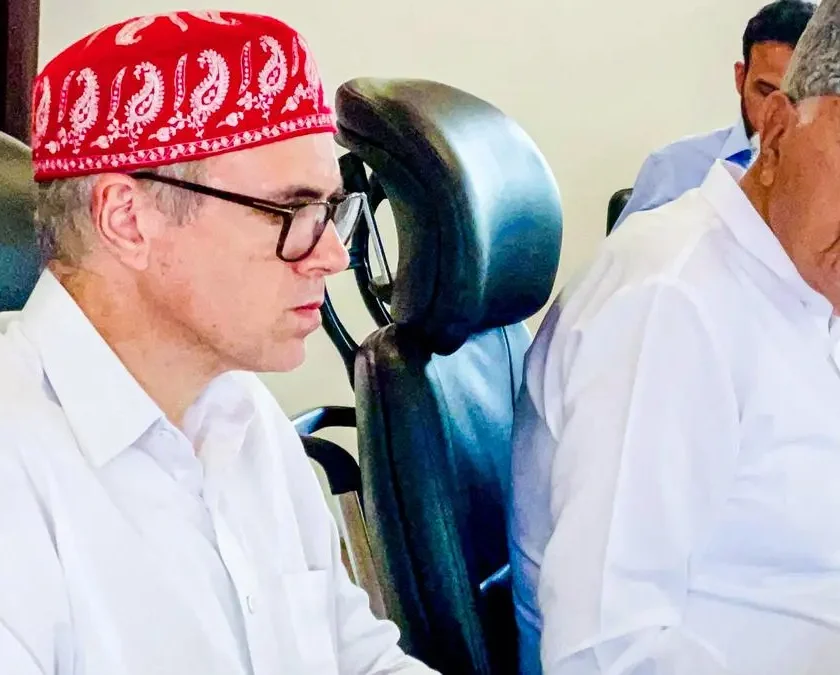
Ruhullah was not an ordinary party member. He was a three-time Budgam legislator, a prominent public voice and a key campaigner for the National Conference during the 2024 parliamentary and Assembly elections.
He also won the Srinagar Lok Sabha constituency in 2024 with 356,866 votes, defeating PDP candidate Waheed Ur Rehman Para, who secured 168,450 votes.
Those figures establish his electoral significance. They do not establish that the same support would automatically follow him into a new political formation, but they explain why his departure carries more weight than a routine resignation.
The greater concern for the NC may be whether his departure encourages other dissatisfied sections to reconsider their relationship with the party.
The party has already faced reports of discontent among a section of its legislators following the October 27 cabinet expansion. Questions have been raised about consultation, ministerial responsibilities, access to leadership and the implementation of the party’s manifesto.
Those grievances and Ruhullah’s ideological dispute are not necessarily part of the same movement. There is no established evidence that the dissatisfied legislators are acting under his direction or preparing to join his proposed platform.
Nevertheless, the timing creates a political vulnerability.
If younger workers begin identifying with Ruhullah’s criticism, if local leaders start questioning the party’s direction, or if more senior figures publicly distance themselves from the leadership, the NC could face a broader challenge to its authority.
That is the potential contagion the party must guard against.
Sajad Shaheen’s response: an attempt to project organisational confidence
The presence of Banihal MLA Sajad Shaheen alongside Sagar at the press conference was also politically relevant.
Shaheen argued that the National Conference was neither built nor weakened by the arrival or departure of an individual. The message was intended to reinforce the idea that the party’s institutional strength was greater than the influence of any one leader.
There is a legitimate organisational argument here. The NC has a long political history, an established cadre network and a substantial Assembly presence. Its survival does not depend on one MP.
But institutional longevity does not make a party immune to internal crises.
The more important test is whether the organisation can absorb disagreement without allowing it to turn into a prolonged confrontation between the leadership and its own elected representatives.
If the NC can resolve its internal differences, retain its grassroots network and demonstrate progress on its manifesto commitments, Ruhullah’s exit may remain a major but contained setback.
If it cannot, the resignation could become part of a wider debate about the party’s political identity after 2019.
The BJP’s position: beneficiary does not automatically mean architect
The NC’s accusation also raises a broader question about the BJP’s political strategy in Jammu and Kashmir.
The BJP has expanded its electoral presence in Jammu and emerged as a major force in the Assembly. Its political interests are not limited to the movement of individual leaders from regional parties. It also has an interest in how regional parties define their positions on Article 370, statehood, relations with New Delhi and the future governance of the Union Territory.
A fragmented regional political landscape could create additional space for the BJP and other political formations.
But political advantage and political responsibility are two different things.
If the BJP benefits from a rival party’s internal crisis, that does not prove it caused the crisis. To establish the latter, evidence of coordination, inducement, pressure or direct involvement would be necessary.
There is also a strategic risk for the NC in making the allegation without producing supporting evidence. If the charge becomes the party’s main response to Ruhullah’s criticism, it could appear to be avoiding the questions he has raised about its own political commitments.
The BJP’s denial does not settle the matter either. The allegation should be judged on evidence, not on the claims of either side.
What would make the Operation Lotus allegation more credible?
The NC’s charge should not be judged simply by whether Ruhullah eventually forms a party or contests an election independently.
Even if he establishes a new political platform, that would not prove BJP involvement. Nor would a meeting with a BJP leader, by itself, establish that his original resignation was engineered.
A more meaningful assessment would require examining concrete developments:
-
Evidence of prior coordination: Were there documented communications or negotiations between Ruhullah and BJP representatives before his resignation?
-
Political inducements or pressure: Is there credible evidence of offers, threats or other interventions designed to secure his departure?
-
A subsequent formal arrangement: Does he enter an alliance or political arrangement with the BJP, and what are its terms?
-
A consistent political position: Does his movement independently challenge BJP policies, the NC government and other political formations, or does it selectively align with one side?
Even these developments would need to be examined in context. Political alliances and negotiations are part of democratic competition; they do not automatically prove that an earlier resignation was orchestrated.
At present, the strongest publicly documented explanation for Ruhullah’s departure remains the political disagreement set out in his resignation letter and subsequent interviews.
The parliamentary question remains separate
There is also a legal distinction that should not be overlooked.
Ruhullah announced his resignation from the Srinagar Lok Sabha seat and submitted a formal letter to Speaker Om Birla under Article 101(3)(b) of the Constitution and Rule 240 of the Lok Sabha Rules of Procedure.
However, the seat becomes vacant only after the Speaker accepts the resignation after satisfying himself that it is voluntary and genuine. The submission of the letter and the formal vacancy of the seat are therefore separate steps.
This matters because the political debate is already moving towards the possibility of a Srinagar by-election. Until the resignation is formally accepted, the constituency should not be described as having a legally vacant Lok Sabha seat.
Political bottom line: a battle over the future of regional politics
The National Conference is trying to frame Ruhullah’s departure as a victory for the BJP. Ruhullah is presenting it as a break with a party that, in his view, has abandoned its political commitments.
The confrontation is therefore about more than one resignation. It is a contest over who has the authority to define the political mandate of 2024 and what regional politics in Jammu and Kashmir should look like after the 2019 constitutional changes.
For the NC, the challenge is to demonstrate that it remains capable of representing the political aspirations of its voters while governing within the limitations of the Union Territory framework.
For Ruhullah, the challenge is considerably different. He must prove that his criticism can be converted into a credible political movement with an organisation, leadership beyond his own circle and a programme that reaches voters across Jammu and Kashmir.
For the BJP, the question is whether it can expand its political influence without the regional opposition successfully presenting every internal crisis as evidence of a deliberate campaign against it.
The decisive test will not be the exchange of accusations. It will be what happens next.
If Ruhullah builds an independent movement and continues to challenge both the NC and the BJP, the NC’s Operation Lotus allegation will face a serious credibility test. If evidence of political coordination or inducement emerges, the allegation will deserve a different assessment.
For now, the facts establish a major political rupture, a public accusation by the NC and a denial of BJP involvement. They do not establish that the BJP engineered Ruhullah’s exit.
The deeper crisis may ultimately be inside the regional political space itself: a struggle over political credibility, constitutional commitments, leadership and the right to speak for Kashmir’s post-2019 future.