CM Omar Hurts Jammu’s Cause in Cabinet Expansion, Turns NC Back to Muslim Conference: BJP
By: Javid Amin | 28 October 2026
Jammu: The Jammu and Kashmir BJP has accused Chief Minister Omar Abdullah of weakening Jammu’s representation in the government following the recent cabinet expansion, arguing that the induction of four ministers from the Kashmir Valley has deepened regional and community-based concerns.
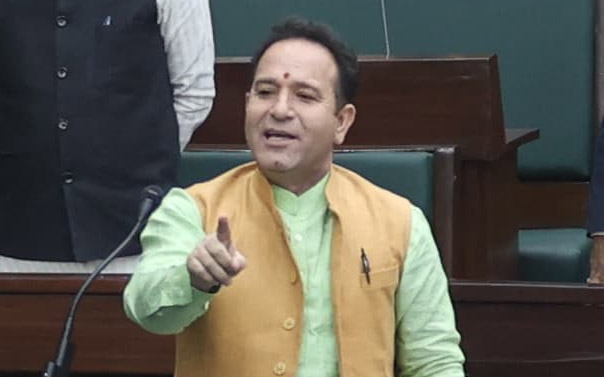
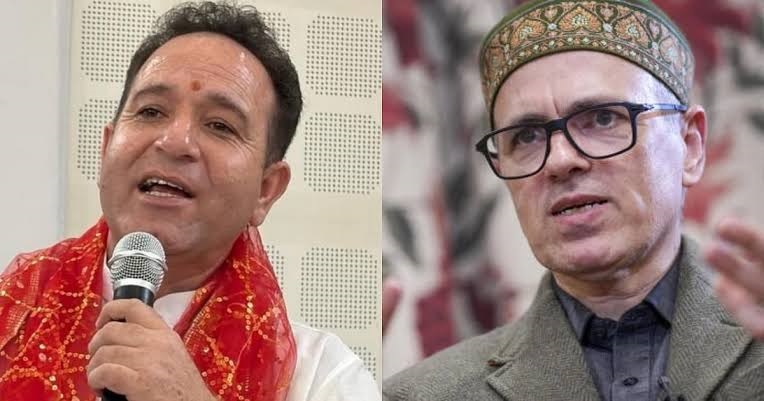
BJP chief spokesperson Sunil Sethi alleged that the reshuffle had disadvantaged Jammu, particularly the plains, and questioned the decision to remove independent MLA Satish Sharma from the Council of Ministers. In a sharply worded attack, Sethi also accused the National Conference (NC) of returning to its pre-1939 political identity, describing the party under Omar Abdullah as “Muslim Conference 2.0.”
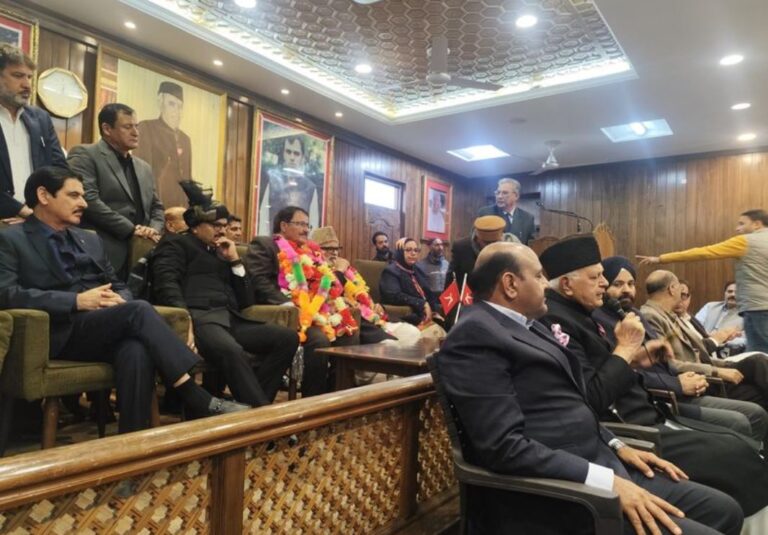
The allegations followed the October 27 cabinet expansion, in which Ali Mohammad Sagar, Mir Saifullah, Shameema Firdous and Altaf Ahmad Wani, also known as Kalloo, were inducted into the government. All four represent constituencies in the Kashmir Valley. Satish Sharma, who represented Chhamb in Jammu district as an Independent MLA, was dropped from the ministry.
With the expansion, the Council of Ministers reached its full strength of nine, including the Chief Minister. Seven members represent Kashmir Valley constituencies, while two represent Jammu division. Both Jammu-based ministers, Deputy Chief Minister Surinder Choudhary and Javed Ahmed Rana, represent the Pir Panjal region, leaving the Jammu plains without a representative in the cabinet.
The composition has brought regional representation back to the centre of the political debate in Jammu and Kashmir.
BJP Questions Jammu’s Representation After Reshuffle
Addressing a press conference in Jammu, Sethi said the BJP had expected at least one of the vacant ministerial positions to go to Jammu when the cabinet was expanded. Instead, he argued, the induction of four Valley-based legislators and the removal of Satish Sharma had left the region’s representation unchanged in numerical terms and reduced its geographical spread.
The BJP spokesperson also raised the issue of community representation, pointing out that eight of the nine ministers are Muslim and one is Hindu. He questioned why the government had dropped Sharma rather than considering another legislator from the Hindu community.
Sethi further alleged that the Chief Minister had prioritised political proximity over broader representation and questioned the decision to retain ministers against whom, he claimed, allegations of wrongdoing had been raised.
These are the BJP’s political allegations. They should not be treated as established findings of corruption or proof that the reshuffle was motivated by religious considerations. No conclusion about an individual minister’s integrity follows simply from the cabinet’s regional or religious composition.
The BJP has also linked the reshuffle to dissatisfaction within the National Conference, claiming that several party leaders were unhappy with the distribution of ministerial positions. The cabinet expansion has indeed been accompanied by reports of resentment among some NC legislators who were not inducted, although the extent and long-term political consequences of that discontent remain to be seen.
Jammu Division and Jammu Plains: Why the Distinction Matters
The debate requires a distinction between Jammu division as a whole and the Jammu plains.
Jammu division continues to have two ministers in the nine-member Council of Ministers. Surinder Choudhary represents Nowshera, while Javed Ahmed Rana represents Mendhar. Both constituencies are in the Pir Panjal region.
The concern raised by the BJP, therefore, is not that Jammu division has no ministerial representation at all. It is that the Jammu plains, including the core urban and adjoining districts that form a significant political and electoral bloc, have lost their direct representation following Sharma’s removal.
The Indian Express reported before the expansion that Sharma’s induction had provided a cabinet presence for mainland Jammu, comprising Jammu, Kathua, Samba and Udhampur districts. His removal left that area without a minister representing one of its constituencies. The report also highlighted the challenge of balancing representation across Jammu’s subregions and the Kashmir Valley.
This geographical distinction matters because Jammu division is not politically or socially uniform. The Pir Panjal region, the Chenab Valley and the Jammu plains have different electoral patterns, local concerns and political alignments. A minister from one part of Jammu division may contribute to decisions affecting the entire region, but that does not automatically remove concerns about direct political representation in another part.
The reshuffle has consequently sharpened a question that extends beyond the BJP’s immediate criticism: how should a government balance regional representation when its legislative strength is unevenly distributed across different areas?
What the 2024 Election Results Explain—and What They Do Not
The National Conference emerged as the largest party in the 2024 Jammu and Kashmir Assembly election, winning 42 of the 90 elected seats. The BJP won 29 seats, with its strongest performance concentrated in the Jammu region, particularly the plains.
That electoral outcome helps explain the political arithmetic confronting the Omar Abdullah government. The NC’s legislative strength is concentrated in the Valley, while the BJP commands a substantial bloc of legislators from Jammu. The cabinet, however, is formed by the Chief Minister and is not automatically required to mirror the Assembly’s regional seat distribution.
The electoral map does not, by itself, settle the question of representation. The government’s supporters can point to the NC’s mandate and its need to accommodate experienced legislators. The BJP, meanwhile, can argue that a government responsible for the entire Union Territory should consider the political and geographical diversity of its population when distributing ministerial responsibilities.
The removal of Satish Sharma is central to that argument because his inclusion had provided a cabinet link to the Jammu plains despite his status as an Independent legislator.
At the same time, the absence of a plains-based minister does not establish that the government has denied the region development funds, public services or administrative attention. Such a claim would require evidence from budget allocations, project implementation, recruitment, infrastructure spending and other measurable indicators.
The political dispute is therefore about representation and the message conveyed by the reshuffle, rather than proof of unequal development.
Does the Cabinet Violate Any Regional Quota?
The Jammu and Kashmir Reorganisation Act, 2019, limits the Council of Ministers to no more than 10 per cent of the total membership of the Legislative Assembly. With a 90-member Assembly, the maximum cabinet strength is nine, including the Chief Minister.
Section 54 of the Act provides that ministers other than the Chief Minister are appointed by the Lieutenant Governor on the Chief Minister’s advice. The cited provisions establish the cabinet’s size and appointment process; they do not prescribe a fixed number of ministerial positions for Jammu, the Kashmir Valley or any religious community.
The current cabinet composition, therefore, should not be described as violating a regional quota on the basis of the available legal provisions.
That legal position does not make regional representation politically irrelevant. A cabinet can comply with the statutory framework and still face criticism over whether its composition reflects the diversity of the electorate. The political debate concerns that distinction between legal requirements and the expectations of representative government.
Why the BJP Invoked the Muslim Conference’s History
The BJP’s “Muslim Conference 2.0” charge draws on the National Conference’s pre-independence history.
The organisation was founded in 1932 as the All Jammu and Kashmir Muslim Conference. On June 11, 1939, it adopted the name All Jammu and Kashmir National Conference as its leadership sought to build a broader political platform that was not restricted by religious identity.
The change was part of a wider political shift in the princely state, where opposition to the ruling establishment increasingly drew support from people beyond a single religious community. The historical transition was also contested: a section of the leadership later broke away and revived the Muslim Conference.
The BJP’s current argument uses this history to question whether the NC’s cabinet choices reflect the broader, inclusive identity associated with its later name.
But a party’s historical origins and its present-day cabinet composition are separate matters. The 1939 name change is documented history; the assertion that Omar Abdullah has reversed that political transformation is the BJP’s interpretation. Establishing whether the government systematically favours one community would require a wider assessment of its policies, appointments and decisions, not cabinet arithmetic alone.
The historical reference has nevertheless given the controversy a larger ideological dimension. Rather than limiting its criticism to the number of ministers from each region, the BJP is questioning the National Conference’s claim to represent Jammu and Kashmir’s diverse population.
Satish Sharma’s Removal Becomes the Focal Point
Sharma’s exit has become the most visible symbol of the representation dispute because he was the only minister from mainland Jammu before the expansion.
His removal changed the cabinet’s geographical profile even as its overall strength increased. The four incoming ministers brought additional experience and legislative representation from the Valley, but none filled the position vacated by the Chhamb MLA.
The BJP has questioned the rationale for dropping Sharma and argued that another legislator from the Jammu plains could have been considered. Its criticism also extends to the government’s handling of internal party expectations and the exclusion of some senior NC leaders from ministerial positions.
The Chief Minister’s cabinet choices inevitably involve competing demands: experience, regional balance, political loyalty, representation of different constituencies and the need to maintain a functioning administration. The precise weight assigned to each consideration is a political decision, and the cabinet’s composition alone does not establish the Chief Minister’s motives.
The controversy has also exposed the limits of relying solely on party strength to assess representation. A government may have a clear legislative mandate while still facing questions about whether its executive team includes voices from all major geographical areas.
A Wider Debate Over Regional Balance
The cabinet expansion has revived a long-running debate in Jammu and Kashmir over the relationship between regional identity, electoral mandates and executive representation.
For the BJP, the absence of a minister from the Jammu plains provides grounds to argue that the reshuffle has overlooked a major part of the electorate. The party has also framed the issue in religious terms, citing the cabinet’s composition and Sharma’s removal.
For the National Conference, the challenge is to explain how its appointments serve the government’s wider administrative and political objectives while addressing concerns about geographical representation. The induction of experienced Valley-based leaders may be justified on political or governance grounds, but that does not erase the representational question raised by the absence of a plains-based minister.
The distinction between a political allegation and an established fact remains essential. The cabinet’s composition is verifiable. The claim that Jammu has been deliberately punished for its electoral choices is not established by those numbers alone.
A fuller assessment of regional balance would need to examine not only who sits in the cabinet, but also the distribution of portfolios, the location of major development projects, public expenditure, recruitment and the delivery of government services across Jammu and Kashmir.
What the Controversy Means for Omar Abdullah’s Government
The immediate dispute concerns ministerial representation, but its implications reach beyond the reshuffle. It puts pressure on the government to demonstrate that its decisions and policies account for the interests of regions that voted differently in the 2024 Assembly election.
It also places the BJP’s criticism within a broader political contest over identity and representation. By invoking the Muslim Conference’s history, the opposition has sought to turn a cabinet decision into a question about the National Conference’s political character.
Whether that argument gains wider traction will depend on how the government responds and whether future administrative decisions address the concerns being raised. The cabinet’s current composition alone cannot determine how regional development or political representation will evolve.
For now, the central fact is clear: the expanded Council of Ministers has seven members representing Kashmir Valley constituencies and two representing Jammu division, both from the Pir Panjal region. The Jammu plains have no direct constituency representation in the cabinet following Satish Sharma’s removal.
That composition has given the BJP a concrete basis for questioning regional balance. Its stronger claims about religious bias and deliberate punishment remain allegations that must be assessed separately from the documented cabinet changes.