Saudi Security Concerns Grow After Deadly Airport Attack and Shaybah Oilfield Incident
By: Javid Amin | 22 October 2026
Saudi Arabia is facing renewed security concerns after separate attacks hit a major airport in the kingdom’s east and the strategically important Shaybah oilfield, leaving three people dead and several others injured. An Indian national was among those injured at the oil facility, according to India’s Ministry of External Affairs and the Indian Embassy in Riyadh.
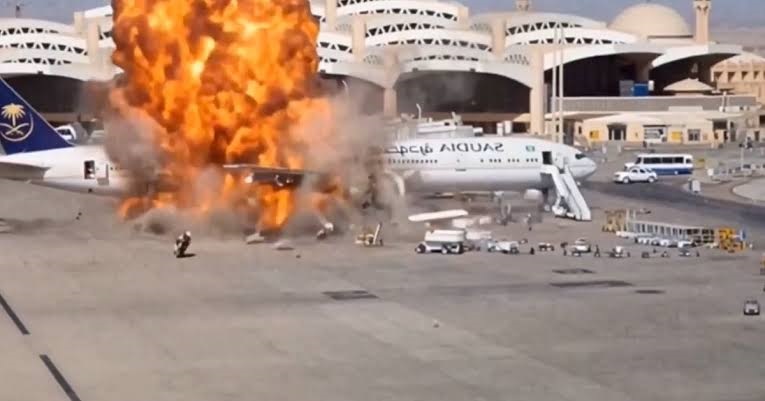
Saudi authorities said one Saudi resident was killed and eight people were injured in an attack on King Fahd International Airport in Dammam, in the Eastern Province. The airport also sustained material damage, while flights were diverted away from the facility.
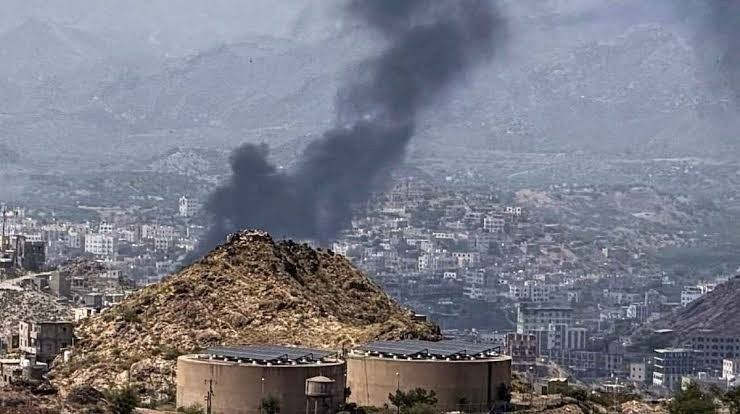
In a separate incident at Shaybah, Saudi air defences intercepted a drone reportedly targeting an oilfield facility. Debris from the interception caused a fire in a contractor’s vehicle outside the facility’s perimeter, killing two foreign nationals and injuring two others. The fatalities were identified as citizens of the Philippines and Nepal, while the injured included Pakistani and Indian nationals.
Indian Embassy Coordinates With Saudi Authorities After Shaybah Attack
India’s diplomatic mission in Riyadh confirmed that an Indian citizen was injured in the incident at the Shaybah oilfield on October 21.
In a statement shared on social media, the Embassy of India said it was in contact with Saudi authorities and awaiting further details. It also assured the injured national that all necessary assistance would be provided.
The Ministry of External Affairs acknowledged the injury, but the initial public statement did not disclose the individual’s identity, the precise nature of the injuries or the circumstances in which the person was hurt.
The embassy’s response is significant given the large Indian community in Saudi Arabia, which includes professionals, technical workers and other employees in sectors such as construction, healthcare, manufacturing and energy.
For Indian families with relatives working in the kingdom, attacks affecting industrial facilities can create immediate concerns about personal safety, even when there is no confirmed disruption to production.
India’s immediate priority is to establish the injured citizen’s condition and ensure access to appropriate assistance. The available reports do not provide enough information to determine the severity of the injuries or the expected recovery period.
According to the Saudi Energy Ministry, air defences intercepted a drone attempting to strike a facility at the Shaybah oilfield in the kingdom’s Eastern Province.
The interception prevented the drone from directly reaching its intended target, according to the official account. However, falling debris caused a fire in a vehicle belonging to a contractor working at the site, outside the facility’s perimeter.
The incident resulted in two deaths and two injuries.
The two people killed were nationals of the Philippines and Nepal. The injured workers were identified by nationality as Pakistani and Indian.
Saudi authorities said the relevant agencies responded to the incident and took the necessary measures. The ministry also confirmed that oilfield operations had not been affected.
The incident also highlights a broader security challenge: protecting an industrial site requires more than defending its principal installations. Contractors, transport vehicles, access roads and workers operating near facility boundaries may remain exposed even when air-defence systems intercept an incoming threat.
At this stage, the publicly available reports do not establish the precise origin of the drone or independently identify those responsible for the attempted attack.
Dammam Airport Attack Leaves One Dead and Eight Injured
The second incident struck King Fahd International Airport in Dammam, a major aviation facility in eastern Saudi Arabia.
Saudi Arabia’s General Authority of Civil Aviation reported that one Saudi resident had been killed and eight people injured in the attack late Wednesday. The airport sustained material damage, and flight-tracking service Flightradar24 reported that aircraft were being diverted away from the facility.
The attack is particularly significant because airports serve as more than passenger terminals. They support domestic connectivity, international travel, cargo movement and the wider logistics networks on which regional economies depend.
Disruption at a major airport can affect passengers well beyond the immediate area of an incident. Diversions may create delays, complicate connecting journeys and force airlines to reassess flight schedules while safety checks are carried out.
However, the available reports do not establish the full duration of the disruption at Dammam airport or the final number of flights affected. Nor have Saudi authorities publicly identified the perpetrator of this specific attack in the reporting reviewed.
The absence of confirmed attribution matters. Although the latest incident occurred amid a wider wave of attacks associated with the conflict involving Yemen’s Houthi movement and the Saudi-led coalition, that broader context does not, by itself, establish who carried out the Dammam attack. The Houthis had not publicly claimed responsibility for this particular incident in the initial reporting.
The Shaybah oilfield is one of Saudi Arabia’s major petroleum assets. Located in the kingdom’s southeast, near the border with the United Arab Emirates, the field is operated by Saudi Aramco and forms part of the country’s extensive oil-production infrastructure.
Its importance extends beyond the immediate industrial site. Saudi Arabia is a major force in global oil markets, and the security of its production facilities is closely watched by energy companies, governments and traders.
Attacks on energy infrastructure can raise questions about production continuity, export reliability and the cost of protecting industrial facilities. Even when an incident does not interrupt output, repeated security threats may increase operating costs and reinforce concerns about supply risks.
For now, the Saudi Energy Ministry’s statement that operations at Shaybah were unaffected is an important distinction. The incident caused casualties, but the available official account does not indicate that the oilfield stopped producing.
That does not mean the wider economic implications can be dismissed. Markets often respond not only to confirmed production losses but also to the possibility that future attacks could reach critical equipment, storage facilities or transport networks.
The immediate evidence, however, does not establish that the latest incident caused an oil-supply shortfall or a specific change in global crude prices. Any such claim would require separate market data and confirmation of an operational impact.
The latest incidents come after a series of attacks on Saudi infrastructure, including strikes on Riyadh’s King Khalid International Airport earlier in October.
In the October 10 attack on Riyadh airport, Saudi authorities initially reported 12 deaths and more than 300 injuries. The death toll subsequently rose to 13 after an Indian national who had been injured in the attack died, according to the Indian Embassy. The embassy also reported that Indian citizens were among those injured.
The geographical spread of the incidents is particularly significant. Riyadh is the kingdom’s capital, Dammam is a major eastern transport hub, and Shaybah is a strategically important energy asset. Security threats affecting these different locations raise questions about the capacity of defensive systems to protect multiple sites simultaneously.
Saudi Arabia’s air defences have intercepted drones in the eastern region, but the Shaybah incident demonstrates that interception does not necessarily eliminate all risk to people and property on the ground.
The challenge is not limited to detecting and destroying incoming projectiles. Authorities must also manage debris, assess damage, protect workers, maintain emergency response capabilities and determine whether essential operations can safely continue.
The United States has also responded to the deteriorating security environment. The Associated Press reported that Washington ordered some US government personnel and their families to leave Saudi Arabia following the recent attacks and heightened concerns about further escalation.
The Houthi Question: What Is Known and What Remains Unclear?
The attacks have occurred amid continuing hostilities involving Yemen’s Houthi movement, which is backed by Iran, and forces aligned with the Saudi-led coalition.
The Houthis have previously targeted Saudi infrastructure, including airports and energy-related facilities. That history provides important context for understanding Riyadh’s security concerns.
Yet attribution must remain incident-specific.
In the latest Dammam airport attack, the initial Saudi authorities’ account did not identify the perpetrator. Reports also indicated that the Houthis had not claimed responsibility for that particular strike.
At Shaybah, Saudi officials said a drone had attempted to target an oilfield facility and was intercepted by air defences. The official account establishes the attempted targeting and resulting casualties, but the reports reviewed do not independently establish who launched the drone.
The possibility of further attacks remains a serious concern, but a reliable assessment requires evidence about the weapons used, their launch locations, the intended targets and any subsequent claims of responsibility.
Without those details, assigning definitive blame for the latest incidents would go beyond the publicly established facts.
What the Attacks Could Mean for Oil Prices and Regional Trade
Saudi Arabia occupies a central position in international energy markets. Consequently, security incidents affecting its oil infrastructure can have implications for crude prices, shipping costs and broader economic confidence.
The potential effects depend on several factors: the scale of the damage, whether production is interrupted, the frequency of subsequent attacks and the ability of Saudi authorities to protect facilities and maintain exports.
The Shaybah incident has so far been reported as having no effect on oilfield operations. This limits the basis for claims of an immediate supply disruption.
Nevertheless, repeated attacks can create uncertainty. Energy companies may need to strengthen site security, review emergency procedures and reconsider the risks associated with operating in exposed locations. Transport and logistics businesses may also face additional costs if routes or facilities become subject to restrictions.
Aviation faces a similar set of challenges. Airport damage and flight diversions can affect passengers, airlines and connecting transport services, particularly if disruptions continue over several days.
For international markets, the central question is whether these incidents remain contained or develop into a sustained campaign that disrupts production, exports or regional transport.
As of the latest reports reviewed, there is insufficient evidence to conclude that the Dammam and Shaybah incidents have caused a major interruption to Saudi oil supplies.
What Happens Next?
The immediate priorities are likely to include assessing damage at Dammam airport, supporting those injured at both locations, investigating the attempted drone strike at Shaybah and strengthening security around vulnerable infrastructure.
For India, the immediate diplomatic concern is the welfare of its injured citizen. The embassy has confirmed contact with Saudi authorities and pledged assistance, but further information about the individual’s condition remains pending.
For Saudi Arabia, the incidents underscore the difficulty of protecting civilian and industrial assets during a period of heightened regional hostilities. The ability to intercept incoming threats remains crucial, but the casualties at Shaybah show that debris and secondary fires can still cause deadly consequences.
Investigators will also need to establish the origin of the attacks and determine whether the incidents were connected. The fact that both occurred in eastern Saudi Arabia within a short period does not, on its own, prove they formed part of a single coordinated operation.
The wider regional implications will depend on what emerges from those investigations, whether further attacks occur and how the parties involved respond.
For now, the confirmed picture is serious but specific: one person has been killed and eight injured in the Dammam airport attack, while two foreign nationals died and two others, including an Indian citizen, were injured at Shaybah. Saudi authorities say oilfield operations remain unaffected, while responsibility for the Dammam attack has not been established in the reports reviewed.
Follow Us on WhatsApp
Get Breaking News, Exclusive Updates & In-Depth Analysis from Kashmir and beyond, delivered straight to your phone.
Join our WhatsApp Channel: Follow Now