Tehran says Washington has accepted some demands but left key issues unresolved, while fresh diplomatic exchanges offer a narrow opening to prevent a wider regional conflict
By: Javid Amin | 12 October 2026
Tehran/Washington: Diplomacy between Iran and the United States remains alive, but the two sides are still far apart on the terms required to end the conflict and restore normal maritime traffic through the strategically vital Strait of Hormuz.
Iran’s security chief, Mohsen Rezaei, has described Washington’s response to Tehran’s seven conditions as “insufficient”, saying the United States has accepted some demands while leaving others unclear. Tehran has insisted that it will not fully reopen the waterway to the United States or resume normal negotiations until its conditions are met.
However, developments on October 12 offered a further indication that the diplomatic channel has not closed. Iranian Foreign Ministry spokesperson Esmaeil Baghaei said Tehran was reviewing the American response and would communicate its position through intermediaries.
The distinction matters. Iran’s criticism signals that the current proposal has failed to resolve the main disagreements, but the continued exchange of messages leaves room for further negotiations.
At the heart of the standoff is a difficult question: can Washington secure the reopening of one of the world’s most important energy routes without accepting terms that Tehran considers essential to its security and economic recovery?
The answer will have consequences far beyond the Gulf, affecting energy-importing countries, international shipping, global markets and the wider balance of power in West Asia.
What Has Happened So Far?
According to Reuters reporting on October 11, Iran presented a proposal during the United Nations General Assembly period under which normal maritime passage through the Strait of Hormuz could be restored within seven days if its seven conditions were fulfilled.
The United States responded through Qatari intermediaries. Rezaei subsequently said that the response was inadequate and that Washington needed to clarify unresolved points.
Iranian officials have not publicly released the complete seven-point list or provided a definitive breakdown of which conditions Washington has accepted, rejected or left open to interpretation. The demands reported publicly include an end to the war, the release of frozen Iranian funds and the lifting of the US naval blockade. Other reported conditions concern American military action and interference in Iran’s internal affairs.
This lack of a complete, jointly confirmed text is important. The public knows the broad areas of disagreement, but it does not have enough information to establish whether the two governments are close to a workable agreement.
Washington has not publicly confirmed that it has accepted Iran’s conditions as Tehran describes them.
The immediate position is therefore one of limited diplomatic engagement without an agreed settlement. Neither the language of partial acceptance nor Iran’s criticism should be mistaken for proof that a comprehensive agreement is close.
What Are Iran’s Seven Conditions?
Iran has referred to seven conditions, but the full list has not been officially published in a form that allows every provision to be independently verified. The following demands have been reported or identified in public statements and coverage of the proposal.
1. An end to the war on all fronts
Tehran wants hostilities to stop rather than accept a temporary pause that could leave the underlying conflict unresolved.
For Iran, an end to the war is closely connected to the question of future security. A ceasefire without credible arrangements to prevent renewed attacks may be viewed as a tactical break rather than a durable settlement.
Washington, meanwhile, must weigh any cessation of hostilities against its military objectives and commitments to regional partners. The two sides may agree in principle that escalation should end while disagreeing over the timing, scope and enforcement of a ceasefire.
2. Release of frozen Iranian assets
Iran has also demanded the release of frozen funds.
The issue carries both economic and political significance. Access to overseas assets could improve Tehran’s financial flexibility, support trade and provide relief to an economy constrained by sanctions and restricted access to international finance.
For Washington, however, the release of funds is likely to raise questions about the scale of relief, the timing of transfers, legal restrictions and the conditions attached to any arrangement.
A partial or staged release could become part of a negotiated settlement, but there is no confirmed public agreement establishing that such relief has been accepted.
3. Lifting the US naval blockade
The naval blockade is among the most consequential points in the dispute because it concerns Iran’s ability to move goods and sustain economic activity.
Tehran wants the restrictions lifted, while Washington has its own security and strategic interests in maintaining pressure on Iran.
The disagreement is not merely about shipping. It concerns who sets the terms for maritime access and whether restrictions will be removed before, during or after other elements of a settlement are implemented.
4. An end to US attacks on Iranian territory
Iran’s reported demands include an end to American attacks on its territory.
This is a fundamental security issue. Tehran is seeking an arrangement that prevents the conflict from simply restarting after an initial ceasefire.
Washington would have to consider how any commitment would interact with its wider military posture, regional security obligations and the terms of a possible settlement.
5. An end to American interference in Iran’s internal affairs
Iran has also raised the issue of US interference in its domestic affairs.
This demand reflects Tehran’s long-standing objection to external pressure on its political system and internal decision-making. It also illustrates the broader difficulty of negotiating between governments that fundamentally distrust one another.
The precise scope of this condition remains unclear in the publicly available account. Without an agreed definition, the phrase could encompass different interpretations of sanctions, political pressure, intelligence activity and other forms of external involvement.
What about the remaining two conditions?
The complete list has not been publicly disclosed in a sufficiently clear and independently verified form to establish the exact wording of the remaining demands.
It would therefore be premature to present a definitive seven-point list as though all its terms were known. The undisclosed provisions may be important to the negotiations, particularly if they concern guarantees, military arrangements or the conditions governing future maritime traffic.
The absence of a complete text is itself a major limitation in assessing how close the parties are to a deal.
Sources: Reuters, October 11; The Indian Express, October 12.
Why the Strait of Hormuz Has Become the Centre of the Crisis
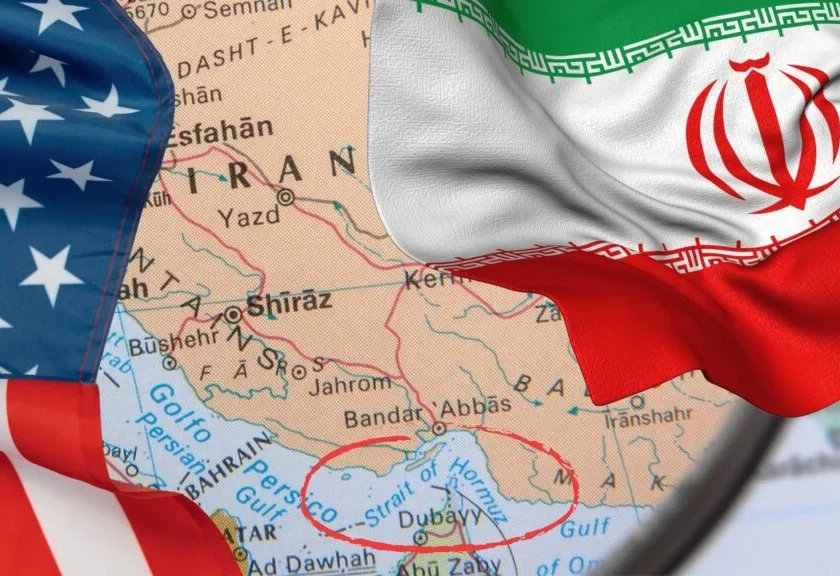
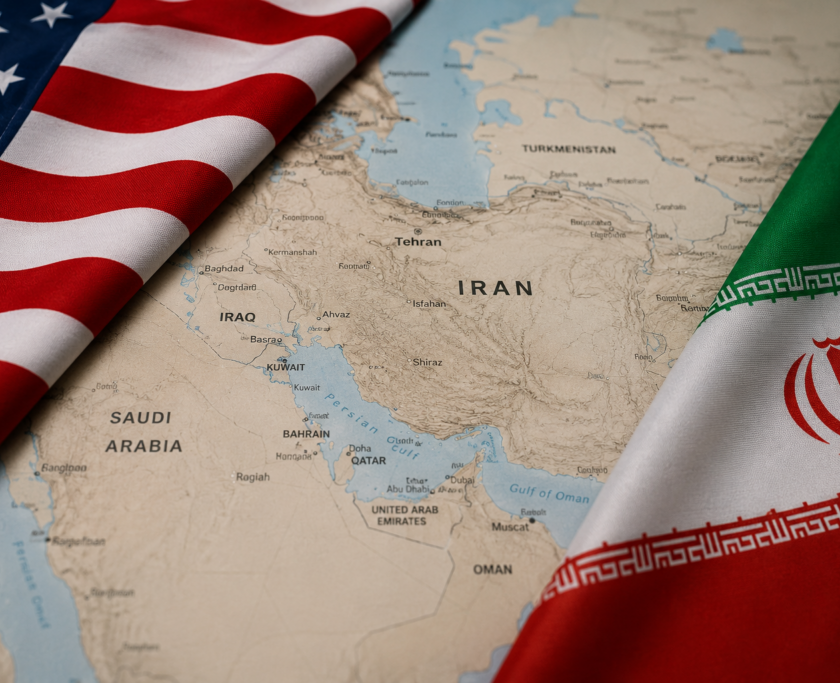
The Strait of Hormuz is a narrow maritime passage connecting the Persian Gulf with the Gulf of Oman and the wider Arabian Sea. Its geography makes it one of the most strategically important energy chokepoints in the world.
According to the US Energy Information Administration, around one-fifth of global liquefied natural gas trade passed through the strait in 2024. Oil flows through the route are similarly critical to international energy markets.
The waterway is particularly important for Asian economies. China, India, Japan and South Korea rely on energy supplies from the Gulf, while European consumers can also be affected by changes in global supply and prices.
When shipping through Hormuz is disrupted, the consequences extend beyond the vessels unable to pass.
- Oil and gas: Uncertainty over supplies can push energy prices higher and make procurement more difficult.
- Shipping and insurance: Elevated security risks can increase insurance premiums, freight costs and the expense of transporting cargo.
- Industrial production: Higher fuel and transport costs can feed into electricity generation, manufacturing and supply chains.
- Household budgets: Energy-price increases can eventually affect transport fares, food distribution and the prices of everyday goods.
- Financial markets: Prolonged uncertainty can weaken investor confidence and complicate economic planning.
These effects do not occur at the same speed or with the same intensity in every country. The scale of the impact depends on how much traffic is disrupted, how long the disruption lasts, available alternative routes and the response of energy producers and governments.
But the strategic significance is clear: a prolonged crisis around Hormuz can impose costs on countries that have no direct role in the conflict.
Source: US Energy Information Administration.
Is Iran Using Hormuz as a Negotiating Weapon?
The strait gives Tehran substantial geographic leverage, but using that leverage also carries risks.
By linking the restoration of normal maritime passage to its conditions, Iran is seeking to make the costs of continued confrontation more visible to Washington and the international community. Disruption can increase pressure on governments and markets to find a diplomatic solution.
From Tehran’s perspective, the waterway is therefore not just a shipping route. It is part of a broader effort to obtain security assurances, economic relief and recognition of its demands.
Yet the strategy is not without consequences for Iran itself.
A prolonged disruption can damage regional commerce, complicate Iran’s own economic recovery and deepen tensions with neighbouring Gulf states. It may also increase the likelihood of additional military action by the United States or other countries seeking to protect navigation.
The distinction between leverage and escalation is consequently important. Pressure can create incentives to negotiate, but it can also harden positions and make compromise politically more difficult.
There is another issue: the freedom of international navigation cannot be treated solely as a bargaining matter between Tehran and Washington. Other countries, commercial operators and seafarers have direct interests in safe passage. Any lasting settlement will need to address their security as well as the demands of the two principal parties.
Why Washington Has Not Accepted the Proposal in Full
From the American perspective, Iran’s conditions raise several questions about the price of a settlement.
Accepting demands on military operations, sanctions-related assets and naval restrictions could reduce Washington’s immediate leverage. It could also create disagreements over whether Iran has made sufficient commitments on issues that the US considers central to regional security.
One major point of contention is the sequencing of negotiations.
Reuters reported on October 12 that Washington wants Iran’s nuclear programme addressed early in the talks, while Tehran prefers to prioritise reopening the Strait of Hormuz and restoring maritime security.
This difference is significant because each side wants to establish the order in which concessions are discussed.
Iran’s preferred approach would place maritime access and immediate conflict-related demands near the front of the process. Washington’s position, as reported, seeks to bring the nuclear issue into the negotiations early rather than leave it for a later stage.
Neither side may want to make its most consequential concessions before receiving assurances from the other.
That creates a familiar negotiating problem: Washington wants commitments on issues it considers essential to security, while Tehran wants an end to pressure and tangible relief before accepting a broader framework.
A workable agreement would need to define not only what each side must do, but also when it must do it and how compliance would be assessed.
Source: Reuters, October 12.
Qatar and Pakistan: Why Intermediaries Matter
Direct negotiations between Washington and Tehran are complicated by decades of distrust, competing strategic objectives and the risk that public concessions could be portrayed as weakness.
Intermediaries can help both sides exchange proposals without requiring an immediate public commitment. Qatar has played a role in transmitting messages, and Reuters has also identified Pakistan among the countries involved in mediation efforts.
Such channels can help clarify disputed language, explore possible compromises and establish whether the two sides are prepared to move beyond their initial positions.
However, mediation should not be confused with progress towards a final agreement.
The fact that messages are being exchanged confirms that communication remains possible. It does not establish that the sides have resolved the central disputes or agreed on a timetable for reopening the strait.
The October 12 statement from Iran’s Foreign Ministry is therefore relevant. Tehran’s intention to review the American response and communicate through intermediaries suggests that the next phase may involve further clarification rather than an immediate breakthrough.
The real test will be whether those exchanges produce specific, verifiable commitments.
Israel’s Security Concerns Complicate the Negotiations
Although the immediate proposal concerns Iran and the United States, Israel remains a major factor in the wider security environment.
Any agreement that eases economic pressure on Iran without addressing the security concerns raised by Israel and other regional actors could generate political opposition. Conversely, an arrangement that leaves Iran exposed to renewed attacks may be unacceptable to Tehran.
This creates a wider diplomatic challenge. A bilateral understanding between Washington and Tehran could reduce immediate tensions without resolving every regional security dispute.
It is also important to distinguish political interpretation from established fact. Without a complete public text of the proposal and a confirmed account of each government’s position, it is not possible to determine exactly what role Israeli concerns have played in the current US response.
What can be said is that the wider regional environment makes any agreement more difficult to sustain. A deal that reduces one immediate source of conflict may still require additional understandings to prevent renewed escalation.
What the Crisis Means for India
For India, the stakes are economic, diplomatic and strategic.
The Strait of Hormuz is an important route for energy supplies reaching Asian markets, including India. A sustained disruption can increase the cost of imported energy, raise shipping expenses and place additional pressure on businesses and households.
The consequences would depend on the duration and severity of the disruption, the availability of alternative supplies and routes, and movements in international energy prices.
A prolonged increase in oil prices can put pressure on India’s import bill and complicate efforts to manage inflation. Higher freight and insurance costs can affect goods beyond energy, while uncertainty can make it more difficult for companies to plan procurement and delivery schedules.
The effects would not necessarily be immediate or uniform. Existing inventories, supply contracts and government measures can cushion some of the pressure. But a long-running crisis would make energy security more expensive and uncertain.
India also has a diplomatic interest in de-escalation. Its relations with Gulf countries, energy requirements and wider economic interests give it a strong reason to favour stable maritime routes and a negotiated settlement.
For New Delhi, the priority is not simply which side secures the better terms. It is whether the region can avoid a wider conflict that threatens trade, energy supplies and the safety of commercial shipping.
Three Possible Paths Ahead
The next stage will depend on whether the two sides can translate general statements into an agreed sequence of actions. Three broad possibilities stand out, but none can be treated as certain.
1. A limited, phased agreement
Washington and Tehran could attempt to reach an initial arrangement focused on immediate maritime security and a reduction in hostilities, while leaving more difficult disputes for later negotiations.
Such a deal might involve reciprocal steps, monitoring arrangements and a defined timetable for implementing commitments.
The challenge would be ensuring that neither side feels it has surrendered its leverage without receiving something meaningful in return. Any arrangement would also need clear terms for what happens if one party alleges non-compliance.
2. A prolonged diplomatic stalemate
The sides could continue exchanging messages through intermediaries without agreeing on the order or substance of concessions.
Under this scenario, the diplomatic channel would remain open, but the main disputes would persist. Shipping uncertainty and regional security risks could continue to weigh on businesses and energy markets.
This outcome would not mean diplomacy had completely failed. It would mean that communication had not yet produced a mutually acceptable settlement.
3. Renewed escalation
If negotiations break down and military confrontation intensifies, the Strait of Hormuz could remain a focal point of pressure and retaliation.
A wider escalation could threaten additional infrastructure, shipping and regional security. It could also make future negotiations more difficult by increasing political pressure on both governments to demonstrate resolve.
The possibility of further escalation is one reason intermediaries have an important role. But diplomacy alone cannot guarantee restraint if the parties decide that military action serves their interests better than compromise.
What Should Be Watched Next?
The most meaningful indicators of progress will be concrete developments rather than forceful public statements.
First, the substance of Iran’s next response: Tehran’s Foreign Ministry has said it is reviewing the US reply. Any subsequent statement may clarify whether Iran sees room for further negotiation.
Second, the nuclear issue: Whether Washington and Tehran can agree on when and how to address Iran’s nuclear programme will be central to determining whether the broader talks can advance.
Third, maritime access: A clear and verifiable change in restrictions on shipping would provide stronger evidence of progress than a general expression of willingness to negotiate.
Fourth, the terms of economic relief: Any confirmed agreement on frozen assets or sanctions-related measures would help establish whether the two sides are prepared to exchange tangible concessions.
Finally, the role of mediators: Continued communication through Qatar, Pakistan or other intermediaries may help bridge differences, but the decisive question is whether their efforts produce an agreed framework.
The Bottom Line: Diplomacy Is Alive, but the Gap Remains Wide
Iran’s description of the US response as “insufficient” is not, by itself, proof that negotiations have collapsed. Nor does the reported partial acceptance of Tehran’s conditions establish that a settlement is near.
The October 12 update, in which Iran said it was reviewing Washington’s response and would reply through intermediaries, points to a diplomatic process that remains active but unresolved.
The core disagreement concerns more than the reopening of a waterway. It involves the sequence of concessions, the future of US military pressure, Iran’s access to frozen funds, nuclear negotiations and the security arrangements that would follow any cessation of hostilities.
Iran is seeking to turn its geographic leverage into economic and security concessions. Washington is weighing those demands against its own regional objectives. Both governments face the challenge of negotiating without appearing to surrender their principal interests.
For the rest of the world, the immediate priority is safer and more predictable maritime traffic through the Strait of Hormuz. A reopening would be an important sign of de-escalation, but it would not by itself resolve the broader conflict.
The real measure of progress will be whether Tehran and Washington move from competing demands to specific, reciprocal and verifiable commitments. Until then, diplomacy remains an opening, not a breakthrough.