Delhi Protest Disrupts Rail Travel: Jammu Rajdhani, Tejas Rajdhani and Sampoorna Kranti Among Trains Cancelled
By: Javid Amin | Jammu & Kashmir | October 10, 202
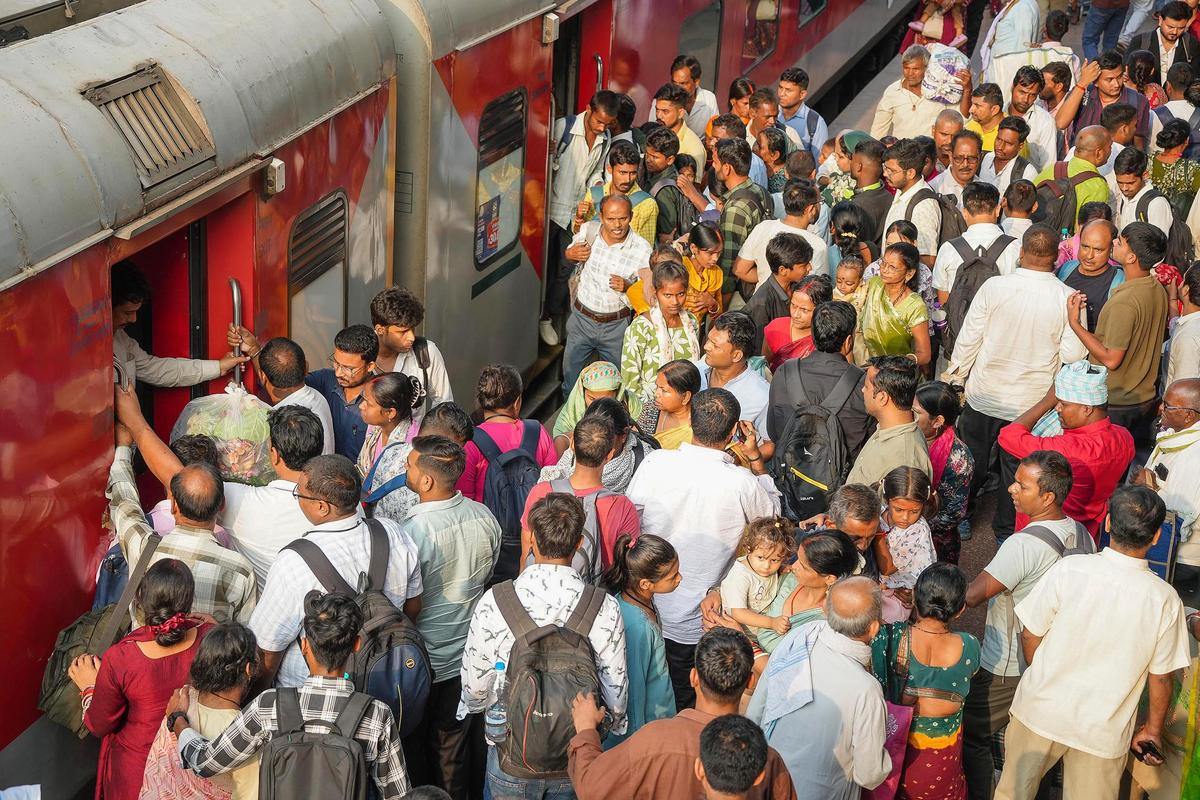
The disruption has spread far beyond Jammu, affecting long-distance passengers, daily commuters and travellers heading to the national capital from several parts of India.
More than 250 train services have been reported cancelled or affected in connection with the restrictions imposed around Delhi on October 10. However, the headline figure needs context: the latest reporting distinguishes between 75 long-distance mail and express trains and 179 local services, rather than more than 250 long-distance trains alone.
The disruption comes as Delhi prepares for a protest organised by the Cockroach Janata Party (CJP) over the Special Intensive Revision (SIR) of electoral rolls and its demand for the resignation of Chief Election Commissioner Gyanesh Kumar.
Railway authorities have cited anticipated severe road congestion around New Delhi and Hazrat Nizamuddin stations as the reason for the cancellations. The timing has nevertheless drawn political criticism, with the protest organisers alleging that the restrictions could prevent supporters from reaching the capital. The railway’s stated reason and the political allegations should be distinguished rather than treated as interchangeable explanations.
For passengers travelling from Jammu and Katra to Delhi, the disruption directly affects four services. According to The Tribune, all four were cancelled at their originating stations for October 9 departures, as they were scheduled to reach the Delhi area during the restriction window on October 10.
Scheduled departure: 9:25 pm, October 9
Scheduled departure: 7:50 pm, October 9
Scheduled departure: 9:00 pm, October 9
Scheduled departure: 11:25 pm, October 9
Major trains affected across India
The disruption extends well beyond Jammu and Kashmir. Several high-profile services connecting Delhi with eastern, central and western India have been cancelled.
Cancelled for its October 9 departure.
Patna–Delhi service cancelled.
Rajendra Nagar Terminal–New Delhi service cancelled.
Cancelled for October 10.
Prayagraj–New Delhi service cancelled.
Kanpur Central–New Delhi service cancelled.
Cancelled for its October 9 departure.
Cancelled for its October 9 departure.
These services appear in the published cancellation lists reported by The Indian Express. The list also includes trains from Indore, Jabalpur, Lucknow, Udaipur and other cities.
Passengers travelling between Mumbai and Delhi have also been affected.
According to the supplied railway disruption reports, the following services were rescheduled by approximately five hours:
-
12951 Mumbai Central–New Delhi Rajdhani Express
-
12953 Mumbai Central–Hazrat Nizamuddin August Kranti Rajdhani Express
Separately, the 22221 Mumbai CSMT–Hazrat Nizamuddin Rajdhani Express was reported cancelled by West Central Railway. Passengers should confirm the latest operational status before travelling, as the exact revised departure or cancellation information can change.
The immediate explanation given by the Railways is anticipated severe road congestion around New Delhi and Hazrat Nizamuddin stations during the October 10 restriction window, from 4 am to 2 pm.
According to the Railway Ministry’s statement reported by The Indian Express, trains scheduled to arrive at the two stations during this period were cancelled at their originating stations if they had been due to depart after 2 pm on October 9. The decision was described as a precaution intended to prevent passengers from being stranded or missing their trains amid congestion.
This explains how a measure focused on a limited number of Delhi stations can affect services hundreds of kilometres away.
Why the CJP protest has become a national transport story
The proposed protest by the Cockroach Janata Party is centred on allegations concerning the Special Intensive Revision of electoral rolls and demands for Chief Election Commissioner Gyanesh Kumar’s resignation.
The party and its supporters argue that the voter-roll revision requires greater accountability. The BJP has rejected allegations of electoral manipulation, and the claims remain politically contested.
Delhi Police denied permission for the planned demonstration, citing concerns that included public order and traffic management. The ensuing security measures have affected transport access to the capital, including railway services.
The available reporting establishes the timing of the disruption and the Railways’ stated rationale. It does not, by itself, prove that the cancellations were ordered specifically to prevent protesters from attending.
That distinction matters because the transport decision has become part of a broader political dispute over the protest itself.
What does the cancellation figure actually mean?
The headline figure has changed as railway updates have emerged.
An earlier report referred to 48 incoming trains affected by Northern Railway’s decision. Subsequent reporting on October 10 put the number of cancelled services at 245, comprising 75 mail and express trains and 170 passenger trains in The Indian Express‘s tally. Other reports used a broader count that included additional local services.
The distinction between mail/express services and local or passenger trains is important. Both affect the public, but their routes, passenger volumes and operational implications differ.
What should passengers from Jammu and Kashmir do?
Passengers scheduled to travel to Delhi should take the following steps:
-
Check the train number and journey date. Do not rely solely on the train’s usual timetable.
-
Use official railway channels. Check the National Train Enquiry System (NTES), contact railway helpline 139, or consult the station enquiry counter.
-
Confirm refund eligibility. If a train has been officially cancelled, check the applicable refund procedure through IRCTC or the relevant booking channel.
-
Review onward connections. Flights, buses, hotel bookings and appointments may need to be rearranged.
-
Do not assume a rescheduled train is cancelled. Confirm the revised departure time directly before leaving for the station.
The Jammu Railway Division has also said that help desks and public announcements are being used to provide information to passengers.
The October 10 cancellations illustrate how closely India’s rail network is connected. A traffic and security concern around two major Delhi stations can affect passengers departing from Jammu, Katra, Patna, Howrah, Kanpur, Mumbai and other cities.
For travellers, the immediate concern is practical: whether their train will run, whether their ticket remains valid and how to reach their destination.
For the Railways, the challenge is to manage passenger safety and operational continuity without leaving travellers uncertain about their journeys.
And for the political debate surrounding the CJP protest, the cancellations have become another point of contention, with authorities citing congestion and organisers questioning the wider effect of the restrictions.
As the situation develops, passengers should rely on live railway updates rather than headline totals alone.