Srinagar Smart City: 72 Bus Stops to Be Completed by October 31
By: News Desk | 19 September 2026
Srinagar: Srinagar is set to get another push toward a more structured public transport system, with Srinagar Smart City Limited (SSCL) directed to complete 72 bus stops under Module-A by October 31, 2026.
The deadline was fixed by Divisional Commissioner Kashmir Anshul Garg during a high-level meeting of the Multidisciplinary Committee and Regional Transport Authority (RTA) on September 19, where officials reviewed a series of measures aimed at easing traffic congestion and improving urban mobility in the city.
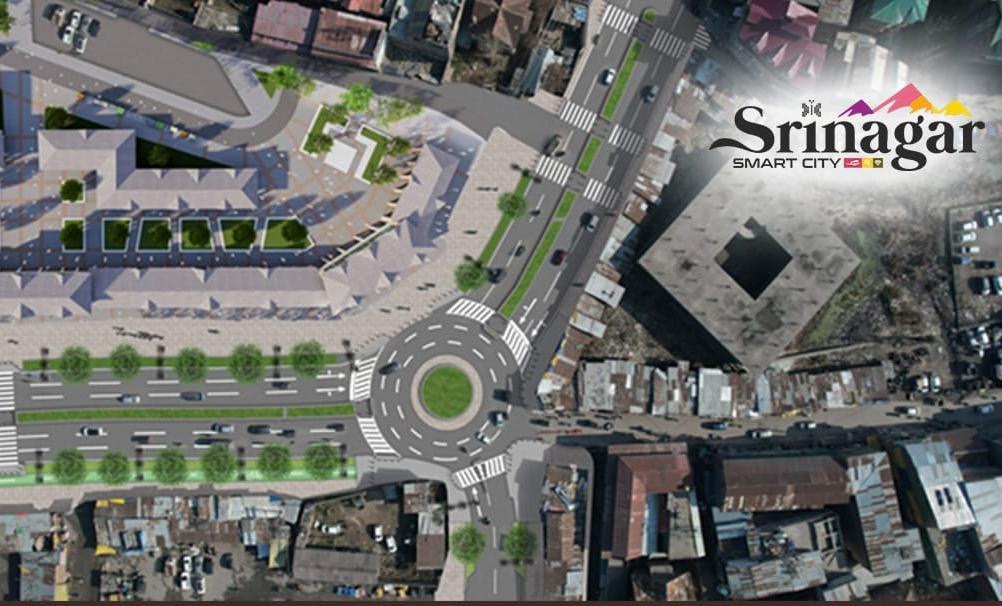
The bus-stop programme is not being treated as an isolated civil-works project. It is being pursued alongside intelligent traffic monitoring, road improvements, IT-based parking, e-bus charging infrastructure and a proposed transfer of the traffic control room to the Traffic Police.
That broader approach is significant because Srinagar’s congestion problem is not caused by a single bottleneck. It involves road capacity, parking, pedestrian movement, public transport stopping patterns, junction management and enforcement.
72 Bus Stops Put on a Tight October Deadline
The most immediate directive from the September 19 meeting concerns 72 bus stops under SSCL’s Module-A.
SSCL has been given until October 31 to complete the work. The relatively short deadline puts the focus on execution, inter-agency coordination and removal of bottlenecks that could slow construction.
The administration has not publicly indicated in the meeting report how many of the 72 stops are already complete or at what percentage of physical progress the project currently stands. Therefore, the October 31 deadline should be understood as a target for completion rather than evidence that all 72 locations are presently at an advanced construction stage.
For commuters, the importance of designated bus stops goes beyond providing a shelter.
A properly planned stop can establish a predictable location for passengers to board and leave buses, reduce random roadside halts and make traffic movement easier around busy corridors.
It can also make public transport more accessible for elderly passengers, children and people with disabilities when appropriate pedestrian access and boarding arrangements are incorporated.
Why Bus Stops Matter to Srinagar’s Traffic Problem
Srinagar has been expanding its organised public transport network in recent years.
The city introduced a fleet of 100 electric buses in 2023, with the buses operating on designated intra-city and inter-city routes. The J&K Housing and Urban Development Department reported that the e-bus system was designed around 133 bus stops and included accessibility features such as foldable mechanical ramps.
That means the quality and location of bus-stop infrastructure becomes increasingly important as organised bus services expand.
A bus may be modern and environmentally cleaner, but if passengers board wherever they find space, or buses stop unpredictably because designated facilities are inadequate, some of the potential traffic-management benefits can be lost.
The new 72-stop target therefore fits into a larger effort to make the public transport network more structured.
ITMS Cameras to Expand to 10 More Junctions
The September 19 meeting also reviewed the proposed installation of Intelligent Traffic Management System (ITMS) cameras at 10 additional junctions.
ITMS infrastructure can help authorities monitor traffic conditions and identify congestion points in real time. But technology alone does not automatically solve traffic problems.
Its effectiveness depends on whether traffic personnel can act on the information being generated, whether violations are addressed consistently and whether junction design itself supports smoother movement.
The administration also directed SSCL and the Traffic Police to implement stop-line interventions at identified junctions within 10 days.
Freshly painted stop lines and zebra crossings may appear like relatively small interventions, but they can influence pedestrian safety and vehicle positioning at intersections, particularly where lane discipline has weakened.
Traffic Control Room to Be Handed Over to Traffic Police
Another important decision concerns the traffic control room.
The Divisional Commissioner directed SSCL to hand over the control room to the Traffic Police, with the stated objective of strengthening deployment of traffic personnel and improving monitoring of the traffic system.
The move points toward a closer connection between technology and field-level enforcement.
A control room can generate surveillance information, but congestion management ultimately requires decisions on the ground. Traffic diversions, enforcement, response to breakdowns, management of junctions and handling of peak-hour pressure all require operational coordination.
The handover could therefore become an important test of whether Srinagar’s smart-city technology translates into faster and more practical traffic management.
Batamaloo E-Bus Charging Station Gets 10-Day Deadline
The administration has also set a separate deadline for electric-bus infrastructure.
The Batamaloo e-bus charging station has been directed to become operational within 10 days of the September 19 meeting. The status of another charging facility at Zoonimar was also reviewed during the meeting.
This is relevant to the city’s wider shift toward electric public transport.
Charging infrastructure is a basic requirement for maintaining reliable e-bus operations. As the number of electric buses and associated services grows, charging facilities have to be operational, strategically located and capable of supporting scheduled services without creating operational gaps.
Earlier SSCL tenders also show that the city’s electric-bus programme is continuing to expand, including infrastructure planned for additional e-bus capacity under the PM e-Bus Sewa programme.
IT-Based Parking Also Part of the Plan
Parking management was another component reviewed during the meeting.
The administration examined the implementation of an IT-based parking system, alongside ITMS cameras and other traffic interventions.
This matters because congestion in Srinagar is often closely linked with the use of road space for parking, loading and stopping.
A digital parking system can potentially make available parking easier to identify and improve management of designated spaces. However, its real effect will depend on coverage, enforcement, pricing or access rules where applicable, and whether drivers actually shift away from informal roadside parking.
The combination of parking management and designated bus stops is particularly important. Public transport can move more efficiently only when bus corridors and stopping areas are protected from competing roadside uses.
Road Projects Being Reviewed Alongside Smart-City Works
The September 19 meeting was broader than SSCL projects.
Officials reviewed several road and connectivity proposals, including:
- Natipora-Chanapora road development
- T-junction development at Natipora crossing
- Shalteng-Parimpora flyover
- Footbridge near the Pediatric Hospital in Bemina
- Nowgam underpass
- Shopping complex development at Noorbagh
- Road development along the Doodhganga riverbank from Barzulla to Sanat Nagar
The administration also directed the Roads and Buildings Department and Irrigation and Flood Control Department to conduct a joint inspection for development of Lasjan Bund Road.
Taken together, these projects indicate that traffic management is being approached through multiple interventions rather than relying exclusively on surveillance technology.
The Real Test Will Be Beyond Construction
Completing 72 bus stops by October 31 will be a measurable achievement, but construction alone will not determine whether the intervention improves Srinagar’s traffic.
The next challenge will be how the stops are used.
Bus operators will need to follow designated stopping points. Passengers will need to use the new facilities. Traffic police will have to discourage stopping outside designated areas where that creates obstruction. Pedestrian approaches to the stops will also need to remain usable.
This is where infrastructure and enforcement become inseparable.
A modern bus shelter placed beside a congested road cannot deliver its intended benefit if buses continue to stop randomly or if parked vehicles occupy the approach lane.
Autumn Weather Could Add Execution Pressure
The October 31 target also comes with a practical construction challenge.
Srinagar’s autumn transition brings changing weather conditions, and civil works can face disruptions from rain, reduced working windows and site-level coordination issues.
The administration’s decision to set a firm deadline suggests that departments are expected to identify such obstacles early rather than allow them to accumulate toward the end of the project period.
Previous directions concerning bus-stop development have also highlighted the need to consider Srinagar’s winter conditions, particularly for closed bus-stop facilities.
That consideration is particularly relevant for a city where public transport users face cold, rain and snow during the winter months.
From Smart Infrastructure to Everyday Mobility
Srinagar’s smart-city transition is increasingly moving into the everyday experience of commuters.
For a passenger, the success of the programme will not be measured primarily by the number of cameras installed or the number of projects sanctioned.
It will be measured by simpler questions:
Can I find a bus stop easily? Can the bus reach it without getting trapped in traffic? Can I cross the road safely? Is parking managed? Does the bus run reliably? Can traffic police respond quickly when congestion builds?
The 72 bus stops, 10 additional ITMS junctions, upgraded crossings, IT-based parking, e-bus charging infrastructure and traffic-control-room integration are intended to address different parts of that same urban mobility chain.
The October 31 deadline now puts the immediate focus on SSCL’s ability to deliver the bus-stop component on time.
If completed as scheduled and supported by effective enforcement and maintenance, the facilities could provide a more predictable framework for Srinagar’s growing public transport network. The larger outcome, however, will depend on how successfully the infrastructure is integrated into daily traffic management across the city.
Quick Snapshot
| Initiative | Deadline / Status | Expected Role |
|---|---|---|
| 72 SSCL bus stops, Module-A | October 31, 2026 | More organised public transport |
| Batamaloo e-bus charging station | Within 10 days | Support electric-bus operations |
| 10 additional ITMS junctions | Implementation planned | Traffic monitoring |
| Stop lines and zebra crossings | Within 10 days | Junction discipline and pedestrian safety |
| Traffic control room | Handover directed | Stronger Traffic Police monitoring |
| IT-based parking system | Under implementation/review | Better parking management |
| Lasjan Bund Road | Joint inspection ordered | Connectivity assessment |
The Bottom Line
Srinagar’s latest traffic-management push is notable because it links public transport infrastructure with surveillance, parking management, road connectivity and enforcement.
The 72 bus stops are the most visible near-term target. The October 31 deadline gives SSCL a clear delivery benchmark, but the more consequential question will be whether the new infrastructure changes commuter behaviour and bus operations on the ground.
For Srinagar, the objective is not simply to build more urban infrastructure. It is to make the city’s transport system more predictable, accessible and manageable for the people who use it every day.
SEO Package
SEO Title:
Meta Description:
Focus Keywords:
Slug:
Tags: