Omar Abdullah Warns Ladakh: Seek Written Assurances, Not Verbal Promises From Centre
By: News Desk | 16 September 2026
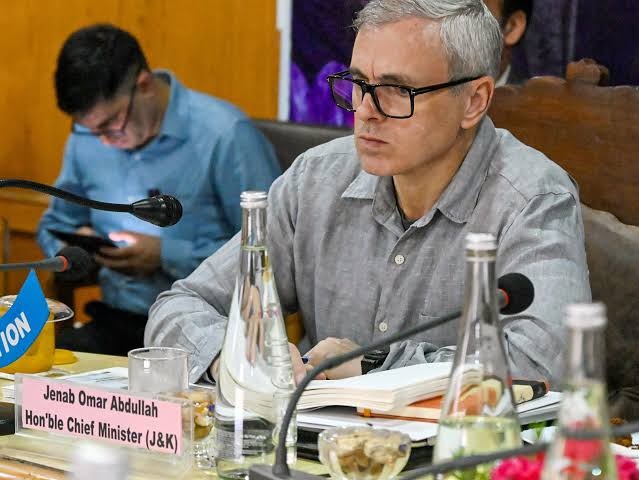
Srinagar: Jammu and Kashmir Chief Minister Omar Abdullah has delivered a pointed message to Ladakh’s political leadership at a moment when Leh and Kargil are once again negotiating with New Delhi over the region’s constitutional and political future: do not rely on verbal assurances from the Centre. Get them in writing, and get them signed.
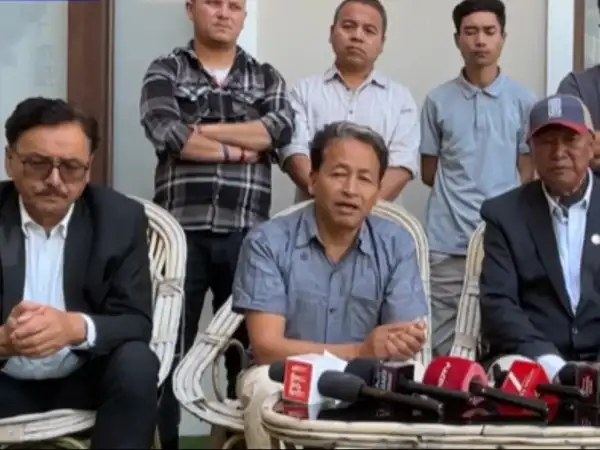
Speaking to reporters in Pulwama on September 16, Omar said Ladakh had its own political demands and that J&K’s issues were separate, but offered his advice as a “friend and elder brother”. His warning came as representatives of the Ladakh Apex Body and Kargil Democratic Alliance continue discussions with the Ministry of Home Affairs over constitutional safeguards covering land, jobs, political representation and governance.
Omar’s intervention is significant because he is not speaking about Ladakh’s demands as an outsider to the broader dispute over New Delhi’s assurances. He is using Jammu and Kashmir’s unresolved statehood question as the example.
According to Omar, J&K too was told that statehood would return after elections. Nearly two years after the 2024 Assembly election, he argues, that promise remains unfulfilled.
The statement has therefore opened another front in an already complicated political conversation: what counts as a meaningful political assurance when there is no legally binding document, legislative guarantee or clear implementation mechanism behind it?
Omar’s warning comes as Ladakh’s talks reach a sensitive stage
The timing of Omar’s remarks is crucial.
Ladakh’s political groups have spent years demanding stronger constitutional protection after the former state of Jammu and Kashmir was reorganised in 2019 and Ladakh became a Union Territory without a legislature.
The major concerns have centred on protection of land, employment opportunities for locals, cultural identity, political representation and environmental interests.
The current negotiations have moved beyond the earlier demand for inclusion under the Sixth Schedule alone.
Recent discussions have reportedly examined the possibility of a special constitutional provision, including a proposed Article 371(K), along with a new elected Union Territory-level governance body possessing executive and financial powers. The precise structure, powers, composition and relationship with the existing Hill Councils remain under discussion.
That is where the difference between a political assurance and an enforceable arrangement becomes important.
A statement made at a meeting can signal intent.
A signed agreement can establish a record.
A constitutional amendment or legislation can create an institutional framework.
And an implemented law can ultimately determine what powers people actually possess.
Ladakh’s political leadership is now seeking to move the discussion further along that chain.
Why Omar is invoking J&K’s statehood experience
Omar’s argument rests largely on the history of the statehood commitment.
After the 2019 reorganisation, senior Union government leaders repeatedly said Jammu and Kashmir’s statehood would eventually be restored.
In September 2019, then Union Home Minister Amit Shah said statehood would be returned “as soon as possible” once circumstances permitted. In March 2020, Shah again said the government would work to realise the hopes of statehood at an early opportunity. In July 2021, the Ministry of Home Affairs told Parliament that statehood would be granted at an “appropriate time” after normalcy was restored.
The language matters.
These were assurances of eventual restoration, but they did not establish a publicly announced fixed deadline.
That distinction has become central to the political dispute.
After the 2024 Assembly elections, the issue acquired another dimension because Jammu and Kashmir once again had an elected government. The Omar Abdullah Cabinet subsequently passed a resolution requesting restoration of statehood.
The Supreme Court’s December 2023 judgment had also recorded the Union’s submission that statehood would be restored, while directing that elections to the Assembly be held by September 2024. A later Supreme Court order in October 2025 recorded the Union government’s position that the Assembly election had taken place and an elected government was functioning.
But there was still no judicially fixed date for restoration.
That gap between assurance and implementation is precisely what Omar is now placing before Ladakh’s leaders.
The Ladakh dispute is about more than statehood
There is another important distinction.
Ladakh’s current negotiations are not simply a demand for statehood.
The principal political groups have sought constitutional safeguards for local land and employment, stronger political representation and protection of the region’s cultural and ecological interests. Some have demanded Sixth Schedule status, while the Centre’s current discussions have explored alternative institutional arrangements.
The September 9 MHA meeting illustrates how complicated the question has become.
According to the Ladakh administration, the meeting discussed the framework for constitutional and legislative safeguards and included representatives of the Apex bodies and the Kargil Democratic Alliance. The administration subsequently described the dialogue as constructive.
But representatives of the Ladakh groups gave a more cautious account.
Reports following the meeting said they were disappointed that the expected draft of the proposed elected UT-level body was not presented. Sonam Wangchuk said there had been no significant progress, while the administration maintained that discussions had been positive and that broad contours of a possible governance model had been examined.
That difference in interpretation explains why Omar’s call for written commitments has landed at a particularly sensitive moment.
What would a “written guarantee” actually mean?
This is where the political debate needs some precision.
Not every written assurance has the same legal force.
A letter from a ministry, minutes of a meeting, a Cabinet decision, an executive order, an affidavit, legislation and a constitutional amendment all carry different legal and institutional consequences.
Omar himself reportedly suggested that Ladakh’s leaders should seek a formal written commitment, even referring to an affidavit as an example.
For Ladakh’s leadership, however, the larger question is likely to be what exactly is written down.
If the objective is protection of land, the mechanism needs to specify who controls land policy and which categories of land are protected.
If the objective is local employment protection, the eligibility rules and enforcement mechanism need to be clear.
If political representation is the concern, the powers, tenure, electoral method and relationship with the existing Hill Councils would need to be defined.
And if a new UT-level institution is created, the division of legislative, executive and financial authority would need to be explicit.
In other words, the argument is not simply about obtaining a piece of paper. It is about obtaining a document that contains enforceable commitments.
J&K’s experience remains politically contested
Omar’s historical argument, however, should not be read as an uncontested account of every constitutional development in J&K.
The history of the region’s autonomy is considerably more complicated.
The 1952 Delhi Agreement was followed by successive constitutional and political changes. The 1975 Indira-Sheikh Accord brought Sheikh Abdullah back as Chief Minister, while differences over the extent of autonomy continued.
The 2015 PDP-BJP Agenda of Alliance similarly reflected competing political positions. The document became the governing framework for the coalition and contained language around the existing constitutional position, including Article 370, while also acknowledging the parties’ different ideological positions.
The coalition eventually collapsed in 2018.
A year later, Article 370 was effectively removed through the constitutional changes upheld by the Supreme Court in 2023, and the Jammu and Kashmir Reorganisation Act divided the former state into the Union Territories of Jammu and Kashmir and Ladakh.
For the NC, this sequence reinforces the argument that political commitments require institutional protection.
For the BJP-led Centre, the same period is presented through a different narrative, centred on constitutional integration, security, development and the expansion of central laws and institutions in J&K.
Those competing interpretations remain at the heart of the region’s politics.
The 2019 statehood assurance is the clearest current example
Among the historical examples, the post-2019 statehood commitment is particularly relevant to Omar’s present argument because it remains an active political issue.
The Centre’s position has consistently been that statehood would return at an appropriate time.
That is different from saying that restoration was guaranteed by a specific date.
Omar’s political argument is that the absence of a deadline demonstrates why Ladakh should insist on something more concrete.
The Centre, meanwhile, has not formally abandoned the stated position that J&K statehood will be restored. Government representatives have continued to repeat that position.
The dispute is therefore less about whether the word “statehood” has disappeared from the government’s vocabulary and more about when and under what conditions the commitment will become reality.
Ladakh now faces its own test of political trust
For Ladakh’s leaders, the warning from Omar comes with an obvious political calculation.
The region has already experienced prolonged mobilisation.
Leh and Kargil groups have repeatedly pressed New Delhi for safeguards, while the Centre has established dialogue mechanisms to discuss those demands.
The latest negotiations could eventually produce a new institutional framework. But until the proposal is formally drafted, agreed upon and implemented, uncertainty will remain.
The Ladakh administration has publicly described the current dialogue as part of an ongoing process rather than a concluded settlement. The MHA has also sought detailed inputs on the structure of a proposed governance body, including its relationship with the existing district councils.
That means the final shape of the arrangement is not yet settled.
Why the “trust deficit” matters
Political negotiations depend not only on the substance of an agreement but also on whether the parties believe the agreement will survive changes in political circumstances.
This is particularly important in J&K and Ladakh because both regions have experienced major constitutional and administrative changes within a relatively short period.
For Ladakh, the transition from being part of the former state to becoming a separate Union Territory fundamentally altered the political structure.
For J&K, the removal of Article 370 and the loss of statehood fundamentally changed the relationship between the elected government and the Union.
That history explains why legal wording has acquired unusual political importance.
A verbal assurance can reassure people temporarily.
A written commitment creates an official record.
A constitutional or statutory safeguard can create an institution that survives changes of government.
That progression is ultimately what Ladakh’s leadership must negotiate.
Centre faces a test beyond the negotiating table
The Centre’s challenge is not simply to persuade Ladakh’s representatives that it is willing to discuss safeguards.
It must eventually demonstrate what those safeguards will look like in practice.
The government has already moved the conversation towards an alternative constitutional and governance framework. If the proposal develops into a concrete draft, the next questions will concern its powers, legal status, implementation timetable and relationship with Ladakh’s existing institutions.
The more detailed the proposal becomes, the easier it will be for the Ladakh leadership and the public to judge it.
That could either reduce the trust deficit or deepen it.
Omar’s intervention also serves J&K politics
Omar’s statement is directed at Ladakh, but it inevitably carries a message for Jammu and Kashmir.
The National Conference has made restoration of statehood one of its principal political demands since returning to government.
By invoking the Centre’s statehood assurance, Omar is reinforcing the NC’s argument that the issue remains unresolved despite the return of an elected government.
It also allows him to connect the political experiences of J&K and Ladakh without suggesting that their demands are identical.
In fact, he explicitly acknowledged that the two regions have separate issues.
That qualification is important.
Ladakh is seeking a constitutional and governance arrangement suited to a Union Territory without a legislature. J&K is seeking restoration of statehood after having held state status for decades.
The political histories overlap, but the institutional demands are not the same.
A new phase in the J&K-Ladakh debate
Omar Abdullah’s warning has arrived at a moment when the old politics of broad promises is giving way to a more technical debate over constitutional design.
For Ladakh, the immediate question is no longer simply whether New Delhi recognises its concerns.
It is what New Delhi is prepared to put on paper.
What powers will a new elected UT-level body have?
How will those powers interact with the Leh and Kargil Hill Councils?
What protections will exist for land and employment?
Will those safeguards be executive, legislative or constitutional?
And what mechanism will ensure that they cannot be diluted without another formal process?
Those questions will matter far more than political speeches once the negotiations enter their next stage.
Omar Abdullah’s message is therefore likely to resonate beyond the immediate exchange between Srinagar and Leh.
His warning is built around a simple political lesson drawn from J&K’s own unresolved statehood debate: when the issue concerns the constitutional future of a region, an assurance carries much greater weight when it is formally recorded, legally defined and capable of being enforced.
For Ladakh’s leadership, the challenge now is to convert negotiations into precisely that kind of commitment.
For New Delhi, the test is whether it can turn its assurances on safeguards into a framework sufficiently clear to withstand political scrutiny.
And for J&K, the unresolved statehood question remains a reminder that a promise to restore an old constitutional status is politically different from actually restoring it.
That gap between promise and implementation is where the region’s trust deficit continues to live.