NGT Seeks Status Report on Achan Landfill Legacy Waste as Srinagar Faces Mounting Environmental Crisis
By: News Desk | 28 July 2026
NGT Tightens Oversight as Srinagar’s Achan Landfill Faces Fresh Environmental Scrutiny
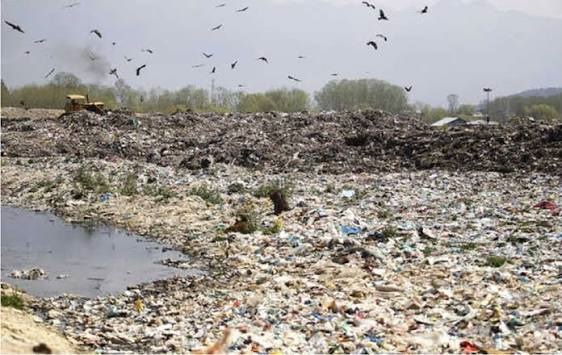
More than three decades after it began receiving municipal waste, Srinagar’s Achan landfill has once again come under judicial scrutiny. The National Green Tribunal (NGT) has directed the Jammu & Kashmir administration to submit a comprehensive status report on the handling of legacy waste at the landfill, signalling growing concern over delays in waste remediation and the continuing environmental damage caused by one of Kashmir’s largest dumping sites.
The Tribunal has sought detailed information on the progress of biomining, treatment of toxic leachate, environmental safeguards, and compliance with the Solid Waste Management Rules, 2016. The directive reflects increasing judicial pressure on authorities to address a problem that has affected nearby communities, polluted water bodies, and raised questions about Srinagar’s long-term environmental sustainability.
With nearly 11.5 lakh tonnes of accumulated legacy waste and around 550 tonnes of fresh municipal waste generated every day, the Achan landfill has become one of the region’s most pressing environmental challenges.
Why the Achan Landfill Has Become a National Environmental Concern
Established in 1986, the Achan landfill was originally intended to serve as Srinagar’s primary waste disposal facility. Spread across approximately 123 acres, the site has received municipal solid waste for decades with limited scientific processing during much of its operational life.
As Srinagar’s population expanded and tourism increased, waste generation rose sharply. However, infrastructure for waste segregation, recycling and scientific disposal failed to keep pace. The result has been the accumulation of an enormous mountain of untreated waste that continues to emit harmful gases, generate toxic leachate and pose serious health risks.
Environmental experts have repeatedly warned that the landfill no longer functions merely as a dumping ground—it has evolved into a significant source of pollution affecting air, soil and water resources.
What the National Green Tribunal Has Asked For
The NGT has instructed the Jammu & Kashmir administration to provide a detailed compliance report covering several critical aspects of waste management.
The Tribunal has sought updates on:
- Progress achieved under the biomining project.
- Quantity of legacy waste processed so far.
- Current status of leachate collection and treatment.
- Measures taken to prevent contamination of nearby water bodies.
- Compliance with the Solid Waste Management Rules, 2016.
- Timelines for completing remediation of the landfill.
- Steps taken to minimise environmental and public health impacts.
The order indicates that the Tribunal wants measurable progress rather than broad policy commitments. Failure to demonstrate compliance could expose authorities to further judicial action, including environmental compensation or stricter monitoring.
The Growing Threat of Legacy Waste
Legacy waste refers to decades-old municipal garbage that remains untreated and continues to degrade over time.
Unlike freshly generated waste, legacy waste produces several long-term environmental hazards:
Toxic Leachate
Rainwater filtering through decomposing garbage produces contaminated liquid known as leachate. This contains organic pollutants, heavy metals, harmful bacteria and other contaminants that may seep into groundwater and nearby wetlands if not properly collected and treated.
Methane Emissions
Organic waste buried over many years generates methane, a greenhouse gas significantly more potent than carbon dioxide over a 20-year period. Poor landfill management therefore contributes not only to local pollution but also to climate change.
Air Pollution
Residents living near Achan frequently complain about foul odours, smoke from occasional fires and poor air quality. Decomposing waste releases gases including methane, hydrogen sulphide and volatile organic compounds, which can affect respiratory health.
Soil Degradation
Continuous accumulation of untreated waste reduces soil quality and complicates future land restoration efforts.
Anchar Lake Continues to Bear the Environmental Cost
Among the most serious concerns surrounding Achan landfill is its proximity to Anchar Lake, one of Kashmir’s ecologically important wetlands.
Environmental studies and official assessments over the years have highlighted concerns that untreated leachate and polluted runoff may be contributing to the deterioration of the lake’s ecosystem.
The consequences include:
- Declining water quality.
- Nutrient pollution leading to eutrophication.
- Threats to aquatic biodiversity.
- Increased weed growth.
- Reduced ecological resilience.
Groundwater contamination also remains a concern for nearby communities dependent on local water resources.
Environmentalists argue that protecting Anchar Lake requires effective landfill remediation alongside broader wetland conservation measures.
Residents Continue to Raise Public Health Concerns
People living around the landfill have repeatedly reported deteriorating living conditions.
Some of the commonly reported issues include:
- Persistent foul smell throughout the year.
- Increased incidence of respiratory discomfort.
- Eye irritation during warmer months.
- Mosquito and fly infestation.
- Poor quality of life due to continuous waste accumulation.
While establishing direct medical causation requires detailed epidemiological studies, public health experts generally acknowledge that prolonged exposure to unmanaged landfill emissions can increase environmental health risks.
Government’s Multi-Crore Waste Management Projects
To address the crisis, the Jammu & Kashmir administration has initiated major waste management projects.
₹61 Crore Biomining Project
Biomining involves scientifically excavating old waste, separating recyclable materials, recovering usable fractions and safely disposing of residual waste.
The objectives include:
- Reducing landfill height.
- Recovering recyclable materials.
- Creating additional landfill capacity.
- Restoring land for future use.
- Reducing methane emissions.
However, implementation has progressed slower than expected, prompting closer judicial monitoring.
₹361 Crore Integrated Solid Waste Management (ISWM) Project
The larger Integrated Solid Waste Management initiative aims to modernise municipal waste handling across Srinagar.
The project includes:
- Scientific waste segregation.
- Modern processing facilities.
- Improved collection systems.
- Composting infrastructure.
- Recycling facilities.
- Engineered landfill development.
- Better environmental monitoring.
Experts believe that successful implementation would significantly reduce future waste accumulation while improving overall sanitation standards.
Processing Capacity Still Falls Short
Although waste-processing infrastructure has expanded across Jammu & Kashmir, capacity gaps remain.
| Aspect | Current Status |
|---|---|
| Legacy waste at Achan | Approximately 11.5 lakh tonnes |
| Daily waste generated in Srinagar | Around 550 tonnes |
| Waste processing capacity across J&K | Approximately 1,027 tonnes per day |
| Major concern | Legacy waste backlog and processing delays |
| NGT directive | Detailed compliance and progress report |
The challenge lies not only in processing newly generated waste but also in eliminating decades of accumulated garbage.
Past Challenges That Slowed Progress
Previous efforts to improve waste management have encountered several obstacles.
These include:
Poor Waste Segregation
Mixed municipal waste entering the landfill has made recycling and scientific processing considerably more difficult.
Non-Functional Infrastructure
Reports have highlighted instances where waste segregators and leachate treatment systems either remained underutilised or became non-operational.
Rapid Urban Expansion
Srinagar’s growing population and increasing tourist footfall have significantly increased municipal waste generation.
Administrative Delays
Large infrastructure projects have experienced procedural and implementation delays, affecting remediation timelines.
Environmental Impact Beyond the Landfill
The Achan landfill represents a broader challenge facing rapidly urbanising Himalayan cities.
Environmental consequences extend beyond waste accumulation and include:
- Increased greenhouse gas emissions.
- Wetland degradation.
- Reduced biodiversity.
- Greater pressure on urban ecosystems.
- Declining environmental resilience.
Experts note that scientific waste management has become essential for protecting Kashmir’s fragile ecological landscape.
Tourism and Srinagar’s Green Image at Stake
Srinagar’s economy depends heavily on tourism. The city is internationally recognised for Dal Lake, Mughal gardens, houseboats and its scenic Himalayan landscape.
However, environmental degradation associated with unmanaged waste threatens that reputation.
Urban planners caution that if waste management problems persist, they could undermine Srinagar’s branding as a clean and sustainable tourist destination. Addressing landfill pollution is therefore viewed as both an environmental necessity and an economic priority.
What Happens Next?
The NGT’s latest directive places renewed accountability on the Jammu & Kashmir administration.
The forthcoming status report is expected to clarify:
- The actual pace of biomining.
- Progress in removing legacy waste.
- Effectiveness of pollution-control measures.
- Compliance with environmental regulations.
- Realistic timelines for completing remediation.
If implementation accelerates, officials aim to substantially remediate the landfill under ongoing waste-management initiatives, with longer-term plans envisioning ecological restoration of the site. However, achieving such outcomes will depend on sustained funding, transparent execution, continuous environmental monitoring and strict adherence to statutory waste-management standards.
The Bottom Line
The Achan landfill has evolved from a municipal dumping ground into one of Jammu & Kashmir’s most significant environmental challenges. With millions of tonnes of untreated waste, continued risks to Anchar Lake, and concerns over air and groundwater pollution, the issue has moved beyond urban sanitation to become a matter of environmental governance and public health.
The National Green Tribunal’s demand for a detailed compliance report sends a clear message that incremental progress is no longer sufficient. Scientific waste management, timely biomining, effective leachate treatment and transparent implementation of the Integrated Solid Waste Management project will determine whether Srinagar can reverse decades of environmental degradation and protect both its residents and its globally recognised natural heritage.