Mehbooba Mufti Apologises Over Kashmir Protest Remarks After Backlash | PDP Chief Faces Political Heat
By: Javid Amin | 28 July 2026
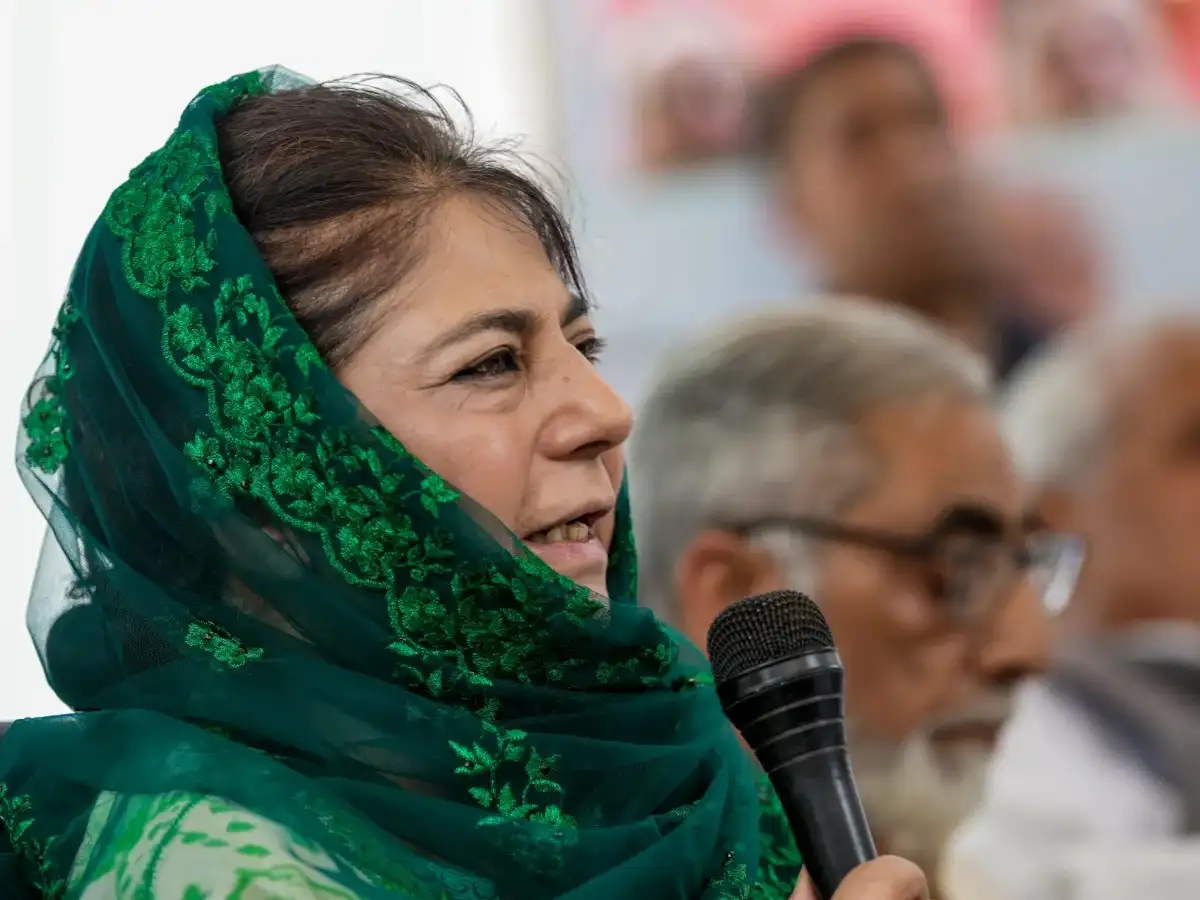
Former Jammu and Kashmir Chief Minister and Peoples Democratic Party (PDP) president Mehbooba Mufti has issued a public apology after facing intense criticism over remarks that appeared to justify the use of force against protesters in Kashmir.
The controversy erupted following her speech at Jantar Mantar in New Delhi, where she condemned police action against protesters in the national capital but drew a comparison with Kashmir, saying that the use of force there was linked to militancy. The statement quickly triggered a political backlash across Jammu and Kashmir, with rivals accusing her of contradicting her long-standing stand on human rights.
As criticism intensified, Mufti clarified that her comments were incomplete and had been misunderstood. She said she never intended to justify violence against civilians and expressed regret if her words had hurt the people of Jammu and Kashmir.
What Triggered the Controversy?
The political storm began after a video clip from Mufti’s address at Jantar Mantar circulated widely on social media.
While criticising the handling of protesters in Delhi, she remarked that similar actions had taken place in Kashmir because security forces were dealing with militancy. Critics interpreted her words as an endorsement of the use of force, including pellet guns and crowd-control measures that have remained among the most sensitive issues in the Valley.
The comments surprised many observers because the PDP has repeatedly criticised alleged human rights violations in Jammu and Kashmir over the past several years. Political opponents argued that her statement contradicted the party’s earlier position.
Mehbooba Mufti’s Clarification and Public Apology
Responding to the controversy, Mehbooba Mufti acknowledged that her statement had caused confusion.
Addressing the media in Srinagar, she said the video circulating online was genuine but insisted she had intended to say that militancy often becomes an excuse (“bahana”) for the use of force, not that such force was justified. According to Mufti, in the rush of speaking she omitted that crucial word, making her statement appear very different from what she intended.
She apologised to anyone who felt hurt by her remarks and described the episode as a “slip of the tongue.”
Opposition Parties Mount Pressure
The controversy quickly became a major political issue in Jammu and Kashmir.
The ruling National Conference (NC) demanded an unconditional apology, arguing that Mufti’s remarks appeared to legitimise excessive force against Kashmiri protesters.
Chief Minister Omar Abdullah publicly questioned why the PDP chief had not apologised sooner and said her remarks were deeply insensitive, particularly given the lasting impact of pellet injuries in the Valley.
The Awami Ittehad Party (AIP) also criticised the comments, while several civil society voices accused Mufti of adopting different standards when discussing protests inside and outside Kashmir.
Human Rights Debate Returns to Centre Stage
The episode has once again brought the issue of human rights in Jammu and Kashmir into political focus.
For years, the use of pellet guns, crowd-control measures and security operations has remained one of the most contentious aspects of governance in the Union Territory. Successive governments, political parties and human rights organisations have debated the balance between maintaining security and protecting civilian rights.
Because of this background, even a brief remark from a senior political leader can generate intense public scrutiny.
Analysts say the controversy demonstrates how carefully political leaders must frame their statements on Kashmir, where questions relating to security, militancy and civil liberties remain highly sensitive.
Political Damage Control Ahead of Key Mobilisation
Mufti’s apology also comes at a politically significant moment.
The PDP has announced plans for protests marking the anniversary of the abrogation of Article 370 and Article 35A, seeking restoration of Jammu and Kashmir’s constitutional rights.
By apologising before those demonstrations, the party appears to be attempting to shift attention back to its broader political agenda and avoid allowing the controversy to overshadow its campaign.
Mixed Public Reaction
Public reaction remains divided.
Some PDP supporters have accepted Mufti’s explanation that the statement was incomplete and taken out of context.
Others argue that politicians, particularly former chief ministers, are expected to communicate with greater precision on issues involving human rights and security.
Critics continue to question why the clarification came only after sustained political pressure, while supporters believe the controversy has been amplified by political rivals.
The debate has therefore shifted from the original statement to broader questions of political accountability and credibility.
Political Implications
| Issue | Current Situation | Likely Impact |
|---|---|---|
| Political credibility | Public apology issued | Damage control but questions remain |
| Opposition pressure | NC and AIP continue criticism | Political rivalry likely to continue |
| Human rights debate | Returned to public discussion | May influence future political discourse |
| PDP positioning | Attempting to refocus on constitutional issues | Could help consolidate core supporters |
Challenges Ahead for the PDP
Although the apology may have reduced immediate political pressure, the controversy is unlikely to disappear quickly.
Several challenges remain:
- Credibility: Critics may continue citing the remarks during future political campaigns.
- Opposition attacks: Rival parties are expected to use the episode to question the PDP’s consistency on human rights.
- Public perception: Whether voters accept Mufti’s explanation could influence her political standing ahead of future electoral contests.
- Narrative control: The PDP will likely seek to redirect attention toward issues such as constitutional rights, governance and democratic representation.
Political Analysis
The controversy highlights the increasingly competitive political landscape in Jammu and Kashmir, where every public statement by senior leaders is closely examined.
For Mehbooba Mufti, the apology represents an effort to contain political fallout while reaffirming the PDP’s long-standing position on civil liberties and constitutional rights.
Whether the clarification succeeds in restoring public confidence remains uncertain. While some supporters view the episode as an honest verbal mistake, opponents argue it has exposed contradictions in the party’s messaging.
What is clear, however, is that debates over human rights, policing, militancy and democratic accountability continue to occupy a central place in Kashmir’s political discourse, ensuring that such controversies are unlikely to fade quickly.