Congress Opposes MP Waqf Board Reorganisation, Plans Supreme Court Challenge Over Hindu Members
By: News Desk | 07 July 2026
Congress Opposes Madhya Pradesh Waqf Board Reorganisation, Announces Supreme Court Challenge
A fresh political and legal controversy has emerged in Madhya Pradesh after the reorganisation of the state’s Waqf Board reportedly included Hindu members in its composition. The Congress has strongly objected to the move, arguing that it is inconsistent with the purpose and framework of the Waqf law and has announced that it will approach the Supreme Court.
The development has intensified the debate over the governance of religious institutions, minority rights and the scope of reforms in Waqf administration. It also comes against the backdrop of ongoing litigation concerning changes to the Waqf framework before the Supreme Court of India.
Congress Calls the Move Contrary to the Spirit of the Waqf Law
Congress leaders have argued that a Waqf Board is a statutory body established to administer Muslim charitable and religious endowments, commonly known as Waqf properties.
According to the party, altering the composition of the Board by including non-Muslim members changes the character of an institution created specifically to oversee Islamic religious endowments.
The Congress maintains that any such restructuring should await judicial clarity, particularly when related issues are already under consideration by the Supreme Court.
Arif Masood Questions Timing of the Reorganisation
Congress MLA Arif Masood has criticised the decision, stating that the matter is already pending before the Supreme Court.
He argued that implementing structural changes while legal proceedings are underway could complicate the judicial process and create uncertainty over the Board’s future composition.
According to the Congress, it will seek judicial intervention to challenge the validity of the reorganisation.
Understanding the Legal Debate
What Is a Waqf Board?
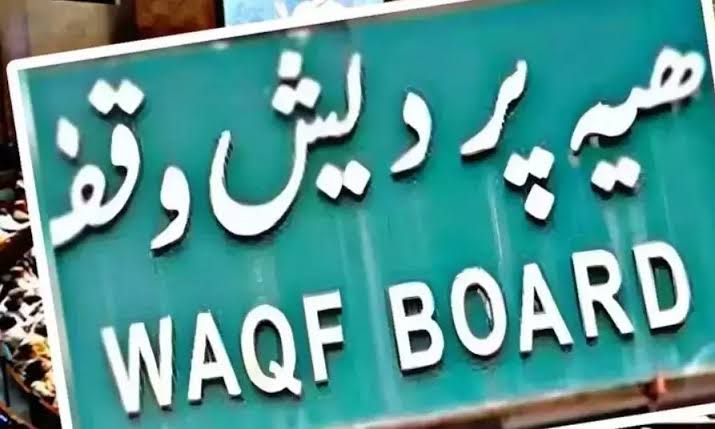
A Waqf Board is a statutory body constituted under the Waqf Act to supervise and manage Waqf properties.
These properties are permanently dedicated for religious, charitable or educational purposes under Islamic law. State Waqf Boards are responsible for:
- Managing Waqf assets.
- Protecting encroachments on Waqf land.
- Supervising religious and charitable institutions.
- Ensuring that Waqf income is used for its intended purposes.
The composition and functioning of these Boards are governed by statutory provisions, making any change in membership a matter of legal interpretation.
Why the Matter Could Reach the Supreme Court Again
Congress argues that because broader issues relating to the Waqf legal framework are already pending before the Supreme Court, fresh administrative decisions affecting Waqf Boards should be examined judicially.
If a petition is filed, the Court may be asked to determine:
- Whether the reorganisation complies with the applicable law.
- Whether the revised composition is consistent with legislative intent.
- Whether interim relief is warranted while related cases remain pending.
At this stage, the outcome of any potential legal challenge remains uncertain.
Government’s Position and the Debate on Inclusivity
Supporters of the reorganisation have argued that broader representation could improve transparency and administrative accountability in Waqf institutions.
Critics, however, contend that because Waqf Boards administer Muslim religious endowments, their composition should preserve the institution’s religious character as envisaged under the law.
The disagreement reflects two competing perspectives:
- Supporters emphasise administrative reform, transparency and inclusivity.
- Opponents argue that religious institutions must retain autonomy consistent with the governing legislation.
Whether the current reorganisation aligns with the legal framework will ultimately depend on judicial interpretation.
Political Fallout Intensifies in Madhya Pradesh
The issue has quickly acquired political significance in Madhya Pradesh.
Congress has positioned itself as defending the autonomy of minority institutions and constitutional safeguards relating to religious endowments.
The ruling establishment, meanwhile, has faced criticism from opposition parties, which allege that the move politicises religious institutions.
The controversy is expected to remain a prominent political issue as legal proceedings develop.
Community Response
The reported reorganisation has generated differing reactions among stakeholders.
Some Muslim organisations have expressed concern that changes to the Board’s composition could affect institutional autonomy and confidence in Waqf administration.
Others supporting the government’s approach argue that broader oversight may strengthen governance and improve public accountability.
The debate therefore extends beyond politics into broader questions about the administration of religious institutions and the balance between reform and autonomy.
MP Waqf Board Controversy: At a Glance
| Aspect | Details | Possible Impact |
|---|---|---|
| Legal Position | Issues relating to Waqf reforms are before the Supreme Court | Judicial scrutiny likely |
| Congress Stand | Opposes inclusion of Hindu members | Plans legal challenge |
| Key Concern | Composition of the Waqf Board | Debate over statutory interpretation |
| Community Response | Mixed reactions | Public and political debate |
| Political Impact | Government–Opposition confrontation | Minority rights discourse intensifies |
What Happens Next?
The controversy is now likely to shift from the political arena to the courtroom. If Congress files a fresh petition, the Supreme Court may be asked to examine whether the reorganisation complies with the applicable provisions governing State Waqf Boards and whether it should remain in effect while related legal issues are pending.
Until then, the debate is expected to continue over the balance between administrative reform, statutory interpretation and the autonomy of religious institutions. Any final resolution will depend on judicial findings rather than political claims alone.