Delhi Building Collapse Near Saket Metro Station: One Dead, Several Injured as Rescue Teams Race Against Time
By: Javid Amin | 31 May 2026
Tragedy in Saidulajab Raises Fresh Questions Over Illegal Construction and Urban Safety in Delhi
A late-night building collapse in South Delhi’s Saidulajab area near Saket Metro Station has left one person dead and at least eight others injured, triggering a massive rescue operation and reigniting concerns over illegal construction and structural safety in the national capital.
The four-storey building, located on Western Marg in the densely populated Saidulajab locality, came crashing down on Saturday night, trapping several occupants beneath the rubble. The structure reportedly housed a mix of paying guest (PG) accommodations, a mess facility, coaching classes, cafés, and office spaces.
As emergency teams worked through the night to search for survivors, anxious families gathered at the site, hoping for information about missing relatives and friends.
The incident has once again highlighted the growing risks associated with overcrowded and poorly regulated urban development in Delhi.
Chaos and Panic as Building Collapses
According to eyewitnesses, the collapse occurred suddenly, giving occupants little time to react.
Residents reported hearing a loud rumbling sound followed by screams from inside the structure. Within seconds, a massive cloud of dust engulfed the area as portions of the building crumbled into a heap of concrete, steel, and debris.
Several nearby residents rushed to the scene before emergency services arrived.
One witness described the terrifying moment:
“There was a huge cloud of dust. When it settled, we realized that not only had the building collapsed, but part of a neighboring structure had also been affected.”
The collapse sent shockwaves through the neighborhood, where many students, working professionals, and migrant residents live in rented accommodations.
One Dead, Eight Injured
Authorities confirmed that a 26-year-old man lost his life in the tragedy.
At least eight others sustained injuries and were shifted to nearby hospitals for treatment.
Officials stated that several victims suffered fractures, cuts, and crush injuries, though most are believed to be in stable condition.
The exact number of people present inside the building at the time of collapse remains under investigation.
Given the mixed commercial and residential use of the structure, authorities initially feared a higher casualty count.
Massive Rescue Operation Launched
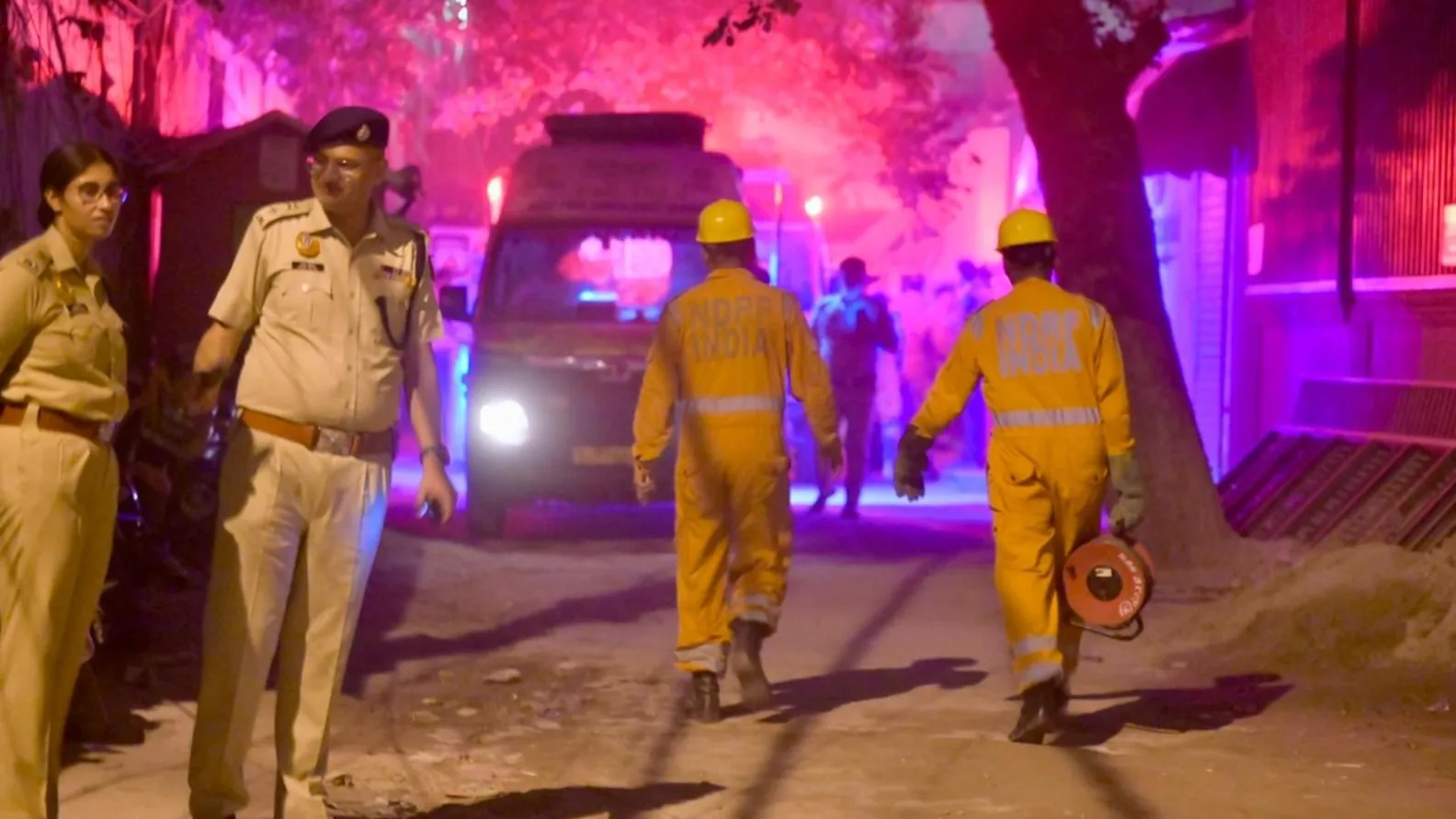
Soon after the incident, teams from the National Disaster Response Force, Delhi Fire Service, Delhi Police, and local authorities launched a coordinated rescue operation.
Rescuers used heavy machinery, hydraulic cutters, thermal detection equipment, and manual digging techniques to search for survivors trapped beneath the debris.
Officials reported that nine people were rescued alive during the operation.
Rescue efforts continued overnight as authorities attempted to rule out the possibility of additional victims being trapped.
Emergency personnel faced challenges due to:
- Narrow access roads
- Dense surrounding construction
- Unstable debris
- Risk of secondary collapse
Despite these difficulties, rescue teams continued operations under floodlights well into the early morning hours.
Families Demand Answers
As rescue operations progressed, scenes of anguish unfolded outside the collapse site.
Family members and friends of missing occupants waited anxiously for updates from authorities.
Some residents expressed frustration over what they described as poor communication and delayed information sharing.
One woman at the site reportedly told reporters:
“Local people rescued three people before officials arrived. We still don’t know where some of our relatives are.”
Others claimed that local residents and volunteers were among the first responders and played a critical role in rescuing trapped individuals before specialized teams reached the location.
The emotional scenes underscored the human cost of the tragedy and the uncertainty faced by families during large-scale rescue operations.
Illegal Construction Under Scanner
Preliminary investigations suggest that structural weaknesses may have contributed to the collapse.
Officials are examining whether:
- Unauthorized floors were added to the building
- Construction norms were violated
- Commercial activities exceeded approved usage
- Structural safety certifications were ignored
The building reportedly accommodated multiple businesses and residential occupants despite being located in a congested urban area.
Investigators are now reviewing building permissions, ownership records, and compliance documents.
Municipal authorities have ordered a formal inquiry to determine the cause of the collapse and identify any lapses in oversight.
If violations are confirmed, legal action could follow against property owners, builders, and officials responsible for approving the structure.
A Familiar Urban Challenge for Delhi
The Saidulajab tragedy is the latest in a series of building collapse incidents that have periodically exposed vulnerabilities in Delhi’s urban infrastructure.
Experts say rapid urbanization, unauthorized construction, and inadequate enforcement of safety regulations remain persistent challenges across many parts of the capital.
Several densely populated neighborhoods continue to witness:
- Vertical expansion without structural audits
- Conversion of residential buildings into commercial spaces
- Weak monitoring of safety standards
- Overloading of aging structures
Urban planners warn that mixed-use buildings accommodating students, workers, offices, and businesses face increased pressure if safety assessments are not regularly conducted.
Residents Question Regulatory Oversight
Following the collapse, local residents questioned whether authorities had adequately monitored construction activity in the area.
Many argued that visible structural concerns often go unaddressed until tragedy strikes.
Community members also criticized what they described as a reactive rather than preventive approach to urban safety.
Experts believe the incident should serve as a wake-up call for stricter inspections, digital building audits, and stronger accountability mechanisms in fast-growing urban neighborhoods.
Probe Ordered as Pressure Mounts
Authorities have ordered a detailed investigation into the collapse.
The inquiry is expected to examine:
- Structural design and engineering standards
- Municipal approvals
- Occupancy levels
- Safety compliance records
- Possible negligence by owners or contractors
The findings could influence future policy discussions on building regulation and urban safety enforcement in Delhi.
For now, the focus remains on rescue efforts, medical care for the injured, and support for affected families.
A Stark Reminder of Urban Vulnerability
The collapse of the Saidulajab building is more than an isolated accident—it reflects broader concerns about urban planning, enforcement failures, and infrastructure safety in rapidly expanding cities.
As rescue teams continue their work and investigators search for answers, grieving families and local residents are left confronting difficult questions about accountability and prevention.
For many Delhi residents, the tragedy serves as a sobering reminder that unchecked construction and weak oversight can turn ordinary buildings into deadly hazards.