Return of Memory or Return Home? Kashmiri Pandit Conclave Revives Debate on Reconciliation and Rehabilitation
By: Javid Amin | 15 June 2026
A Gathering That Carried the Weight of Decades
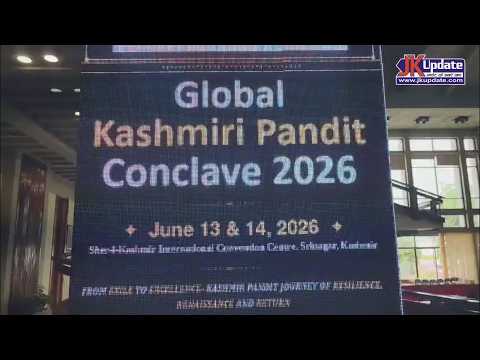
For many participants, the Global Kashmiri Pandit Conclave held in Srinagar was far more than a conference. It was an emotional journey into memory, identity, and belonging.
More than three decades after the exodus of Kashmiri Pandits from the Valley, delegates from different parts of India and abroad gathered in Kashmir to reconnect with their roots, revisit places tied to family histories, and discuss the future of a community that remains deeply connected to the Valley despite decades of displacement.
The event brought together intellectuals, policymakers, community leaders, cultural activists, and members of the global Kashmiri Pandit diaspora. Discussions focused on heritage preservation, cultural revival, youth engagement, and rebuilding connections between communities.
Yet even as the conclave celebrated reconnection, another voice emerged from within the broader Kashmiri Pandit discourse—one that questioned whether memory alone can substitute for meaningful rehabilitation.
That voice came from Panun Kashmir, one of the most prominent advocacy groups representing displaced Kashmiri Pandits.
A Homecoming of Memory
The emotional centre of the conclave lay in its symbolism.
Participants visited revered religious and cultural sites, including the historic temples of Mattan and the sacred Kheer Bhawani shrine. For many attendees, these visits represented the fulfilment of a long-held desire to reconnect with ancestral spaces that had survived in stories, photographs, and memories.
Community leaders described the gathering as an opportunity to rebuild relationships and encourage dialogue after decades of separation.
According to organizers, changing circumstances in Kashmir have opened new avenues for engagement, allowing members of the diaspora to reconnect with their homeland while contributing to cultural preservation and social dialogue.
The atmosphere throughout the event emphasized reconciliation rather than confrontation.
Delegates spoke about preserving traditions, language, literature, music, and rituals that once formed an integral part of Kashmir’s composite cultural identity.
Reconnecting with Roots Through Culture
One of the central themes of the conclave was cultural revival.
Participants discussed ways to preserve the intellectual and cultural legacy of Kashmiri Pandits for future generations, particularly among younger members of the diaspora who have never lived in the Valley.
Heritage Preservation
Scholars and researchers proposed extensive documentation projects aimed at digitally preserving:
- Historic temples
- Sacred sites
- Ancestral homes
- Community archives
- Oral histories
- Traditional manuscripts
The goal is to ensure that future generations retain access to their heritage regardless of geography.
Youth Participation
Young delegates argued that reconnecting with Kashmir should move beyond nostalgia.
Several sessions focused on:
- Heritage tourism
- Academic exchanges
- Research fellowships
- Cultural internships
- Digital storytelling projects
Participants emphasized that younger generations should become active stakeholders in preserving Kashmir’s multicultural legacy.
A Valley Seeking New Conversations
The conclave unfolded against the backdrop of a changing Kashmir.
Tourism has witnessed substantial growth in recent years, while cultural and civil society initiatives have attempted to create spaces for dialogue and community interaction.
Many attendees described a sense of cautious optimism about engaging with the Valley again.
Several speakers stressed that rebuilding trust between communities requires sustained engagement rather than symbolic gestures alone.
The idea that coexistence must be rooted in shared heritage, mutual respect, and collective memory resonated throughout the discussions.
For many participants, reconciliation was presented not as forgetting the past but as finding ways to move forward while acknowledging historical wounds.
Panun Kashmir Raises a Difficult Question: Is Culture Replacing Rehabilitation?
While the conclave generated optimism among many participants, Panun Kashmir expressed serious reservations about its priorities.
The organization argued that discussions centered primarily on cultural reconnection while insufficient attention was paid to the unresolved issue of rehabilitation.
According to Panun Kashmir, the fundamental challenge facing the displaced community remains the same: thousands of families continue to live outside the Valley without a clear pathway toward safe and dignified return.
The group questioned whether cultural events and symbolic homecomings risk diverting attention from long-standing demands related to resettlement, security, and justice.
Its intervention brought a different perspective into the debate—one grounded in the lived realities of displaced families rather than diaspora engagement alone.
Rehabilitation Remains the Core Issue
Panun Kashmir reiterated that rehabilitation must remain at the centre of all discussions concerning the future of Kashmiri Pandits.
The organization highlighted several key concerns:
Security Guarantees
Many displaced families continue to cite security concerns as a major obstacle to return.
The fear of targeted violence remains a significant factor shaping public opinion within sections of the displaced community.
Property Rights
Questions surrounding:
- Encroached properties
- Disputed ownership
- Legal restoration mechanisms
- Compensation frameworks
continue to generate concern among displaced families.
Structured Resettlement
The organization has repeatedly called for a comprehensive and clearly defined rehabilitation policy that includes security, housing, employment opportunities, and institutional support.
According to Panun Kashmir, emotional reconnection cannot substitute for practical rehabilitation measures.
Two Narratives, One Shared Pain
The debate emerging from the Srinagar conclave does not necessarily represent opposing goals.
Instead, it reflects differing priorities within the broader Kashmiri Pandit community.
| Issue | Global Conclave Perspective | Panun Kashmir Perspective |
|---|---|---|
| Primary Focus | Cultural revival and reconnecting with roots | Rehabilitation and resettlement |
| Approach | Dialogue and reconciliation | Policy action and implementation |
| Key Audience | Diaspora and civil society | Displaced families awaiting return |
| Main Objective | Heritage preservation | Safe and dignified rehabilitation |
| Tone | Optimistic and forward-looking | Urgent and rights-focused |
Both perspectives ultimately seek the preservation of Kashmiri Pandit identity and a stronger connection with Kashmir.
The difference lies in how that goal should be pursued.
The Policy Challenge Ahead
Experts argue that meaningful progress will require combining both approaches.
Cultural reconnection can help preserve identity and rebuild trust, but long-term reconciliation may depend on concrete solutions addressing rehabilitation, security, and economic opportunities.
Several proposals discussed during and around the conclave included:
Rehabilitation Frameworks
- Property restoration mechanisms
- Housing support programs
- Security assurances
- Employment opportunities
Cultural Diplomacy
- Diaspora partnerships
- Academic exchanges
- Annual cultural forums
- Community dialogue initiatives
Educational Initiatives
- Inclusion of Kashmiri Pandit history in educational materials
- Preservation of oral histories
- Cultural awareness programs
Heritage Tourism
Proposed heritage circuits connecting Srinagar, Mattan, Kheer Bhawani, and other historically significant locations could strengthen cultural engagement while supporting local economies.
Kheer Bhawani: Where Memory and Hope Met
The conclave’s closing events at the revered Kheer Bhawani shrine carried deep symbolic significance.
Participants described the gathering as a moment where memory, faith, and aspiration intersected.
The sight of Kashmiri Pandits returning to one of their most sacred sites, engaging in dialogue and reflection, became one of the defining images of the event.
For supporters of the conclave, it represented the possibility of rebuilding bridges.
For critics, it underscored the need to ensure that symbolism is matched by substantive policy action.
Both interpretations reveal the complexity of the Kashmiri Pandit question.
Conclusion: Beyond Memory, Toward a Meaningful Future
The Global Kashmiri Pandit Conclave has reignited an important conversation about identity, belonging, and the future of a displaced community.
For many participants, it offered a chance to reconnect with a homeland that never disappeared from memory.
For Panun Kashmir, however, the gathering highlighted a persistent concern—that discussions of culture and reconciliation should not overshadow the urgent need for rehabilitation and dignified return.
The challenge ahead lies in bringing these two visions together.
Memory can preserve a community’s connection to its roots. But for many displaced families, the ultimate test of reconciliation will be whether remembrance is accompanied by meaningful pathways home.
As Kashmir continues to evolve, the debate is no longer simply about returning to the Valley. It is about defining what return itself should mean—and whether it can be built on both memory and justice.