‘A Tragedy for Democracy’: Mehbooba Mufti Raises Alarm Over J&K Prisoners Held Without Trial
By: Javid Amin | 23 May 2026
PDP Chief Says Prolonged Detentions Undermine Constitutional Rights and Public Faith in Justice
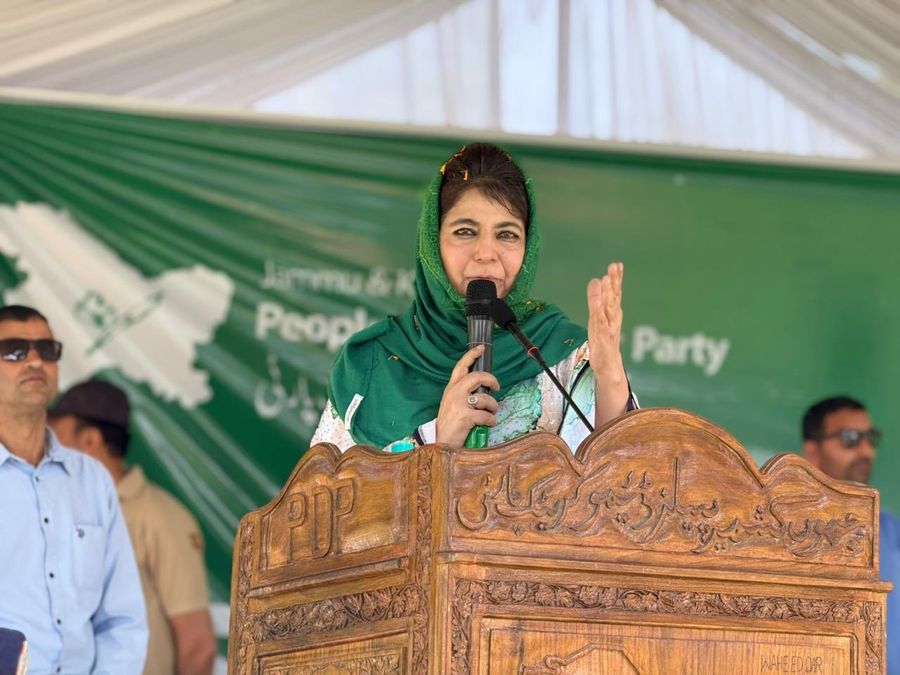
Former Jammu and Kashmir Chief Minister and Peoples Democratic Party (PDP) president Mehbooba Mufti has described the continued detention of many Jammu and Kashmir residents without trial as a “tragedy,” arguing that prolonged incarceration without judicial conclusion represents a serious challenge to constitutional principles and democratic accountability.
Her remarks have once again brought attention to a long-running debate surrounding preventive detentions, judicial delays, and civil liberties in Jammu and Kashmir, particularly in the years following the abrogation of Article 370 in August 2019.
According to Mehbooba Mufti, numerous detainees from Jammu and Kashmir continue to remain in prisons, including facilities outside the Union Territory, while awaiting trials or legal resolution of their cases.
Mehbooba Mufti’s Core Argument
The PDP chief argued that justice cannot be delayed indefinitely and that prolonged detention without the commencement or conclusion of trial proceedings weakens public faith in democratic institutions.
She maintained that constitutional guarantees apply equally to all citizens and that individuals should not remain incarcerated for extended periods without due legal process.
Mufti contended that the issue is not merely political but fundamentally constitutional and humanitarian, affecting families who have spent years waiting for legal clarity regarding their relatives.
According to her, the prolonged incarceration of undertrials or preventive detainees raises questions about fairness, accountability, and access to justice.
The Constitutional Debate: Articles 14 and 21
At the heart of the controversy are two key constitutional protections frequently cited in discussions on detention and due process.
Article 14: Equality Before Law
Article 14 guarantees equality before the law and equal protection of laws to all citizens.
Critics of prolonged detention argue that extended incarceration without timely judicial proceedings can undermine the principle of equal treatment and procedural fairness.
Article 21: Right to Life and Personal Liberty
Article 21 protects the right to life and personal liberty except according to procedure established by law.
Over the decades, the Supreme Court has interpreted Article 21 broadly, linking it to fair procedure, speedy justice, and protection against arbitrary deprivation of liberty.
Human rights advocates often cite Article 21 while arguing for timely trials and judicial review of long-pending detention cases.
The Post-2019 Context
The issue is closely tied to the political and security developments that followed the abrogation of Article 370 and the reorganization of the former state into a Union Territory in 2019.
During that period, authorities detained numerous political leaders, activists, and individuals under various legal provisions, including preventive detention laws.
Some detainees were lodged in prisons outside Jammu and Kashmir, a move that generated criticism from families and political parties who argued that distance made legal access and family visits more difficult.
Government authorities, however, maintained that such measures were necessary to preserve public order and security during a sensitive period.
While many detainees were subsequently released, concerns regarding some remaining cases have continued to surface in political and legal discussions.
Preventive Detention and the Public Safety Act
Much of the debate revolves around the use of preventive detention laws, particularly the Jammu and Kashmir Public Safety Act (PSA).
Preventive detention laws differ from conventional criminal proceedings because they are designed to prevent anticipated threats to public order or security rather than punish completed crimes.
Supporters argue that such laws are necessary tools in conflict-prone or security-sensitive regions.
Critics counter that preventive detention must remain subject to rigorous oversight because prolonged incarceration without conventional trial processes can create concerns regarding civil liberties and accountability.
This tension between security requirements and constitutional protections remains one of the most contested aspects of governance in Jammu and Kashmir.
Families Caught in Legal Limbo
Beyond politics and legal arguments lies a deeply human dimension.
Families of detainees often describe emotional, financial, and psychological hardship resulting from prolonged legal uncertainty.
Common concerns raised by affected families include:
- Long delays in court proceedings
- Difficulty accessing legal representation
- Travel burdens when detainees are lodged outside J&K
- Economic hardship caused by loss of family income
- Emotional distress stemming from prolonged separation
Human rights groups frequently argue that delays in resolving cases can have consequences extending well beyond the individuals detained.
Political Fallout and Opposition Narrative
For the PDP, the issue reinforces a broader political narrative centered on constitutional rights, democratic accountability, and civil liberties in post-2019 Jammu and Kashmir.
Mehbooba Mufti has consistently positioned herself as a critic of policies she believes have weakened democratic institutions and eroded protections guaranteed to citizens.
Her latest remarks are likely to resonate with opposition parties and civil society groups that have repeatedly called for greater transparency regarding detentions and legal proceedings.
Critics of the government argue that unresolved detention cases fuel public mistrust and deepen political alienation.
Supporters of the government’s approach, meanwhile, maintain that security challenges in the region require exceptional vigilance and that legal mechanisms are operating within constitutional frameworks.
The Challenge of Judicial Delays
The controversy also highlights a wider national issue that extends beyond Jammu and Kashmir: judicial backlog.
Indian courts face millions of pending cases, creating delays that affect undertrials and litigants across the country.
Legal experts often note that prolonged detention without timely trial can become a systemic challenge when judicial processes move slowly.
Many constitutional scholars argue that strengthening judicial infrastructure, increasing court capacity, and expediting sensitive cases are essential steps toward ensuring both security and justice.
The J&K debate therefore intersects with a broader conversation about the efficiency of India’s legal system.
Growing Calls for Case Reviews
A recurring demand from opposition parties, rights advocates, and affected families is the review of long-pending detention cases.
Proponents of review mechanisms argue that:
- Cases should be periodically reassessed
- Individuals without sufficient evidence against them should not face indefinite uncertainty
- Trials should proceed within reasonable timelines
- Judicial oversight should remain robust and transparent
Supporters believe such measures would strengthen public confidence in both the legal system and democratic institutions.
Balancing Security and Liberty
The central challenge remains finding a balance between two legitimate concerns:
Security Imperatives
Authorities argue that preventive measures are sometimes necessary in sensitive regions facing security threats.
Constitutional Liberties
Critics insist that even in difficult circumstances, constitutional safeguards and due process cannot be indefinitely postponed.
The debate is therefore not simply about individual cases but about how democratic societies reconcile public security with fundamental rights.
Outlook: A Continuing Debate Over Justice and Governance
Mehbooba Mufti’s intervention has once again placed the spotlight on one of Jammu and Kashmir’s most sensitive and enduring issues.
For the PDP, the matter reinforces its position as a vocal advocate for civil liberties and constitutional protections.
For the government, it adds pressure to demonstrate transparency, legal accountability, and confidence in the judicial process.
For families awaiting legal resolution, the issue remains deeply personal and urgent.
Ultimately, the debate over prolonged detentions is also a debate about the credibility of institutions. In any democracy, public trust depends not only on maintaining security but also on ensuring that justice is seen to be fair, timely, and accessible.
As political and legal discussions continue, the question raised by Mehbooba Mufti remains central: how can confidence in democratic governance be strengthened if significant numbers of people continue to face years of uncertainty without a concluded trial?