“Ball in US Court”: Iran–US Crisis Hits निर्णायक Moment as Diplomacy Falters
By: Javid Amin | 03 May 2026
The US–Iran confrontation has entered a निर्णायक phase. Tehran has declared that “the ball is in the US court,” signaling readiness for either a negotiated settlement or renewed conflict. Washington’s response, however, has tilted the balance toward escalation.
US President Donald Trump has outright rejected Iran’s latest peace proposal, warning that military options remain firmly on the table.
The result: a geopolitical standoff where both sides claim openness to diplomacy—but neither is willing to move first.
Iran’s Offer: Diplomacy on Its Own Terms
At the center of the latest developments is a 14-point proposal submitted by Iran through Islamabad, reflecting Tehran’s attempt to reshape the negotiation framework.
Core Elements of Iran’s Plan:
- Lifting of US economic sanctions
- End to the naval blockade
- Reopening of the Strait of Hormuz
- Deferral of contentious nuclear program discussions
Deputy Foreign Minister Kazem Gharibabadi framed the proposal as a balanced pathway—placing the burden of decision squarely on Washington.
Strategic Intent:
Iran is attempting to decouple immediate de-escalation from long-term nuclear negotiations, prioritizing economic relief and maritime stability first.
Trump’s Rejection: Pressure Over Compromise
President Trump’s response was swift and unambiguous.
He stated he “can’t imagine” accepting Iran’s proposal, arguing that Tehran has not paid a “big enough price.” The language signals a continuation of Washington’s maximum pressure doctrine.
Key US Position:
- Immediate focus on curbing Iran’s nuclear ambitions
- Continued use of naval blockade and sanctions as leverage
- Retention of military strike options
This approach reinforces a fundamental mismatch:
- Iran wants sequencing (relief first, nuclear later)
- US demands compliance first (nuclear rollback before relief)
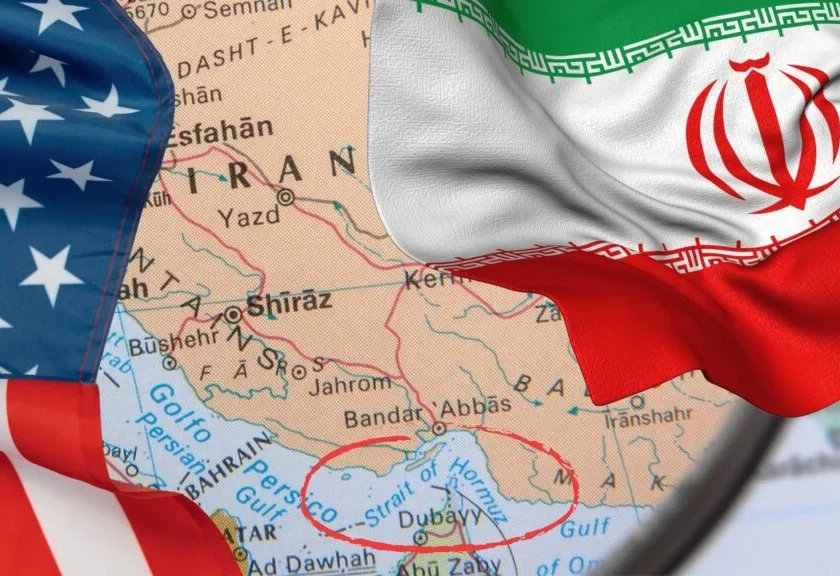
Hormuz Factor: The Strategic Pressure Point
- Roughly 20% of global oil and gas flows pass through this corridor
- Iran continues to exert pressure—both rhetorically and operationally
- The US views uninterrupted access as a non-negotiable global interest
Domestic pressures are also shaping policy. Rising fuel costs in the US have increased political urgency for Washington to neutralize Iran’s leverage over Hormuz.
Ceasefire on the Brink: Pause Without Progress
The conflict—sparked by US and Israeli strikes in February 2026—has been under a fragile ceasefire since April 8.
But that pause is now under severe strain:
- No breakthrough in Pakistan-mediated talks
- Continued US naval operations
- Iranian warnings that renewed war is “likely”
The ceasefire has effectively become a holding pattern, not a pathway to peace.
Diplomatic Divide: A Structural Deadlock
| Issue | Iran | United States |
|---|---|---|
| Negotiation Approach | Sanctions relief first | Nuclear rollback first |
| Maritime Control | End blockade, reopen Hormuz | Maintain naval pressure |
| Tone | “Ready for talks or war” | Skeptical, coercive |
| Mediation | Supports Pakistan channel | Engages but doubts outcomes |
This is not a tactical disagreement—it is a structural deadlock, where both sides’ core demands are mutually incompatible in the short term.
Regional & Global Fallout
The implications extend far beyond bilateral tensions:
- Energy Markets: Continued volatility driven by Hormuz risks
- Regional Security: Spillover potential into Lebanon and Gulf theaters
- Global Trade: Shipping costs and insurance premiums remain elevated
Non-state actors like Hezbollah add another layer of unpredictability, especially as parallel tensions persist along Israel’s northern border.
Strategic Outlook: Four Possible Paths
1. Managed Stalemate (Most Likely)
Ceasefire holds loosely, with periodic violations. No major diplomatic breakthrough.
2. Renewed Conflict (High Risk)
Talks collapse entirely, triggering strikes on Iranian infrastructure and retaliation across the Gulf.
3. Tactical Compromise (Low Probability)
A limited agreement—possibly on maritime access—buys time without resolving core disputes.
4. Regional Escalation (Medium Risk)
Conflict expands via proxy fronts, particularly involving Israel and Hezbollah.
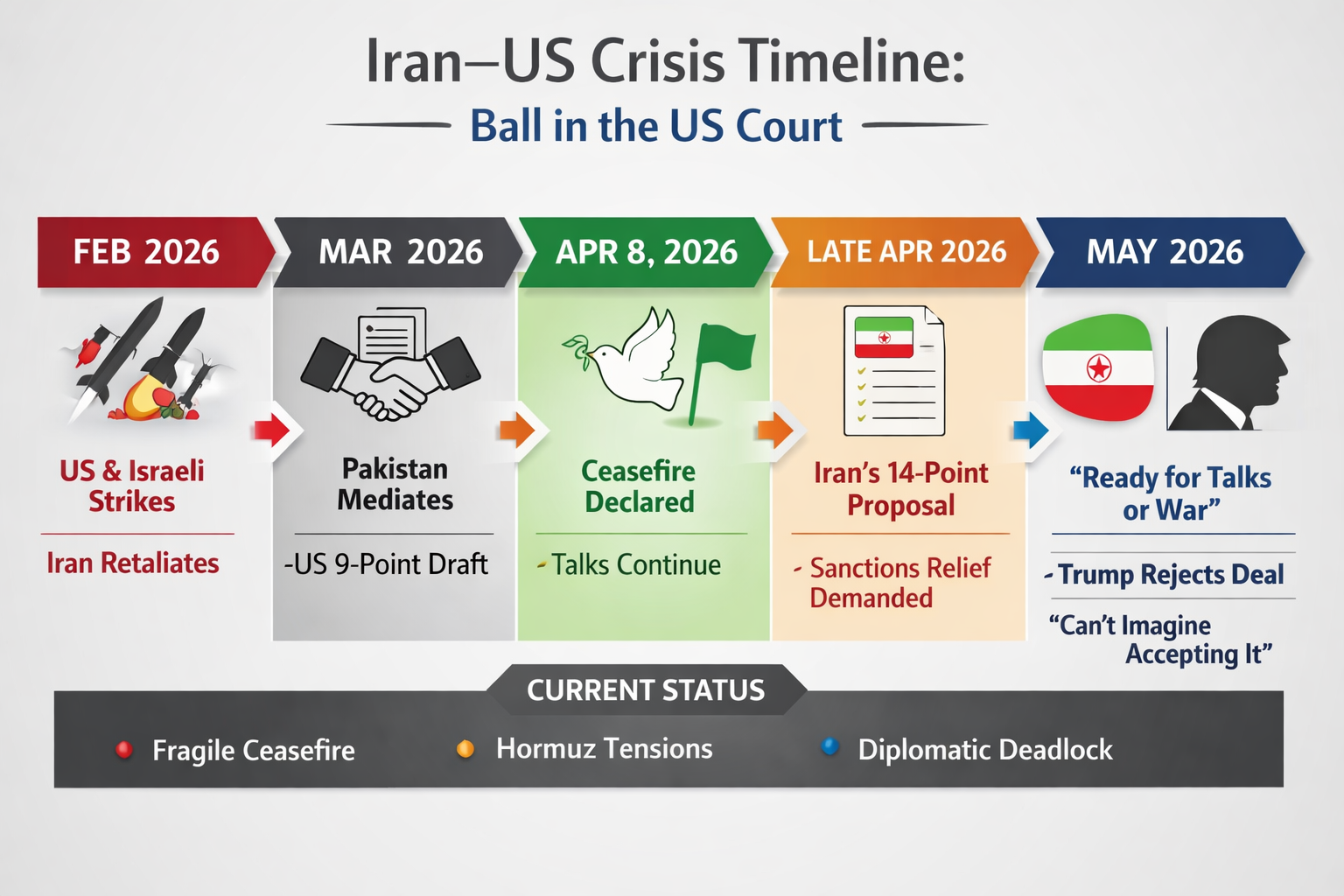
Timeline Snapshot
- Feb 2026: US–Israel strikes trigger open conflict
- March 2026: Pakistan mediates initial indirect talks
- April 8: Fragile ceasefire begins
- Late April: Iran submits 14-point proposal
- Now: Iran signals readiness; US rejects terms
Bottom Line: Decision Point Without Movement
The crisis has reached a classic geopolitical impasse.
Iran has positioned itself as open to negotiation—but only on terms that reduce immediate pressure. The United States, meanwhile, is unwilling to concede leverage without concrete concessions on nuclear policy.
With President Trump rejecting Tehran’s proposal and signaling readiness for escalation, the burden of next action now lies squarely with Washington.
But in reality, neither side is moving.
That is what makes this moment dangerous:
A ceasefire without trust, diplomacy without alignment, and power without compromise.
The next move—whether military or diplomatic—will determine whether this standoff hardens into prolonged confrontation or breaks toward resolution.