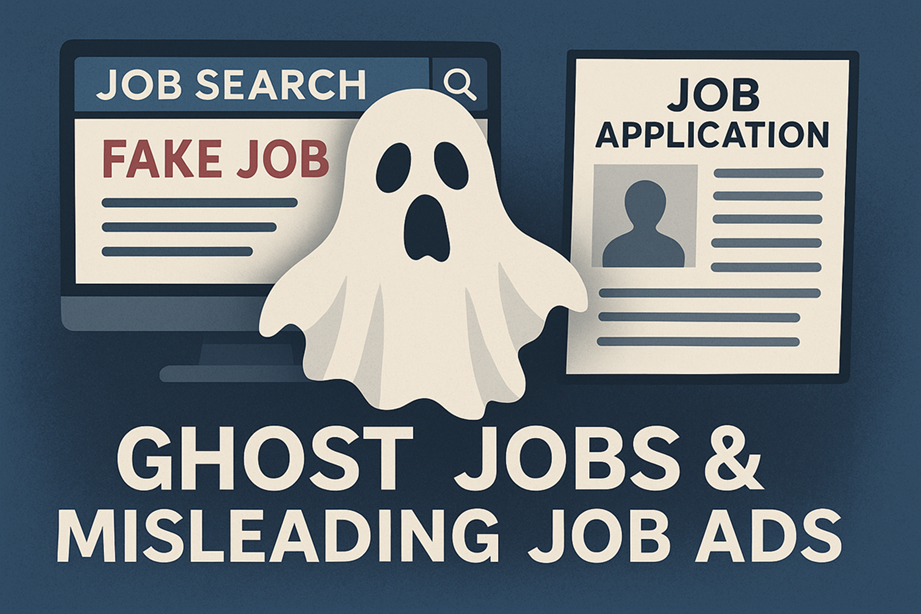
Ghost Hiring Explained: How to Spot Fake Job Listings & Avoid Job Search Scams
By: Javid Amin | 17 April 2026
The Hidden Job Market Problem: Ghost Hiring Is Real
A growing number of job seekers are encountering a frustrating reality—jobs that don’t actually exist.
Recent estimates suggest that 18% to 27% of online job listings may be “ghost jobs”, while some surveys indicate that up to 4 in 10 companies have engaged in this practice. These listings create false hope, wasted effort, and growing distrust in hiring systems.
What Is Ghost Hiring?
Definition:
A ghost job is a job posting that a company has no immediate or genuine intention of filling.
Unlike outright scams, these listings often come from legitimate companies, making them harder to detect and more misleading.
Why Companies Post Jobs They Don’t Intend to Fill
Talent Pipeline Building
Companies collect résumés to build a future candidate pool, even when no current vacancy exists.
Growth Signaling
Posting jobs can create the impression of expansion—useful for investors, stakeholders, or public perception.
Compliance Requirements
Some firms must post jobs publicly due to internal policies or regulatory obligations, even if they have internal candidates in mind.
Market Testing
Employers gauge salary expectations, skills availability, and candidate interest without committing to hiring.
Internal Morale Management
Job postings can signal to employees that reinforcements are coming, even if hiring isn’t immediate.
Industries Where Ghost Jobs Are Most Common
- Tech & IT Services: Frequent speculative postings to maintain talent pipelines
- Finance & Consulting: Use hiring signals to reinforce market position
- Retail & Hospitality: Listings often remain active even after roles are filled
Three Clear Signs You’re Looking at a Ghost Job
- Overuse of buzzwords
- Lack of specific responsibilities or KPIs
- Identical listings across multiple locations
Signal: Placeholder content rather than an active hiring need.
02. Listings That Never Expire
- Job posted for 30–60+ days without updates
- Reposted frequently with identical content
Signal: Role may already be filled—or never existed.
03. No Clear Hiring Process
- No acknowledgment after applying
- Endless delays or vague recruiter responses
- Interviews that lead nowhere
Signal: No urgency to hire.
The Real Impact on Job Seekers
Time Drain
Applicants spend hours tailoring résumés for roles that don’t exist.
Psychological Toll
Repeated silence leads to frustration, burnout, and self-doubt.
Data Risks
Your CV and personal data may be stored indefinitely with no real purpose or transparency.
Smart Strategies to Avoid Ghost Jobs
Check recent:
- Hiring announcements
- Press releases
- Employee growth trends
If hiring claims don’t match reality—be cautious.
Network Internally
Reach out to current employees via platforms like LinkedIn to confirm:
- Whether the role is active
- If the team is actually expanding
Use Detection Tools
Platforms like Trouvr and MintCareer analyze job listings for suspicious patterns.
Track Posting Timelines
Avoid roles that:
- Stay open too long
- Get reposted repeatedly
Test Responsiveness
Apply and monitor:
- Response time
- Communication clarity
No response at all? Move on quickly.
Expert Take: A Broken Hiring Signal
Ghost hiring reflects a deeper issue in modern recruitment—a disconnect between employer signaling and actual hiring intent.
For job seekers, the solution is not just more applications—but smarter filtering.
Final Takeaway
Ghost hiring may be widespread, but it’s not invisible. By focusing on job quality over quantity, verifying listings, and leveraging networks, you can avoid wasting time and stay focused on real opportunities.
Bottom line: Don’t just apply—investigate before you apply.