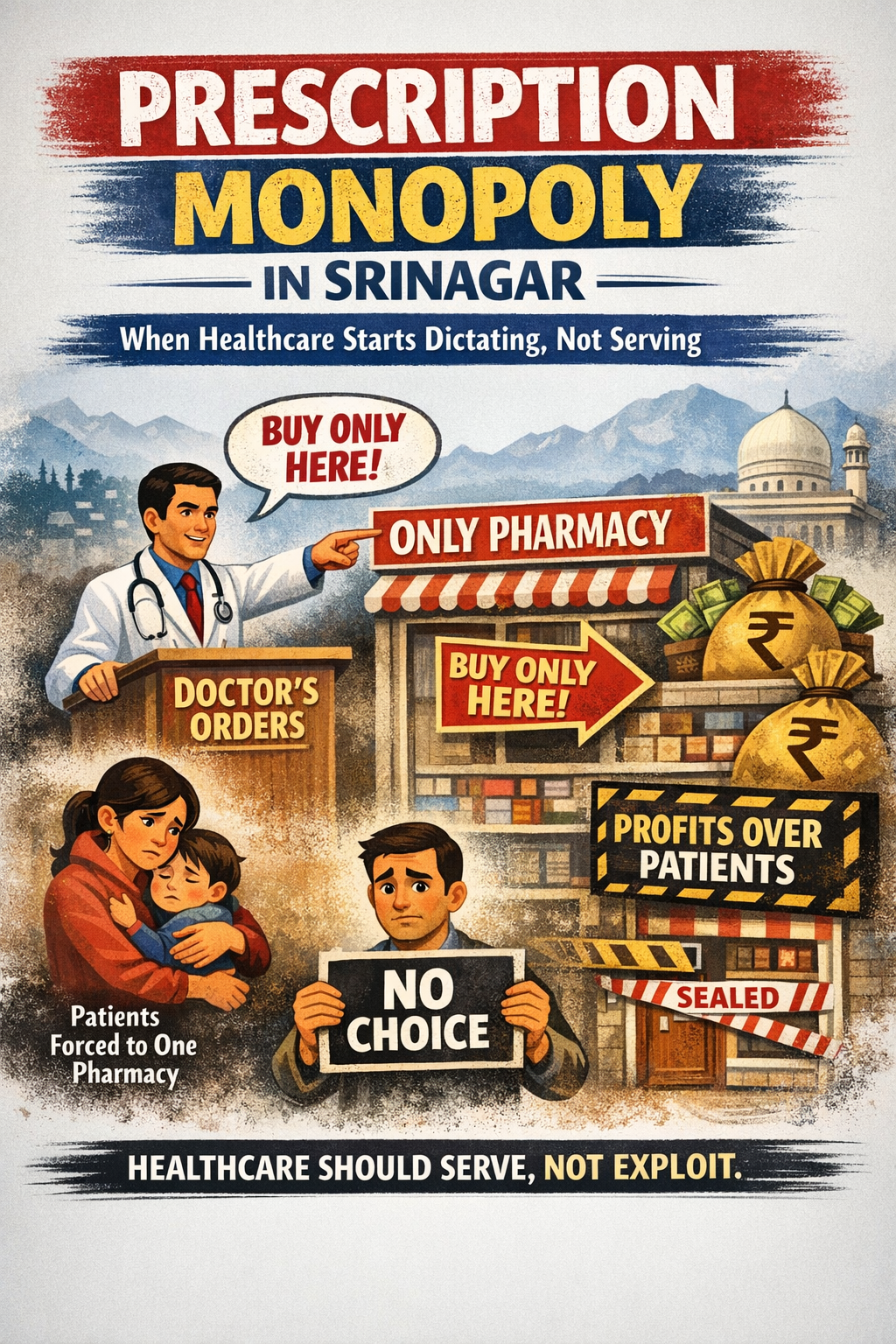
Srinagar Healthcare Monopoly: Doctor–Pharmacy–Lab Nexus Raises Ethical Concerns
By: Javid Amin | 03 May 2026
From Isolated Incident to Widespread Pattern
What initially appeared to be a single troubling case in Srinagar is now being described by many patients as a routine pattern across the city’s healthcare ecosystem.
Families report a consistent experience:
- Medicines prescribed are available only at a specific pharmacy linked to the doctor
- Diagnostic tests are restricted to a particular lab
- Reports from outside labs are often rejected or dismissed, forcing patients to repeat tests
In effect, patients feel they are not being advised—they are being directed, and in some cases, compelled.
The Alleged Nexus: Doctor–Pharmacy–Lab Loop
At the center of these complaints is a closed loop:
- Doctor prescribes specific branded medicines
- Medicines are stocked primarily at a linked pharmacy
- Diagnostic tests are funneled to a designated lab
- External reports are often invalidated or questioned
This creates what many describe as a “prescription monopoly”—where choice is eliminated and compliance is enforced.
Ethical Line Crossed: From Guidance to Control
Medical professionals are expected to guide patients based on clinical judgment. However, when:
- Choice is restricted
- Alternatives are discouraged
- Financial linkages influence decisions
…it shifts from healthcare to controlled commerce.
Such practices, if substantiated, directly conflict with principles under the Drugs and Cosmetics Act, 1940 and broader medical ethics frameworks governing prescription independence.
Why Patients Feel Powerless
Several structural factors enable this system to persist:
1. Information Imbalance
Patients rely heavily on doctors’ expertise and rarely question prescriptions or referrals.
2. Fear of Compromised Treatment
Many patients comply because they fear:
- Inferior treatment if they resist
- Delays in care
- Negative reactions from practitioners
3. Lack of Clear Enforcement Visibility
While raids and shop sealings happen, they are:
- Episodic
- Not always followed by systemic reform
- Rarely communicated transparently to the public
4. Normalization of the Practice
Over time, what began as an exception appears to have become normalized behavior in parts of the system.
The Real Cost: Financial, Emotional, and Medical
This ecosystem places a heavy burden on patients:
- Financial strain: Higher medicine costs and repeated diagnostic tests
- Emotional stress: Feeling coerced during vulnerable moments
- Medical risk: Delays or duplication in treatment due to forced processes
Healthcare, instead of being a space of relief, becomes a transactional maze.
Broader Implications for Public Trust
If patients begin to believe that:
- Prescriptions are profit-driven
- Tests are commission-linked
- Choices are intentionally restricted
…it leads to a deep trust deficit.
And once trust erodes:
- Even ethical practitioners are viewed with suspicion
- Compliance with medical advice declines
- Public health outcomes suffer
What Must Change Immediately
1. Enforce Prescription Independence
Doctors must prescribe generic options and alternatives, allowing patients freedom of choice.
2. Accept External Diagnostics
Legitimate lab reports from certified centers should not be arbitrarily rejected.
3. Digital Monitoring Systems
Introduce prescription and referral tracking to:
- Detect repeated pharmacy/lab linkages
- Flag unusual patterns
- Enable regulatory audits
4. Strict Penalties for Proven Collusion
- Financial penalties
- License suspension in serious cases
- Public disclosure to deter repeat violations
5. Empower Patients
Public awareness campaigns must clearly communicate:
- The right to choose any licensed pharmacy
- The right to seek independent diagnostics
- The right to question and report coercion
A Critical Moment for Healthcare in Srinagar
The growing volume of complaints suggests this is not a fringe issue—it is a systemic concern demanding structural correction.
Authorities have begun taking action. But the real test lies ahead:
- Will enforcement remain episodic?
- Or will it evolve into sustained, transparent reform?
Conclusion: Healthcare Must Serve, Not Dictate
The essence of medicine lies in trust, choice, and patient welfare.
When doctors begin to dictate where to buy, where to test, and how to comply, that balance is broken.
Srinagar’s healthcare system stands at a crossroads:
- Continue with opaque practices that erode trust
- Or rebuild credibility through accountability and patient-centric reform
Because healthcare should guide patients—not control them.