Nasha Mukt Kashmir: Beyond Slogans, Toward Policy Integrity
By: Javid Amin | 03 May 2026
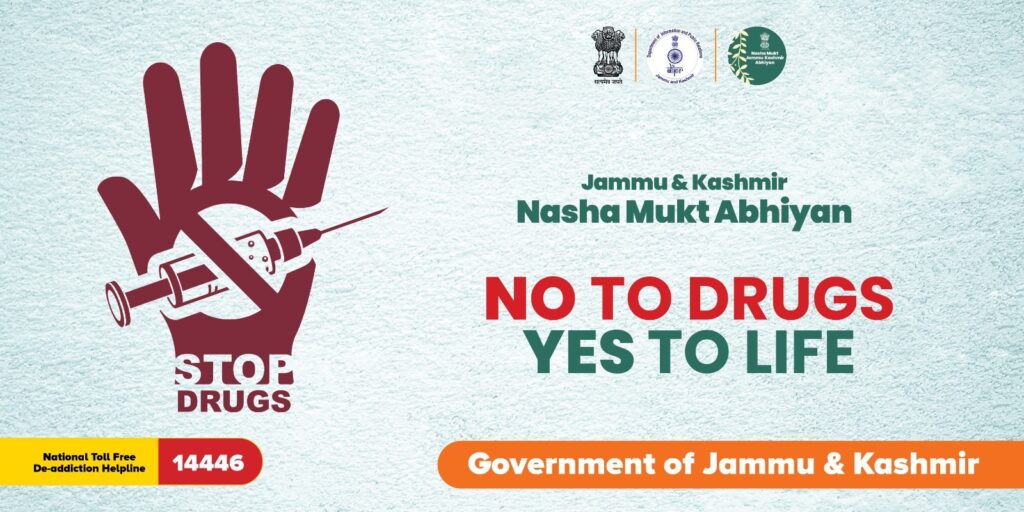
Across Jammu & Kashmir, a powerful social movement is taking shape. From classrooms to mosques, colleges to community halls, the message is loud and unified — “Nasha Mukt Kashmir.”
Rallies are being organized, awareness drives conducted, and voices from every section of society — teachers, students, religious leaders, sportspersons, and civil society — are joining hands. The campaign’s growing momentum reflects a genuine and urgent public concern: the rising threat of substance abuse in the region.
Yet, as the campaign crosses its symbolic 100-day milestone, a deeper and more uncomfortable question demands attention:
What exactly counts as “Nasha”?
Understanding ‘Nasha’: What Science Says
According to the World Health Organization, substance intoxication is defined as:
A transient condition following the administration of a psychoactive substance, resulting in disturbances in consciousness, cognition, perception, judgment, affect, or behavior.
This definition is not selective. It encompasses a wide spectrum of substances, including:
- Alcohol
- Opioids (such as heroin)
- Cannabis
- Sedatives
- Stimulants
From a scientific and medical standpoint, alcohol is not separate from “drugs” — it is one of them.
The Contradiction at the Heart of the Campaign
Here lies the central paradox.
While the campaign vocally condemns narcotics like heroin and synthetic drugs, alcohol — the most widely consumed psychoactive substance globally — remains largely absent from the discourse.
This omission is not just symbolic; it raises serious concerns about policy coherence.
Why is alcohol treated differently?
1. Economic Dependence
State governments across India generate substantial revenue through alcohol excise duties, licensing, and sales. This financial reliance creates a structural hesitation to categorize alcohol alongside illegal drugs.
2. Social Normalization
Alcohol consumption is deeply embedded in many social and cultural practices — celebrations, gatherings, and even business settings. This normalization often masks its harmful impact.
3. Selective Morality
There exists a visible double standard:
- Illegal drugs are criminalized and stigmatized.
- Alcohol is regulated, advertised (indirectly), and socially tolerated.
This selective framing weakens the moral and public-health credibility of anti-drug campaigns.
4. Policy Framing Bias
Many campaigns, including “Nasha Mukt” initiatives, are structured around illegal substances, leaving out legal intoxicants — even when the latter contribute more significantly to health and social harm.
The Reality: Alcohol’s Hidden Burden
Globally, alcohol remains a leading risk factor for:
- Liver disease and cancers
- Road accidents and fatalities
- Domestic violence and abuse
- Workplace injuries
- Mental health disorders
Public health experts frequently describe alcohol as the “silent driver” of social harm — precisely because it is legal and normalized.
In contrast to stigmatized drugs, its dangers are often underestimated, underreported, or politically inconvenient to confront.
Addiction Is a Health Issue, Not a Moral Failure
One of the most progressive aspects of modern addiction science is the shift from moral judgment to medical understanding.
Substance use disorder is now recognized as a chronic health condition, influenced by:
- Neurobiology
- Environment
- Socio-economic factors
- Psychological stress
Treating addiction as a crime rather than a health issue not only stigmatizes individuals but also discourages them from seeking help.
Ground Reality in Jammu & Kashmir
Local awareness campaigns, police initiatives, and community mobilization efforts in Jammu & Kashmir have undeniably increased visibility around drug abuse.
However, field-level observations and social feedback suggest:
- A strong focus on illicit drugs
- Limited public discourse around alcohol-related harm
- Minimal integration of rehabilitation-focused messaging compared to enforcement
This creates a partial narrative, where one part of the problem is addressed while another is quietly ignored.
From Awareness to Accountability: What Needs to Change
If Nasha Mukt Kashmir is to evolve from a symbolic campaign into a sustainable public health movement, the next phase must address structural gaps.
1. Policy Coherence
Align legal frameworks with scientific definitions. If alcohol is a psychoactive substance causing harm, it must be included in prevention narratives.
2. Community Rehabilitation
Expand access to de-addiction centers, counseling services, and community-based recovery programs. Shift from punishment to treatment.
3. Economic Accountability
Gradually reduce dependence on alcohol-generated revenue. Explore alternative fiscal models that do not rely on public health trade-offs.
4. Honest Public Messaging
Acknowledge alcohol openly in awareness campaigns. Silence undermines credibility.
The Way Forward: Naming the Full Problem
The success of Nasha Mukt Kashmir lies in its ability to mobilize society — a rare and valuable achievement. But awareness alone cannot dismantle systemic contradictions.
If the goal is truly a drug-free, healthier society, then the definition of “nasha” must be:
- Scientifically accurate
- Policy-consistent
- Socially honest
Because leaving out the most widely consumed intoxicant is not just an oversight — it risks weakening the very foundation of the movement.
Conclusion
The silence around alcohol is not accidental. It is shaped by economics, culture, and political convenience.
But public health movements gain strength from truth, not selectivity.
If Kashmir is to become truly “Nasha Mukt,” it must confront all forms of addiction — including the ones hiding in plain sight.