Ruckus in J&K Assembly: Global Geopolitics Spill Into Local Politics as Pro-Iran Slogans Trigger Chaos
By: Javid Amin | 27 March 2026
When Global Tensions Ignite Local Assemblies
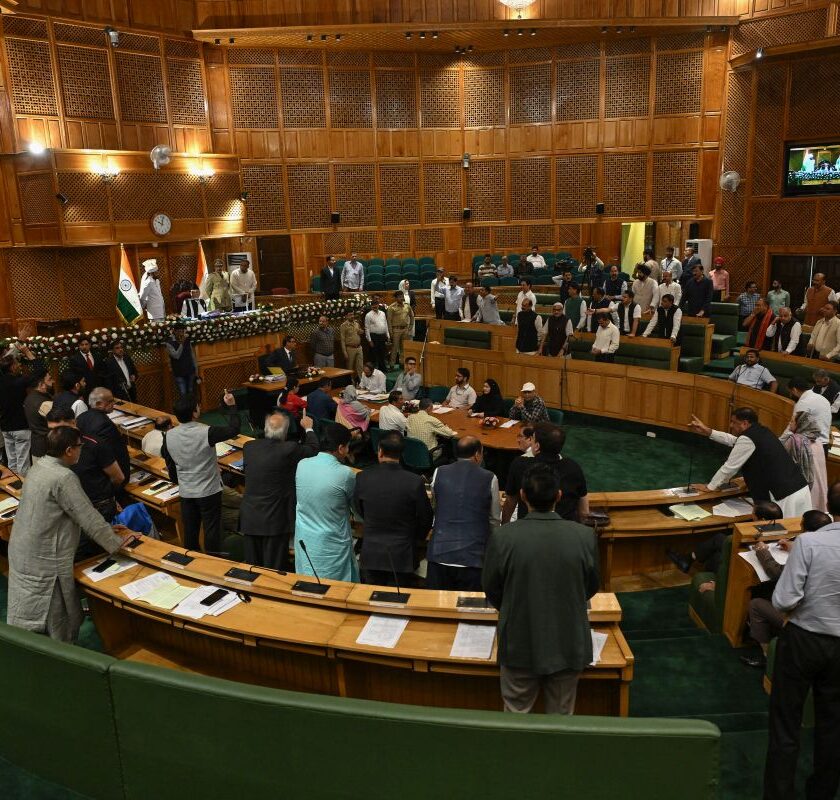
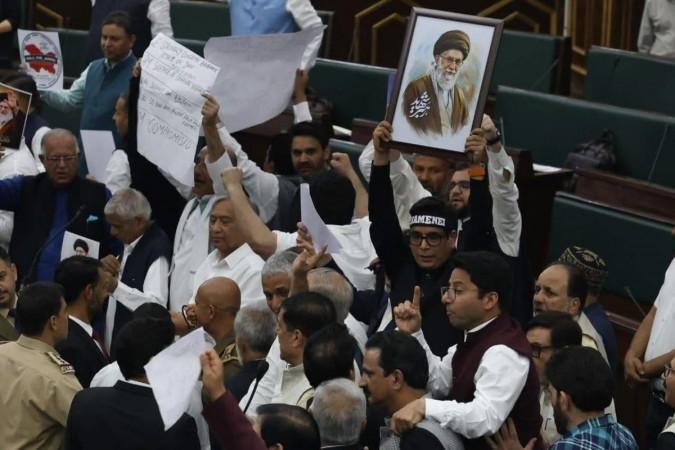
On March 27, 2026, the usually procedural environment of the Jammu & Kashmir Legislative Assembly transformed into a charged political battlefield. What began as a routine continuation of the budget session quickly spiraled into chaos when members of the Jammu and Kashmir National Conference (NC) raised pro-Iran slogans, condemning the reported killing of Iran’s Supreme Leader, Ali Khamenei.
The reaction was swift and intense. Members of the Bharatiya Janata Party (BJP) responded with counter-slogans, including nationalist chants such as “Vande Mataram,” escalating tensions inside and outside the Assembly.
Within minutes, proceedings became untenable. Speaker Abdul Rahim Rather was forced to adjourn the House for 30 minutes, marking yet another disruption in a session already critical for governance and fiscal planning.
But this was more than just a political scuffle. It was a reflection of a deeper and increasingly visible trend: the intersection of global geopolitics with local political narratives.
What Exactly Happened: A Chronology of Chaos
The Setting: A Crucial Budget Session
The Assembly had reconvened after a month-long recess, with expectations centered on discussing key fiscal proposals, regional development, and pressing governance issues. The budget session, scheduled to run until April 4, was expected to shape economic priorities for Jammu & Kashmir.
However, the agenda quickly derailed.
The Trigger: Pro-Iran Slogans
NC legislators initiated protests by raising slogans expressing solidarity with Iran. Their protest was reportedly aimed at condemning alleged military actions by the United States and Israel, and the reported killing of Khamenei.
The slogans, while symbolic of international solidarity, immediately politicized the Assembly floor.
The Counter: BJP Pushback
BJP MLAs strongly objected to the protests, accusing the NC of diverting attention from pressing local issues. They responded with nationalist slogans and staged demonstrations both inside and outside the Assembly premises.
Their demands were clear:
- Address rising fuel prices affecting citizens
- Establish a National Law University in Jammu
- Prioritize governance over international commentary
The Collapse: Adjournment of Proceedings
With both sides unwilling to yield, the situation escalated into shouting matches and procedural breakdown. Speaker Abdul Rahim Rather adjourned the House, citing an inability to conduct Question Hour amid the uproar.
Decoding the Political Positions
National Conference: International Solidarity or Strategic Messaging?
The NC’s stance reflects a broader ideological positioning. By expressing solidarity with Iran and condemning Western military actions, the party appears to be aligning itself with a narrative that resonates with certain sections of its political base.
Possible Motivations
- Ideological Alignment: Anti-Western intervention rhetoric has historical resonance in regional politics.
- Symbolic Politics: Demonstrating solidarity with global Muslim causes may strengthen political identity.
- Strategic Diversion: Critics argue it could be a way to shift focus from domestic accountability.
However, this approach also carries risks—particularly in a politically sensitive region like Jammu & Kashmir, where international narratives can quickly amplify local tensions.
BJP: Nationalism and Local Governance Focus
The BJP’s response was rooted in two key pillars:
- National Identity
- Local Governance Priorities
By countering with slogans like “Vande Mataram,” the party sought to frame the debate as one of national loyalty versus misplaced international sympathies.
Core Arguments
- The Assembly should prioritize local issues affecting citizens.
- International conflicts should not disrupt legislative functioning.
- Governance must remain the primary focus during budget sessions.
This positioning aligns with the BJP’s broader national narrative, emphasizing sovereignty, nationalism, and development.
Other Political Voices: Between Silence and Selective Support
Other opposition members displayed mixed reactions:
- Some supported the condemnation of Khamenei’s killing.
- Others attempted to redirect focus to local governance issues.
This fragmentation highlights a lack of unified opposition strategy, further complicating Assembly dynamics.
The Larger Context: Why Iran Matters in Kashmir Politics
Geopolitics Meets Regional Identity
The Iran crisis has global implications, but its resonance in Kashmir is not accidental. The region has historically been sensitive to developments in the Muslim world, and political actors often tap into these sentiments.
Symbolism Over Substance
While the protests were symbolic, their impact was tangible:
- Legislative disruption
- Media attention
- Political polarization
This raises a critical question: Should international issues influence local legislative spaces?
Governance at Risk: The Cost of Disruption
Budget Delays and Policy Paralysis
Repeated adjournments can derail critical discussions, including:
- Budget approvals
- Development योजनाएँ
- Public welfare schemes
Administrative Uncertainty
Delays in legislative processes can create bottlenecks in:
- Fund allocation
- Infrastructure projects
- Social sector programs
Public Impact
Ultimately, it is the जनता (public) that bears the cost:
- Delayed services
- Policy uncertainty
- Erosion of trust in institutions
Public Perception: Polarization Deepens
The incident underscores a growing divide in public opinion:
Two Competing Narratives
- Global Solidarity Matters
- Local Governance First
This polarization is not just political—it is social, ideological, and emotional.
Media and Narrative Building
The role of media in amplifying such incidents cannot be ignored.
Framing the Debate
- National media highlighted the disruption and nationalist response.
- Regional outlets focused on political motivations and local implications.
Digital Amplification
Social media platforms further intensified the debate, with hashtags and viral clips shaping public perception.
Historical Parallels: Has This Happened Before?
Jammu & Kashmir’s political landscape has witnessed disruptions in the past, but the nature of this incident is distinct due to its international trigger.
Historically:
- Protests were centered on local मुद्दे (issues)
- Current incident reflects global-local convergence
Expert Analysis: A Socio-Political Perspective
From a socio-political standpoint, this incident reflects three emerging trends:
1. Globalization of Local Politics
Local leaders increasingly engage with global narratives to shape political identity.
2. Symbolic राजनीति (Politics)
Symbolism often outweighs policy discussions in legislative spaces.
3. Institutional Strain
Frequent disruptions weaken democratic institutions and प्रक्रियाएँ (processes).
What Lies Ahead: A Troubled Session?
With the budget session scheduled until April 4, further disruptions seem likely.
Possible Scenarios
- Continued protests and adjournments
- Negotiated truce for smooth functioning
- Escalation into larger political confrontation
Key Takeaways
- The J&K Assembly incident highlights the collision of global geopolitics with local governance.
- Political parties are leveraging international issues for domestic positioning.
- Legislative disruptions risk undermining governance and public trust.
- The घटना (incident) reflects deeper polarization within the political ecosystem.
Conclusion: A Turning Point for Legislative Priorities?
The chaos in the Jammu & Kashmir Assembly is not an isolated घटना—it is a संकेत (signal). A signal that political discourse is evolving, where global events can rapidly influence local decision-making spaces.
However, the fundamental question remains:
Should legislative assemblies prioritize symbolic political expressions, or focus on governance and public welfare?
The answer will shape not just the current budget session, but the future trajectory of politics in Jammu & Kashmir.
Final Word
As tensions persist, the coming days will test the resilience of democratic institutions in the region. Whether the Assembly returns to order or continues down a path of disruption will depend on political maturity, leadership decisions, and the willingness to prioritize the जनता over political narratives.