India’s Inflation Crisis: Food Prices Rise 8.94%, Retail Inflation Crosses RBI’s 6% Ceiling
By: Javid Amin | 14 November 2026
Inflation Is No Longer Just an Economic Number
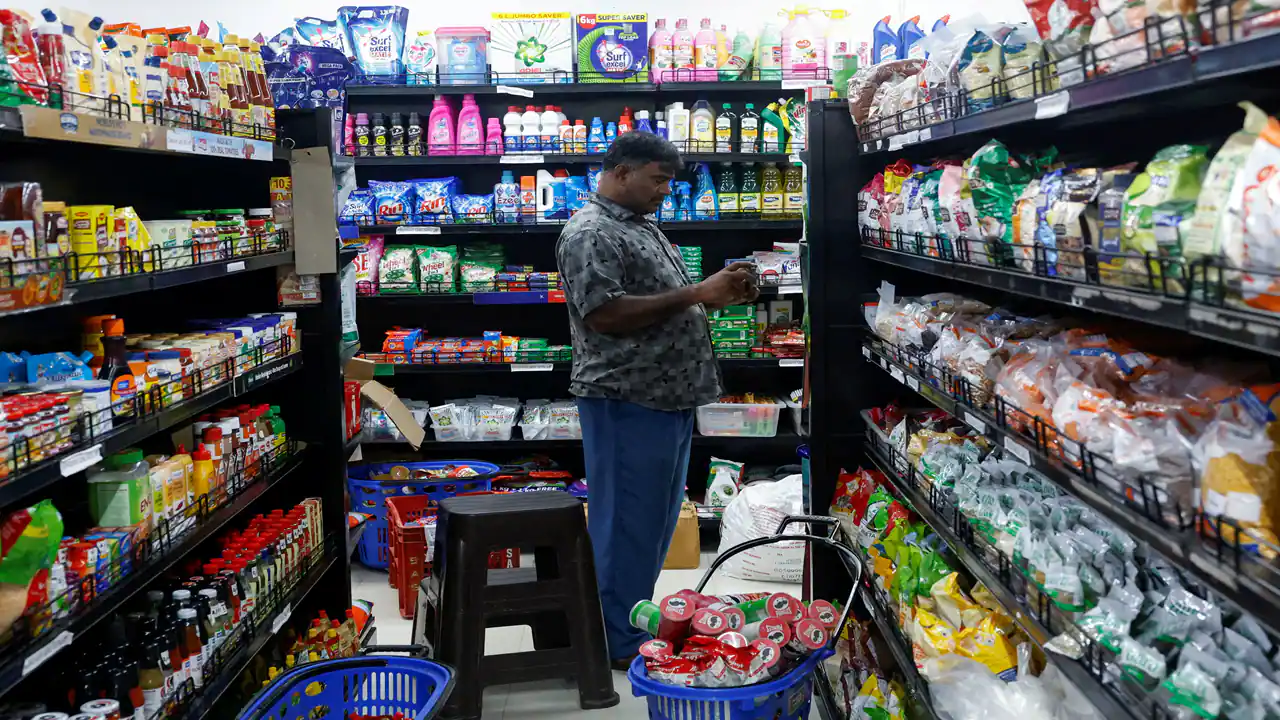
For years, inflation was most visibly felt at petrol pumps. A rise in fuel prices meant more expensive travel, higher transportation costs and additional pressure on businesses. But the nature of India’s inflation debate is changing. Today, its most immediate impact is being felt somewhere far more personal: inside the household kitchen.
The question confronting millions of families is no longer simply whether inflation stands at 6%, 7% or 8%. It is much more straightforward: why does a routine visit to the grocery store cost more than it did last month?
Milk, cooking oil, sugar, vegetables, eggs, meat and other everyday essentials form the foundation of household consumption. When several of these items become expensive simultaneously, families have limited room to adjust. They cannot simply stop buying food or postpone essential purchases.
According to the October 2026 Consumer Price Index figures cited in the supplied material, India’s retail inflation climbed to 6.09%, while food inflation reached 8.94%. The figures, if confirmed by the official release, indicate that price pressures have moved beyond an isolated increase in a few commodities and are affecting the broader cost of living.
The implications extend beyond economic statistics. Rising food prices influence household savings, nutrition, consumption patterns, small businesses and the financial security of lower- and middle-income families.
The inflation debate has, increasingly, moved from the fuel station to the dining table.
1. What the October 2026 inflation figures actually tell us
The Ministry of Statistics and Programme Implementation (MoSPI) released the October Consumer Price Index data on November 12, 2026. The official release confirms the two central figures in the supplied report.
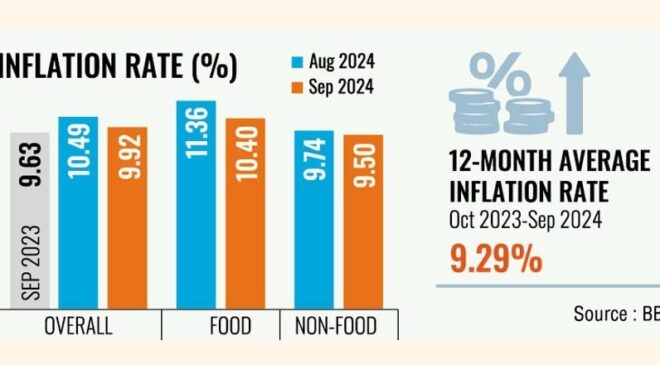
Source: MoSPI, October 2026 CPI release. October figures are provisional.
The distinction between retail and food inflation matters.
Retail inflation measures the overall movement in prices across a representative basket of goods and services consumed by households. Food inflation, on the other hand, tracks changes in the prices of food items.
In October, food inflation was considerably higher than headline retail inflation. This suggests that food prices were a particularly strong source of pressure on household purchasing power.
There is another important detail in the official figures: rural retail inflation stood at 6.63%, compared with 5.41% in urban India. Rural food inflation was 9.09%, against 8.68% in urban areas.
That difference deserves attention. Rural households often have less financial flexibility, while many depend on agricultural earnings, informal employment or seasonal work. Higher food prices can therefore create pressure on both sides of their household finances: the cost of consumption and the uncertainty of income.
Has inflation crossed the RBI’s upper tolerance limit?
Yes. India’s inflation-targeting framework sets a central CPI target of 4%, with a tolerance band of two percentage points on either side. The permitted range is therefore 2% to 6%.
At 6.09%, October’s retail inflation moved 0.09 percentage points above the upper boundary.
However, crossing the limit in one monthly reading should not automatically be described as a sustained breach of the inflation target. The monetary policy framework assesses persistent deviations over a specified period. October’s figure is an important warning, but the subsequent readings will determine whether the pressure continues.
The October release also needs to be read with one statistical qualification: the figures are provisional and can be revised.
2. Why households are feeling the inflation shock more sharply
There is a fundamental difference between an increase in the price of a discretionary product and an increase in the price of something a family needs every day.
A household can postpone buying a new television, replace an expensive mobile phone with a cheaper model or delay purchasing furniture. It cannot indefinitely postpone buying milk, flour, vegetables, cooking oil or other essential food products.
This is why food inflation has a disproportionate effect on ordinary families.
Consider a household managing a fixed monthly income. Its essential expenditure may include:
-
Food and groceries.
-
Rent or housing costs.
-
Electricity and cooking fuel.
-
Children’s education.
-
Medicines and healthcare.
-
Transportation.
-
Loan repayments and other obligations.
When grocery expenses increase, families must find the additional money somewhere. Often, the adjustment comes at the expense of savings, discretionary purchases, healthcare spending or the quality of food consumed.
For lower-income households, the consequences can be more serious. Food accounts for a larger share of their total expenditure, leaving less room to absorb price increases.
Middle-income households face a different but equally real problem. Their incomes may be higher, but education fees, housing expenses, transport costs and EMIs already consume a substantial portion of monthly earnings.
A seemingly modest increase across several grocery categories can therefore create a significant cumulative burden.
The hidden impact: Families are paying more but adjusting their consumption
Inflation does not always show up as an obvious financial crisis.
Sometimes it appears in smaller decisions:
-
Buying less fruit than before.
-
Reducing the quantity of meat or eggs.
-
Switching to cheaper edible oil.
-
Purchasing smaller quantities of groceries more frequently.
-
Avoiding certain food products altogether.
-
Cutting back on household savings.
These adjustments may not immediately appear in official economic headlines, but they influence nutrition, living standards and household financial security.
The real concern is not simply that families are spending more. It is that some are being forced to compromise on what they can afford to consume.
3. Onion prices rise 116.22%: What the official data reveals
One of the most striking findings in the October inflation release is the increase in the prices of selected vegetables and food-related commodities.
MoSPI identified onion inflation at 116.22% year-on-year, garlic at 60.74%, ginger at 48.32% and lemon at 47.30%.
These are not minor increases. They demonstrate how individual commodity shortages and supply disruptions can translate into sharp price movements for consumers.
| Commodity | October 2026 annual inflation |
|---|---|
| Onion | 116.22% |
| Garlic | 60.74% |
| Ginger | 48.32% |
| Lemon | 47.30% |
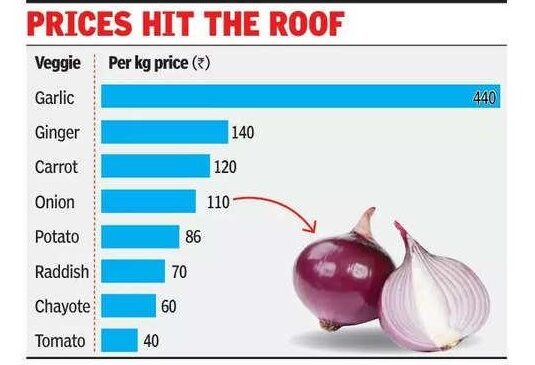
Source: MoSPI, October 2026 CPI release. These are year-on-year inflation rates, not monthly price increases.
Year-on-year inflation rate, All-India combined.
0% 35% 70% 105% 140%
Onion Garlic Ginger Lemon
The onion figure is particularly significant. Onions are a regular ingredient in millions of Indian kitchens, used by households across income groups. A sharp increase affects household cooking costs as well as restaurants, street-food vendors, caterers and small food businesses.
Garlic and ginger also occupy an important place in everyday cooking. Their rising prices add to the cost of preparing even ordinary meals.
But there is a distinction worth making: a 116.22% inflation rate means the relevant onion price index was more than twice its level in October 2025. It does not mean onion prices increased by 116% in October alone.
This distinction is important because inflation measures the rate of price change over a defined period, not the amount by which prices have increased during a single month.
Not every grocery item is becoming more expensive
The same official report also records price declines in several commodities.
Potato inflation was minus 14.24%, cauliflower minus 10.57%, coconut minus 5.60%, brinjal minus 3.34% and cabbage minus 1.92%.
This complicates the picture presented by a general statement that all household essentials are becoming more expensive.
The more accurate conclusion is that India is experiencing uneven food-price pressures. Some commodities have registered exceptionally high inflation, while others have become cheaper compared with the corresponding period last year.
For consumers, however, falling prices of a few vegetables may not provide sufficient relief when other frequently purchased items are becoming significantly more expensive.
4. Why are food prices rising? Understanding the supply-side problem
Food inflation is rarely caused by one factor. It usually reflects a combination of agricultural production, weather conditions, storage capacity, transportation costs, market arrivals and demand.
India has made considerable progress in agricultural production, but the availability of food commodities at affordable prices remains dependent on several interconnected factors.
A. Weather disruptions and agricultural production
Agriculture remains highly sensitive to weather conditions.
Insufficient rainfall, excessive rainfall, unseasonal showers, heatwaves and changes in crop-growing cycles can affect both the quantity and quality of agricultural produce.
Vegetables are particularly vulnerable because many have relatively short storage lives. A disruption in harvesting or transportation can quickly reduce market arrivals.
Onions provide a useful example. Their availability depends on different harvesting seasons, storage stocks and the arrival of fresh produce. If existing stocks become tight before the next crop reaches wholesale markets, prices can rise sharply.
A CRISIL Intelligence assessment published in October 2026 had already highlighted the impact of lower onion production, weak rainfall during the monsoon period and delayed fresh arrivals on household food costs. Its September assessment reported a 10% year-on-year increase in the cost of a home-cooked vegetarian thali and a 6% increase in the non-vegetarian thali.
This illustrates why agricultural supply problems can eventually become an urban household problem.
B. Storage and supply-chain weaknesses
India’s agricultural supply chain involves farmers, commission agents, wholesalers, transporters, cold-storage operators and retailers.
Every stage adds costs.
For perishable commodities, inadequate storage facilities can create an additional problem. Farmers may be compelled to sell quickly after harvesting, while markets can experience shortages during periods when fresh arrivals decline.
A stronger cold-chain network, modern warehouses, scientific storage and improved transportation infrastructure could help reduce these fluctuations.
The objective should not simply be to increase agricultural production. It should also be to ensure that produce reaches consumers efficiently, with fewer losses and unnecessary costs along the way.
C. Transportation and fuel costs
Fuel prices influence the cost of moving agricultural products from farms to wholesale markets and retail outlets.
Even when agricultural production remains stable, higher transportation expenses can increase the final price paid by consumers.
The effect is particularly relevant for regions that depend on supplies transported over long distances.
D. Wholesale market behaviour and intermediaries
Another important question concerns the difference between the price farmers receive and the price consumers pay.
In a well-functioning agricultural market, price information should be transparent and competition should prevent unjustified margins.
However, fragmented supply chains, limited market access and excessive dependence on intermediaries can create inefficiencies.
This does not mean that every increase in retail prices is evidence of hoarding or cartel activity. Such allegations require investigation and evidence.
But when the gap between wholesale and retail prices becomes unusually large, authorities should examine whether transportation costs, commissions, storage charges or market concentration are contributing to the increase.
5. The hidden cost of inflation: Why the poor and middle class suffer differently
Inflation affects everyone, but it does not affect everyone equally.
A wealthy household may absorb higher grocery bills without making substantial changes to its lifestyle. A family earning a modest monthly income may have to reconsider its entire household budget.
Consider two families facing the same increase in food prices.
The higher-income household may respond by reducing restaurant visits or postponing a discretionary purchase.
The lower-income household may have fewer options. It may reduce the quantity of food purchased, switch to cheaper alternatives or use money previously reserved for other essential expenses.
This is why food inflation is also a question of economic inequality.
The pressure on monthly household budgets
Consider an illustrative household spending ₹10,000 every month on food and groceries.
If its actual food expenditure rises by 8.94%, the additional monthly expense would be approximately ₹894.
Illustrative household food budget
Previous monthly spending – ₹10,000
Illustrative increase (8.94%) – ₹894
New monthly spending – ₹10,894
Illustration only. The 8.94% national food inflation rate is not the actual inflation rate experienced by every household or the guaranteed increase in an individual family’s grocery bill.
For a household already struggling with rent, school fees, electricity bills and medical expenses, even this additional expenditure can matter.
Over a year, such recurring increases can weaken savings and reduce the ability to deal with emergencies.
Small businesses are also under pressure
The impact does not stop at household kitchens.
Restaurants, roadside food vendors, bakeries, small eateries, caterers and other food-related businesses also face higher input costs.
When the price of onions, garlic, cooking oil, flour, eggs or meat rises, businesses have two choices: increase selling prices or absorb the additional cost.
Raising prices risks losing customers. Absorbing costs reduces profit margins.
Smaller businesses generally have less financial capacity to withstand prolonged increases in operating expenses.
Consequently, food inflation can affect employment, small-business profitability and local consumption.
6. Where are the authorities? The need for visible market intervention
This is where economic data meets public accountability.
Citizens understand that governments cannot control every rainfall pattern, international commodity movement or agricultural production cycle.
They also understand that food prices can rise because of genuine shortages.
But the responsibility of public authorities does not end with publishing inflation statistics.
When essential commodities become unaffordable, people expect governments to examine supply conditions, monitor wholesale and retail markets and take action against unlawful practices.
There are several areas where intervention can make a difference.
A. Stronger anti-hoarding enforcement
The Essential Commodities Act provides a legal framework through which the government can regulate the production, supply, distribution and trade of specified essential commodities under relevant conditions.
The authorities should use available market intelligence to identify artificial shortages, unlawful stockpiling and attempts to manipulate prices.
However, enforcement must distinguish legitimate commercial storage from unlawful hoarding. Farmers, traders and wholesalers also need predictable rules so that necessary storage and distribution activities are not disrupted.
B. Better price monitoring
Price monitoring should not be limited to national averages.
Authorities need regular information about prices at:
-
Farm-gate markets.
-
Wholesale mandis.
-
Local retail markets.
-
Supermarkets.
-
Online grocery platforms.
Such comparisons can help identify unusual differences between procurement and retail prices.
Where the gap cannot be explained by transport, storage, handling or other legitimate costs, the relevant agencies should investigate.
C. Strategic buffer stocks
Buffer stocks can help stabilise prices when market supplies become insufficient.
Onions and pulses, for example, have featured in India’s price-stabilisation interventions.
The government can procure commodities during periods of adequate supply and release stocks when prices become excessive.
But such intervention requires accurate estimates of demand, storage conditions and market availability. Poorly timed releases may have limited impact, while delayed action can allow shortages to become more severe.
D. Affordable food distribution
The Public Distribution System remains an important instrument for protecting vulnerable households from food insecurity.
The availability of subsidised foodgrains can reduce some household expenditure pressures.
However, cereal support alone cannot completely protect families from rising prices of vegetables, edible oils, milk, eggs and other essential foods.
The policy challenge is to ensure that food-security programmes address nutritional needs as well as access to basic cereals.
E. Better coordination between central and state governments
Food prices are influenced by decisions taken at different levels of government.
The Centre has responsibilities relating to national food policy, procurement, buffer stocks and interstate supply. State governments have important roles in local market monitoring, enforcement, distribution and agricultural marketing.
If these institutions fail to coordinate, consumers may continue to face high retail prices even when interventions are announced.
7. The RBI’s dilemma: Controlling inflation without hurting economic growth
Rising inflation also creates a challenge for monetary policymakers.
The Reserve Bank of India uses monetary policy, particularly the repo rate, to influence borrowing costs, liquidity and overall demand in the economy.
When inflation remains elevated, the RBI may consider tighter monetary conditions to prevent price pressures from becoming entrenched.
But there is a limitation.
Interest rates cannot directly increase onion production, improve rainfall, repair a disrupted supply chain or bring fresh vegetables to a wholesale market.
Food inflation often originates from supply-side problems rather than excessive consumer demand.
Raising borrowing costs may help control broader demand and inflation expectations, but it cannot immediately resolve a shortage of agricultural commodities.
The RBI’s own inflation-targeting framework recognises the need to account for temporary supply-side shocks.
There is also an important distinction in the present situation. The RBI’s inflation target remains 4%, with a tolerance band of 2% to 6% for April 2026 to March 2031. Under the formal definition, failure to maintain the target occurs when average inflation remains outside the tolerance band for three consecutive quarters, not merely when one monthly reading crosses 6%.
Therefore, October’s 6.09% reading is a warning signal, not by itself a formal declaration of failure under the framework.
The larger policy challenge is to contain inflation without unnecessarily weakening investment, employment and economic growth.
8. An important statistical detail: India’s new CPI series changes the inflation comparison
There is another development that deserves attention in any serious analysis of the October figures.
India introduced a revised Consumer Price Index with a new base year of 2024, replacing the previous 2012 base.
The new series was released in February 2026. It incorporates updated household consumption patterns based on the 2023-24 Household Consumption Expenditure Survey and expands the number of weighted items from 299 to 358.
It also increases market coverage and incorporates online price information.
Most importantly, MoSPI has clarified that the new CPI series provides inflation data from January 2026 onwards, while the previous series runs through December 2025. Direct comparison between the two inflation series is not appropriate because their baskets, weights, coverage and methodology differ.
This has two implications for reporting the current inflation situation.
First, the claim that October 2026 represents the first breach of the RBI’s upper limit in two years should not be presented as an established fact on the basis of the new CPI series alone.
Second, the comparison between January and October 2026 should be made within the new series, while historical comparisons across the old and new series require the official linking methodology.
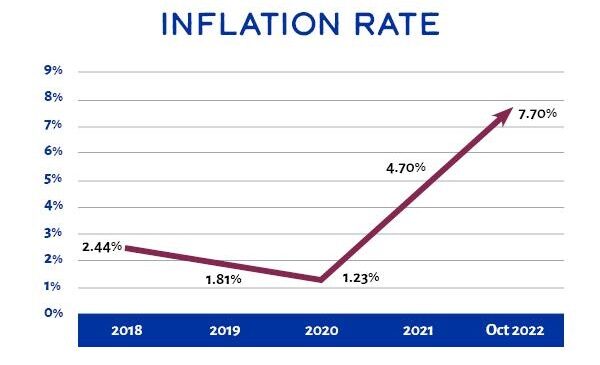
The official data shows that combined retail inflation under the new series rose from 2.74% in January 2026 to 6.09% in October.
| Month | Retail inflation |
|---|---|
| January 2026 | 2.74% |
| February 2026 | 3.21% |
| March 2026 | 3.40% |
| April 2026 | 3.48% |
| May 2026 | 3.93% |
| June 2026 | 4.38% |
| July 2026 | 4.45% |
| August 2026 | 4.83% |
| September 2026 | 5.54% |
| October 2026 | 6.09% |
Source: MoSPI CPI 2024 series. October provisional; September final.
Year-on-year combined CPI inflation, new 2024 base series. October is provisional.
Jan-Feb Mar-Apr May-Jun Jul-Aug Sep-Oct
The direction is clear: inflation has increased throughout the year under the revised series, with a particularly noticeable acceleration in September and October.
This trend makes the next few CPI releases especially important.
9. What should happen next? The questions consumers deserve answers to
The October inflation figures raise several questions that deserve clear answers from the authorities.
First, are market prices being monitored effectively?
National inflation figures provide an overall picture, but consumers experience prices at local markets. Authorities should publish regular comparisons of wholesale and retail prices for essential commodities.
Second, are farmers receiving fair prices?
When consumers pay substantially more for agricultural products, it is important to understand how much of that increase reaches farmers and how much is absorbed by intermediaries and distribution costs.
Third, are buffer stocks being used effectively?
The government should explain whether available reserves are sufficient, whether market interventions are timely and whether supplies are reaching the markets experiencing the greatest pressure.
Fourth, what protection is available to vulnerable households?
Food-security programmes need to remain responsive to changing prices. Assistance should reach those who have the least capacity to absorb increases in essential expenditure.
Finally, how are authorities preparing for further price volatility?
The next few months will be important for agricultural arrivals, seasonal demand and the overall food-price outlook. Preventive action is generally more useful than intervention after prices have already climbed sharply.
These are not merely political questions. They concern the everyday economic security of Indian households.
10. The larger economic picture: Inflation is also a question of purchasing power
India’s economic growth, infrastructure development, industrial expansion and rising consumption are important indicators of national progress.
But economic progress must also be measured by what ordinary citizens can afford.
A family whose income increases by 5% while its essential expenditure rises faster may actually become financially weaker, even if its nominal earnings are higher.
This is the difference between income growth and real purchasing power.
When food prices rise faster than household earnings, families have less money available for education, healthcare, housing improvements, savings and other productive expenditure.
Over time, sustained pressure on household consumption can also affect the wider economy.
Small retailers may experience weaker demand. Restaurants may lose customers. Families may postpone purchases. Businesses dependent on domestic consumption may face slower sales.
The effects can spread well beyond the agricultural sector.
That is why food-price stability should be treated as an important part of economic policy, not simply an issue for agriculture departments.
Conclusion: When the kitchen budget becomes an economic warning
The latest inflation figures deserve serious attention, particularly because food prices are rising faster than the overall consumer price index.
The official numbers tell us that India’s retail inflation reached 6.09% in October 2026, while food inflation climbed to 8.94%. The sharp increases in onions, garlic, ginger and lemons demonstrate how individual commodity pressures can affect the wider cost of living.
At the same time, falling prices of potatoes, cauliflower and other vegetables show that inflation is not uniform across the food basket. A proper assessment must recognise both developments rather than suggest that every essential commodity has become more expensive.
But the central issue remains.
For a family managing a fixed income, the difference between an economic statistic and a financial problem is often just a few hundred rupees at the grocery counter.
People do not experience inflation through statistical releases. They experience it when the same amount of money buys fewer groceries, when monthly savings disappear faster and when essential purchases become difficult to manage.
The government cannot control every supply shock. The RBI cannot produce vegetables through monetary policy. But better market surveillance, agricultural storage, timely intervention, transparent pricing and effective food-security programmes can reduce the burden.
The inflation debate has moved from the fuel station to the dining table. And when the cost of feeding a family begins to rise faster than its ability to earn, the issue is no longer just about prices. It is about the quality of life, economic security and the purchasing power of ordinary Indians.
Editorial fact-check: Important corrections incorporated
For publication accuracy, several points in the original summary require qualification.
| Original claim | Editorial assessment |
|---|---|
| Retail inflation at 6.09% |
Verified
Official MoSPI release |
| Food inflation at 8.94% |
Verified
Official MoSPI release |
| Onion inflation at 116.22% |
Verified
|
| Garlic inflation at 60.74% |
Verified
|
| Lemon inflation at 47.30% |
Verified
|
| First breach in two years |
Needs qualification
New CPI series begins in January 2026 |
| Milk and sugar driving inflation | Requires item-specific supporting data; not established by the headline figures alone |
| All listed household items becoming more expensive | Not established; official data also records deflation in several vegetables |
| One reading above 6% constitutes RBI target failure | Incorrect; the formal failure test requires three consecutive quarters outside the tolerance band |
The article uses the official October release as its primary statistical source and avoids presenting unsupported household price comparisons as verified national trends.