U.S.-Iran Conflict Escalates: Five Iranian Oil Tankers Destroyed as Tehran Strikes U.S. Targets in Jordan
By: Javid Amin | 08 September 2026
The U.S.-Iran confrontation has entered a more dangerous phase, with Washington striking five Iranian oil tankers and Tehran responding with a ballistic-missile attack on U.S.-linked military positions in Jordan. Amman says 18 of 20 missiles were intercepted, but the episode shows how quickly the conflict is spreading beyond the Gulf.
The latest escalation between the United States and Iran has shifted the battlefield once again.
On Tuesday, September 8, the U.S. military said it destroyed five Iranian oil tankers after accusing Iran’s Islamic Revolutionary Guard Corps of repeatedly targeting an American warship with ballistic missiles. Hours later, Iran retaliated by launching 20 ballistic missiles towards Jordan, where American forces are stationed.
Jordan’s military said it intercepted 18 of the missiles, while two fell in unpopulated areas. No casualties were reported.
The sequence is significant not simply because of the exchange itself, but because of what it says about the direction of the wider conflict. An increasingly direct U.S.-Iran confrontation is now placing military installations, shipping routes and energy infrastructure across several Middle Eastern countries under pressure.
And Jordan, which has long tried to maintain its position as a stable U.S. partner in an exceptionally volatile neighbourhood, is once again finding itself caught between two competing military powers.
The immediate trigger for the latest escalation was maritime.
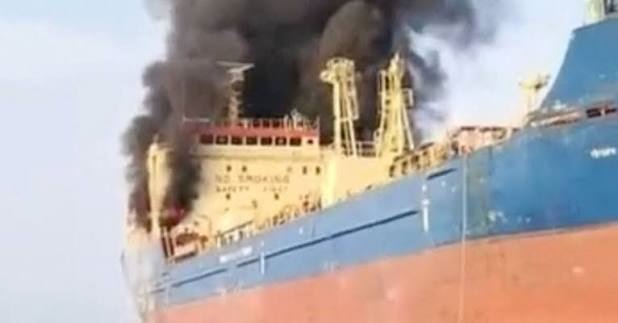
U.S. Central Command said American forces destroyed five Iranian crude-oil tankers on September 8. According to the U.S. account, the vessels were connected to an Iranian oil network associated with the IRGC.
Four tankers were struck in the Gulf of Oman, while another was hit near Iran’s Kharg Island, a crucial oil-export hub. U.S. officials said crews were warned to abandon the ships before the vessels were rendered inoperable.
Washington presented the operation as retaliation rather than an isolated attack on commercial shipping.
The U.S. military said Iranian forces had attempted to strike a U.S. Navy warship with ballistic missiles on two occasions. The American vessel reportedly evaded the attacks and no U.S. personnel were injured.
The distinction matters.
Washington is portraying the tankers as part of an economic and military network supporting Iran’s war effort, rather than treating them simply as civilian commercial vessels. Tehran, however, has described the American action as an attack on Iranian commercial shipping and has threatened consequences for U.S. military facilities across the region.
That competing interpretation is likely to become one of the central disputes surrounding the escalation.
U.S. Secretary of State Marco Rubio made Washington’s position particularly blunt, saying the U.S. would continue striking Iranian ships if Tehran continued attacking American naval vessels.
The message from Washington is therefore clear: attacks on American military assets will carry an economic and maritime cost.
Iran’s response suggests Tehran has accepted the challenge.
Iran strikes U.S.-linked targets in Jordan
Iran did not answer the tanker strikes only at sea.
The Islamic Revolutionary Guard Corps said it launched ballistic missiles against U.S.-related targets at Al Azraq in Jordan, a strategically important military area where American forces operate.
Jordan’s Armed Forces confirmed that 20 ballistic missiles were fired towards Jordanian territory.
Its air-defence systems intercepted and destroyed 18 of them, while two missiles landed in unpopulated areas. The Jordanian military reported no casualties and said specialist teams were deployed to secure debris and shrapnel.
The Jordanian government’s account is important because it provides an independent regional confirmation of the missile attack and its immediate consequences.
Iran, meanwhile, claimed that the operation caused damage to facilities used by U.S. forces, including areas associated with fighter aircraft. Those claims have not been independently verified.
The difference between the two narratives is revealing.
Tehran has an interest in demonstrating that it can penetrate U.S.-aligned defences and retaliate against American forces beyond the immediate Gulf theatre. Jordan, by contrast, has emphasised the effectiveness of its air-defence network and the absence of casualties.
The result is a familiar pattern in Middle Eastern conflicts: competing claims of military success, with independently verified battlefield information often arriving much later.
Why Jordan matters in the U.S.-Iran confrontation
Jordan is not a frontline combatant in the conventional sense.
But geographically and strategically, it occupies an unusually sensitive position.
The kingdom borders Israel, Syria, Iraq and Saudi Arabia and maintains a close security relationship with Washington. American forces operate from Jordanian facilities, making the country an important part of the U.S. regional military architecture.
That relationship also creates a vulnerability.
Iran does not necessarily need to attack the American mainland or American forces in the Gulf to retaliate against Washington. U.S. military installations spread across the region provide Tehran with multiple potential targets.
Jordan is particularly sensitive because any sustained attack on its territory risks transforming the country’s role from U.S. security partner into an active battlefield.
That would carry consequences far beyond the immediate military exchange.
Amman has spent years balancing its strategic relationship with Washington against the need to prevent regional conflicts from destabilising Jordan internally. A prolonged missile campaign would test that balancing act severely.
The Strait of Hormuz is becoming the bigger battlefield
The tanker strikes also need to be viewed alongside the struggle over the Strait of Hormuz.
The waterway is one of the world’s most important energy corridors. A substantial share of global oil shipments passes through the strait, meaning even limited military disruption can quickly affect freight costs, insurance premiums and crude prices.
The latest confrontation comes as Iran threatens further restrictions on maritime traffic, while Washington seeks to keep oil moving through the waterway.
Reuters reported that Iran also threatened or attacked vessels in the region following the tanker strikes, while the United States continued efforts to maintain maritime access.
That creates a dangerous economic equation.
The U.S. wants to weaken Iran’s ability to finance its military and regional network by restricting oil exports. Iran, meanwhile, has powerful leverage over the shipping routes through which energy supplies move.
If both sides continue using commercial shipping as a pressure point, the consequences will not remain confined to Washington and Tehran.
They will be felt in Asia, Europe and other oil-importing economies.
Oil prices react as markets watch the Gulf
Financial markets have already begun responding to the renewed confrontation.
Brent crude moved sharply higher amid concerns over shipping disruptions, with prices approaching the $100-a-barrel level during the latest escalation.
That is significant because the oil market does not need a complete closure of the Strait of Hormuz to experience disruption.
Even threats against shipping can increase insurance costs. Tankers may delay voyages, reroute where possible or demand higher risk premiums. Ports can become congested, and buyers may compete for alternative supplies.
For countries heavily dependent on imported energy, the effect can eventually reach consumers through higher fuel and transport costs.
The destruction of five tankers therefore has a dual purpose from Washington’s perspective.
It imposes a direct cost on Iran while signalling that Iranian oil exports remain vulnerable.
But there is an obvious danger: if Tehran responds by attacking more tankers or restricting the movement of commercial ships, the economic pressure can quickly become global.
This is no longer just a U.S.-Iran exchange
The most worrying feature of the latest episode is its geographical spread.
The confrontation is now involving several interconnected theatres.
There is the U.S.-Iran military contest at sea. There are American bases in countries such as Jordan. There is the continuing contest around the Strait of Hormuz. And Iran-backed Houthi forces have simultaneously intensified attacks against Saudi targets.
Reuters and the Associated Press reported that Houthi attacks in southern Saudi Arabia caused casualties and damage to energy-related infrastructure, adding another layer to an already unstable regional picture.
This creates the possibility of a chain reaction.
An American strike on Iran can provoke an Iranian response. Iran can retaliate against U.S. forces stationed in another country. Iranian-aligned groups can open additional fronts. Regional governments can then become involved whether they want to or not.
The danger is not necessarily that every actor wants a regional war.
It is that several actors may believe escalation serves their immediate interests.
Israel and the Gulf states are watching closely
The latest developments also matter for Israel and the Gulf monarchies.
Israel has long viewed Iran’s military capabilities and regional alliances as a major security threat. Gulf states, meanwhile, have strong economic and security interests in keeping oil infrastructure and maritime trade functioning.
A wider U.S.-Iran confrontation could therefore create pressure on countries that have tried, at different times, to avoid being drawn directly into the conflict.
Saudi Arabia and other Gulf states face a particularly complicated calculation.
They rely on U.S. security guarantees but also understand that Iranian retaliation can reach energy infrastructure, ports and civilian areas.
That makes escalation management as important as military deterrence.
The legal and strategic question surrounding the tankers
There is also a deeper issue beneath the immediate military exchange: when does an oil tanker become a legitimate military target?
Washington’s argument rests on the claim that the vessels were part of an Iranian network supporting the IRGC and therefore contributed to Iran’s military capacity.
But commercial shipping occupies a sensitive position under international humanitarian law. The legality of attacking a civilian vessel depends on factors including its status, military use, ownership, contribution to military operations and the circumstances of the attack.
The destruction of the tankers will therefore attract scrutiny well beyond the immediate political confrontation.
The same applies to Iran’s missile attack on Jordan.
Iran may argue that it was targeting U.S. military assets rather than Jordanian civilians or infrastructure. Jordan, however, regards any unauthorised missile attack on its territory as a violation of its sovereignty.
That distinction could become increasingly important if attacks continue.
Jordan’s success in interception may conceal a bigger problem
From a purely tactical perspective, Jordan’s reported interception of 18 out of 20 missiles is a significant defensive outcome.
But strategically, the fact that 20 ballistic missiles were launched towards Jordan is itself the bigger story.
Missile defence can reduce casualties, but it cannot remove the underlying threat.
Repeated attacks create pressure on radar systems, interceptor stocks, military personnel and civilian confidence. They also force governments to maintain high readiness for long periods.
And missile defence is expensive.
The longer this confrontation continues, the more difficult it becomes to distinguish between a successful defensive system and a sustainable defensive strategy.
Jordan’s immediate success therefore should not be mistaken for immunity.
A dangerous cycle of retaliation
The latest sequence can be reduced to a simple but increasingly dangerous cycle:
Iran attacks U.S. military assets → Washington strikes Iranian economic and maritime assets → Tehran targets U.S. positions in the region → regional allies face the consequences → shipping and energy markets react.
Each side can argue that its latest action is defensive or retaliatory.
That is precisely what makes the situation difficult to contain.
Neither Washington nor Tehran needs to formally declare a wider war for the conflict to expand. A series of limited responses can gradually create a much larger confrontation.
The history of the Middle East is full of examples of conflicts that expanded through miscalculation rather than deliberate planning.
The question now is whether both sides can stop the cycle before the next retaliation becomes more damaging than the last.
What happens next?
Three developments will be particularly important.
First, maritime traffic in the Gulf. Any further attacks on tankers or U.S. naval vessels could push shipping costs and oil prices sharply higher.
Second, U.S. bases across the region. If Iran continues targeting American facilities outside the Gulf, countries hosting those forces could face increasing domestic and diplomatic pressure.
Third, the response from Washington. If another American ship comes under attack, the United States could respond with further strikes on Iranian energy infrastructure, military assets or shipping.
That would raise the possibility of a much broader confrontation.
For Jordan, the immediate priority will be protecting its airspace while preventing the country from becoming permanently embedded in the U.S.-Iran battlefield.
For Washington, the challenge is to demonstrate deterrence without triggering a conflict that becomes impossible to control.
For Tehran, the calculation is equally difficult: demonstrate that American pressure carries costs without provoking an overwhelming U.S. response.
A regional war could begin without anyone intending it
The latest U.S.-Iran escalation is therefore about much more than five tankers and 20 missiles.
It is a test of whether military deterrence can still operate without becoming a mechanism for uncontrolled escalation.
The United States has demonstrated that it is willing to attack Iranian oil assets in response to threats against American forces. Iran has demonstrated that it is prepared to respond against U.S. positions beyond the Gulf. Jordan has shown that it can intercept incoming missiles, but it cannot control the decisions being made in Washington or Tehran.
And that is the central danger.
The region is becoming a network of interconnected pressure points. A tanker strike in the Gulf can lead to a missile launch over Jordan. A strike on an American base can produce another attack on Iranian shipping. A maritime confrontation can push oil prices higher across the world.
The immediate missile attack may have ended without casualties in Jordan.
The strategic consequences, however, are only beginning.