Sajad Lone vs Rahul Gandhi: Kashmir Pellet Victims and the Politics of Selective Outrage
By: Javid Amin | 23 Aug 2026
Sajad Lone’s Question to Rahul Gandhi Is Uncomfortable — Precisely Because the Numbers Are Real
There is a peculiar irony in Indian politics this week.
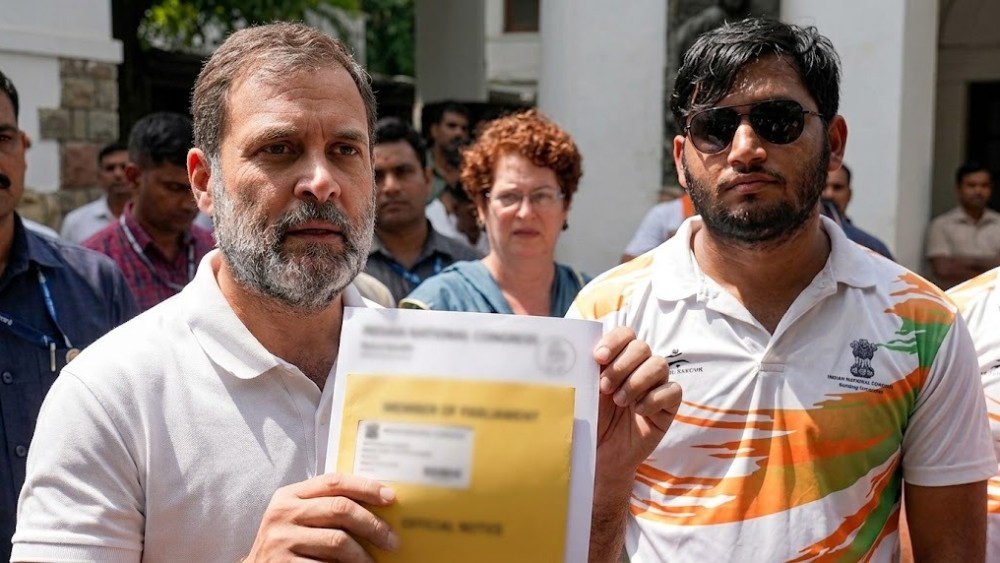
A 19-year-old student in Delhi suffered pellet injuries during a protest. His complaint initially struggled to get an FIR registered. Rahul Gandhi went personally to the Parliament Street police station, sat through a prolonged dharna and demanded that the police register a case. Eventually, an FIR was filed.
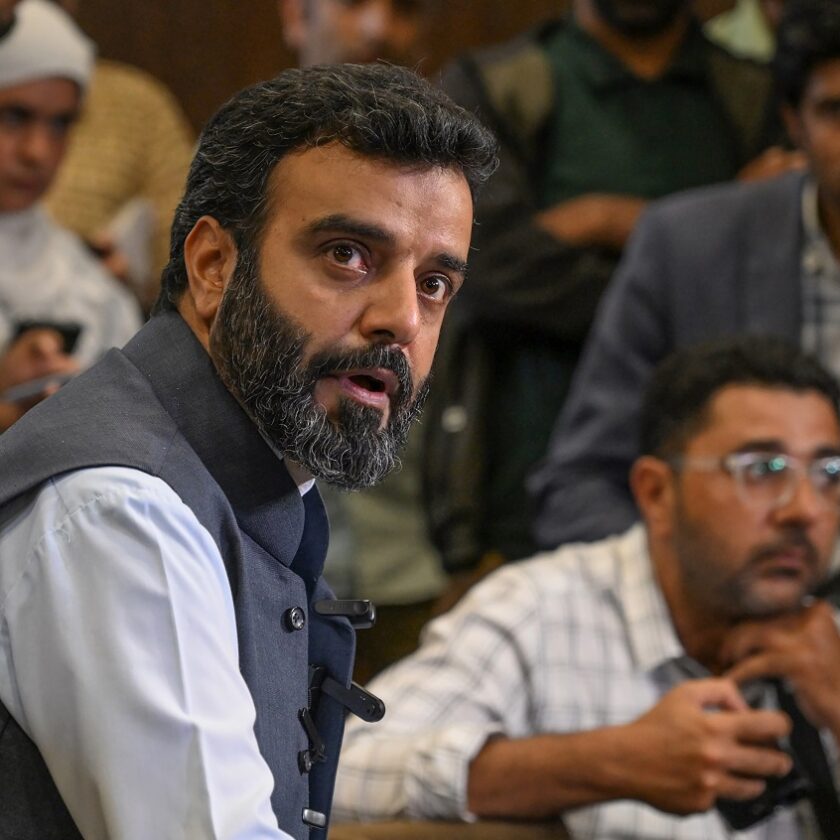
That intervention has now produced a pointed question from Jammu & Kashmir Peoples Conference chief Sajad Lone:
Where was this urgency when Kashmir witnessed years of pellet firing, including a period in which the then state government recorded more than 6,000 pellet injuries and hundreds of eye injuries?
Lone’s challenge, issued publicly on August 23 and reported on August 24, is not merely another exchange between politicians. It touches a much larger and more uncomfortable question about Indian politics:
Does the political system respond differently to the same form of state force depending on where the victim lives?
Lone says it does.
Rahul Gandhi has not, at the time of publication, publicly answered the specific challenge in the reports examined for this article.
That leaves the question hanging.
And the history behind it is difficult to dismiss.
What Exactly Did Sajad Lone Say?
Lone acknowledged Gandhi’s intervention in Delhi but questioned why the Congress leader had not demonstrated the same “moral urgency” during Kashmir’s pellet violence.
He pointed specifically to the period following the killing of Hizbul Mujahideen commander Burhan Wani in July 2016, when Kashmir experienced months of protests, clashes, shutdowns and security-force operations.
Lone cited the former Jammu & Kashmir government’s own figures: 6,221 people were injured by pellet firing between July 8, 2016 and February 27, 2017, including 782 people who suffered eye injuries.
He then asked whether Kashmiris had received the same concern that Gandhi was displaying for the Delhi victim.
His challenge went beyond a television soundbite.
Lone invited Gandhi to come to Kashmir, speak to pellet victims and even attempt to get an FIR registered on their behalf.
That is the political heart of the confrontation.
Lone is not arguing that Gandhi was wrong to help the Delhi student.
He is arguing that Gandhi’s intervention exposes a standard that should also apply to Kashmir.
First, the Delhi Incident: What Happened?
The immediate trigger was the July 20 protest at Jantar Mantar.
Nineteen-year-old Sahil Lochab alleged that he suffered pellet injuries during the demonstration. Reports said he had numerous pellets embedded in his body and continued to experience serious problems, including impaired vision.
Lochab’s family and representatives approached Delhi Police seeking registration of an FIR.
According to reports, a written complaint was submitted before Gandhi’s intervention, but the complainant alleged that police had not provided the expected acknowledgement or FIR number.
On August 21, Gandhi accompanied Lochab to the Parliament Street police station.
When the case was not immediately registered, Gandhi began a dharna.
The protest lasted several hours.
The Delhi Police eventually registered an FIR concerning the alleged pellet injuries. Reports indicate that no individual was initially named as an accused and that the case was registered under Sections 118 and 125 of the Bharatiya Nyaya Sanhita.
This distinction is important.
An FIR is the beginning of a criminal investigation — not a finding of guilt.
Registration of the case does not establish that a particular police officer unlawfully fired pellets.
That will have to be established, if at all, through investigation and evidence.
But Gandhi’s political argument was straightforward: a serious allegation of unlawful force deserves to be formally investigated.
It is precisely that principle that Lone has now turned back toward Kashmir.
Kashmir’s Pellet Story Is Much Larger
The Delhi incident involves one recent alleged victim.
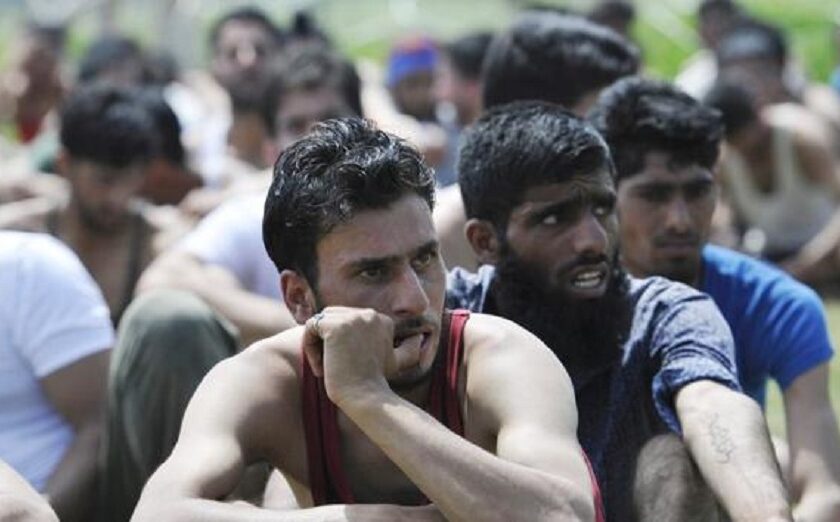
Kashmir’s pellet controversy developed over years and affected thousands.
Pellet-firing shotguns were introduced in the Valley around the 2010 unrest as a “less-lethal” crowd-control option, intended to reduce reliance on live ammunition.
The distinction was always important.
“Less-lethal” does not mean harmless.
A shotgun cartridge disperses numerous metal pellets over a broad area. Unlike a conventional projectile, the spread makes precise targeting difficult.
That characteristic became particularly devastating when pellets struck faces and eyes.
The UN human rights report on Kashmir described the pellet-firing shotgun as one of the most dangerous weapons used against protesters and noted the serious injuries caused by its use.
2010: The Beginning of the Pellet Era
The summary supplied for this article describes pellet guns as being introduced after the 2010 unrest.
Broadly, that is correct, but there is an important historical qualification.
The 2010 Kashmir unrest was itself a major episode of deadly violence, with more than 100 people killed in security-force firing and other incidents.
The pellet shotgun emerged during that period as an alternative crowd-control tool.
The UN’s later investigation recorded that the Union Home Ministry commissioned a task force after the 2010 violence to develop standard operating procedures for non-lethal crowd control. Interestingly, the 12-gauge pellet shotgun was not listed in the Bureau of Police Research and Development’s 2011 standard operating procedures.
That detail is significant.
It means the debate was not simply about whether pellets caused injuries.
It also involved questions about what weapons should legitimately be considered appropriate for crowd control in the first place.
2016: The Year That Changed the Debate
The real explosion in pellet use came after Burhan Wani was killed on July 8, 2016.
Large-scale protests erupted across the Valley.
Security forces faced stone-pelting, attacks on installations and attempts to disrupt counterinsurgency operations.
The government argued that forces required non-lethal tools to control violent crowds and reduce deaths from conventional firearms.
Human-rights groups countered that the indiscriminate spread of pellets caused disproportionate injuries, particularly to the eyes.
Both elements form part of the historical record.
Ignoring either side produces an incomplete story.
The 6,221 Figure: What It Actually Means
This number is frequently repeated — and it is genuine.
But it needs to be presented accurately.
In January 2018, then Chief Minister Mehbooba Mufti told the Jammu & Kashmir Legislative Council that 6,221 people suffered pellet injuries between July 8, 2016 and February 27, 2017.
The same government data recorded:
- 9,042 total injuries from bullets, pellets, PAVA shells and other causes;
- 6,221 pellet injuries;
- 368 bullet injuries;
- 4 PAVA-shell injuries;
- 2,449 other injuries;
- 782 eye injuries among the injured; and
- 510 eye-injury patients hospitalised.
That is stronger evidence than simply quoting a human-rights organisation.
These were figures presented by the then J&K government itself.
So when Lone cites 6,221, he is not inventing a number.
One Important Correction: “782 Eye Injuries” Does Not Mean 782 People Were Permanently Blinded
This distinction matters for credible reporting.
The frequently quoted government figure is 782 eye injuries, not 782 permanently blinded people.
Human-rights groups and other researchers have reported additional figures for blindness and permanent visual impairment, but those datasets differ in methodology and time period.
Human Rights Watch, for example, cited the government’s 6,221 figure and 782 eye injuries while separately noting that IndiaSpend had documented 139 people blinded by pellet injuries between July 2016 and February 2019.
The UN also noted that civil-society estimates of people partially or completely blinded were higher than official figures.
Therefore, the responsible formulation is:
6,221 people suffered pellet injuries, including 782 eye injuries, during the period recorded by the J&K government.
It is more accurate than saying all 782 victims lost their eyesight.
Were “No FIRs” Filed for Kashmir Victims?
This is another claim in the supplied summary that needs qualification.
Lone’s political argument is that Kashmir’s pellet victims did not receive the kind of visible accountability represented by Gandhi’s Delhi intervention.
That is a legitimate political argument.
But saying categorically that there were “no FIRs” for pellet incidents in Kashmir would be too broad without case-by-case evidence.
There were FIRs and investigations into various incidents of violence during the unrest.
The deeper issue is different:
Did the use of pellet guns by security personnel result in systematic, transparent criminal accountability comparable to the investigation now initiated in Delhi?
That question remains far more difficult.
The UN and rights organisations repeatedly raised concerns about accountability and the proportionality of force.
That is the stronger and more defensible criticism.
The Government’s Defence: Pellets Were a Crowd-Control Alternative
Any serious investigation into this issue must include the security forces’ argument.
The CRPF and government authorities have historically maintained that pellet guns were intended as a less-lethal alternative to firearms.
The logic was brutally practical:
If security personnel faced violent crowds, stone-pelting or attempts to overrun installations, the choice could be between using pellets and using live ammunition.
From this perspective, pellets were intended to reduce fatalities.
The Home Ministry told Parliament in 2017 that alternatives were being explored, but pellets could be used if other measures failed to disperse violent crowds.
That argument cannot simply be erased from the record.
But it also does not answer the proportionality question.
The Human-Rights Criticism: “Less-Lethal” Can Still Cause Permanent Harm
This is where the controversy became international.
Human Rights Watch argued that the indiscriminate nature of shotgun-fired pellets made them particularly dangerous and called for an end to their use against protesters.
The UN human-rights report likewise highlighted the weapon’s wide dispersion and the severe injuries it caused.
The problem is inherent in the physics of the weapon.
A conventional projectile can be aimed at an individual.
A cartridge containing hundreds of pellets creates a broad pattern.
When used against a crowd, people who may not themselves be participating in violence can be struck.
That is why necessity, distinction and proportionality became central to the debate.
The Hiba Nisar Case Showed the Human Cost
Few cases illustrated the controversy more powerfully than that of Hiba Nisar, a toddler injured in Shopian in November 2018.
She was around 18–20 months old when pellets struck her right eye during clashes near her home.
Doctors performed surgery to remove the pellet and warned that they could not guarantee restoration of her sight.
The case was especially disturbing because she was not an adult protester standing in a confrontation.
She was a child inside her home.
Her case became a symbol of the wider debate over whether a crowd-control weapon capable of causing severe eye injuries can be justified when fired in densely populated civilian environments.
This Is Why Lone’s Challenge Has Political Force
Lone’s argument does not depend on proving that every pellet firing in Kashmir was unlawful.
Instead, it asks a simpler question:
If an alleged pellet injury in Delhi deserves political intervention and an FIR, why shouldn’t a Kashmiri victim receive the same attention?
That is a powerful rhetorical question.
It shifts the debate away from the identity of the protester and toward the principle of equal citizenship.
But it also exposes a weakness in Lone’s argument.
The circumstances of the Delhi protest and the Kashmir unrest were not identical.
Kashmir in 2016 involved prolonged violent confrontations, militant activity, attacks on security personnel and large-scale public disorder.
The Delhi case involves a specific alleged injury during a protest.
The legal circumstances therefore cannot simply be treated as interchangeable.
The principle of accountability, however, can be.
The Real Issue Is Not Whether Delhi and Kashmir Were Identical
They weren’t.
The better question is:
Should the standard for investigating alleged excessive force be the same regardless of whether the victim is in Delhi or Kashmir?
That is a much harder question for political parties to evade.
If a police or security official is alleged to have used excessive force:
- Was the force necessary?
- Was it proportionate?
- Was the person responsible identified?
- Was the complaint recorded?
- Was medical evidence preserved?
- Was an independent investigation conducted?
- Was the victim compensated where appropriate?
- Was disciplinary or criminal action taken?
Those questions should apply everywhere.
Lone Also Turns the Spotlight on NC and PDP
There is another layer to his statement that deserves attention.
Lone accused the National Conference and Peoples Democratic Party of failing to apologise for pellet use during periods when they were in power.
He pointed out that both parties controlled the Home Department during different periods associated with the use of pellets.
This is politically significant.
The PDP governed J&K in coalition with the BJP from 2015 until 2018.
The NC governed during earlier periods of Kashmir unrest.
Lone himself served as a minister in the PDP-BJP government from 2015 to 2018, a fact that adds an uncomfortable dimension to his criticism.
He is not an outside observer of that era.
He was part of the political establishment during a portion of the period he is now invoking.
That does not invalidate his criticism.
But it means readers should ask a second question:
What responsibility does Lone himself accept for the decisions taken while he was in government?
That question has not been answered by simply criticising Rahul Gandhi.
The INDIA Alliance Creates Another Political Contradiction
Lone has deliberately linked NC and PDP to Rahul Gandhi’s wider opposition alliance.
His argument is essentially:
If Gandhi wants to champion accountability for pellet injuries, what does he say about parties that are now political allies but were in power when pellets were being used in Kashmir?
This is a sharp political attack because it forces the Congress to navigate competing narratives.
On one side:
Congress: excessive force against protesters must be investigated.
On the other:
Lone: then apply that principle to Kashmir too — including cases involving parties aligned with the opposition.
That is where the issue moves from human rights to coalition politics.
Rahul Gandhi’s Silence Is Now the Story
There is an important distinction between “Rahul Gandhi never cared about Kashmir pellet victims” and “Rahul Gandhi has not publicly responded to Lone’s challenge.”
The first is a sweeping conclusion that cannot be established from the evidence examined here.
The second is verifiable as of publication.
That distinction should be preserved.
Gandhi has spoken about Kashmir and human-rights issues at various points in his political career.
The more specific question raised by Lone is whether Gandhi will now take direct political action on pellet victims, similar to what he did in Delhi.
That is what makes the coming days interesting.
What Would Happen If Gandhi Went to Kashmir?
It would be politically explosive.
Imagine Gandhi visiting pellet victims in Srinagar or south Kashmir and demanding investigations.
The consequences would be immediate.
For the Congress
It could strengthen the party’s claim that its opposition to excessive force is universal rather than selective.
For the NC and PDP
It could force uncomfortable questions about their own periods in government.
For the BJP
It would provide an opportunity to argue that Congress is reopening a controversial chapter in Kashmir politics.
For Lone
It would validate his challenge and potentially increase the Peoples Conference’s visibility.
For victims
It could bring renewed attention to medical, legal and compensation issues that have faded from national headlines.
That is why Lone’s invitation is more politically consequential than it initially appears.
What About the Pellet Guns Themselves?
The weapon has not simply disappeared from the policy debate.
Authorities have explored alternatives over the years, including PAVA shells, chilli-based munitions, tear gas and other crowd-control technologies.
The broader objective has been to develop tools that can disperse violent crowds while reducing the risk of permanent injury.
The problem is that no crowd-control technology is completely harmless.
A more sophisticated approach requires a graduated use-of-force model.
Ideally:
verbal warnings → barriers → controlled dispersal → less-injurious chemical/physical options → increasingly restrictive measures only where necessary.
The central principle should be that force is proportionate to the threat.
Why Pellet Guns Became Particularly Controversial in Kashmir
The Kashmir context magnified the problem.
The Valley contains densely populated towns and villages.
Protests frequently occurred around security operations or encounters.
A crowd could include:
- protesters;
- bystanders;
- journalists;
- residents;
- children;
- stone-pelters; and
- people trying simply to reach home.
A weapon that disperses hundreds of projectiles therefore creates a difficult problem of distinction.
That is why the issue became much bigger than the question of whether some protesters were violent.
The Forgotten Victim Problem
There is also a human story beneath the statistics.
A pellet injury does not necessarily end when the person leaves hospital.
Victims may face:
- repeated eye surgeries;
- permanent visual impairment;
- chronic pain;
- neurological injury;
- difficulty finding employment;
- education disruption;
- psychological trauma;
- family financial stress.
In other words, the real cost is not captured by the number 6,221.
That is a count of injuries.
It is not a count of lost careers, damaged families or years spent undergoing treatment.
Human-rights groups have repeatedly highlighted those longer-term consequences.
The “Selective Outrage” Argument Goes Beyond Rahul Gandhi
Lone’s criticism should also be applied more broadly.
Indian politics frequently responds intensely to an incident when it fits an existing political narrative.
A victim in Delhi may become a national story.
A victim in Kashmir may become a regional story.
A victim in Manipur, Bastar, Punjab or another conflict-affected region may receive yet another level of attention.
The larger democratic test is whether citizenship produces equal concern for victims of state excess regardless of geography or political identity.
That is the real philosophical question buried inside Lone’s statement.
But There Is Another Side: Kashmir’s Security Reality Cannot Be Erased
It would be intellectually dishonest to discuss pellet guns without discussing why they were deployed.
Kashmir’s security forces have operated in an environment involving:
- militant attacks;
- stone-pelting;
- attacks on police and military installations;
- large protest gatherings;
- encounter-site disruptions;
- curfew violations; and
- threats to personnel.
Security forces have argued that they needed options between doing nothing and using live ammunition.
That is a genuine operational dilemma.
But an operational dilemma does not automatically settle the question of whether a particular use of force was lawful or proportionate.
Those are separate questions.
The Accountability Gap Is the Bigger Story
The strongest lesson from the Delhi-Kashmir comparison may therefore not be:
“Rahul Gandhi is hypocritical.”
Nor is it:
“Pellet guns were always justified.”
The deeper issue is the apparent gap between injury and accountability.
If a person is seriously injured by state force, the system should provide a clear path:
complaint → FIR where legally warranted → investigation → identification of responsible personnel → evidence review → prosecution or disciplinary action where justified → compensation and rehabilitation where applicable.
When that chain breaks, victims lose faith.
And when victims in one region see another victim receiving faster political and legal attention, the perception of unequal citizenship becomes even stronger.
A Crucial Question for NC and PDP
Lone’s attack on NC and PDP deserves a separate response.
Both parties have governed Jammu & Kashmir.
Both have criticised human-rights abuses.
Both have also faced criticism over their own handling of security and law-and-order situations.
If they now stand alongside Congress in an opposition alliance, the obvious question is:
Will they support a fresh accountability mechanism for pellet victims?
That could include:
- reopening selected cases;
- reviewing unresolved complaints;
- compiling a comprehensive victim database;
- assessing permanent disabilities;
- reviewing compensation;
- identifying unresolved criminal investigations; and
- examining whether existing use-of-force rules were followed.
Such a process would be far more meaningful than another round of political accusations.
What Should Rahul Gandhi Do Next?
If Gandhi wants to neutralise Lone’s criticism, there are several options.
He could:
Visit Kashmir pellet victims
Not as a political rally, but as a fact-finding exercise.
Meet doctors and victim groups
Medical records could help distinguish the scale of eye injuries from political claims.
Ask for an official database
The government should publish comprehensive statistics covering injuries, deaths, compensation and investigations.
Seek accountability where evidence exists
Not every pellet injury necessarily constitutes a criminal offence. But credible allegations should be investigated.
Address his own alliance partners
If NC or PDP held responsibility during particular episodes, Gandhi could ask them publicly what accountability measures were undertaken.
That would transform the issue from a political accusation into an institutional demand.
What Should J&K’s Political Leadership Do?
The responsibility cannot rest entirely with Gandhi.
If Kashmir’s political leaders genuinely believe pellet victims were neglected, they can demand a formal review themselves.
J&K’s political class could jointly seek:
a comprehensive Pellet Victims Justice and Rehabilitation Review.
Such an exercise could document:
- every confirmed victim;
- nature of injury;
- date and location;
- medical treatment;
- visual impairment;
- compensation received;
- FIR status;
- investigation status;
- disciplinary proceedings;
- current rehabilitation needs.
That would produce something far more valuable than competing casualty figures.
The Future of the Pellet Debate
The Delhi incident has unexpectedly reopened a chapter many in Kashmir feared had been forgotten.
That may be its most important consequence.
For years, pellet guns became synonymous with the unrest of 2016.
Then the national conversation moved on.
Kashmir’s political landscape changed.
The constitutional structure changed.
Security conditions changed.
Tourism returned.
But the victims did not necessarily recover.
Some continue to live with impaired eyesight and permanent disability.
The Delhi case has now provided them with a new political reference point:
If one pellet victim deserves an FIR, what about us?
That question will be difficult to silence.
The Bigger Political Battle: One Incident vs Years of Memory
Sajad Lone has skilfully transformed a Delhi law-and-order case into a referendum on how India remembers Kashmir.
His message is not merely:
“Rahul Gandhi is being selective.”
It is:
“India’s political conscience cannot be geographically selective.”
That is a much more powerful argument.
But Lone’s challenge also carries responsibilities for him.
If accountability is the goal, he must be willing to scrutinise all governments, including those in which his own political camp participated.
The same principle must apply to everyone.
Final Analysis: The FIR Is Only the Beginning
The Delhi FIR should not be treated as proof that the allegations against security personnel are true.
It is the legal beginning of an investigation.
Likewise, the existence of thousands of pellet injuries in Kashmir does not by itself prove that every individual firing was unlawful.
But the scale of documented injuries is too large to dismiss.
The former J&K government’s own figures recorded 6,221 pellet injuries and 782 eye injuries between July 8, 2016 and February 27, 2017.
The UN and major human-rights organisations subsequently raised serious concerns about the use of pellet-firing shotguns and their impact on civilians.
And now Sajad Lone has placed Rahul Gandhi in front of a deceptively simple question:
If accountability matters in Delhi, should it not matter in Kashmir too?
There is no need to erase the difficult security circumstances of Kashmir to answer that question.
There is also no need to ignore the suffering of security personnel or protesters.
The democratic answer should be more straightforward:
Investigate allegations. Establish facts. Apply the same legal standards. Compensate genuine victims. Hold officials accountable where wrongdoing is proved. And do not allow geography to determine whose suffering counts.
That is ultimately what makes the Delhi-Kashmir comparison so uncomfortable.
The issue is no longer merely about pellet guns.
It is about whether equal citizenship also means equal visibility when the state is accused of causing harm.
And that is a question Rahul Gandhi, the NC, the PDP, the J&K administration and the Union government may all eventually have to answer.