Omar Abdullah on 1947 and 2019: Independence Day Remark Reopens Kashmir’s Constitutional Debate
By: News Desk | 15 Aug 2026
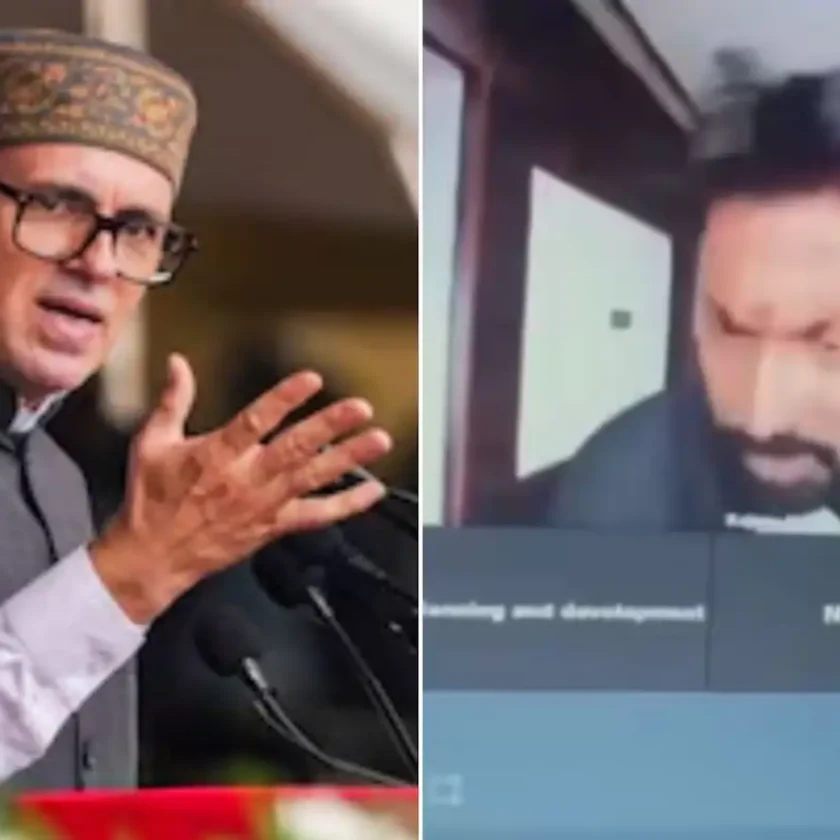
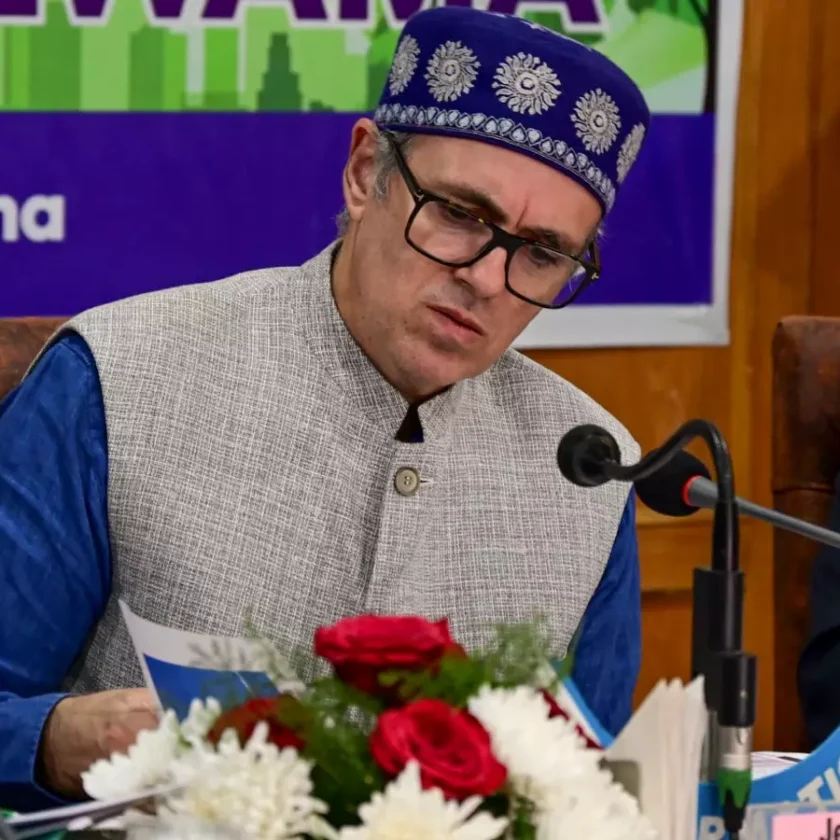
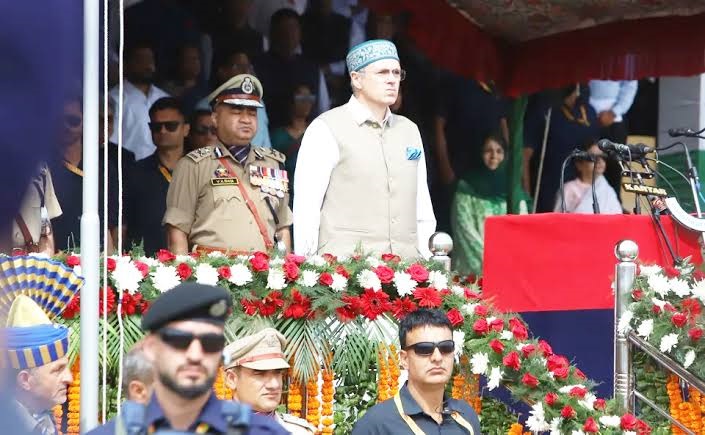
Srinagar: Jammu and Kashmir Chief Minister Omar Abdullah used Independence Day to revisit one of the most politically contested chapters in the region’s history, arguing that developments across the Line of Control (LoC) have vindicated the decision taken in 1947 by his grandfather, Sheikh Mohammad Abdullah, to resist tribal raiders and support Jammu and Kashmir’s accession to India.
The remark, delivered on August 15, 2026, carried a clear political message: Omar sought to distinguish between the decision taken by Kashmir’s political leadership at the time of Partition and the constitutional changes imposed on Jammu and Kashmir decades later.
His intervention is particularly significant because it comes seven years after the Union government ended Jammu and Kashmir’s special constitutional status in August 2019—a move that Omar and his National Conference have consistently opposed.
While the phrase “1947 right, 2019 wrong” neatly captures the political contrast in his position, it should be understood as an editorial summary of his argument rather than a verified verbatim quotation from the Independence Day speech. The latest reporting specifically records Omar saying that the situation across the LoC validates Sheikh Abdullah’s choice in 1947.
What Omar Abdullah Said on Independence Day
Omar Abdullah’s August 15 message centred on the historical choice made in 1947.
According to the latest report, he argued that looking at the situation on the other side of the LoC today reinforces the wisdom of Sheikh Abdullah’s decision to resist the tribal invasion and align with India.
The political significance of that argument goes beyond a historical reference.
For Omar, the comparison with Pakistan-administered Jammu and Kashmir is being used to reinforce the National Conference’s long-standing position that Jammu and Kashmir’s accession to India was the correct political choice.
At the same time, the Chief Minister’s party continues to demand restoration of the region’s statehood and has opposed the constitutional changes introduced after 2019.
That creates an interesting political distinction:
Omar Abdullah is not questioning the accession itself; his criticism is directed at what he sees as the subsequent erosion of Jammu and Kashmir’s constitutional and political position within India.
1947: How Jammu and Kashmir Acceded to India
The roots of the debate go back to the dramatic events of October 1947.
At the time of Partition, princely states were given the option of acceding to India or Pakistan, while Maharaja Hari Singh initially sought to maintain Jammu and Kashmir’s independence.
The situation changed rapidly after armed tribal forces entered Jammu and Kashmir from the Pakistan side in October 1947.
Facing the invasion and deteriorating security situation, Maharaja Hari Singh signed the Instrument of Accession to India on October 26, 1947.
Governor-General Lord Mountbatten accepted the accession on October 27.
The accession initially covered three principal subjects:
- defence;
- external affairs; and
- communications.
The subsequent constitutional relationship between J&K and India evolved through a series of political and constitutional arrangements, eventually including Article 370.
Sheikh Abdullah’s Role
Sheikh Mohammad Abdullah was one of the most influential political figures in Jammu and Kashmir at the time.
His National Conference had opposed the Muslim League’s two-nation politics and supported the idea of Jammu and Kashmir’s relationship with India.
That historical position remains central to the National Conference’s political narrative.
Omar Abdullah’s reference to his grandfather on Independence Day therefore serves two purposes.
First, it reinforces the NC’s claim that its political tradition was rooted in opposition to the two-nation theory and support for India’s secular framework.
Second, it challenges attempts to portray the party’s current opposition to the BJP government’s Kashmir policy as opposition to India itself.
In effect, the argument is:
Accession to India was one decision; the manner in which Jammu and Kashmir was governed after accession is a separate political question.
Why the LoC Comparison Matters
The most striking part of Omar’s latest message is his use of the Line of Control as a historical comparison.
For decades, the LoC has represented more than a military dividing line. It separates communities with shared histories, families and cultural connections while placing them under two different administrative and political systems.
Omar’s argument is essentially that the contrast between the two sides offers a retrospective justification for the 1947 decision.
This is a familiar theme in Indian political discourse on Kashmir, but Omar’s use of it is notable because it comes from a leader whose party has simultaneously challenged the constitutional changes made by New Delhi in 2019.
The message therefore carries an internal political distinction:
India, according to Omar’s argument, was the correct choice in 1947.
The 2019 constitutional changes, according to his established political position, were not.
That distinction is central to understanding the National Conference’s Kashmir politics.
2019: The Constitutional Turning Point
On August 5, 2019, the Union government took a series of constitutional and legislative steps that effectively ended Jammu and Kashmir’s special constitutional status.
Article 370 was rendered inoperative, while Parliament also passed the Jammu and Kashmir Reorganisation Act, 2019, dividing the former state into two Union Territories:
- Jammu and Kashmir, with a legislature; and
- Ladakh, without a legislature.
The government defended the decision as necessary for greater integration, equal application of Indian laws and accelerated development.
Opposition parties, including the National Conference, viewed the move very differently.
Omar Abdullah called the decision a “total betrayal” of the trust that people of Jammu and Kashmir had placed in India when the state acceded in 1947.
That statement is important when interpreting his latest Independence Day remarks.
His political argument has consistently been that the accession to India and the special constitutional arrangement that followed were compatible with each other.
Therefore, in the NC’s narrative, removing Article 370 did not strengthen the original relationship—it altered the terms under which that relationship had developed.
Article 370: Why It Remains Politically Sensitive
Article 370 originally provided Jammu and Kashmir with a special constitutional relationship with the Union.
Unlike most Indian states, the application of constitutional provisions to J&K was subject to a distinctive framework involving presidential orders and the state’s own constitutional institutions.
The provision had already been substantially diluted over decades, with many provisions of the Indian Constitution extended to J&K through presidential orders.
Nevertheless, Article 370 remained an important political symbol.
For the BJP and supporters of the 2019 decision, it represented an unnecessary constitutional exception that contributed to separatism, discrimination and uneven development.
For the National Conference and other critics, it represented a constitutional bridge connecting the accession of 1947 with the political relationship that followed.
That is why the debate over Article 370 has never been simply about one constitutional provision.
It is about identity, federalism, political autonomy and the meaning of accession itself.
Supreme Court’s 2023 Verdict Changed the Legal Landscape
The political dispute continued after 2019, but the legal position also changed significantly.
In December 2023, the Supreme Court of India upheld the Union government’s decision to abrogate Article 370, holding that the constitutional changes were valid.
The judgment also directed that assembly elections in Jammu and Kashmir be held by September 30, 2024, and said statehood should be restored at the earliest.
That distinction is important for contemporary reporting.
The National Conference can continue to politically oppose the 2019 decision and campaign for restoration of statehood or other constitutional changes, but the Supreme Court’s judgment remains the prevailing judicial position on the legality of the 2019 measures.
Therefore, any report describing Omar’s remarks should distinguish between:
political disagreement and legal status.
Why Omar Is Bringing 1947 Back Into the Debate
Omar Abdullah’s Independence Day intervention is politically calculated in another sense.
August 15 provides the National Conference with an opportunity to reaffirm its Indian nationalist credentials while simultaneously criticising the BJP government’s Kashmir policy.
This is especially important for the NC.
The party’s political identity rests heavily on Sheikh Abdullah’s legacy.
His opposition to the two-nation theory and his role in the politics surrounding accession remain fundamental elements of the party’s historical narrative.
By invoking his grandfather’s 1947 decision, Omar is effectively saying:
The National Conference’s disagreement with New Delhi’s Kashmir policy should not be confused with opposition to India’s independence or the accession of Jammu and Kashmir to India.
That is a significant political message.
The “1947 Right, 2019 Wrong” Formula
The phrase “1947 right, 2019 wrong” is powerful because it compresses decades of Kashmir’s constitutional history into two dates.
But editorially, it should not be presented as Omar Abdullah’s exact quotation unless a primary recording or transcript establishes those exact words.
Instead, the phrase works best as a description of the political contrast contained in his position.
1947 — Accession to India
The National Conference presents the accession and its opposition to the two-nation theory as a historic decision that kept Jammu and Kashmir within India’s constitutional framework.
2019 — Article 370 changes
The NC regards the removal of special status and reorganisation of the former state as a fundamental political setback and continues to demand restoration of statehood.
This makes the two dates powerful bookends for understanding Omar Abdullah’s current political narrative.
Omar’s Position Is More Nuanced Than a Simple Rejection of India
One of the most important aspects of Omar Abdullah’s latest statement is that it does not amount to a rejection of India’s role in Jammu and Kashmir.
Quite the opposite.
His argument explicitly defends the 1947 choice to align with India.
The disagreement is over what kind of relationship J&K should have with the Union and how much political autonomy the region should retain.
This distinction has been central to mainstream Kashmiri politics for decades.
It also allows the NC to position itself between two competing narratives:
- the BJP’s argument that complete constitutional integration was necessary; and
- separatist narratives that reject accession to India altogether.
Omar’s position attempts to occupy a third political space:
Jammu and Kashmir belongs within India, but its political and constitutional relationship with India should retain elements of the pre-2019 arrangement.
The Jammu Dimension Cannot Be Ignored
The political interpretation of Article 370 is not uniform across Jammu and Kashmir.
Support for the 2019 changes has been particularly strong among sections of Jammu’s population, where the BJP has argued that the old constitutional arrangement created regional inequalities and restricted integration with the rest of India.
The National Conference’s political messaging, meanwhile, remains especially influential in the Kashmir Valley.
This regional divide means that Omar’s remarks are likely to be interpreted differently across Jammu and Kashmir.
For his supporters, the statement is a defence of the region’s political history.
For his critics, it can be seen as an attempt to revive a constitutional arrangement that they believe was responsible for political and economic imbalance.
That disagreement is unlikely to disappear quickly.
Independence Day Becomes a Political Stage
Omar’s remarks also demonstrate how Independence Day speeches in Jammu and Kashmir carry an additional political layer.
Across India, August 15 is primarily a celebration of independence and national sovereignty.
In J&K, however, the day inevitably intersects with the region’s complicated history:
1947 accession → constitutional relationship → Article 370 → militancy → 2019 reorganisation → restoration of statehood debate.
Every political reference to one part of this timeline can reopen debate over the others.
Omar’s decision to invoke 1947 on Independence Day therefore goes beyond historical remembrance.
It is a statement about how the present government and the National Conference want Kashmir’s modern history to be remembered.
What Does Omar’s Message Mean for J&K Politics?
The immediate political implications are several.
1. NC Reaffirms Its Pro-Accession Position
By defending Sheikh Abdullah’s 1947 choice, Omar reinforces the National Conference’s position that its opposition to the BJP’s Kashmir policy is not equivalent to rejecting India’s sovereignty over J&K.
2. Article 370 Remains Politically Alive
Even after the Supreme Court’s 2023 judgment, Article 370 remains an important political issue for the NC and other regional parties.
3. Statehood Is Likely to Remain the Immediate Demand
The restoration of full statehood has increasingly become a central demand of the elected government in J&K.
4. The LoC Remains Part of the Political Narrative
Omar’s comparison with conditions across the LoC shows that Pakistan-administered Jammu and Kashmir continues to be used as an important reference point in debates about India’s handling of the region.
5. The NC Is Defending Its Historical Legacy
The reference to Sheikh Abdullah is also a reminder that Omar’s political argument is rooted in the ideological history of the National Conference.
The Bigger Question: What Does “Accession” Mean in 2026?
Perhaps the most important question raised by Omar’s Independence Day intervention is not whether 1947 was right or 2019 was wrong.
It is what India’s relationship with Jammu and Kashmir should look like today.
The legal framework has changed dramatically since 1947.
The constitutional position has changed dramatically since 2019.
The security situation has also evolved.
And J&K now has an elected government functioning within the post-2019 constitutional structure.
Against that backdrop, the political debate is increasingly shifting from whether the 2019 decision can be reversed to what can realistically be achieved through democratic politics.
For the National Conference, that means continuing to push for statehood restoration, while keeping the broader question of constitutional autonomy alive as part of its political narrative.
For the BJP and its supporters, the 2019 decision remains a defining achievement that they argue has brought greater constitutional uniformity and integration.
The disagreement is therefore not going away.
Bottom Line
Omar Abdullah’s Independence Day message has reopened a familiar but deeply consequential chapter of Jammu and Kashmir’s political history.
His central argument, as reported on August 15, 2026, was that the situation across the Line of Control vindicates Sheikh Abdullah’s decision in 1947 to resist the tribal invasion and align with India.
That position sits alongside Omar’s long-established opposition to the 2019 abrogation of Article 370, which he previously described as a betrayal of the trust associated with J&K’s accession to India.
Together, the two positions create a powerful political narrative:
India was the choice in 1947—but Omar Abdullah argues that the constitutional relationship established thereafter should not have been fundamentally altered in 2019.
Whether that argument can translate into concrete political change is another question.
For now, one thing is clear: the constitutional history of Jammu and Kashmir remains very much alive in its present-day politics.
And on Independence Day, Omar Abdullah used the history of 1947 to make a very contemporary political point about the Kashmir of 2026.