Manasbal Lake Pollution Crisis: Kashmir’s “Lake of Lotus” Faces a Troubling Future
By: Javid Amin | 08 Aug 2026
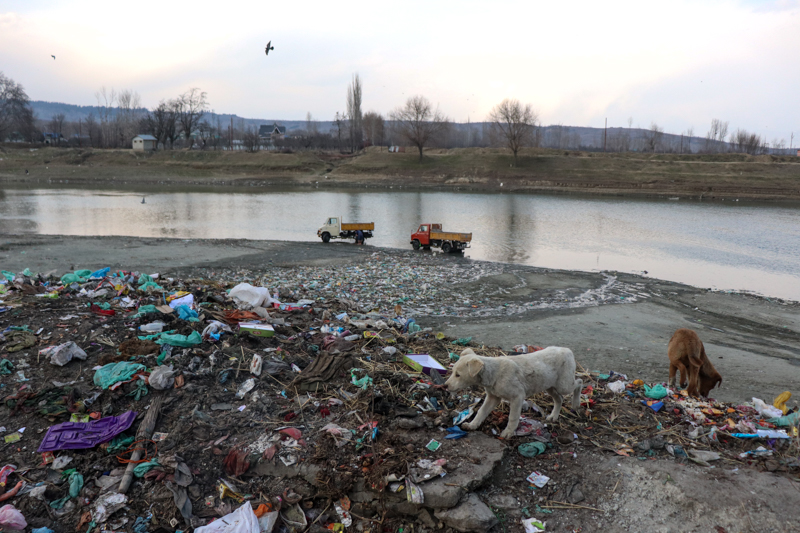
Manasbal Lake, one of Kashmir’s most distinctive freshwater wetlands, is facing renewed scrutiny over sewage, waste and declining water quality.
The concern has now reached the National Green Tribunal (NGT), which in January 2026 directed the Central Pollution Control Board (CPCB) and the Jammu & Kashmir Pollution Control Committee (J&KPCC) to assess the current condition of the Manasbal wetland and identify the sources of pollutants entering it.
The tribunal’s intervention followed allegations that untreated domestic sewage from nearly 14 villages was entering the wetland through the Lar Canal and adjoining areas. The authorities were asked to investigate the pollution sources and submit a status and action-taken report.
The development is significant because Manasbal is not simply a scenic tourist destination. It is an ecologically important wetland, supports aquatic life and has traditionally been associated with local water use.
The bigger concern is becoming increasingly clear:
A lake that should be functioning as a natural ecological asset is being placed under growing pressure from untreated wastewater and human activity.
What the NGT Has Actually Directed
There is an important distinction between the allegations surrounding Manasbal Lake and what has been officially established.
The NGT has not, in the publicly available January 2026 order and subsequent reporting reviewed for this article, itself declared Manasbal Lake “critically polluted.”
Instead, the Tribunal directed CPCB and J&KPCC to:
- Determine the present water-quality status of the wetland.
- Identify sources of pollutants entering the lake.
- Investigate alleged sewage discharge.
- Assess the environmental situation.
- Submit a status and action-taken report.
The order came after an application raised concerns over untreated sewage and solid waste entering the Manasbal wetland.
That distinction matters because a regulatory investigation and a formal pollution classification are not necessarily the same thing.
Nevertheless, the fact that the country’s environmental tribunal has ordered a pollution assessment underlines the seriousness of the situation.
The Sewage Problem at the Heart of the Crisis
The most immediate threat appears to be untreated domestic wastewater.
According to reporting on the NGT proceedings, sewage from nearly 14 villages was alleged to be reaching the wetland through the Lar Canal.
If untreated sewage enters a freshwater lake continuously, it can introduce:
- Faecal bacteria and pathogens.
- Organic matter.
- Nitrogen and phosphorus.
- Detergents and household chemicals.
- Suspended solids.
- Other contaminants associated with domestic wastewater.
This can gradually change the chemistry and ecology of the water body.
The problem becomes particularly severe when sewage treatment infrastructure is inadequate or non-functional.
A Sewage Treatment Plant That Has Become Part of the Problem
The Manasbal pollution controversy has also drawn attention to an existing sewage treatment facility.
Recent reporting on the NGT proceedings said a sewage treatment plant established for the area has remained non-operational for years, allowing untreated wastewater to continue posing a threat to the wetland.
This illustrates a recurring problem in environmental management across India:
Building a treatment plant is only the beginning.
A sewage treatment plant needs:
- Reliable electricity.
- Regular maintenance.
- Adequate sewer connections.
- Trained operators.
- Continuous monitoring.
- Proper sludge management.
- Sufficient capacity for the population it serves.
If any of these components fail, sewage can bypass the treatment system and reach natural water bodies.
Faecal Pollution: Why It Matters
Faecal contamination is particularly concerning because it indicates the possible presence of human or animal waste in water.
Parameters such as faecal coliforms and E. coli are widely used as indicators of faecal contamination.
Their presence does not mean that every disease-causing organism is necessarily present. But elevated levels indicate that water has been exposed to a contamination pathway through which pathogens can enter.
Potential health risks from untreated contaminated water can include gastrointestinal infections and diarrhoeal disease.
For this reason, water intended for drinking must undergo appropriate treatment and meet applicable drinking-water quality standards.
An Important Safety Point
The presence of pollution in a lake does not automatically mean every person using treated municipal water from the lake will become ill.
Risk depends on the source, treatment process, contamination levels and exposure.
The immediate public-health priority should therefore be testing, treatment and prevention of untreated exposure, rather than creating unnecessary alarm.
Scientific Research Also Points to Faecal Pollution
Concerns about sewage contamination are not limited to the current legal proceedings.
A 2025 scientific study examining emerging organic contaminants in Manasbal Lake detected faecal stanol biomarkers, including coprostanol and epi-coprostanol, in lake sediments. These compounds are associated with human and animal waste and can be used as indicators of faecal pollution.
The research also investigated other contaminants, including phthalate esters and polycyclic aromatic hydrocarbons, highlighting the increasingly complex mixture of pollutants entering the lake ecosystem.
This is important because pollution is not always visible.
A lake can appear beautiful from the shore while sediments and water contain contaminants that require laboratory analysis to detect.
Manasbal’s Ecological Health Is Also Under Pressure
The lake’s problems extend beyond human health.
Manasbal is an important aquatic ecosystem supporting fish, aquatic plants, plankton and other organisms.
Historical assessments have documented signs of eutrophication, increased aquatic weed growth and changes in ecological conditions.
One international lake database describes the Manasbal catchment as having severe pollution concerns and historically noted the absence of adequate sewerage facilities in the catchment.
Excess nutrients from sewage can accelerate eutrophication.
How Eutrophication Damages a Lake
The process generally works like this:
Sewage and nutrient inputs → excess nitrogen and phosphorus → rapid plant/algal growth → decomposition → oxygen depletion → stress on aquatic organisms
If this process continues unchecked, sections of a lake can experience low-oxygen or even oxygen-depleted conditions.
That can fundamentally alter the ecosystem.
The Threat to Fish and Aquatic Biodiversity
Manasbal supports a variety of aquatic organisms, including fish species.
Pollution can affect aquatic biodiversity through several pathways.
Reduced Dissolved Oxygen
Organic pollution increases the demand for oxygen as microorganisms break down waste.
Excessive Weed Growth
Nutrient enrichment can encourage aquatic vegetation to expand beyond healthy ecological levels.
Toxic Contaminants
Industrial and household chemicals can accumulate in sediments and organisms.
Habitat Changes
Changes in water chemistry, sediment composition and oxygen availability can reduce suitable habitat for sensitive species.
The result may not be an immediate mass fish kill.
More often, ecological degradation happens gradually—species composition changes, sensitive organisms disappear and tolerant species become dominant.
Encroachment Adds Another Layer to the Problem
Pollution is only one part of the Manasbal challenge.
The NGT proceedings also involve concerns about encroachment and human pressure around the wetland.
Wetland encroachment can reduce the natural area available to absorb floodwater and filter pollutants.
It can also:
- Alter natural drainage.
- Reduce shoreline vegetation.
- Increase runoff.
- Fragment habitats.
- Increase construction pressure.
- Bring more wastewater closer to the lake.
A lake cannot be protected simply by cleaning its open-water area.
Its entire catchment has to be managed.
Tourism Is at Risk Too
Manasbal has long been valued for its scenic landscape and lotus-filled waters.
Its ecological decline therefore carries an economic cost.
Tourism around Kashmir’s lakes depends heavily on the perception of clean water, attractive shorelines and healthy natural surroundings.
If visitors encounter:
- Sewage outlets,
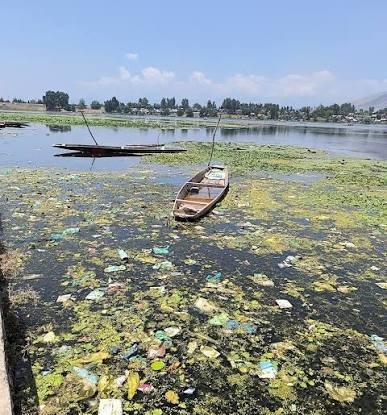
- Floating waste,
- Bad odour,
- Excessive aquatic weeds,
- Polluted shorelines,
the destination’s image can suffer.
For a region increasingly promoting nature and eco-tourism, degraded wetlands represent a direct contradiction.
Why Manasbal Matters Beyond Ganderbal
Wetlands perform services that are often invisible until they disappear.
Healthy wetlands can:
- Store water.
- Reduce flood intensity.
- Recharge groundwater.
- Support biodiversity.
- Capture nutrients and sediments.
- Provide habitat for aquatic species.
- Support livelihoods and tourism.
When these functions deteriorate, communities may eventually have to replace some of them through expensive engineered infrastructure.
Protecting the lake is therefore not merely an environmental exercise.
It is also an investment in water security, disaster resilience and local economic stability.
The Governance Gap: Where Is the Missing Link?
The Manasbal situation raises a fundamental governance question.
If sewage treatment infrastructure exists but wastewater continues entering a lake untreated, the problem may not simply be a lack of money.
It can involve a chain of failures:
Waste generation → inadequate sewerage → non-functional treatment → untreated discharge → lake contamination → ecological degradation → public-health risk
Breaking that chain requires coordination between local authorities, pollution-control agencies, water-management bodies and communities.
The NGT’s intervention could help establish accountability by forcing agencies to document what is happening on the ground.
What Authorities Need to Do Now
A credible recovery programme for Manasbal should go beyond short-term clean-up drives.
01. Restore Sewage Treatment
Any non-functional sewage treatment infrastructure needs to be brought back into operation or replaced with a technically appropriate system.
02. Map Every Sewage Outlet
Authorities should create a publicly available map identifying all wastewater entry points into the wetland.
03. Test Water Regularly
Monitoring should include:
- Faecal coliforms.
- E. coli.
- BOD.
- COD.
- Dissolved oxygen.
- Nutrients.
- Heavy metals where relevant.
- Other emerging contaminants.
Results should be published regularly.
04. Protect the Catchment
Pollution entering through streams, drains and runoff cannot be solved by treating only the lake itself.
05. Stop New Encroachments
Wetland boundaries need clear demarcation and enforcement.
06. Restore the Shoreline
Native vegetation and natural buffers can help intercept runoff before it reaches the lake.
07. Involve Local Communities
Residents should not be treated simply as beneficiaries of a government programme.
They are essential participants in monitoring pollution and preventing illegal discharge.
The Bigger Kashmir Lake Crisis
Manasbal’s problems are part of a wider pattern affecting Kashmir’s wetlands.
Across the region, water bodies are under pressure from:
- Urban expansion.
- Untreated sewage.
- Solid waste.
- Agricultural runoff.
- Encroachment.
- Invasive aquatic vegetation.
- Climate variability.
The deterioration of one lake should therefore be treated as an early warning for the entire wetland network.
If pollution sources are not controlled at their origin, repeated clean-up projects will provide only temporary relief.
What the NGT Inquiry Could Change
The most important outcome of the NGT intervention may be the creation of a clear factual record.
The authorities now have to answer fundamental questions:
How polluted is Manasbal Lake today?
Where exactly is the sewage entering?
How much wastewater is being generated?
How much is actually being treated?
Is existing infrastructure functional?
What is the condition of the lake’s aquatic ecosystem?
What action has been taken against illegal discharges and encroachments?
These answers are more valuable than another symbolic lake-cleaning campaign.
Outlook: Manasbal Still Has a Chance—but Delay Is Costly
Manasbal Lake is not beyond recovery.
Freshwater ecosystems can recover when pollution sources are removed and ecological restoration is sustained over time.
But restoration cannot begin with beautification.
It must begin with stopping sewage at the source.
The NGT’s direction to CPCB and J&KPCC to investigate the lake’s water quality and trace pollution sources provides an important opportunity to move the debate from allegations to measurable evidence.
The available scientific evidence already reinforces the need for caution, with research identifying faecal pollution markers and other contaminants in the Manasbal ecosystem.
The real test now is whether authorities can turn scrutiny into action.
Manasbal does not need another promise of conservation.
It needs functioning sewage treatment, transparent water-quality monitoring, protection of its catchment and strict enforcement against pollution and encroachment.
The lake’s future—and the communities and wildlife that depend on it—will ultimately be determined not by how beautiful Manasbal looks from its shoreline, but by how clean the water beneath that surface actually is.