Kashmir Lakes Pollution Crisis: Dal, Anchar, Manasbal and Wular Choked by Sewage, Waste and Encroachment
By: Javid Amin | 18 Aug 2026
Kashmir’s Lakes Are Sending a Warning We Can No Longer Ignore
From a shikara gliding across Dal Lake to fishermen casting nets in Wular, Kashmir’s waters have long been woven into the Valley’s economy, culture and identity.
But beneath the postcard image is a much darker environmental story.
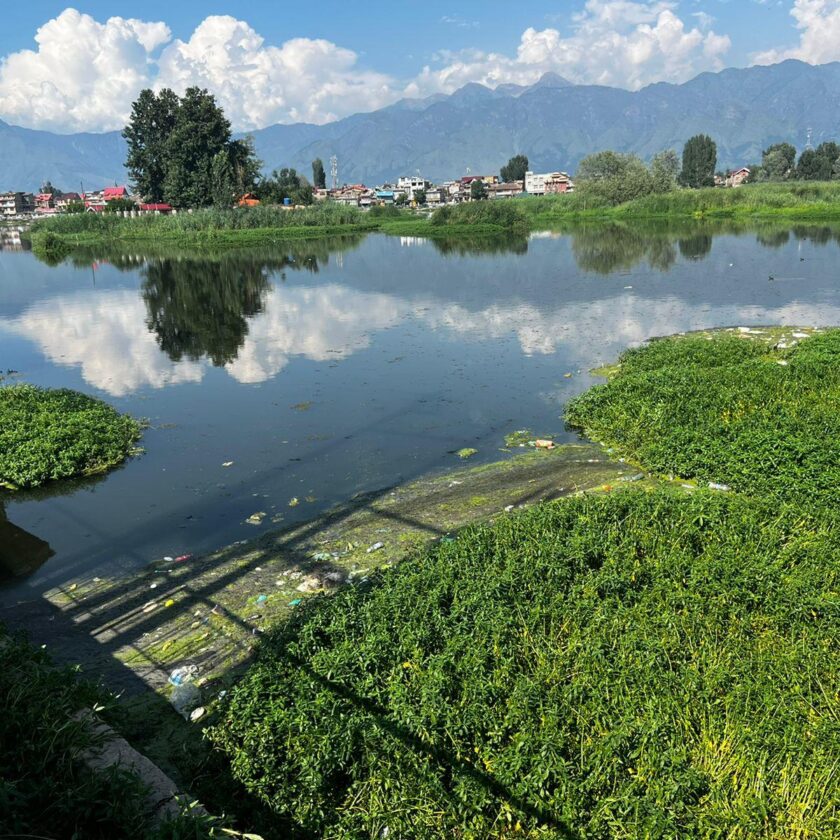
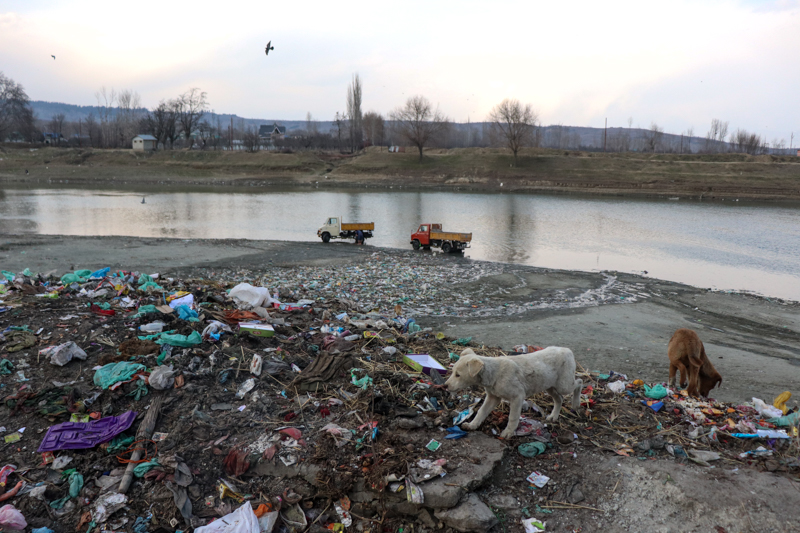
Sewage is entering water bodies. Solid waste is accumulating along their edges. Agricultural runoff is carrying nutrients and chemicals into wetlands. Invasive aquatic plants are expanding. Lake catchments are being altered by construction and land-use change.
And, perhaps most worrying of all, the damage is no longer confined to the ecosystem.
It is beginning to affect the people whose lives remain tied to these waters.
A recent government audit found degradation and shrinkage of Anchar Lake and identified serious shortcomings in the conservation of Kashmir’s major lakes. For Dal Lake, the audit pointed to malfunctioning or inadequate sewage-treatment and sewer-network infrastructure, land-use changes, problems with solid-waste and weed management, and deficiencies in monitoring.
Scientific research published in recent years paints the same broad picture: Dal, Wular and Manasbal are under sustained pressure from sedimentation, sewage, nutrient loading, urbanisation and other human activities.
This is therefore not simply a story about dirty water.
It is a story about what happens when a society continues to depend on an ecosystem that it is simultaneously degrading.
A Fact Check: Some Numbers Need More Caution
Before looking at individual lakes, one important distinction needs to be made.
Several figures commonly repeated in discussions about Kashmir’s lakes come from different years, methodologies and definitions of “lake area.” They should not automatically be treated as directly comparable.
For example, the frequently cited claim that Anchar Lake has fallen from about 20 sq km in the 1890s to around 4 sq km today is difficult to substantiate from the most authoritative material reviewed for this article. The latest CAG audit does, however, independently confirm degradation and shrinkage of Anchar Lake.
Similarly, the claim that Manasbal is simply being used as a drinking-water source by thousands of people should not be presented as a blanket fact without specifying the particular water-supply arrangements and treatment involved.
The evidence is nevertheless serious enough without exaggeration.
In January 2026, the National Green Tribunal took up a case concerning allegations that untreated sewage from 14 villages was entering the Manasbal wetland through the Lar Canal. The Tribunal directed pollution-control authorities to ascertain the lake’s water quality and trace the sources of contamination.
And a 2025 peer-reviewed study found sewage-related biomarkers in Manasbal Lake sediments, along with other contaminants including phthalates and polycyclic aromatic hydrocarbons.
The environmental warning, therefore, is real even where individual headline figures require qualification.
Dal Lake: Kashmir’s Most Famous Water Body Is Fighting a Slow Battle
Dal Lake is perhaps the clearest example of Kashmir’s environmental contradiction.
It is one of the Valley’s greatest tourism assets and simultaneously one of its most heavily pressured ecosystems.
The lake supports houseboats, shikaras, floating gardens, vendors, fishermen, tourism workers and businesses. Its image is used to sell Kashmir around the world.
Yet the same lake receives pressure from the dense urban settlement surrounding it.
Sewage and nutrient-rich wastewater are among the principal problems.
The issue is not new.
A Government of India backgrounder published years ago acknowledged the deterioration of Dal Lake and outlined a conservation programme involving diversion of sewage from drains and construction of sewage-treatment plants.
But the persistence of the problem decades later is revealing.
The Comptroller and Auditor General’s 2025 audit found deficiencies in sewage-treatment infrastructure, sewer networking, sewage-disposal arrangements for households, solid-waste handling, weed and sludge management, monitoring and other components of the conservation programme. It also noted land-use changes and the failure to restore the lake’s open-water area to the desired extent.
Why do weeds keep returning?
Visitors often see workers removing thick mats of aquatic vegetation from the lake and may assume that weed removal itself is the solution.
It is not.
Excess nutrients — particularly nitrogen and phosphorus entering water through sewage and agricultural runoff — can stimulate excessive plant and algae growth. This process, known as eutrophication, changes the ecological balance of a lake.
Removing weeds can provide temporary relief.
Stopping the nutrient supply is the harder and more important task.
A recent parliamentary committee assessment similarly identified sewage discharge and nutrient inputs as major contributors to Dal Lake’s deteriorating condition and stressed the importance of proper sewage facilities.
In other words, the weed is a symptom. The sewage and nutrient load are part of the disease.
Anchar Lake: A Wetland Under Pressure From a Growing City
Anchar Lake is less internationally famous than Dal, but its environmental significance is considerable.
The lake forms part of the interconnected wetland system around Srinagar and has experienced substantial degradation.
The CAG’s audit specifically identified land-use changes and degradation/shrinkage of Anchar Lake.
That finding matters because wetlands do not disappear overnight.
They are usually lost incrementally.
A channel gets narrowed.
A wet patch becomes agricultural land.
A boundary is altered.
Waste is dumped.
Sediment accumulates.
Vegetation changes.
Construction moves closer.
The combined effect may be almost invisible from one year to the next. Over several decades, however, the ecosystem can be transformed.
The Achan waste problem adds another layer
The proximity of Srinagar’s enormous Achan waste facility has become a major environmental concern.
Recent reporting described the Achan site as holding approximately 1.1 million tonnes of accumulated waste, the legacy of decades of disposal. Residents have complained about foul odours and pollution affecting surrounding areas and water bodies.
It would be too simplistic to claim that the entire Anchar Lake pollution problem is caused by Achan.
The lake has multiple pressures, including urbanisation, land-use change, sewage, solid waste and hydrological alterations.
But the existence of such a huge waste accumulation close to a fragile wetland illustrates a larger planning failure:
urban waste systems and wetland protection cannot be treated as separate issues.
Water does not respect municipal boundaries.
Manasbal Lake: The Latest Alarm Comes From the National Green Tribunal
If Dal represents a long-running conservation struggle, Manasbal represents a warning that even relatively smaller and more scenic water bodies can reach a critical point.
In January 2026, the National Green Tribunal heard a petition concerning alleged discharge of untreated sewage into the Manasbal wetland through the Lar Canal.
The allegation involved sewage from 14 villages.
The Tribunal directed authorities to examine the water quality and identify the sources of contamination.
That development is significant because it moves the issue beyond local complaints and into formal environmental scrutiny.
And there is independent scientific evidence supporting concerns about contamination.
A study published in Environmental Nanotechnology, Monitoring & Management examined sediments from Manasbal Lake and detected faecal-stanol markers associated with sewage contamination. It also found several classes of emerging organic pollutants.
This is important because pollution is not always visible.
Clear-looking water can still contain microbial contamination or chemical pollutants.
That is why environmental assessment cannot rely on photographs or smell alone. It requires systematic sampling, laboratory testing and long-term monitoring.
Wular Lake: When Pollution Becomes a Livelihood Crisis
Wular is different in scale.
It is one of the most important freshwater wetland systems in Kashmir and a Ramsar Site of international importance. The J&K administration’s Wular Conservation and Management Authority describes it as one of Asia’s largest freshwater lakes and places it at the centre of a dedicated conservation programme.
But its ecological importance has not insulated it from human pressure.
The Ramsar documentation identifies sewage, catchment degradation, land-use change and declining ecological quality among the pressures affecting Wular.
An official Government of India account previously noted that sewage entering the Jhelum upstream of Wular had contributed to eutrophication and aquatic weed growth. It also recorded a dramatic long-term decline in fish catch and highlighted the dependence of thousands of fishermen on the lake.
More recent reporting from the lake illustrates what ecological degradation means on the ground.
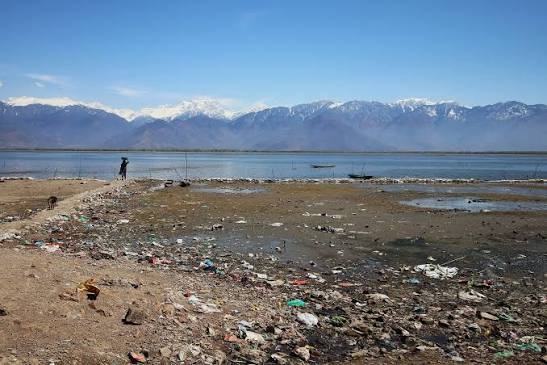
Fishermen have reported shallower water, expanding vegetation and falling fish availability. One fisherman interviewed by AP said his earnings had fallen from roughly ₹1,000 a day to ₹100–200 for an entire night’s fishing.
That single account should not be treated as a statistical measure for every fishing family.
But it captures a broader reality:
when a lake becomes ecologically weaker, the first people to feel the economic consequences are often those who have the fewest alternatives.
The Jhelum Is Part of the Same Problem
Kashmir’s lakes cannot be viewed in isolation.
They are connected through a wider hydrological system.
The Jhelum carries water, sediments, nutrients and pollutants through the Valley. What happens upstream can eventually affect downstream wetlands and lakes.
A recent assessment reported that 22 of 52 monitored river locations across J&K’s 13 rivers failed to meet prescribed water-quality criteria during 2022–23, highlighting the wider scale of freshwater pollution in the region.
Separate academic research has also found declining dissolved oxygen, reduced fish diversity and evidence of heavy-metal contamination in parts of the Jhelum, reinforcing concerns about the river’s ecological health.
This changes the way Kashmir’s lake problem should be understood.
It is not:
Dal Lake problem + Wular problem + Manasbal problem + Anchar problem.
It is a watershed problem.
The same pollutants can move between settlements, drains, tributaries, rivers, wetlands and lakes.
Pollution Is Also Entering the Food Chain
Perhaps the most troubling recent development is evidence that contamination is not necessarily stopping at the water’s surface.
A 2026 study examining water chestnut (Trapa natans) from four major Kashmir water bodies — including Dal, Manasbal and Wular — found significant variation in water quality and heavy-metal accumulation. Dal showed the highest contamination among the studied water bodies, while nutrient parameters exceeded desirable ecological thresholds in some locations.
This matters because water chestnut is not simply an aquatic plant.
It is harvested, sold and eaten.
That creates a potential pathway from polluted sediments and water into agricultural and food systems.
It does not mean that every water chestnut sold in Kashmir is unsafe, nor does one study establish a universal public-health conclusion.
But it does provide a powerful reason for routine testing of edible aquatic products harvested from contaminated water bodies.
What Is Actually Driving Kashmir’s Lake Crisis?
There is no single culprit.
The degradation is the result of several pressures acting together.
1. Untreated and Inadequately Treated Sewage
This is perhaps the most direct controllable source.
Domestic wastewater contains organic matter, nutrients, pathogens and other contaminants.
When it enters a lake without adequate treatment, it increases the ecological load.
The Dal Lake audit demonstrates that the challenge is not merely building STPs. Sewer networks must actually connect households and drains to treatment systems, plants must function reliably, and treated effluent must meet standards.
2. Solid Waste
Plastic, food waste, packaging, construction debris and other materials can enter waterways directly or indirectly.
Once waste accumulates in wetlands, removing it becomes far more difficult and expensive.
3. Encroachment and Land-Use Change
A wetland is not merely its visible water surface.
Its marshes, floodplains, channels and surrounding catchments are part of the ecological system.
When these areas are converted into buildings, roads, farms or other uses, the lake loses the space it needs to function.
4. Agricultural Runoff
Fertilisers and pesticides can reach lakes through drainage channels.
Nutrients can stimulate eutrophication, while pesticide residues can affect aquatic organisms and potentially enter sediments and food chains.
Research on Kashmir’s lakes has repeatedly identified agricultural runoff as one component of the wider pollution problem.
5. Sedimentation
Sediment gradually reduces water depth and changes lake habitat.
Research on Kashmir’s major lakes estimated sedimentation rates of approximately 0.93 cm per year in Dal, 0.44 cm per year in Manasbal and 0.125 cm per year in Wular.
These figures are estimates from scientific research rather than a universal rate for every part of each lake.
But they demonstrate the scale of a process that can quietly transform a lake over decades.
6. Climate Change
Climate change is adding another layer of uncertainty.
Changes in snowfall, rainfall, snowmelt timing, temperature and sediment dynamics can alter the hydrology of Himalayan lakes.
Recent reporting on Kashmir’s disappearing and shrinking lakes has linked ecological decline to a combination of pollution, unplanned urban expansion and climate-related changes.
The important point is that climate change does not replace pollution as the problem.
It compounds it.
The Hidden Cost: Kashmir’s Lakes Are Also Natural Infrastructure
There is an economic argument for lake conservation that often gets overlooked.
Wetlands provide services that governments would otherwise have to recreate through expensive infrastructure.
They store floodwater.
They support fisheries.
They recharge and regulate water systems.
They provide habitat for birds and aquatic organisms.
They support tourism.
They provide opportunities for agriculture and traditional livelihoods.
Wular is particularly important for flood regulation because of its connection with the Jhelum system. Official and scientific assessments have repeatedly recognised its role as a major flood buffer.
When a wetland is filled, narrowed or degraded, the lost service does not simply disappear.
The cost may reappear elsewhere — in flood damage, water-treatment expenses, declining fisheries or tourism losses.
That is why protecting a lake should not be viewed as an environmental luxury.
It is infrastructure protection.
Why Simply Cleaning the Lakes Will Not Solve the Problem
Kashmir has seen repeated efforts to remove weeds, dredge water bodies, improve sewage infrastructure and undertake restoration projects.
These activities can be useful.
But restoration becomes an endless cycle if pollution sources continue feeding the lake.
Imagine trying to empty a bathtub while the tap remains open.
That is essentially what happens when weeds are removed without controlling nutrient inflows, or when waste is collected without preventing new dumping.
The CAG audit is particularly revealing here. It found deficiencies not only in physical restoration but also in source identification, pollution treatment, sewage networking, monitoring, waste handling and scientific assessment.
The lesson is straightforward:
Lake conservation must begin outside the lake.
What Kashmir Needs: A Basin-by-Basin Strategy
A single “clean Kashmir lakes” programme is unlikely to work.
Dal, Anchar, Manasbal and Wular have different hydrology, catchments, pollution sources, communities and ecological functions.
Their management plans should therefore be basin-specific.
1. Map Every Pollution Source
Authorities need an updated inventory of:
- Sewage outfalls
- Open drains
- Stormwater channels
- Agricultural runoff points
- Solid-waste dumping locations
- Encroachments
- Industrial or commercial discharges
- Failing sewage-treatment systems
Every major pollution point should have an identified agency responsible for eliminating it.
2. Make Sewage Treatment the First Priority
The objective should not simply be to announce another sewage-treatment plant.
The complete chain must work:
household → sewer network → treatment plant → treated discharge → monitoring.
A treatment plant without adequate sewer connectivity cannot solve a city’s lake pollution problem.
3. Publish Water-Quality Data
Lake and river monitoring should be transparent.
Regular data on:
- BOD
- COD
- dissolved oxygen
- faecal coliforms
- E. coli
- nitrogen
- phosphorus
- heavy metals
- pesticides
should be publicly accessible.
That would allow citizens, scientists and journalists to track whether restoration programmes are actually improving water quality.
4. Protect Floodplains and Wetland Boundaries
Encroachment cannot be dealt with selectively.
Wetland boundaries should be scientifically demarcated, digitised and publicly mapped.
Construction inside protected areas should trigger enforcement rather than years of administrative uncertainty.
5. Treat Waste Before It Reaches Water
Solid-waste management must be linked to watershed protection.
Dumping sites near streams and wetlands should receive special scrutiny because rainfall can transport waste and leachate into water systems.
6. Bring Local Communities Into Conservation
Fishermen, farmers, shikara operators, houseboat owners and lakeside residents are not merely part of the problem.
They are also part of the solution.
Community monitoring can identify illegal dumping and pollution points much faster than occasional inspections.
But communities will cooperate only if conservation policies also protect their livelihoods.
7. Measure Results — Not Just Spending
The success of a lake project should not be judged by how many crores were spent or how many weeds were removed.
The real indicators should be:
Is water quality improving?
Is open-water area increasing?
Are fish populations recovering?
Are pollution loads falling?
Is sewage being treated?
Are encroachments declining?
Is biodiversity returning?
That is the difference between a conservation programme and a construction programme.
The Bigger Warning: Kashmir Cannot Pollute Its Way Into Water Security
Kashmir is often described as a land of rivers, springs, lakes and snow-fed streams.
That description can create a dangerous illusion of abundance.
Water availability and water security are not the same thing.
A region may have plenty of water and still suffer from water insecurity if its freshwater resources become contaminated, fragmented or ecologically degraded.
The decline of Kashmir’s lakes should therefore be treated as an early warning.
If sewage continues entering wetlands, if catchments continue to be built over, if solid waste continues accumulating and if climate pressures intensify, restoration will become progressively more expensive — and eventually some ecological losses may become irreversible.
The CAG’s findings make this particularly difficult to dismiss as an isolated environmental complaint. The audit found shortcomings across planning, implementation, monitoring, sewage management, waste handling and conservation of multiple lakes.
Kashmir’s Lakes Are More Than Scenic Destinations
Dal is more than a tourist photograph.
Wular is more than a large blue patch visible from an aircraft.
Manasbal is more than a picnic destination.
Anchar is more than another wetland on a map.
Together, these water bodies form part of the Valley’s ecological infrastructure.
They regulate water, support biodiversity, sustain livelihoods and shape the landscape that makes Kashmir unique.
The irony is uncomfortable: the same natural assets that attract millions of people and support local economies are being slowly weakened by the way the surrounding society produces waste, manages sewage and uses land.
There is still time to reverse much of the damage.
But conservation cannot remain a seasonal exercise in cleaning weeds before tourist season.
Kashmir needs a long-term water strategy built around sewage treatment, scientific monitoring, wetland protection, catchment management, responsible urban planning and community participation.
The central question is no longer whether Kashmir’s lakes are polluted.
The evidence is already too strong for that debate.
The real question is whether the Valley will treat its lakes as disposable water bodies — or finally recognise them as living infrastructure that cannot be replaced once lost.
Kashmir’s lakes have absorbed decades of sewage, waste, sediment and encroachment. The next chapter depends on how much more pressure they are forced to carry.