National Conference Wins Civil Society Support Ahead of Delhi Protest, Expands Campaign for J&K Statehood
By: News Desk | 07 July 2026
The National Conference (NC) has strengthened its campaign for the restoration of Jammu and Kashmir’s statehood by securing the support of sections of Kashmir’s civil society ahead of its proposed protest at Jantar Mantar in New Delhi.
The endorsement comes as the party prepares to take its demand for statehood to the national capital, where it plans to mobilize opposition parties, civil society representatives and public opinion in an effort to press the Union government for a clear roadmap on restoring Jammu and Kashmir’s full statehood.
By obtaining support beyond its own political ranks, the NC is attempting to project the statehood demand as a broader public aspiration rather than a partisan political campaign.
Civil Society Extends Support for Statehood Restoration
According to the National Conference, representatives from various sections of civil society—including trade bodies, lawyers, academics and non-governmental organizations—have backed a resolution supporting the restoration of Jammu and Kashmir’s statehood.
The resolution reportedly urges the Union government to announce a definite timeline for restoring statehood, arguing that democratic governance and institutional accountability would be strengthened through the return of full statehood.
The endorsement reflects growing calls from different segments of society for greater political clarity regarding the Centre’s commitment to restore Jammu and Kashmir’s statehood.
However, the extent of participation and the organizations represented in the resolution have not been independently verified through an official consolidated list at the time of writing.
NC Seeks to Transform a Political Campaign into a People’s Movement
The National Conference’s latest outreach represents a strategic shift in how it is framing the statehood issue.
Rather than presenting the campaign solely as a demand raised by a political party, the NC is seeking to portray it as a collective voice representing diverse sections of Kashmiri society.
Party leaders believe that wider participation from professional associations, business organizations, educational institutions and civil society groups could enhance the legitimacy of the campaign and strengthen its public appeal.
Political observers say such an approach could help the NC argue that the issue extends beyond electoral politics and concerns democratic representation and constitutional governance.
Delhi Protest Expected to Draw Wider Opposition Participation
The proposed protest at Jantar Mantar is expected to be one of the National Conference’s most significant political mobilizations since assuming office in Jammu and Kashmir.
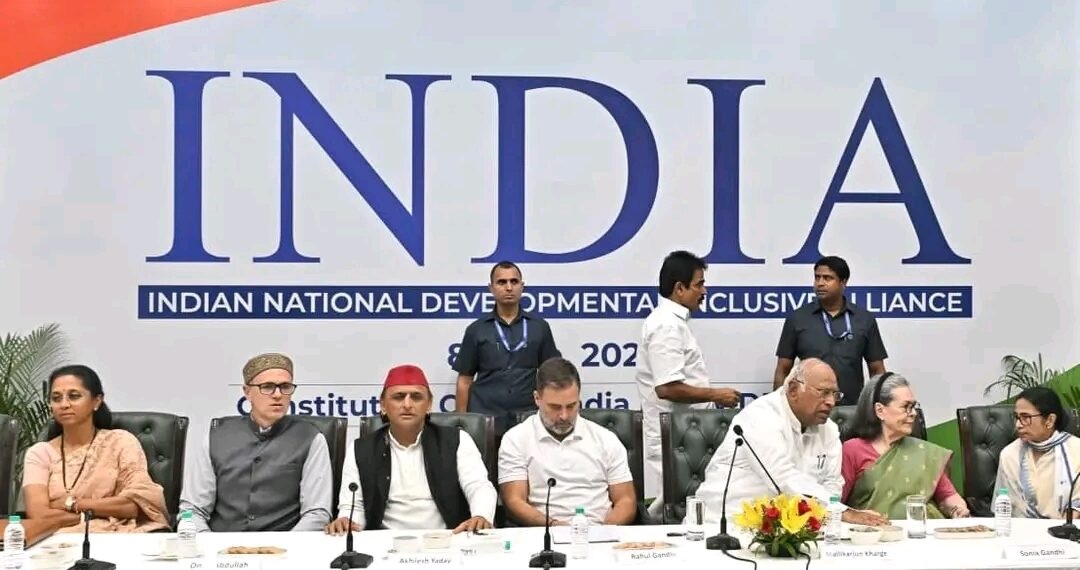
The party has already announced plans to invite constituents of the INDIA bloc to participate in the demonstration, hoping to build a broader opposition platform around the demand for statehood.
If major opposition parties join the protest, it would elevate the campaign from a regional political event to a national discussion on federalism, constitutional commitments and Centre–Union Territory relations.
Jantar Mantar, long regarded as one of New Delhi’s principal venues for democratic protests, provides the campaign with national visibility and direct access to policymakers and Parliament.
Background: Why Statehood Remains a Central Issue
The demand for restoring Jammu and Kashmir’s statehood has remained at the centre of political discourse since the former state was reorganized into the Union Territories of Jammu and Kashmir and Ladakh on August 5, 2019.
Successive statements by the Union government have affirmed that statehood will be restored at an appropriate time. During proceedings before the Supreme Court in the Article 370 case, the Centre also reiterated its commitment to restoring statehood to Jammu and Kashmir.
Despite these assurances, no formal timeline has been announced, prompting regional political parties to intensify their campaign on the issue.
For the National Conference, restoration of statehood has consistently been projected as its foremost constitutional objective.
Criticism from Within: Calls for a Sustained Campaign
While the National Conference’s initiative has generated political momentum, it has also attracted calls for a more sustained movement.
Senior NC leader and Member of Parliament Aga Ruhullah Mehdi has publicly argued that symbolic demonstrations alone may not be sufficient to achieve the objective of restoring statehood.
He has advocated a long-term, consistent and people-centric campaign capable of maintaining pressure on the Union government beyond a single protest.
His observations reflect a broader debate within political circles over whether one-day demonstrations should evolve into continuous public engagement and constitutional advocacy.
Political Significance of Civil Society Participation
The inclusion of civil society changes the political dynamics of the campaign in several ways.
Broadens Public Ownership
Participation by lawyers, traders, academics and social organizations allows the National Conference to argue that the demand reflects wider public sentiment rather than a party-specific agenda.
Enhances National Visibility
Support from non-political groups may increase the campaign’s credibility before national audiences and policymakers, especially if the Delhi protest attracts substantial participation.
Strengthens Opposition Coordination
With INDIA bloc parties also expected to participate, the campaign could evolve into a broader opposition initiative focused on constitutional governance and democratic federalism.
Raises Public Expectations
At the same time, broader public involvement raises expectations that political mobilization will be followed by sustained engagement and tangible outcomes rather than remaining symbolic.
Political Snapshot
| Aspect | Details | Political Significance |
|---|---|---|
| Civil Society Support | Resolution backing statehood restoration | Expands legitimacy beyond party politics |
| Lead Organizer | National Conference | Positions campaign as a broader public movement |
| Delhi Protest Venue | Jantar Mantar | Provides national political visibility |
| Opposition Participation | INDIA bloc invited | Builds wider political consensus |
| Public Expectation | Demand for sustained action | Increases pressure for concrete political outcomes |
Challenges Ahead
While securing civil society support is politically significant, translating public endorsements into policy outcomes remains a complex challenge.
The Union government has consistently reiterated its commitment to restoring statehood but has not announced a timeline. Meanwhile, opposition parties continue to demand greater clarity and urgency.
The effectiveness of the National Conference’s strategy will depend not only on the turnout at Jantar Mantar but also on its ability to sustain political engagement after the protest. Analysts note that one-day demonstrations often generate headlines, but long-term campaigns backed by consistent public participation are generally more influential in shaping national political discourse.
Outlook
By securing support from sections of Kashmir’s civil society before its Delhi protest, the National Conference has attempted to broaden the narrative around Jammu and Kashmir’s statehood. The party is positioning the issue as a collective democratic aspiration rather than a narrowly partisan demand, while seeking to build wider opposition backing through the INDIA bloc.
Whether this strategy results in greater political momentum will depend on three factors: the scale of participation at Jantar Mantar, the response of opposition allies, and the Union government’s willingness to provide greater clarity on its commitment to restore statehood. As the campaign moves to the national stage, the debate over Jammu and Kashmir’s constitutional future is likely to remain a central issue in the region’s political landscape.