Bhabanipur Shocker: Suvendu Adhikari Defeats Mamata Banerjee as BJP Scripts Historic Bengal Takeover
By: Javid Amin | 04 May 2026
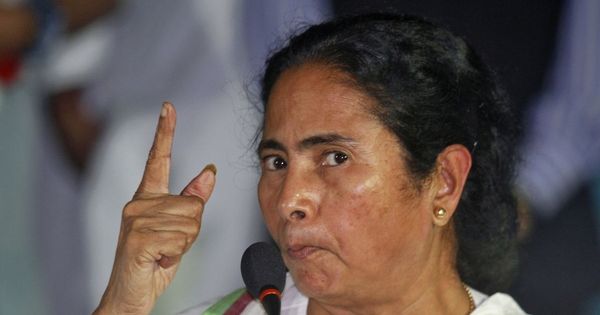
In a stunning political upset that could redefine India’s electoral landscape, Suvendu Adhikari has defeated West Bengal Chief Minister Mamata Banerjee in Bhabanipur — her political stronghold for over a decade.
What began as a high-stakes contest quickly turned into a symbolic collapse of dominance, as the Bharatiya Janata Party (BJP) surged across the state, securing a decisive two-thirds majority and ending the 15-year rule of the All India Trinamool Congress (TMC).
Bhabanipur: Fall of a Fortress
Bhabanipur has long been synonymous with Mamata Banerjee’s political identity. Since 2011, the constituency has served as both her electoral base and symbolic headquarters of TMC’s governance model.
This time, however, the tide turned.
Suvendu Adhikari — once a trusted lieutenant of Banerjee — managed to penetrate deep into this urban bastion. Early and consistent leads translated into a decisive victory, signaling not just a constituency-level upset but a broader shift in urban voter sentiment across Kolkata.
Political observers note that Bhabanipur’s result reflects changing aspirations among middle-class and younger voters, who appear to have leaned toward the BJP’s promise of governance reform and central alignment.
Nandigram Déjà Vu: A Rivalry Reignited
The Bhabanipur contest carries echoes of the high-voltage Nandigram battle of 2021, where Adhikari narrowly defeated Banerjee in one of India’s most closely watched elections.
This latest victory reinforces Adhikari’s image as a formidable challenger capable of taking on Bengal’s most powerful political figure — and winning.
Unlike Nandigram, which was largely rural and agrarian in character, Bhabanipur represents urban, educated, and politically aware voters. The BJP’s success here indicates its expanding footprint beyond traditional strongholds into metropolitan spaces.
BJP’s Bengal Blitz: End of a 15-Year Era
The Bhabanipur upset is part of a much larger wave.
The Bharatiya Janata Party has secured a two-thirds majority in West Bengal — a historic breakthrough in a state where it once had minimal presence. This victory effectively ends TMC’s uninterrupted rule since 2011.
Key Takeaways:
- BJP crosses the decisive majority mark with ease
- Significant gains in both rural and urban constituencies
- Consolidation of anti-incumbency sentiment against TMC
- Strategic cadre expansion and organizational depth paying dividends
Ground reports suggest a combination of factors behind this surge: welfare fatigue, governance concerns, factionalism within TMC, and BJP’s aggressive grassroots mobilization.
Political Earthquake: What It Means for TMC
For the Trinamool Congress, this defeat is both structural and psychological.
- Loss of its tallest leader’s seat raises leadership questions
- Potential internal churn and realignment within party ranks
- Weakening of TMC’s bargaining power in national opposition politics
Mamata Banerjee, widely seen as a key opposition face nationally, may now face pressure to recalibrate her strategy — both within Bengal and at the national level.
Suvendu Adhikari: Architect of BJP’s Eastern Surge
With back-to-back symbolic victories against Mamata Banerjee, Suvendu Adhikari has emerged as the central figure in BJP’s Bengal success story.
His journey — from a senior TMC leader to BJP’s face in Bengal — underscores a larger political shift in the state. Analysts believe his grassroots connect, organizational understanding, and strategic positioning played a decisive role in dismantling TMC’s strongholds.
Adhikari is now likely to play a pivotal role in shaping governance and consolidating BJP’s hold in eastern India.
Beyond Bengal: India’s 2026 Electoral Realignment
The Bengal results are part of a broader national trend indicating regional churn and political realignment.
National Snapshot
| Region | Leading Party/Alliance | Key Outcome |
|---|---|---|
| West Bengal | BJP | Ends TMC’s 15-year rule |
| Assam | NDA | Secures third consecutive term |
| Puducherry | NDA | Retains power |
| Kerala | UDF (Congress-led) | Returns to power |
| Tamil Nadu | TVK | Emerges dominant |
NDA’s Expanding Footprint
The National Democratic Alliance continues to consolidate its hold:
- Assam: A third straight victory signals stability and voter confidence
- Puducherry: Retention highlights continued organizational strength
These wins reinforce the NDA’s dominance in the northeast and select southern pockets.
Southern Surge: Congress Comeback & Vijay’s Rise
In the south, the narrative is more fragmented — and equally dramatic.
- In Kerala, the United Democratic Front (UDF), led by the Indian National Congress, has returned to power, ending a decade of Left dominance.
- In Tamil Nadu, actor-turned-politician Vijay has led his party, Tamilaga Vettri Kazhagam (TVK), to a stunning electoral breakthrough.
This dual shift indicates both a revival of traditional parties and the rise of new political forces reshaping regional politics.
The Big Picture: A New Political Map Emerges
India’s 2026 electoral landscape reflects three simultaneous trends:
- Expansion: BJP’s aggressive push into eastern India
- Resilience: Congress-led alliances regaining ground in key states
- Disruption: New entrants like TVK altering long-standing equations
The Bhabanipur result, in this context, is more than a constituency upset — it is a signal of deep structural change in voter behavior and political alignment.
Conclusion: A Defining Moment in Indian Politics
Suvendu Adhikari’s victory over Mamata Banerjee in Bhabanipur will likely be remembered as a watershed moment — not just for West Bengal, but for India’s evolving democratic narrative.
It marks the fall of a political fortress, the rise of a new regional power center, and the beginning of a reconfigured national political order.
Whether this shift sustains or faces resistance in the coming years will depend on governance delivery, opposition strategy, and the electorate’s evolving expectations.