CJI Kant’s ‘Cockroaches’ Remark Sparks National Debate on Judiciary, Activism and Public Dissent
By: Javid Amin | 15 May 2026
Supreme Court Observation During Hearing Draws Sharp Reactions Across Legal and Civil Society Circles
A courtroom remark by Chief Justice of India Kant has triggered widespread debate after he compared certain unemployed youngsters involved in activism and media work to “cockroaches” and “parasites” while hearing a matter related to senior advocate designation.
The comments, made during proceedings before a bench comprising CJI Kant and Justice Joymalya Bagchi, have rapidly moved beyond the courtroom into a larger national discussion about judicial language, institutional criticism, dissent, activism, and freedom of expression in India’s democratic framework.
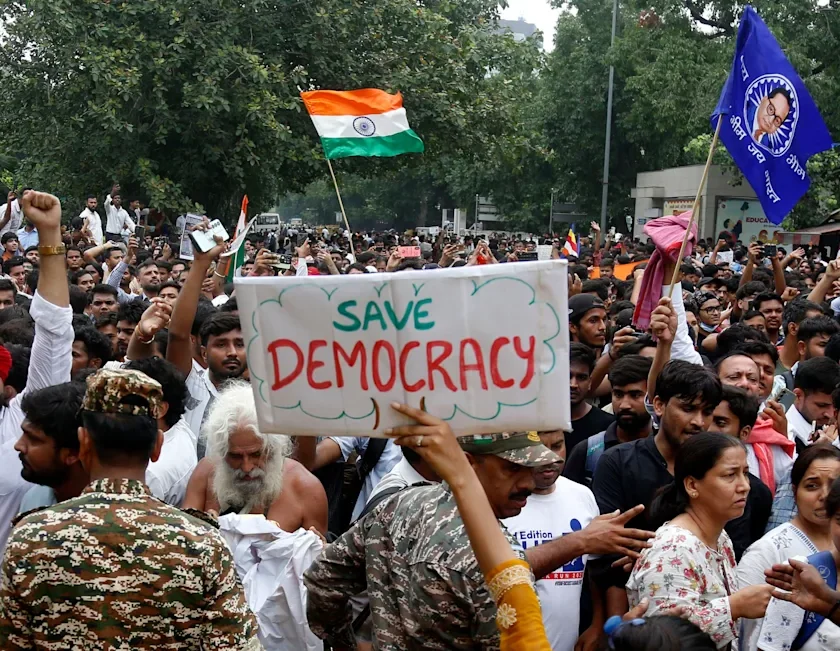
While supporters of the remarks argue that the Chief Justice was criticizing sensationalism and irresponsible attacks on institutions, critics say the language risks delegitimizing genuine activism, independent journalism, and youth participation in democratic discourse.
The controversy once again demonstrates how remarks made from the bench can shape public conversation far beyond legal proceedings.
What Exactly Happened in Court?
The remarks reportedly came during a hearing in which the bench was displeased with a lawyer perceived to be aggressively pursuing designation as a senior advocate.
During the exchange, the bench criticized what it viewed as a growing culture of attacking institutions for visibility or influence.
It was in this context that CJI Kant allegedly remarked that society already had enough “parasites” who attack the system and referred to certain unemployed youngsters turning toward media or activism as “cockroaches.”
The bench reportedly questioned whether the petitioner also intended to “join hands” with such people.
Though made in the course of oral courtroom observations rather than a written judicial order, the remarks immediately attracted public attention because of the strong imagery and language used.
Why the Remarks Triggered Such Strong Reactions
The controversy is not only about the words themselves, but also about the office from which they were spoken.
The Chief Justice of India occupies one of the country’s highest constitutional positions, and statements made from the bench often carry moral, institutional, and symbolic weight.
Critics argue that comparing activists or unemployed youth to insects or parasites risks creating a perception that dissent and criticism are being viewed with hostility by powerful institutions.
Several legal commentators and civil society voices expressed concern that such language may alienate young Indians already struggling with unemployment, social anxiety, and political polarization.
Others argued that activism and journalism — even when critical or uncomfortable — are integral to democratic accountability.
Supporters Say the CJI Was Criticizing “Performative Activism”
At the same time, defenders of the remarks insist the criticism has been taken out of context.
According to supporters, the Chief Justice was not attacking all activists or journalists but was referring specifically to individuals who use sensationalism, misinformation, or anti-institutional rhetoric for personal attention, ideological influence, or professional gain.
Some legal observers say the judiciary has increasingly faced coordinated online criticism, selective media narratives, and social media campaigns that often distort judicial proceedings.
From this perspective, the remarks reflected frustration within sections of the judiciary over what they see as erosion of institutional respect and responsible public discourse.
Supporters also argue that courts, like other constitutional institutions, are entitled to defend themselves against deliberate misinformation and reputational attacks.
The Larger Debate: Institutions vs Dissent
The controversy has revived a broader and recurring debate in India:
Where should the line be drawn between legitimate criticism of institutions and attacks that undermine public trust?
This question has become increasingly relevant in the digital era, where courtroom comments, political speeches, and institutional actions are instantly amplified through television debates, online platforms, and social media ecosystems.
Critics of the CJI’s remarks warn that institutions must remain open to scrutiny in a democracy.
Supporters counter that criticism should remain factual and responsible rather than becoming performative outrage or targeted hostility.
The tension between institutional authority and public accountability is now central to many democratic debates across India.
Why Judicial Language Matters More Than Ever
Historically, courtroom observations were largely confined to legal reporting and specialist audiences.
Today, however, every judicial remark can become a national headline within minutes.
In the age of instant media amplification, oral observations from judges frequently shape:
- Political narratives
- Public sentiment
- Social media discourse
- Activist campaigns
- Institutional credibility
That reality makes judicial language more consequential than ever before.
Legal scholars often note that even non-binding oral observations from constitutional courts can influence public perception as powerfully as formal judgments.
This is why courtroom language increasingly attracts scrutiny beyond legal circles.
A History of Judicial Remarks Influencing Public Discourse
India’s judiciary has long played a role not just in law, but in shaping national conversation.
1950s–1970s: The Era of Judicial Restraint
In the early decades after independence, Supreme Court judges generally adopted cautious and restrained public language, emphasizing constitutional morality and institutional balance.
The judiciary was viewed as a stabilizing constitutional authority.
Emergency Era (1975–1977)
The Emergency period fundamentally changed public expectations from the judiciary.
The controversial ADM Jabalpur judgment — where civil liberties became a major issue — later triggered deep introspection about judicial independence and accountability.
That era permanently shaped how Indians evaluate judicial courage and institutional responsibility.
1990s: Rise of Judicial Activism
As Public Interest Litigations (PILs) expanded, judges became increasingly vocal on governance, corruption, pollution, and public administration.
Justice Kuldip Singh, often called the “Green Judge,” became known for strong environmental observations that influenced national policy debates.
2010s–2020s: The Age of Media Amplification
In recent years, judicial comments on religion, gender, politics, free speech, social behavior, and constitutional morality have regularly triggered national debates.
The rise of social media means courtroom remarks now travel instantly across ideological and political ecosystems.
The current controversy surrounding CJI Kant’s remarks reflects this transformed media environment.
Youth Unemployment and Sensitivity Around the Remarks
Another reason the remarks generated strong emotional reactions is India’s ongoing unemployment challenge.
Large sections of educated youth continue to face economic uncertainty, competitive pressure, and shrinking employment opportunities.
Against this backdrop, critics argue that describing unemployed youngsters in derogatory terms may appear insensitive, especially when many young people enter activism, digital media, or public advocacy due to limited traditional opportunities.
Some commentators warned that such language risks widening the disconnect between institutions and younger generations already struggling with frustration and mistrust.
Others, however, argue that the remarks targeted opportunistic behavior rather than unemployment itself.
That distinction has now become central to the public debate.
The Judiciary’s Delicate Position in a Hyper-Connected Democracy
The episode also highlights the increasingly difficult environment in which India’s judiciary operates.
Courts today function under constant public scrutiny from:
- Television debates
- Political actors
- Social media campaigns
- Activist groups
- Digital journalism platforms
Judges are expected to maintain institutional dignity while simultaneously navigating unprecedented levels of public criticism and political polarization.
This balancing act has made courtroom language more politically sensitive than at any time in recent decades.
Can Strong Judicial Remarks Affect Public Trust?
Legal experts say the answer depends largely on public interpretation.
Supporters of strong judicial language argue that blunt observations can reinforce institutional seriousness and discourage frivolous conduct.
Critics, however, caution that emotionally charged remarks may unintentionally create perceptions of intolerance toward criticism or dissent.
Because courts derive authority not from force but from public confidence, the tone of judicial communication matters enormously.
That is why even off-the-cuff courtroom comments increasingly become subjects of national debate.
Beyond the Courtroom: A Reflection of India’s Democratic Tensions
The controversy surrounding CJI Kant’s remarks ultimately reflects deeper tensions within Indian democracy itself.
It raises difficult but important questions:
- How should institutions respond to criticism?
- When does activism become performative outrage?
- Can harsh judicial language undermine perceptions of neutrality?
- How should democracies balance dissent with institutional respect?
These questions have no simple answers.
What is clear, however, is that judicial remarks today do not remain confined to courtrooms. They shape political conversations, influence public trust, and become part of the larger national dialogue on democracy, accountability, and free expression.
In that sense, the controversy is not merely about one remark — it is about the evolving relationship between institutions and citizens in modern India.