Langate MLA Sheikh Khursheed Boycotts LG Manoj Sinha’s Anti-Drug Campaign Over House Demolition Row in Kashmir
By: Javid Amin | 13 May 2026
A Demolition in Langate Has Triggered a Wider Political Storm in Jammu & Kashmir
The demolition of a two-storey residential house in Langate has pushed Jammu and Kashmir’s anti-drug campaign into the centre of a heated political and legal controversy. What began as part of Lieutenant Governor Manoj Sinha’s aggressive “Nasha Mukt J&K Abhiyaan” has now evolved into a broader debate over constitutional rights, selective enforcement, due process, and the growing use of demolition drives as a tool of governance in Kashmir.
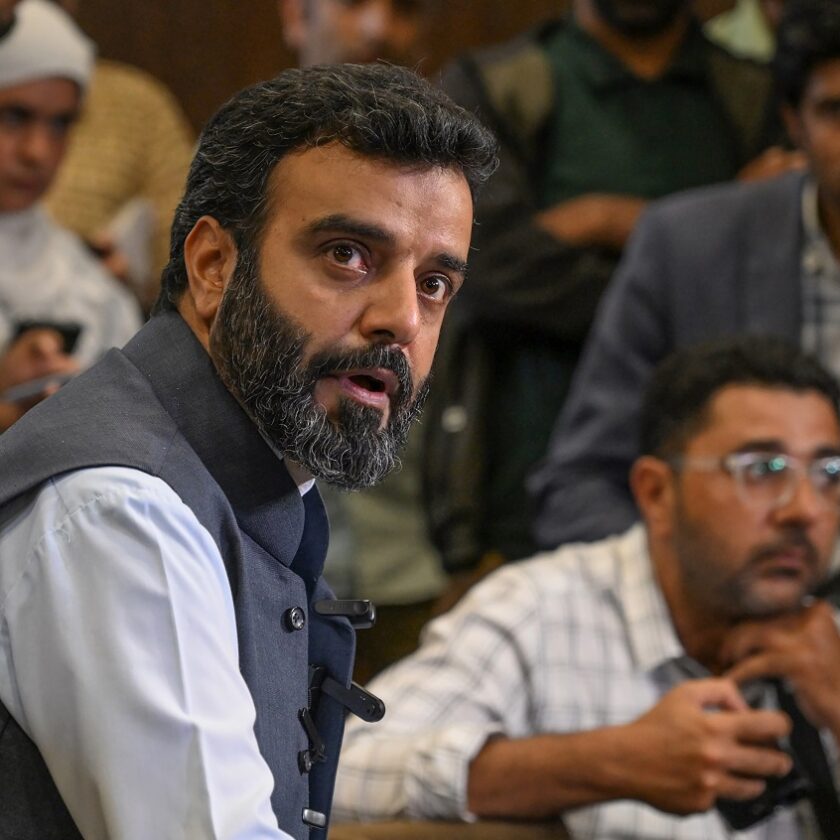
At the heart of the controversy is Awami Ittehad Party (AIP) MLA Sheikh Khursheed, who publicly boycotted the Lieutenant Governor’s anti-drug foot march held in Baramulla and Handwara on May 13, 2026. His protest came after police demolished a house in his Langate constituency on May 11, claiming it was linked to narcotics activity.
Khursheed accused the administration of “arbitrary and illegal action,” alleging that the demolished property belonged to a family whose member had already been acquitted in an NDPS case years ago.
The incident has reopened difficult questions in Jammu and Kashmir:
Can anti-drug enforcement bypass due process? Are poor families becoming collateral damage in the crackdown? And why are demolitions appearing more concentrated in Kashmir than Jammu?
What Happened in Langate?
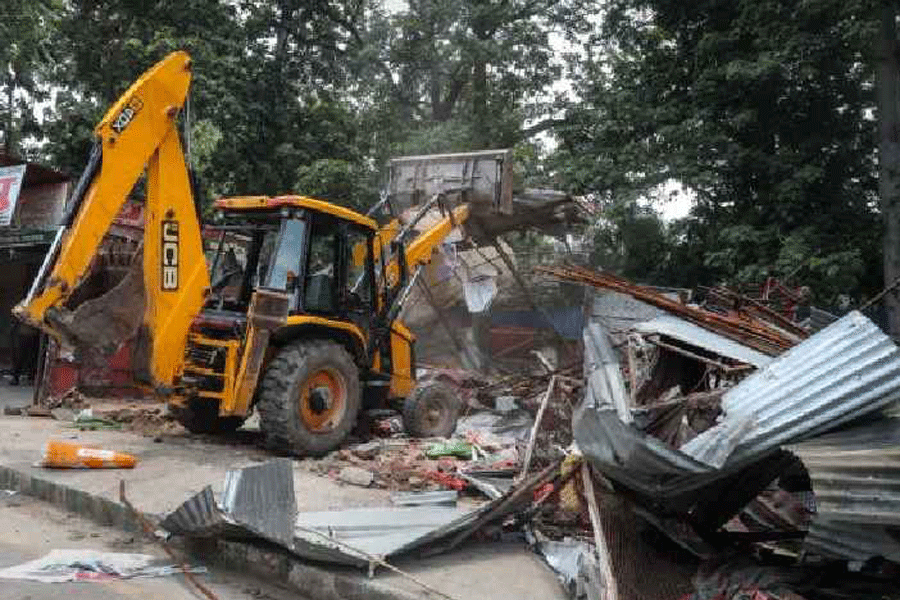
According to local accounts and political statements, authorities demolished a two-storey house in Langate on May 11 during an anti-drug enforcement operation. Officials reportedly claimed that the property was connected to narcotics proceeds or drug-related activities.
However, the demolition quickly became controversial after local MLA Sheikh Khursheed livestreamed the operation and publicly challenged the administration’s justification.
Khursheed stated that the family member linked to the case had already been acquitted in an NDPS matter dating back nearly eight years and was currently employed in Srinagar. He alleged that the family had constructed the house after selling land and investing their lifetime savings.
The demolition, he argued, left an entire family devastated, with household belongings buried under rubble.
His decision to boycott LG Manoj Sinha’s anti-drug rally was framed as a protest against what he called “collective punishment” and “bulldozer politics.”
The Core Allegation: Demolition Without Due Process
One of the biggest concerns raised by opposition leaders and civil society voices is the question of legality.
Critics argue that demolitions linked to anti-drug drives are increasingly taking place without transparent legal procedures, written orders, or adequate notice to affected families.
Khursheed specifically claimed the action violated Supreme Court principles regarding demolitions and property rights. Although authorities have defended the broader anti-drug campaign as lawful and necessary, questions remain over whether every demolition is being backed by proper judicial or administrative scrutiny.
Recent reports indicate that several properties have been attached or demolished under provisions of the NDPS Act, with authorities arguing that these assets were acquired through proceeds of crime.
Yet legal experts and opposition politicians warn that demolitions without conviction — or before trial completion — risk undermining constitutional protections.
The Langate case became particularly sensitive because the accused individual was reportedly acquitted years ago, making the administration’s justification politically explosive.
Sheikh Khursheed’s Political Stand
Sheikh Khursheed has emerged as one of the loudest critics of the demolition campaign.
The Langate MLA accused the BJP-backed administration of targeting poor Kashmiris while failing to dismantle larger drug networks and influential operators.
He questioned whether demolishing homes of ordinary families would genuinely solve the narcotics crisis.
According to Khursheed, the anti-drug drive appears selective and symbolic rather than systemic.
He also linked the issue to the government’s liquor policy, arguing that authorities cannot claim to be building a “drug-free society” while simultaneously allowing the expansion of liquor outlets.
“If the government is serious about public health and addiction, ban liquor first,” he reportedly argued during his criticism of the campaign.
His remarks reflect a wider political narrative emerging in Kashmir, where several leaders are now accusing the administration of using demolitions as a form of public spectacle rather than focusing on rehabilitation, prevention, and financial networks behind narcotics trafficking.
Sakina Ittoo Raises Questions of Regional Bias
The controversy deepened after Jammu and Kashmir Health Minister Sakina Ittoo also criticized the demolition strategy.
Ittoo argued that the campaign appears disproportionately focused on Kashmir despite official data showing that drug addiction cases are also deeply prevalent in Jammu.
She described the demolition of family homes for the alleged crimes of one member as a form of “collective punishment.”
Her remarks are politically significant because they came not from the opposition, but from a minister within the ruling establishment.
The comments have amplified accusations that anti-drug enforcement is being implemented unevenly across regions.
Critics now argue that the optics of demolitions in Kashmir risk reinforcing longstanding perceptions of discrimination and over-policing.
LG Manoj Sinha’s Aggressive Anti-Drug Push
Lieutenant Governor Manoj Sinha has defended the campaign as a necessary and uncompromising war against narcotics networks in Jammu and Kashmir.
Launched on April 11, 2026, the “Nasha Mukt J&K Abhiyaan” was presented as a large-scale public movement against drug abuse and trafficking.
The administration says the crackdown has already produced major results within weeks:
- 481 FIRs registered
- 518 alleged smugglers and peddlers jailed
- 37 houses and structures demolished or attached
- Properties worth crores seized
- More than 300 driving licences recommended for cancellation
Official figures show that a significant portion of these actions occurred in Kashmir.
Sinha has repeatedly linked narcotics trafficking to terrorism and national security, calling drugs and terror “two heads of the same snake.”
He has vowed to dismantle the financial ecosystem of drug cartels by targeting assets, bank accounts, licences, and allegedly illegally acquired properties.
The administration insists that no innocent individuals are being targeted. On May 13, Sinha challenged critics to identify even one innocent victim of the crackdown.
The Bulldozer Debate Reaches Kashmir
The Langate controversy is also part of a larger national debate around “bulldozer justice.”
Across India, demolition drives linked to crime crackdowns have triggered repeated legal and constitutional debates. Critics argue that demolitions increasingly function as punishment before conviction, bypassing courts and due process.
Supporters, however, see them as visible deterrents against organized crime and illegal wealth accumulation.
In Kashmir, the issue carries additional political sensitivity because demolitions are viewed not only through the lens of law enforcement but also through the region’s long history of state-citizen tensions.
That is why even people supportive of strong anti-drug action are beginning to ask whether enforcement can remain effective without appearing arbitrary.
The Contradiction Over Liquor Policy
Another dimension of the controversy is the political contradiction highlighted by opposition leaders: the coexistence of an anti-drug campaign alongside liquor expansion.
Several political voices, including Sheikh Khursheed and PDP leaders, have questioned how the administration can project a moral anti-addiction campaign while permitting increased liquor vending.
The debate has widened into a larger ideological argument over public health, state revenue, and selective morality.
While the administration distinguishes between legal alcohol sales and illegal narcotics trafficking, critics insist that addiction cannot be addressed selectively.
This contradiction has become a powerful political talking point in Kashmir’s evolving anti-drug discourse.
Public Support vs Public Fear
There is little doubt that drug abuse has emerged as one of the biggest social crises in Jammu and Kashmir.
Families across both Kashmir and Jammu have repeatedly demanded stronger action against narcotics networks destroying the lives of young people.
The administration’s crackdown therefore enjoys significant public support in principle.
However, controversies like the Langate demolition also reveal a growing fear: that anti-drug enforcement may begin punishing families before courts establish guilt.
This tension — between public demand for tough action and constitutional safeguards — now sits at the centre of the political debate.
A Campaign at a Crossroads
The “Nasha Mukt J&K Abhiyaan” was launched as a campaign against drugs. But within weeks, it has evolved into a much bigger political and legal confrontation.
For the administration, the demolitions symbolize zero tolerance against narcotics networks.
For critics like Sheikh Khursheed, they represent selective targeting, collective punishment, and the erosion of due process.
The controversy surrounding the Langate demolition has transformed one local incident into a wider test of governance, legality, and political trust in Jammu and Kashmir.
As the anti-drug campaign intensifies, the key question remains unresolved:
Can the state fight narcotics aggressively without crossing constitutional limits and deepening public resentment?
For now, Kashmir remains sharply divided between those demanding stronger crackdowns and those warning against the rise of bulldozer-driven governance.