Liquor Ban Debate in J&K Exposes Governance Crisis, Identity Politics & Growing Public Frustration
By: Javid Amin | 12 May 2026
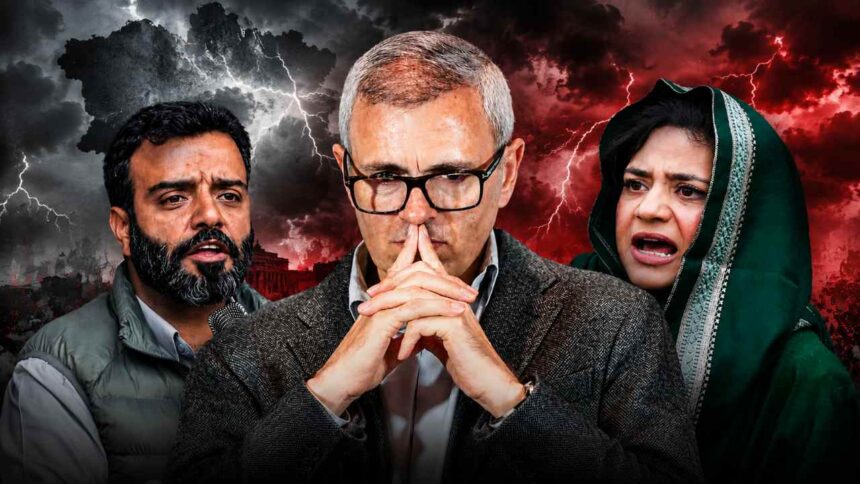
What began as a casual roadside comment by Omar Abdullah has rapidly transformed into one of the most emotionally charged political controversies in Jammu and Kashmir in recent years.
At first glance, the debate appeared to revolve around a simple policy question:
Should liquor be banned in Jammu & Kashmir?
But within days, the controversy evolved into something much larger:
- a referendum on leadership,
- a clash between secularism and religious sentiment,
- a debate on governance credibility,
- and a reflection of growing public impatience with traditional politics in Kashmir.
The backlash against Omar Abdullah’s remarks has now united critics across ideological lines — from the Jammu and Kashmir Peoples Democratic Party to the Bharatiya Janata Party — while also exposing deeper anxieties about identity, governance, and political responsiveness in post-2019 Jammu & Kashmir.
The Comment That Ignited the Firestorm
The controversy erupted after Omar Abdullah responded to calls for prohibition by saying:
“Who has forced anyone to drink? People are going to these shops of their own. We are not advertising it.”
The Chief Minister also clarified that:
- no new liquor shops had been opened under his government,
- and existing outlets largely catered to tourists and communities whose religion permits alcohol consumption.
However, in Kashmir’s deeply sensitive socio-political environment, the statement was immediately interpreted by critics as:
- dismissive,
- insensitive,
- and disconnected from public sentiment.
Why the Remarks Triggered Public Anger
In many parts of Kashmir, alcohol is not viewed merely as a commercial product.
It is deeply connected to:
- religious teachings,
- social conservatism,
- cultural identity,
- and fears of moral erosion.
For many people, Omar Abdullah’s statement appeared to reduce a deeply emotional issue into a matter of personal choice.
That perception proved politically damaging.
The backlash intensified because the remarks came at a time when:
- economic frustrations are rising,
- unemployment remains high,
- welfare promises are under scrutiny,
- and trust in traditional political parties is steadily eroding.
The Liquor Debate Became a Symbol of Something Bigger
Very quickly, the controversy stopped being only about liquor.
Instead, it became symbolic of a larger public frustration:
“Why do governments in J&K struggle to act decisively on public concerns?”
Many citizens increasingly compare Jammu & Kashmir’s slow-moving governance structure with states where newly elected leaders move rapidly on manifesto promises.
That comparison gained momentum after references were repeatedly made to Vijay in Tamil Nadu, where visible policy announcements reportedly followed quickly after electoral victory.
This contrast sharpened public debate:
- If new leaders elsewhere can move fast,
- why do experienced political families in J&K appear slow, cautious, or disconnected?
Governance Frustration Is Replacing Emotional Politics
Political observers say the controversy reflects a major shift in public mood.
For decades, Kashmir politics largely revolved around:
- identity,
- autonomy,
- Article 370,
- Delhi vs Srinagar narratives,
- and emotional mobilization.
But increasingly, younger voters are asking different questions:
- Where are the jobs?
- Why are recruitment drives delayed?
- Why do promises remain pending?
- Why is governance so slow?
- Why does every issue become symbolic rather than solution-oriented?
This shift is important because it challenges the traditional political style of:
- emotional speeches,
- identity-centric narratives,
- and symbolic positioning.
Political Rivals Smell Opportunity
The opposition moved swiftly to capitalize on the controversy.
PDP’s Offensive
Mehbooba Mufti framed the issue as:
- protection of Kashmir’s social fabric,
- women’s safety,
- and cultural preservation.
Meanwhile, Iltija Mufti attacked Omar Abdullah’s logic by citing states like:
- Gujarat and
- Bihar,
where prohibition exists despite Hinduism not prohibiting alcohol.
Her argument challenged NC’s claim that prohibition is incompatible with secular governance.
BJP’s Intervention: Culture & Morality Narrative
Ravinder Raina and Darakhshan Andrabi also entered the debate forcefully.
Darakhshan Andrabi described Kashmir as:
“the land of sufis and saints,”
arguing that public sentiment should not be brushed aside.
The BJP used the controversy to:
- project itself as sensitive to cultural values,
- challenge NC’s secular framing,
- and portray Omar Abdullah as politically disconnected.
Aga Ruhullah’s Intervention Added Another Layer
Perhaps the most politically significant criticism came from Aga Ruhullah Mehdi.
He called Omar Abdullah’s comments:
“arrogant and illogical.”
The criticism mattered because Ruhullah is seen as an influential political voice with significant grassroots resonance.
His remarks suggested that unease over Omar’s handling of the issue was not limited to opposition parties alone.
Omar Abdullah Forced Into Damage Control
As backlash intensified, Omar Abdullah attempted to soften the controversy.
He later admitted:
making the roadside comment publicly was “a mistake.”
He reiterated:
- no new liquor outlets had been approved,
- existing shops predated his administration,
- and his words had been politically twisted.
But by then, the political damage was already visible.
The Real Clash: Secularism vs Religious Sentiment
At the heart of the controversy lies a deeper ideological conflict:
| Position | Core Argument |
|---|---|
| NC | Governance should remain secular and protect personal freedom |
| PDP & BJP | Governance must reflect social morality and majority sentiment |
This ideological clash is turning the liquor issue into:
a symbolic struggle over the identity of governance in Jammu & Kashmir.
Why NC Faces a Credibility Challenge
The controversy also exposed a wider perception problem for the Jammu & Kashmir National Conference.
Many critics argue that traditional parties:
- speak emotionally during elections,
- blame Delhi when in opposition,
- but struggle to deliver visible reforms once in power.
That perception has created growing political fatigue among sections of the electorate.
The Structural Reality: J&K Is Not Tamil Nadu
At the same time, analysts caution against simplistic comparisons.
Unlike Tamil Nadu, Jammu & Kashmir:
- is still a Union Territory,
- functions under stronger central oversight,
- faces security-driven governance priorities,
- and has limited fiscal autonomy.
These structural constraints genuinely slow decision-making.
However, critics argue:
even within those limits, leadership style and urgency still matter.
Liquor Policy: Social Reform or Governance Risk?
The prohibition debate itself remains deeply complex.
Supporters of a Ban Say:
- alcohol damages families,
- increases social instability,
- and clashes with Kashmir’s cultural ethos.
Opponents Warn:
- bans often fuel black markets,
- increase smuggling,
- reduce government revenue,
- and push alcohol underground.
States like Gujarat and Bihar continue to struggle with illicit liquor networks despite prohibition laws.
Conclusion: Kashmir’s Politics Is Entering a New Phase
The liquor controversy may ultimately be remembered not because of alcohol policy itself — but because it exposed a changing political mood in Jammu & Kashmir.
The debate revealed:
- rising impatience with traditional politics,
- growing demand for governance delivery,
- and increasing scrutiny of leadership credibility.
For Omar Abdullah, the episode became a reminder that in Kashmir’s emotionally charged political landscape, even a single sentence can reshape public discourse.
And for J&K politics more broadly, the message emerging from the streets is becoming harder to ignore:
People no longer want only emotional speeches and symbolic politics.
They increasingly want visible action, accountability, and delivery.