Donald Trump’s Deleted ‘Jesus-Like’ Image: A Political Misstep or Calculated Provocation?
By: Javid Amin | 13 April 2026
In a political landscape already charged with polarization, a now-deleted post by Donald Trump has triggered a fresh controversy—this time at the intersection of religion, symbolism, and campaign messaging.
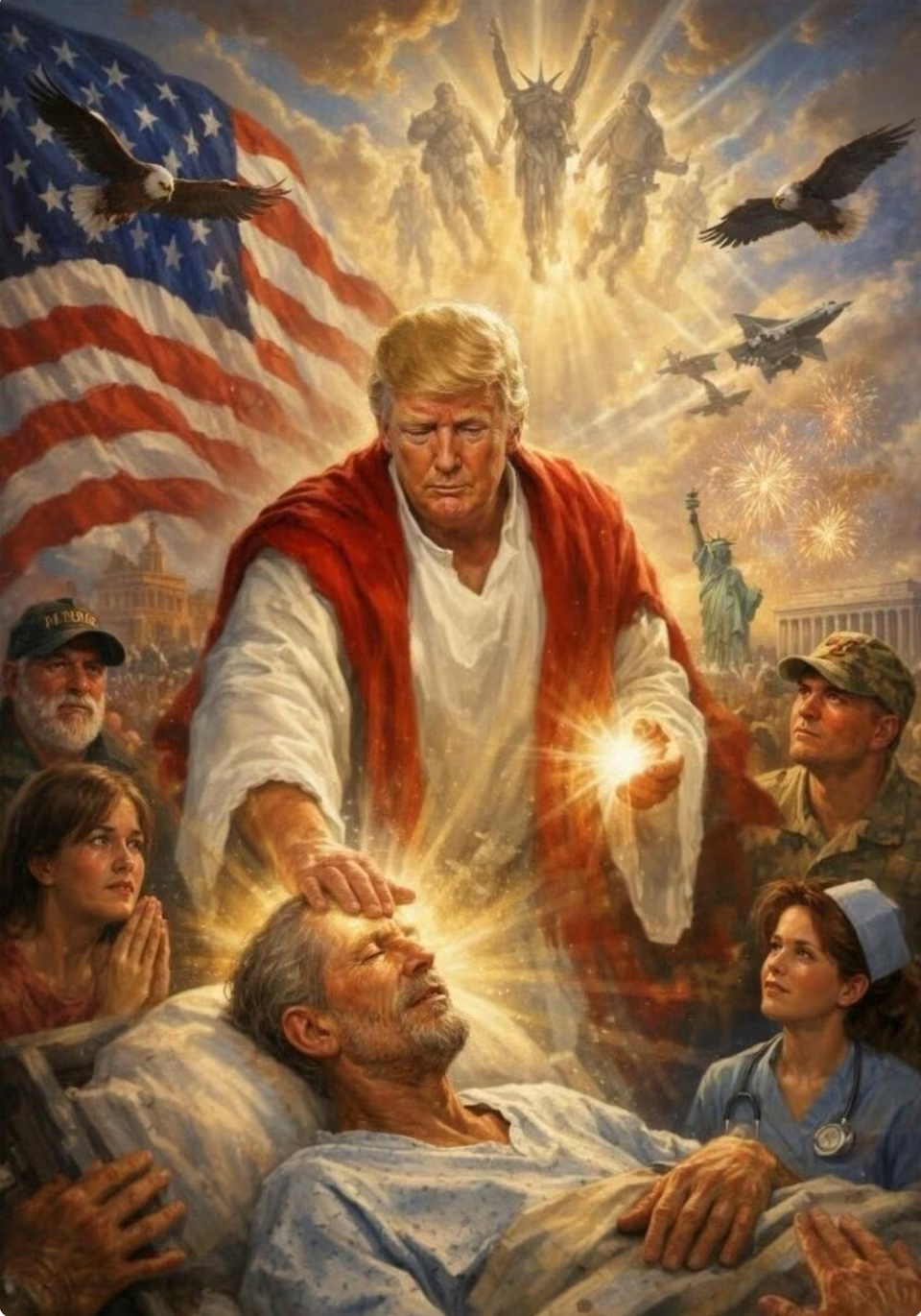
The image, shared on Truth Social, depicted Trump in a white robe placing his hand on a man’s head, evoking imagery closely associated with biblical healing scenes attributed to Jesus Christ. Within hours, the post was deleted—but not before igniting backlash across religious and political circles.
Incident Breakdown: What Happened?
Key facts:
- 📍 Platform: Truth Social
- 🖼️ Content: Trump depicted in a Christ-like healing pose
- ⏱️ Timeline: Deleted within hours
- 🛑 Response: Aides claimed the post was “unauthorized”
While no official clarification followed, the rapid deletion suggests internal recognition of its potential fallout.
Religious Backlash: خطوط That Shouldn’t Be Crossed?
Across Denominations
Christian leaders—both Protestant and Catholic—criticized the image as blasphemous and politically reckless. The portrayal of a political leader in a Christ-like role struck many as crossing a sacred boundary.
Catholic Response
Criticism intensified after Trump’s remarks about the Pope. Catholic voices described the dual episode—verbal attack plus symbolic imagery—as deeply disrespectful.
Conservative Allies Speak Out
Even figures typically aligned with Trump warned of alienating faith-based voters, a key constituency in U.S. elections. This internal dissent is notable given the historical alignment between Trump and evangelical groups.
Public Reaction: Viral Criticism, Memes & Polarization
On social media, the response was immediate and intense.
Digital Backlash
- Thousands of users criticized the post as inappropriate
- Religious users expressed offense at perceived mockery
- Hashtags related to the controversy trended briefly
Meme Culture
The image quickly became meme material—highlighting how modern political messaging can spiral beyond control in the digital ecosystem.
Divided Support Base
While a segment of evangelical supporters defended the imagery as symbolic or exaggerated satire, broader faith communities showed clear discomfort.
Political Fallout: Messaging Strategy Under Scrutiny
At a strategic level, this episode underscores both the power and risk of symbolic politics.
Messaging Risk
Religious imagery has long been part of U.S. political rhetoric—but directly invoking Christ-like visuals is widely seen as a step too far, especially among moderate and institutional religious groups.
Damage Control
Campaign aides labeling the post “unauthorized” signals an attempt to contain damage without escalating the issue further. However, such explanations often raise questions about internal campaign discipline.
Strategic Pattern
This aligns with Trump’s broader communication style—provocative, boundary-pushing, and media-dominating. Yet, this incident reveals a potential limit to that strategy, particularly when it intersects with deeply held religious beliefs.
Timeline of Events
- Post Published: Image uploaded on Truth Social
- Immediate Reaction: Social media backlash begins
- Religious Criticism: Church leaders issue condemnations
- Political Amplification: Media coverage intensifies
- Deletion: Post removed within hours
- Campaign Response: “Unauthorized” explanation emerges
Bigger Picture: Religion, Power & Political Optics
This controversy highlights a deeper tension in American politics—the use of religious symbolism as a political tool.
For decades, candidates have referenced faith to connect with voters. But the Trump episode illustrates a crucial distinction:
Referencing religion is different from embodying it.
In a pluralistic democracy, such imagery risks:
- Undermining institutional religion
- Alienating moderate believers
- Reinforcing political polarization
Conclusion: A Calculated Risk That Backfired?
Whether accidental or intentional, the deleted image has already served its purpose in dominating headlines. But it also raises a critical question for Trump’s campaign:
How far can provocation go before it starts eroding core support?
For now, the episode stands as a reminder that in politics—especially where religion is concerned—symbolism is powerful, but boundaries still matter.