BJP’s “Extra Votes” Trigger Political Storm in J&K
By: Javid Amin | 29 April 2026
NC Flags RTI Findings, PDP Pushes Back Hard
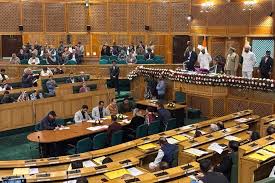
The 2025 Rajya Sabha elections in Jammu & Kashmir have spiraled into a full-blown political controversy after the Bharatiya Janata Party (BJP) secured more votes than its legislative strength, prompting allegations of cross-voting, procedural lapses, and backroom coordination among major parties.
At the center of the row is BJP candidate Sat Sharma, who received 32 votes—four more than the party’s 28 MLAs in the Assembly—raising immediate questions about where the additional support came from.
What Happened: The Core Controversy
Vote Arithmetic Raises Questions
The numerical discrepancy is the foundation of the controversy:
- BJP MLAs: 28
- Votes secured: 32
In a tightly contested proportional representation system, such a gap almost certainly indicates cross-voting—legislators voting beyond party lines.
While cross-voting is legally permissible in an open ballot system, its political implications are significant, especially when it alters outcomes.
RTI Disclosures Add New Layer
The Jammu & Kashmir National Conference (NC) escalated the issue by citing RTI responses that revealed:
- Peoples Democratic Party (PDP) did not appoint polling agents
- NC itself did not insist on their appointment
Polling agents act as critical observers during voting. Their absence reduces scrutiny and creates space for irregularities—particularly in high-stakes elections like the Rajya Sabha.
BJP’s Stand: “Like-Minded Legislators” Backed Us
The BJP has firmly rejected allegations of wrongdoing.
- Claim: Extra votes came from legislators who support the policies of Narendra Modi
- Defense: The open ballot system allows MLAs to vote freely, and cross-party support reflects ideological alignment
- Narrative: The victory is being framed as a legitimate political endorsement, not manipulation
This position attempts to normalize cross-voting as a feature—not a flaw—of the democratic process.
NC’s Counter: “Impossible Without PDP Support”
The NC has taken an aggressive stance, arguing the BJP’s victory could not have happened organically.
- Key Voice: Imran Nabi Dar
- Allegation: BJP benefited from hidden support within PDP ranks
- Evidence: RTI disclosures on missing polling agents
- Charge: Possible inducements—financial or political—behind cross-voting
NC’s broader argument is that procedural negligence and political opportunism combined to produce a distorted outcome.
PDP’s Rebuttal: “Scapegoating, Not Facts”
The PDP has categorically denied any role in facilitating BJP’s win.
- Claim: The party had no candidate in the fray, so collusion makes little sense
- Defense: Polling agents are appointed by candidates, not parties, making the RTI claim irrelevant
- Counterattack: Accused NC of deflecting blame for its own candidate’s defeat
The PDP’s tone has been sharp, framing the accusations as politically motivated rather than evidence-based.
Side-by-Side: Competing Political Narratives
| Party | Claim | Evidence / Defense | Tone |
|---|---|---|---|
| BJP | Extra votes from “like-minded legislators” | 32 votes vs 28 MLAs | Defensive, legitimizing |
| NC | BJP win due to PDP support & lapses | RTI: no polling agents | Aggressive, accusatory |
| PDP | No collusion, no candidate | Agents appointed by candidates | Rebuttal, counter-accusatory |
Why This Controversy Matters
1. Transparency Under Question
Polling agents are a basic safeguard. Their absence weakens oversight and opens the door to suspicion—even if no wrongdoing is proven.
2. Cross-Voting vs Political Ethics
While legally valid, cross-voting in such numbers raises ethical questions about mandate integrity and party discipline.
3. Deepening Trust Deficit
Opposition figures like Sajad Lone have labeled the episode “match-fixing,” arguing that voters are being misled by behind-the-scenes political alignments.
4. Potential Legal & Electoral Reforms
RTI-based revelations could push for:
- Mandatory appointment of polling agents
- Stricter monitoring of open ballot voting
- Clearer accountability mechanisms
Bigger Picture: A Pattern in J&K Politics?
This episode fits into a broader trend in Jammu & Kashmir politics:
- Repeated allegations of cross-voting in Rajya Sabha polls
- Claims of tacit alliances between rival parties
- Growing perception of elite-driven political outcomes
The 2025 controversy may not be an isolated incident—but rather part of an evolving political pattern that demands scrutiny.
Bottom Line
The BJP maintains its win was a reflection of broader political support. The NC insists it was enabled by PDP’s silence and procedural lapses. The PDP, in turn, rejects all allegations and accuses the NC of deflection.
What remains undisputed, however, is this:
A routine Rajya Sabha election has turned into a credibility test for Jammu & Kashmir’s democratic processes.
Whether this leads to institutional reforms or fades into political rhetoric will determine how voters judge the system—and the parties that operate within it.