NMC Warns MBBS Aspirants Against Fake Colleges: Why Verification Before Admission Is Critical
News Feature | November 12, 2026
The National Medical Commission’s latest warning is more than a routine admission advisory. It comes against the backdrop of an alleged education racket in Uttar Pradesh, where an institution operating from a farmhouse reportedly offered medical, pharmacy and nursing courses, allegedly collected money from students and issued forged academic documents.
The case has exposed how easily the promise of a professional degree can be used to exploit young people and their families. For an MBBS aspirant, the consequences of trusting the wrong institution can be particularly severe. Years of preparation, substantial fees and the hope of becoming a doctor can all be put at risk.
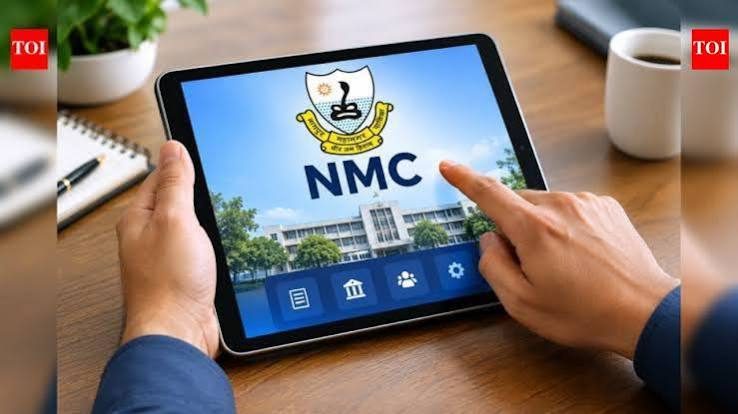
The NMC has now asked students and parents to verify a medical college’s authenticity, regulatory permission, approved courses and sanctioned intake before accepting an admission offer or making any payment. It has also warned against trusting brochures, websites, social media promotions, agents or approval letters circulated by institutions themselves.
There is an important point behind this warning: a college appearing on an official list, or having operated in an earlier academic year, does not automatically mean it can admit students in the current session.
The advisory is especially relevant during the admission process, when families are under pressure to secure a seat and may be tempted by promises of direct admission, guaranteed seats or special arrangements.
The NMC advisory: What exactly has the regulator said?
The National Medical Commission’s Undergraduate Medical Education Board issued the latest advisory on November 5, 2026. It appeared in the NMC’s official notices section on November 6.
The commission said it had received information about institutions purportedly offering medical and allied courses without obtaining the statutory recognition, approval or permission required from the competent regulatory authorities.
It identified several risks:
-
Misleading advertisements and websites.
-
Social media promotions claiming that institutions are recognised.
-
Unauthorised admission offers made by institutions or agents.
-
Forged or misleading Letters of Permission and approval documents.
-
Claims of affiliation or recognition that do not amount to permission to conduct an MBBS course.
-
Admission-related payments collected through unauthorised agents or personal bank accounts.
The NMC has asked students to check whether a college appears on its official list and, more importantly, whether it has permission to admit students for the particular academic year.
It has also directed aspirants to verify the number of seats approved for the relevant course. A college cannot legally admit students beyond its sanctioned intake simply because it advertises additional seats.
The advisory further asks students to use the official counselling process wherever counselling is prescribed and to report suspected fraudulent institutions to the NMC, the concerned State or Union Territory medical education department, the relevant regulator or the local police.
This is not merely advice to exercise caution. It is a reminder that regulatory permission must be independently verified before money or academic commitments are made.
The farmhouse case that brought the issue before the Supreme Court
The immediate background to the advisory is an alleged fake medical and paramedical education racket uncovered in Mahmoodpur Nagaria village in Uttar Pradesh’s Etah district.
The institution reportedly operated under the name of BS Medical College and University. According to police details reported by The Indian Express, it had allegedly been functioning since 2022.
The matter came to light during an investigation into a reported kidnapping.
On September 16, 2026, a complaint was lodged alleging that Satendra Kumar, who was said to be running the institution, had been abducted by three young men and that a ransom of ₹2 lakh had been demanded.
As the police investigated, the story reportedly took an unexpected turn. The three young men were allegedly connected to the institution and were seeking a refund after their admissions had been cancelled. Investigators then began examining the institution’s claimed affiliations and academic credentials.
According to the newspaper’s report, the operator initially claimed that the college was affiliated with an institution in Hapur. Police reportedly found that claim to be false. Another affiliation claim also failed to establish the institution’s credentials.
What began as a kidnapping investigation consequently led police towards an alleged education fraud.
What did investigators reportedly find?
The premises were located on farmland in Mahmoodpur Nagaria. The Indian Express report, quoting an investigating police officer, described a one-storey building on approximately four bighas of land. It reportedly had ten rooms, some furnished, but no washroom.
The Supreme Court’s subsequent order described the premises differently, referring to an old, dilapidated structure comprising two or three rooms in the middle of a field.
The descriptions differ on the number of rooms, and that difference should not be ignored. However, both accounts raised serious questions about the premises and their apparent capacity to support the range of professional courses being advertised.
According to the police account reported by The Indian Express, investigators recovered material including:
-
Student identity cards and admission forms.
-
Attendance records and examination documents.
-
Fee receipts and application forms.
-
Question papers and answer booklets.
-
College seals and letterheads.
-
Mark sheets and other allegedly forged academic records.
-
Promotional material carrying a purported university code.
The investigation reportedly found that the institution was offering courses such as DPharma, BPharma, BSc Nursing, BAMS, DMLT, BMLT, GNM and ANM.
A particularly disturbing detail concerned the person shown as the institution’s chairman. He was identified in the reporting as Bhagwan Das Singh Baghel, a local tea seller. Police reportedly said that he regularly signed documents provided to him by Satendra Kumar, while Baghel claimed that he was unaware of the full nature of the institution’s activities.
These are allegations recorded in media reports and court proceedings. The accused persons’ criminal responsibility must ultimately be determined through the legal process.
The numbers raise another question: How many students were affected?
The scale of the alleged racket is still not entirely clear from the public reporting reviewed for this feature.
In its September 21 report, The Indian Express quoted an Etah police officer as saying that preliminary investigation had revealed documents showing the enrolment of 54 students. The officer also indicated that there was no apparent evidence that students had actually attended classes at the premises.
A report by The Times of India, also quoting police sources, put the alleged number of affected students at nearly 200 and the amount collected at approximately ₹2 crore.
These figures should not be presented as one confirmed total. They may refer to different stages of the investigation, different categories of students or a broader estimate of those allegedly approached or defrauded. But the public reports do not provide a reconciled official account.
That leaves several questions:
-
How many students actually paid admission fees?
-
How many received forged certificates or mark sheets?
-
How many were promised admission but never enrolled?
-
How much money was collected?
-
Were any students able to recover their payments?
-
Did any of the documents issued by the institution enter official academic or employment records?
These details matter because the damage extends beyond financial loss. A student who spends years believing that they are enrolled in a recognised professional course may discover too late that the qualification has no legal value.
From five arrests to seven: What happened after the exposure?
The reported police action developed over several weeks.
The September 21 Indian Express report said five people had been arrested in connection with the alleged operation. The Supreme Court’s October 9 order recorded police action against Satendra Kumar and three other persons.
A subsequent report by Amar Ujala, published on November 5, said the number of arrests had reached seven. It also reported that a joint team involving health officials, the administration and police had sealed the premises.
The sealing action is significant because it indicates that the case moved beyond the initial police investigation to administrative action against the premises.
However, sealing an institution and arresting suspects do not, by themselves, establish the final outcome of the criminal case. The investigation, prosecution, identification of affected students and recovery of money remain important issues.
The authorities should publish a verified account of the students affected and the action taken to protect their academic interests.
Why did the Supreme Court intervene?
The issue reached the Supreme Court through proceedings in Ayesha Jain v. Amity University, Noida and Others, Writ Petition (Civil) No. 531 of 2025.
The farmhouse case was brought to the Court’s attention by Dr R.M. Sharma, who had been nominated to assist it on issues concerning the functioning of educational institutions.
On October 9, 2026, a Bench comprising Justices Ahsanuddin Amanullah and N.V. Anjaria considered the information about the purported fake institution in Etah.
The Court recorded the police action and was informed by the Uttar Pradesh government that an independent inquiry had also been ordered by the Chief Secretary.
The Court appreciated the state’s response and agreed with a suggestion that the University Grants Commission and other regulatory authorities should issue public advisories warning people against taking admission in, or dealing with, institutions without first checking their authenticity.
It consequently directed the UGC and all regulatory authorities to issue such advisories.
The Union Government was also directed to communicate the order to the regulatory bodies and monitor compliance.
The next hearing in the matter was listed for November 19, 2026.
There is an important distinction here. The farmhouse institution was not connected to Amity University merely because the wider Supreme Court proceedings carry that case title. The alleged fake college was a separate issue brought before the Court during those proceedings.
The case itself has developed into a wider examination of educational institutions and regulatory oversight.
A clarification: The farmhouse institution was not specifically described as an MBBS college
One detail deserves particular attention because it can easily be misunderstood in headlines and social media discussions.
The list of courses recorded in the Supreme Court’s October 9 order included DPharma, BPharma, BSc Nursing, DMLT, BMLT, BAMS, GNM and ANM.
MBBS was not included in that list.
The farmhouse case therefore should not be described as a confirmed instance of an unauthorised MBBS college admitting medical students. The case involved an institution allegedly offering a range of medical, pharmacy, nursing and allied courses without the required approvals.
The NMC’s new warning to MBBS aspirants is a broader preventive measure. It responds to the Supreme Court’s direction to regulators and addresses the specific risk of unauthorised MBBS institutions and misleading admission offers.
This distinction is important because different professional courses are governed by different statutory authorities. Approval for one course or qualification cannot be treated as permission to run another.
The NMC itself has made this clear in its advisory.
Recognition, affiliation and permission: Three terms students must understand
One reason students can be misled is that institutions often use regulatory language that sounds reassuring but does not necessarily establish their authority to offer a particular course.
A university may be recognised for one purpose. A college may claim affiliation with a university. An institution may have approval for one programme but not another.
These are not interchangeable permissions.
1. Recognition
Recognition refers to the status of an institution, course or qualification under the relevant legal and regulatory framework.
A claim that an institution is recognised by a university or another authority does not automatically establish that it can offer an MBBS programme.
2. Affiliation
Affiliation generally means that a college is linked to a university or examining body for academic and examination purposes.
But affiliation alone does not replace the statutory permission required from the regulator responsible for a professional course.
3. Regulatory permission
For MBBS, the National Medical Commission and its Medical Assessment and Rating Board are central to the approval process.
Section 28 of the National Medical Commission Act, 2019, requires prior permission from the Medical Assessment and Rating Board for establishing a new medical college, starting a postgraduate course or increasing the number of seats. The NMC’s regulatory framework and published guidance also set out the permission requirements for new medical institutions and courses.
The MARB is responsible for granting permissions and assessing whether medical institutions meet the required standards.
This is why a letter claiming affiliation, a university certificate or a general recognition document cannot be accepted as proof of authority to conduct MBBS.
The NMC’s November advisory expressly warns that approval or recognition granted by one authority for a particular purpose must not be treated as permission from the NMC to run an MBBS course.
Why previous-year approval is not enough
This is arguably the most important part of the NMC warning.
A college may have been allowed to admit students in an earlier academic year. That does not automatically establish its right to admit a new batch in the current session.
Similarly, a college may have approval for a particular number of seats but advertise a larger intake.
The NMC has therefore instructed students to verify three things independently:
-
Whether the institution is listed by the NMC.
-
Whether it has the necessary permission for the relevant academic year.
-
Whether the course and number of seats being offered match the regulator’s approved records.
This matters because medical education is closely tied to clinical training, faculty strength, hospital facilities and infrastructure. Approval cannot be treated as a permanent certificate that allows an institution to expand its intake or start additional courses whenever it chooses.
For the 2026-27 academic year, the NMC’s official College and Course Search page provides filters for course, year, state, management, university and college name. The page was marked as last updated on November 9, 2026, and also provides access to the undergraduate MBBS seat matrix.
The seat matrix is an important cross-check. If a college advertises more seats than the official approved intake, students should seek clarification directly from the regulator before proceeding.
How MBBS aspirants can verify a medical college before admission
The NMC’s warning should become a routine part of every family’s admission process. Students should not wait for an institution to come under investigation before checking its credentials.
Here is a practical verification process.
Step 1: Search the official NMC college database
Visit the NMC College and Course Search portal.
Select MBBS as the course and the relevant academic year. Use the state and college-name filters to locate the institution.
Check its regulatory status, approved intake and available permission or recognition history.
Step 2: Compare the approved seat intake
Do not rely on the number of seats printed in a brochure or advertised by an agent.
Compare the institution’s claim with the official NMC records and the relevant MBBS seat matrix.
If the institution advertises 150 seats but the official record shows a lower approved intake, ask the regulator for clarification.
Step 3: Verify the latest permission
Ask the college for the relevant Letter of Permission or other official approval document.
Do not accept a photograph, screenshot or scanned document as final proof. Verify the document through the NMC’s official communication channels and check whether it applies to the relevant course, intake and academic year.
Step 4: Follow authorised counselling
MBBS admission is not supposed to be secured through private promises of guaranteed seats.
Students must qualify NEET-UG and participate in the applicable official counselling process.
Depending on the seat category, counselling is conducted through the Medical Counselling Committee or the competent state or Union Territory authority.
The Medical Counselling Committee website publishes counselling notices, schedules, seat information and admission-related instructions.
A student should verify the allotment through the official counselling portal rather than relying on a letter or message sent by an intermediary.
Step 5: Check the institution’s actual facilities
The NMC advisory also warns against extraordinary claims that do not match the nature and scale of the institution.
For a medical college, students and parents should ask about:
-
The attached teaching hospital.
-
Clinical training arrangements.
-
Laboratories and practical facilities.
-
Qualified teaching faculty.
-
Student intake and infrastructure.
-
The institution’s actual campus and academic operations.
A building, website, office or advertisement is not proof of regulatory approval. Physical facilities matter, but they cannot substitute for statutory permission.
Step 6: Avoid payments to agents and personal accounts
Do not transfer admission money to an agent, an individual’s personal bank account or an unverified intermediary.
Before paying, confirm the allotment, the college’s approval and the official payment procedure. Obtain an institutional receipt for every payment.
The NMC has specifically warned against admission-related payments to unauthorised agents and unverified intermediaries.
The warning applies to more than MBBS
The NMC advisory also addresses institutions advertising allied and other professional courses.
However, the commission has clarified that courses such as pharmacy, nursing, Ayurveda and allied healthcare programmes fall under different statutory or competent regulatory authorities.
Students must therefore verify the course with the authority responsible for that particular qualification.
| Course | Regulatory authority to check |
|---|---|
| MBBS | National Medical Commission and MARB |
| BPharma and DPharma | Pharmacy Council of India |
| Nursing programmes | Indian Nursing Council and the relevant State Nursing Council |
| BAMS and Ayurveda programmes | National Commission for Indian System of Medicine |
| Allied and healthcare programmes | Relevant competent authority, examining body and applicable statutory regulator |
For example, the Pharmacy Council of India publishes information about approved pharmacy institutions and courses. The Indian Nursing Council maintains academic-year-wise information on nursing institutions found suitable for the relevant programmes. NCISM publishes lists of permitted Ayurveda colleges.
The lesson is simple: never assume that approval for one professional course automatically authorises an institution to offer another.
A university’s general recognition does not replace the course-specific permission required under the applicable law.
What happens when students discover the truth too late?
The consequences of enrolling in an unauthorised institution can extend far beyond the loss of admission fees.
For an aspiring doctor, the central issue is whether the institution and the qualification meet the requirements of the medical regulator. A qualification from an institution without the required statutory approval may not be recognised for the purpose of professional registration.
The student may lose years of study, money paid by parents and the opportunity to pursue admission elsewhere within the normal academic cycle.
The problem can be even more complicated when an institution issues forged mark sheets, attendance records or certificates. Students may find themselves unable to establish whether they completed a valid programme or whether their academic records exist in the official system.
Families may also face difficulty recovering money from the people who allegedly collected it.
That is why verification before admission is much more effective than attempting to repair the damage afterwards.
Students who suspect that they have been misled should preserve:
-
Admission forms and offer letters.
-
Payment receipts and bank transaction records.
-
Brochures and advertisements.
-
WhatsApp messages, emails and social media promotions.
-
Copies of claimed approval and affiliation documents.
-
Website addresses and contact details of agents.
They should then submit a written complaint to the NMC or the competent regulator, inform the relevant State or UT medical education department and approach the local police where fraud or forged documents are suspected.
The NMC has specifically advised complainants to preserve such supporting material.
Is the regulator doing enough, or are students being left to protect themselves?
The latest advisory is necessary, but it also raises a larger question about regulatory enforcement.
Why should an aspirant have to investigate whether a college’s approval letter is genuine? Why should parents have to compare seat matrices, check multiple websites and question the authenticity of documents that institutions claim to have received from government authorities?
Students must exercise caution, but the responsibility cannot rest entirely on them.
The Etah case reportedly operated for several years before the alleged racket came to light. Its exposure was linked to a police investigation into a reported kidnapping, rather than a routine regulatory inspection.
That should prompt a wider examination of how unauthorised institutions advertise courses, collect fees, claim affiliations and issue academic documents without being detected earlier.
The NMC, UGC, state governments and course-specific regulators need a more coordinated approach.
A stronger system could include:
1. A live national verification dashboard: A single searchable platform showing each institution’s approved courses, academic-year permissions and sanctioned intake.
2. Digital verification of approval letters: Every Letter of Permission should have a verifiable reference number or digital authentication facility.
3. Public disclosure of regulatory action: Notices, withdrawal of permission, restrictions on admissions and relevant inspection outcomes should be easy to find.
4. Coordination among regulators: The NMC, PCI, INC, NCISM, UGC and state authorities should exchange information about suspicious institutions and misleading claims.
5. A dedicated student complaint mechanism: Aspirants should be able to report suspected admission fraud and track the progress of their complaints.
6. Protection for affected students: Where an institution is found to have operated illegally, authorities should identify affected students, examine their academic records and pursue appropriate remedies under the law.
7. Action against fraudulent intermediaries: Agents and individuals making false admission promises should be investigated, particularly where forged documents or unauthorised payments are involved.
An advisory can warn students, but a strong regulatory system must also prevent fraudulent institutions from continuing to operate.
A medical seat should never be bought on the strength of a promise
For many Indian families, an MBBS seat represents years of sacrifice. Parents spend their savings, students invest years preparing for NEET and families often travel across states in search of an affordable and recognised institution.
That makes medical admission fraud particularly damaging.
The Etah case, as described in police reports and the Supreme Court’s proceedings, shows how a professional education promise can allegedly be turned into a business built around false affiliations, forged documents and questionable academic arrangements.
The NMC’s latest advisory is therefore timely. Its message is clear: verify the institution, check the current academic year’s permission, confirm the approved intake and use the official counselling system.
But the larger responsibility lies with the regulators as well. Students should not have to discover after paying their fees that the institution they trusted had no authority to offer the course.
Medical education is not simply another commercial service. It determines who may eventually enter a profession that carries responsibility for human life.
A fake admission offer can cost a student money. A fake qualification can cost them a career.
Before paying for a medical seat, verify the college. Before trusting an approval letter, authenticate it. And before believing an admission promise, check the regulator’s records.
Frequently Asked Questions
1. What has the NMC advised MBBS aspirants to do?
The NMC has advised students and parents to verify a medical college’s official listing, permission for the relevant academic year, course approval and sanctioned seat intake before accepting admission or making any payment.
2. Is a college’s presence on the NMC website enough to confirm that it can admit students?
No. The NMC has clarified that a college’s presence on an official list or its approval in a previous academic year does not automatically authorise admissions in every subsequent year. Students must verify current-year permission and approved intake.
3. Can an agent guarantee an MBBS seat through direct admission?
Students should be extremely cautious of such claims. MBBS admissions must follow NEET-UG eligibility requirements and the applicable official counselling process. An agent’s promise cannot replace a valid counselling allotment.
4. Was the Etah farmhouse institution offering MBBS?
The courses listed in the Supreme Court’s October 9 order included pharmacy, nursing, Ayurveda and allied programmes, but did not specifically include MBBS. The NMC’s warning to MBBS aspirants is a wider preventive advisory.
5. Which authority approves MBBS colleges in India?
The National Medical Commission is the principal regulator for medical education. Its Medical Assessment and Rating Board grants permissions and assesses medical institutions under the applicable legal framework.
6. Which authority approves pharmacy and nursing colleges?
Pharmacy programmes are regulated by the Pharmacy Council of India. Nursing institutions are subject to the applicable Indian Nursing Council and State Nursing Council requirements. Ayurveda programmes fall under the National Commission for Indian System of Medicine.
7. What should students do if they suspect an admission scam?
Preserve admission documents, payment receipts, advertisements and messages. Report the matter to the NMC or the regulator responsible for the course, the concerned State or UT medical education department and the local police where fraud is suspected.