92% of EWS Certificates Issued in Jammu, Only 8% in Kashmir: Sajad Lone Questions Poverty Criteria
By: News Desk | 05 October 2026
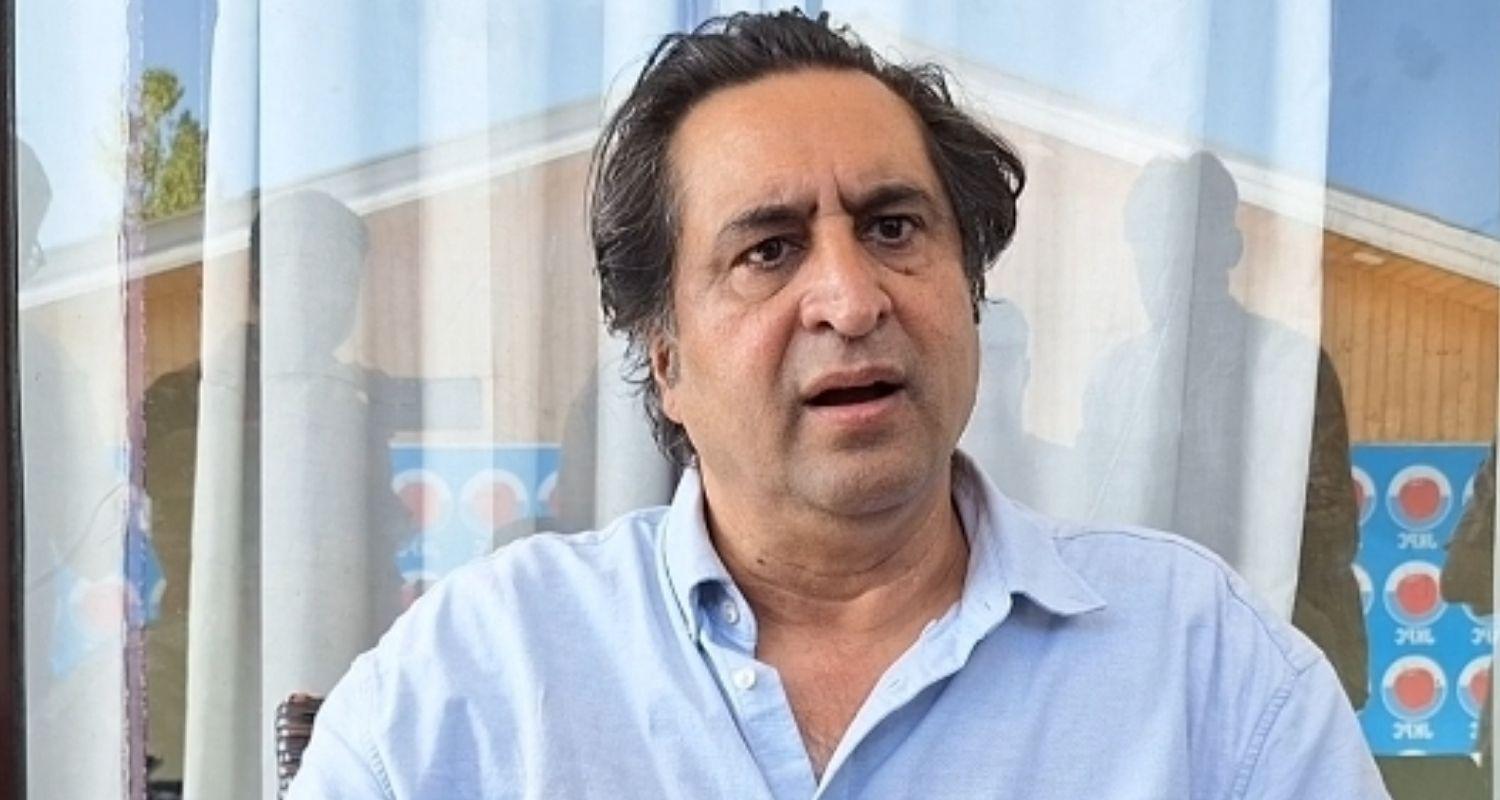
Srinagar: Jammu and Kashmir Peoples Conference chairman and Handwara MLA Sajad Gani Lone has raised fresh questions over the Union Territory’s definition of economic disadvantage, pointing to a striking regional disparity in the issuance of Economically Weaker Sections (EWS) certificates and asking whether the existing criteria accurately reflect the distribution of poverty across Jammu and Kashmir.
Lone’s intervention comes after government figures placed before the J&K Assembly showed that 26,544 EWS certificates were issued across the Union Territory during the past two years. Of these, 24,058 were issued in Jammu division and 2,486 in Kashmir division—a distribution of roughly 91% and 9%, respectively.
Lone has described the figures in political terms as approximately 92% in Jammu and 8% in Kashmir, arguing that the disparity deserves examination by the elected government.
His question is broader than the certificate numbers themselves: does the present system for identifying economically weaker households produce a realistic picture of poverty in the two regions?
At the same time, the government has maintained that the existing criteria are prescribed under the J&K Reservation Rules read with SRO 518 of September 2, 2019, and are in conformity with applicable constitutional and legal provisions. It has said there is currently no proposal to revisit them.
The disagreement therefore centres not simply on statistics, but on how poverty is defined, measured and translated into access to employment opportunities.
The Numbers Behind the 92:8 Claim
The figures cited in the Assembly provide the clearest starting point.
During the two-year period covered by the government’s reply, the Revenue Department reported:
| Region | EWS certificates |
|---|---|
| Jammu division | 24,058 |
| Kashmir division | 2,486 |
| Total | 26,544 |
That works out to approximately 90.6% for Jammu and 9.4% for Kashmir.
Lone has rounded the figures to 92% and 8% in his public statements. The underlying government numbers, however, are 24,058 and 2,486.
The district-level figures show that the concentration is not confined to one part of Jammu.
In Jammu division, Kathua recorded 5,865 certificates, Jammu 5,075, Samba 4,614 and Udhampur 3,435. Doda recorded 1,804, Ramban 1,440, Reasi 1,381 and Kishtwar 429, while Rajouri and Poonch recorded 12 and three respectively.
In Kashmir division, Kulgam recorded 618 certificates, followed by Anantnag with 583 and Baramulla with 315. Budgam had 254, Srinagar 174, Pulwama 157, Shopian 153, Bandipora 82, Kupwara 80 and Ganderbal 70.
The government’s reply did not provide a specific explanation for why the two divisions produced such different certificate numbers.
Lone’s Bigger Question: Who Is Being Counted as Poor?
For Lone, the issue is not necessarily that officials have committed wrongdoing.
He has explicitly framed the question as one of policy design and measurement.
His argument is that if the EWS system produces a situation in which more than nine out of every ten certificates are issued in Jammu, policymakers should examine whether the eligibility framework is accurately identifying economically vulnerable people across the entire Union Territory.
“If 92 percent of the certificates had been issued in Kashmir and 8 percent in Jammu, I would have raised my voice even then,” Lone said, arguing that the central question is whether such a distribution corresponds to the actual geographical distribution of poverty.
This distinction matters.
The certificate data does not itself establish that 91% of economically weaker people live in Jammu.
It establishes that roughly 91% of certificates issued during the specified period were issued in Jammu.
Those are two different propositions.
Lone’s argument is that the difference is sufficiently large to warrant an examination of the underlying criteria.
Why Ration Cards Have Entered the Debate
The political debate has intensified because Lone has compared EWS certification with another government mechanism for identifying economically vulnerable households.
He has pointed to Priority Household (PHH) and Antyodaya Anna Yojana (AAY) ration-card data, arguing that those figures present a substantially different regional picture.
According to figures cited by Lone, Kashmir has around 37.71 lakh PHH/AAY ration-card beneficiaries, compared with around 29.81 lakh in Jammu. Based on that dataset, he has argued that the distribution of economically vulnerable households is closer to a 55:45 split in favour of Kashmir.
This comparison is at the heart of his criticism.
A ration-card classification and an EWS employment certificate are not identical instruments and serve different policy purposes. EWS eligibility is governed by specific income and asset-related conditions, whereas food-security categories operate under their own eligibility framework.
But Lone’s contention is that if the government uses one mechanism to identify a household as economically vulnerable for food support and a substantially different framework when that same household seeks a government job, the resulting definitions of poverty need to be examined.
That is the policy question he wants the government to address.
The Asset-Criteria Question
One of the key issues raised by Lone concerns the asset-based component of EWS eligibility.
Reports of his Assembly intervention indicate that he argued that a person could fall below the income threshold yet fail to qualify because of property or other asset holdings.
The argument is particularly relevant in a region where household ownership of land or property does not necessarily translate into high disposable income.
Lone has therefore called for a more uniform and transparent definition of economic disadvantage, particularly when the same population is being assessed for different government benefits.
The government’s response, however, has so far been clear: the existing criteria are prescribed under the applicable J&K Reservation Rules and SRO 518 of 2019, are considered legally compliant, and there is no current proposal to revisit them.
That means any change would require a policy decision rather than simply an administrative reinterpretation of the existing certificate system.
Why the EWS Issue Matters for Government Jobs
The debate has particular significance because EWS reservation is directly connected with access to education and public employment.
Recent reporting has linked the EWS debate with the wider controversy surrounding Jammu and Kashmir’s reservation framework and the share of government jobs available through open merit.
Lone has argued that the regional imbalance in EWS certification can translate into an imbalance in recruitment outcomes, particularly when recruitment is conducted using the EWS category.
Indian Express reported that, among about 7,580 government jobs filled during the previous two years, roughly 697 EWS positions went to Jammu and 61 to Kashmir, according to figures cited in the debate.
Those numbers have given the EWS dispute a direct employment dimension.
For young job seekers, the question is not simply how certificates are distributed. It is whether the criteria used to determine eligibility are producing a fair reflection of economic disadvantage when candidates compete for limited government posts.
A Larger Reservation Debate in J&K
The EWS controversy comes against the backdrop of a much wider debate over reservation policy in Jammu and Kashmir.
Changes to the reservation framework in March 2024 increased the overall reserved share substantially, prompting protests and demands for rationalisation from sections of open-merit candidates.
The Omar Abdullah government subsequently constituted a Cabinet sub-committee to examine the reservation structure. The committee later recommended restoring a 50:50 balance between reserved and open categories, although the broader reservation question remains politically contentious.
Lone’s EWS intervention adds another layer to that debate.
His argument is not limited to how much reservation should exist. He is questioning how the beneficiaries of one reservation category are identified in the first place.
That makes the issue more technical—but potentially more consequential for recruitment.
The Government’s Position Cannot Be Ignored
While Lone has called for a review, the official position reported from the Assembly is that the existing criteria are already prescribed and legally compliant.
The Revenue Department has said there is presently no proposal to review or revisit the criteria.
This means that the present dispute should not be described as a government admission that the EWS framework is defective.
Rather, there are two distinct positions:
Lone’s position: the regional distribution is sufficiently unusual to justify reviewing how poverty and economic disadvantage are identified.
Government’s position: the existing criteria comply with the applicable legal framework and there is currently no proposal to change them.
The next stage, therefore, would depend on whether the government chooses to undertake a policy review in response to the political and public debate.
Sajad Lone Also Flags Governance Problems
The EWS issue was only one part of Lone’s latest criticism of administration in Jammu and Kashmir.
The Peoples Conference leader also alleged that ordinary citizens continue to face unnecessary difficulties while obtaining permissions and accessing government services.
He said his office had begun closer coordination with government departments and officers to review ongoing development works and improve coordination between elected representatives and the administration.
The intervention reflects a broader complaint frequently raised by legislators: that the return of an elected Assembly has not automatically eliminated the administrative barriers faced by citizens.
Lone said the opposition would continue raising such issues in the Assembly even though the National Conference holds the majority and leads the government.
He also said Speaker Abdul Rahim Rather had indicated that legislators could use the Privilege Motion mechanism if recommendations made by MLAs were ignored by government departments.
That could become an important institutional tool if legislators increasingly seek accountability from departments over unresolved constituency-level issues.
JJM Delays Put Drinking Water Back in Focus
Lone has simultaneously raised concerns about the implementation of the Jal Jeevan Mission (JJM) in Jammu and Kashmir.
His criticism centres on delayed water-supply projects and the time already lost in completing schemes.
He said JJM is a centrally funded programme with defined timelines and that around two years had already been lost. His stated priority was to complete pending pipeline work and ensure that drinking water actually reaches households rather than allowing procedural disputes to hold up implementation.
The concern is not confined to Lone’s constituency.
During the Assembly’s autumn session, legislators raised several issues relating to stalled JJM works, pending payments and delayed water-supply schemes. Sajad Lone and Trehgam MLA Mir Saifullah sought early resumption of stalled projects, noting that a House Committee report on the matter had remained pending for nearly two years.
Other legislators raised concerns about pending payments and the need to complete schemes that were already nearing commissioning.
Why the JJM Dispute Has Become Institutional
The JJM controversy has an unusual institutional dimension.
According to reports from the Assembly, a House Committee was examining issues relating to the implementation of the mission, but its report had remained pending for close to two years.
Lone has argued that the prolonged process has itself become an obstacle to getting water projects completed.
His criticism is essentially that scrutiny should not become a substitute for implementation.
At the same time, legislative committees exist precisely to examine allegations, administrative decisions and implementation issues. The policy challenge is therefore to balance scrutiny with continuity of essential public services.
The JJM debate illustrates that tension clearly.
“First Bring Water to the People”
Lone’s message on JJM has been relatively straightforward: whatever questions remain about implementation should not prevent households from receiving drinking water.
He has called for pipeline laying and completion of pending schemes to move ahead while other issues are examined separately.
The issue has particular importance in rural and remote areas, where incomplete water infrastructure can directly affect household welfare, health, schooling and women’s daily responsibilities.
The Jal Jeevan Mission was designed as a large-scale rural drinking-water programme, making delays potentially significant beyond individual contracts or departmental files.
National JJM data also shows the scale of the programme across India: as of March 31, 2026, more than 15.83 crore rural households had tap-water connections, representing about 81.81% of rural households, according to the mission’s published data.
For J&K, the question is increasingly about converting sanctioned and partially completed works into functioning household connections.
Two Governance Questions, One Political Argument
Although EWS certificates and JJM may appear unrelated, Lone has connected them through a broader criticism of governance.
The first concerns who receives government opportunities and on what criteria.
The second concerns whether government-funded infrastructure is being delivered within a reasonable timeframe.
In the EWS case, he is questioning the policy framework.
In the JJM case, he is questioning implementation and delays.
In both instances, his stated focus is on whether administrative systems are delivering outcomes to citizens.
The Regional Dimension
The EWS figures have inevitably introduced a regional dimension into the debate.
Jammu and Kashmir has historically had political arguments over regional representation, development, employment and access to public resources. Statistics showing a roughly 91:9 distribution of EWS certificates therefore carry significance beyond the certificate itself.
But the numbers should also be interpreted carefully.
The certificate figures do not, by themselves, establish regional discrimination or prove that the distribution of poverty is the reverse of the EWS distribution.
They show a large difference in certification outcomes.
Determining why that difference exists requires examining factors such as applications received, awareness, documentation, income and asset eligibility, administrative processing, population characteristics and the structure of the EWS rules.
That is precisely why Lone is calling for the framework to be examined.
What the Government Could Now Examine
The controversy provides several concrete questions for policymakers.
First, how many people applied for EWS certificates in each division, rather than simply how many certificates were issued?
Second, how many applications were rejected or remained pending, and for what reasons?
Third, how do the EWS applicant figures compare with PHH and AAY household data?
Fourth, are there regional differences in landholding, property ownership or other asset patterns that affect eligibility?
Fifth, how does the EWS certificate distribution translate into actual recruitment and educational admissions?
And finally, should the present definition of economic disadvantage be reviewed even if it is legally compliant?
These questions can be answered through administrative data rather than political assertions.
The Road Ahead
The immediate issue is whether the Omar Abdullah government will respond to Lone’s demand for a review of EWS criteria.
For now, the official position remains that the existing framework is valid and that no review has been proposed.
On JJM, the immediate challenge is different: pending projects need to move from scrutiny and administrative review towards completion, particularly where households are waiting for drinking-water connections.
For the opposition, these issues provide an opportunity to press the government on measurable outcomes rather than broad political commitments.
For the government, the EWS figures present a policy question that cannot be answered simply by pointing to the legality of the existing rules. Even where a framework is legally valid, unusually uneven outcomes can become the basis for a legitimate policy review.
A Data Dispute That Could Shape the Jobs Debate
The EWS controversy is ultimately about more than the headline 92:8 figure.
At its core is a much larger question: how does Jammu and Kashmir define economic disadvantage, and does that definition produce comparable outcomes across its two regions?
The government has supplied the certificate numbers and defended the existing rules.
Sajad Lone has challenged the policy implications of those numbers and asked whether the framework reflects the actual distribution of economically vulnerable households.
That debate is likely to continue because government employment remains one of the most closely watched economic issues in J&K.
If the administration chooses to examine the matter, the most useful next step would be a detailed comparison of applications, rejections, certificates, recruitment outcomes and poverty-related welfare databases across Jammu and Kashmir.
Until then, the 92:8 claim should be understood for what the official figures actually establish: around 91% of EWS certificates issued over the reported two-year period were from Jammu division and around 9% from Kashmir—not proof that 91% of J&K’s poor population lives in Jammu.
That distinction is central to understanding the political and policy debate now unfolding in Jammu and Kashmir.