Iran-US Tensions Escalate: US Carrier Build-Up, Hormuz Crisis and Oil Shock
By: Javid Amin | 04 October 2026
The Iran-US conflict is entering a more dangerous phase as Washington moves another aircraft carrier and thousands of troops toward the Middle East, Tehran warns of a stronger response to any renewed attack, the Strait of Hormuz remains under severe pressure and Saudi-backed forces launch a major offensive against Iran-aligned Houthis in Yemen. For India and the global economy, the biggest risks are now moving from the battlefield to oil, shipping, inflation and trade.
The Middle East is once again approaching a dangerous crossroads.
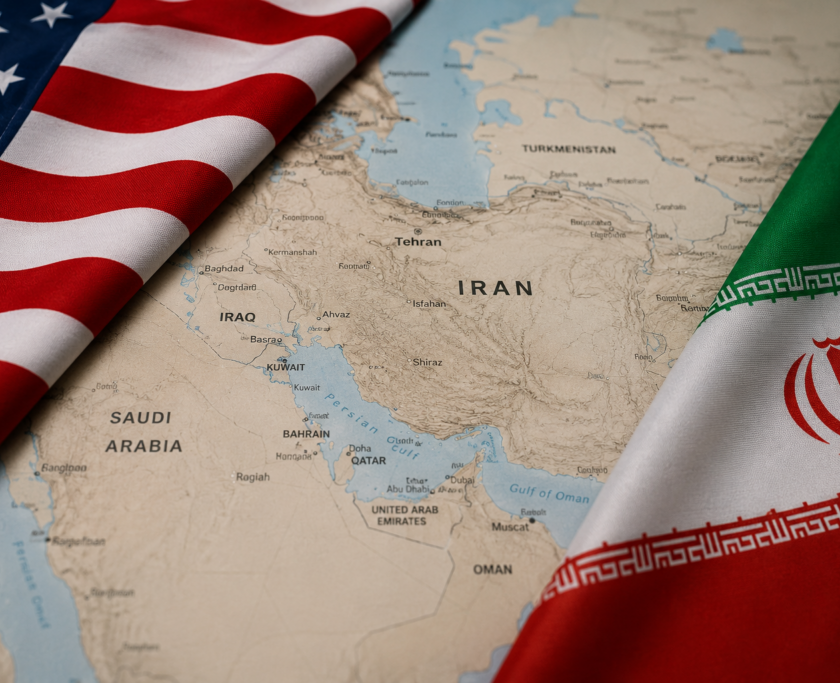
Months after the outbreak of the 2026 Iran war, the confrontation between Tehran and Washington is no longer confined to missile strikes, nuclear negotiations or competing diplomatic statements. It is increasingly becoming a contest over military positioning, maritime access, energy routes and the ability of each side to impose costs on the other without triggering an uncontrollable regional war.
Washington is now moving a third aircraft carrier strike group toward the Middle East, accompanied by an amphibious force and thousands of additional sailors and Marines.
The deployment could put roughly 9,000 to 10,000 additional US personnel into the wider regional theatre. The Pentagon already has around 50,000 US troops deployed across the broader Middle East, according to US officials cited by The Washington Post.
At the same time, President Donald Trump has kept open the possibility of renewed large-scale strikes against Iran after the November US midterm elections.
Tehran, meanwhile, is warning that another American attack would trigger a broader and more forceful response.
And in the background is the most economically sensitive issue of all:
the Strait of Hormuz.
Iran says the strategic waterway will remain closed until specific conditions are met. The United States is maintaining military pressure and has rejected an Iranian proposal that included reopening the strait.
The result is an increasingly interconnected crisis.
A military confrontation in Iran can affect a tanker in the Gulf.
A tanker disruption can affect insurance premiums.
Higher insurance costs can push up shipping costs.
A prolonged disruption can lift crude prices.
Higher crude prices can feed into inflation in countries thousands of kilometres away.
And for India, which imports roughly 88% of its crude oil consumption, the consequences are particularly important.
The latest US military move: another carrier heads east
The clearest signal of Washington’s current strategy is military.
The United States is sending the USS Theodore Roosevelt Carrier Strike Group toward the Middle East along with the USS Makin Island Amphibious Ready Group.
The two groups together carry more than 7,000 sailors and about 2,000 Marines, according to Associated Press reporting. The broader US reinforcement package could amount to 9,000–10,000 additional personnel.
The significance lies not only in the number of troops.
An aircraft carrier strike group brings with it:
- fighter aircraft;
- air-defence systems;
- destroyers;
- long-range strike capabilities;
- surveillance and reconnaissance assets;
- electronic warfare capabilities;
- logistics and command infrastructure.
An amphibious ready group adds another layer of military flexibility, including Marines, helicopters and ships capable of supporting operations ashore.
The deployment therefore gives Washington additional options without necessarily meaning that an attack has already been ordered.
That distinction matters.
Military preparation is not the same thing as a decision to launch a new offensive.
But it does mean the United States wants to retain the ability to act rapidly if diplomacy fails or if American forces, shipping or regional partners come under attack.
Three US carriers could soon be in the region
The scale of the deployment is particularly striking.
The USS George H.W. Bush and USS George Washington are already associated with the current US naval presence, while the Theodore Roosevelt is moving toward the theatre.
US officials cited by The Washington Post said three carrier strike groups could be positioned in or around the Middle East in the coming weeks. Together, they could represent nearly 20,000 sailors and Marines and up to about 150 fighter aircraft, depending on the final deployment configuration.
That would represent a formidable concentration of American naval and air power.
Yet there is another explanation besides preparation for a fresh offensive.
The US Navy has been under enormous operational strain.
Some vessels have spent months at sea, while Washington has simultaneously been dealing with maintenance requirements, troop fatigue and the demands of a prolonged conflict.
The Theodore Roosevelt deployment therefore provides the Trump administration with both additional combat capability and rotational flexibility.
But the timing is impossible to ignore.
Trump keeps the possibility of renewed strikes alive
The military build-up comes as Trump has repeatedly refused to rule out another major attack on Iran.
In a recent interview with Time, Trump said it was “possible” that the United States could intensify bombing of Iran after the November midterm elections. He also indicated that Washington had rejected an Iranian ceasefire proposal because he considered it inadequate.
This is important because the conflict has already lasted considerably longer than the administration initially suggested.
The original expectation in Washington that military pressure could force Tehran into a rapid settlement has collided with the reality of a prolonged confrontation.
Iran has absorbed military pressure while continuing to negotiate.
The United States has increased economic and military pressure while maintaining demands over Iran’s nuclear programme and regional behaviour.
Neither side appears ready to concede the core issues.
And that is what makes the current situation so dangerous.
Diplomacy is still alive — but the space for compromise is shrinking
The crisis is not purely military.
Diplomatic channels remain open.
Qatar and other intermediaries have been involved in communications between Washington and Tehran.
Iran has reportedly offered arrangements involving the reopening of the Strait of Hormuz and a return to negotiations.
But the sequence of actions is disputed.
Tehran wants guarantees and relief from pressure before fully reopening the waterway.
Washington wants Iran to make concessions while maintaining pressure.
Iran’s leadership argues that there can be no genuine diplomacy while American military forces are simultaneously threatening further attacks.
The United States, meanwhile, appears to believe that military and economic pressure strengthen its negotiating position.
That creates a classic escalation trap:
Each side believes pressure will make the other side compromise.
But the same pressure can also make compromise politically harder.
Strait of Hormuz: the narrow waterway with global consequences
If there is one location capable of turning the Iran-US confrontation into a global economic crisis, it is the Strait of Hormuz.
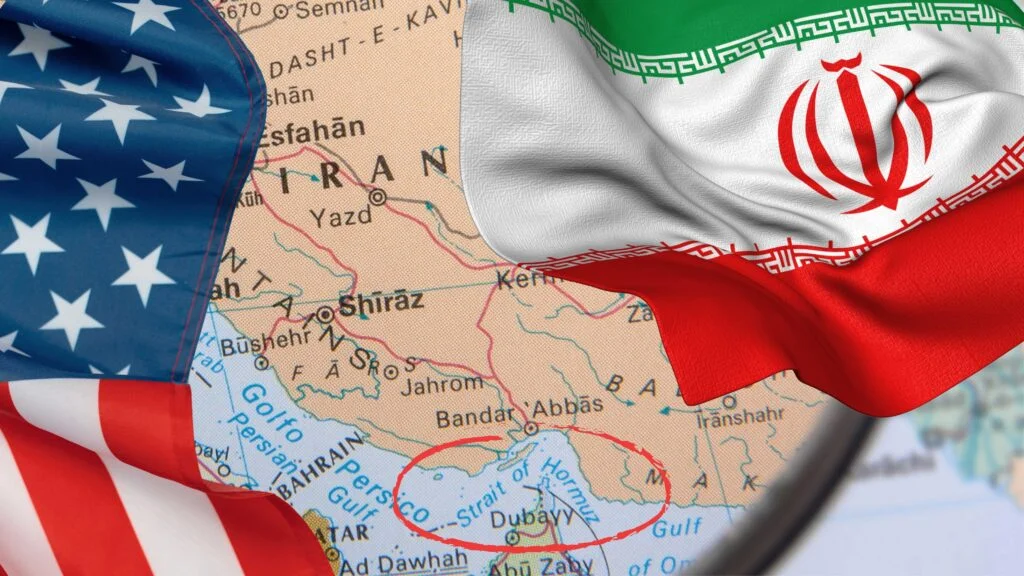
The waterway lies between Iran and Oman and connects the Persian Gulf with the Gulf of Oman and the Arabian Sea.
It is one of the world’s most important energy chokepoints.
The US Energy Information Administration estimates that roughly 20 million barrels per day of petroleum liquids moved through Hormuz in 2024 — approximately 20% of global petroleum liquids consumption. Around one-fifth of global LNG trade also moved through the strait.
And the importance goes beyond the raw volume.
There are limited alternatives.
Saudi Arabia and the UAE have pipelines that can bypass part of the strait, but their combined capacity is only a fraction of the volumes normally moving through Hormuz.
That means prolonged disruption cannot easily be solved by simply finding another route.
Iran says Hormuz will remain closed
The latest Iranian position adds another layer of uncertainty.
Iranian officials have said the Strait of Hormuz will not reopen until conditions linked to an earlier interim understanding with Washington are fulfilled.
Reuters reported on October 4 that Iranian Parliament Speaker Mohammad Baqer Qalibaf said reopening the waterway was contingent on seven conditions. Tehran has also stressed that its position concerns maritime security and the implementation of agreed terms rather than a new nuclear concession.
That makes Hormuz not merely a military issue.
It has become a negotiating instrument.
For Iran, control over access to the waterway creates leverage over the global economy.
For the United States, ensuring freedom of navigation is both an economic and strategic objective.
For Gulf countries, the situation is deeply uncomfortable.
They want Iran contained.
But they also do not want their ports, oil installations and shipping lanes to become targets in a US-Iran confrontation.
Tankers are becoming part of the battlefield
The security environment around Hormuz has deteriorated sharply.
Reports of attacks and incidents involving commercial vessels have raised concerns among shipping companies, insurers and energy traders.
The UK Maritime Trade Operations system has recorded multiple vessel incidents in the strategic waterway since late September. The Wall Street Journal reported seven attacks on vessels since September 28, along with another incident reported on October 4.
Even when a tanker is not destroyed, the consequences can be significant.
A shipping company must consider:
Can the vessel safely enter the Gulf?
Will insurance cover the voyage?
Will the crew agree to sail through the area?
Will the cargo reach its destination on time?
Will banks and commodity traders finance the shipment?
That is how a regional military crisis becomes a global economic problem.
Oil crosses $100 — but markets are sending a mixed signal
Brent crude has remained above the psychologically important $100-per-barrel threshold as traders assess the threat to Middle Eastern supply.
On October 5, however, oil prices eased somewhat after additional Middle Eastern supplies entered the market and the G7 announced a coordinated emergency-stock release.
Reuters reported Brent at around $101.59 per barrel, while WTI was around $90.12, following the announcement.
That does not mean the energy crisis is over.
It means markets are reacting to two opposing forces.
One force is pushing prices higher:
- Hormuz disruptions;
- tanker attacks;
- Gulf infrastructure risks;
- insurance costs;
- uncertainty over Iranian exports;
- potential US strikes;
- possible attacks on Saudi and other Gulf facilities.
The other is pushing prices lower:
- increased Middle Eastern exports;
- emergency stock releases;
- efforts by producers to maintain supply;
- expectations that some shipping activity can continue.
This is why oil markets are currently volatile rather than moving in a single direction.
The G7 is trying to prevent an energy shock
The G7 has announced plans to release 100 million barrels of crude oil and refined products from emergency reserves over the coming months.
The objective is straightforward:
Prevent a regional supply disruption from becoming a global fuel-price shock.
But strategic reserves are a buffer, not a permanent replacement for normal supply.
If the conflict continues for months, governments face a difficult calculation.
They can release more reserves.
But emergency reserves exist precisely for extraordinary situations.
Using them aggressively today reduces the cushion available for tomorrow.
That is why the market is watching not only the amount of oil being released, but also how long the disruption lasts.
Yemen opens another front
The Iran-US confrontation is now spilling even more visibly into Yemen.
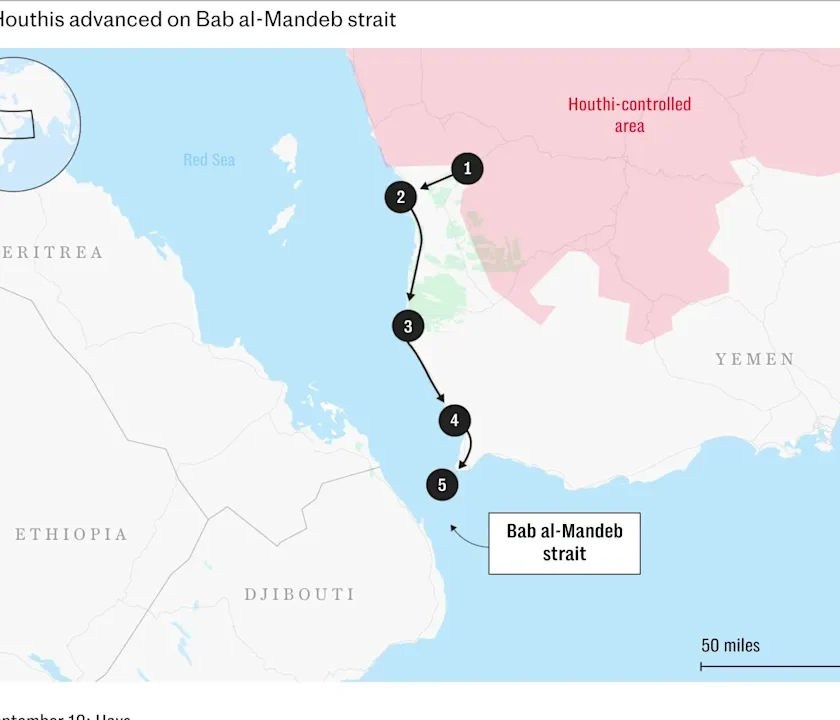
On October 4, Yemen’s internationally recognised government announced a major military offensive against the Iran-backed Houthi movement, seeking to retake territory under Houthi control, including areas around the strategic Red Sea coast and the Bab el-Mandeb corridor.
Saudi Arabia is supporting the Yemeni government.
The United States is providing intelligence and defensive support.
The Houthis, meanwhile, retain the ability to threaten shipping and launch missiles and drones.
That creates another strategic choke point.
Hormuz controls access from the Persian Gulf.
Bab el-Mandeb controls access between the Red Sea and the Gulf of Aden.
Together, the two waterways sit on either side of a major portion of the world’s energy and commercial shipping network.
The risk is therefore no longer concentrated in one location.
Saudi Arabia faces a difficult strategic choice
Saudi Arabia has spent years trying to reduce the temperature of its relationship with Iran.
Riyadh’s economic transformation under Vision 2030 requires stability.
Tourism, foreign investment, logistics, industrial development and major infrastructure projects all depend on the perception that the kingdom is becoming a safer and more predictable destination for capital.
But the Yemen crisis has placed Saudi Arabia back into direct confrontation with an Iran-aligned armed group.
Reuters reported that Riyadh is preparing a major operation involving Yemeni forces to challenge Houthi control of strategically important territory and the Bab el-Mandeb area.
That could produce another escalation cycle.
If Saudi forces intensify attacks, the Houthis could retaliate against Saudi infrastructure.
If Houthi attacks intensify, Saudi Arabia could increase military operations.
And if Iran decides to support a broader response, the crisis could become even harder to contain.
The Middle East is beginning to look like one interconnected battlefield
This is perhaps the most important development.
The current crisis cannot be viewed simply as:
Iran vs United States.
It is becoming a network of overlapping conflicts and pressure points.
Iran–US
Nuclear negotiations, military strikes, sanctions and maritime confrontation.
Iran–Israel
A wider strategic confrontation involving missiles, drones and regional influence.
Saudi Arabia–Houthis
A renewed struggle over Yemen and Red Sea access.
US–Gulf security
Washington’s commitment to protecting shipping and regional partners.
Global shipping
Tankers, LNG carriers, insurance companies and maritime operators responding to security risks.
Global energy markets
Oil and gas prices reacting to every military development.
Each theatre can influence the others.
That is what makes escalation so difficult to control.
What does this mean for India?
For India, the crisis is not distant geopolitics.
It is an economic issue with potentially direct consequences.
India remains heavily dependent on imported crude oil.
Government data indicates that India’s crude-oil import dependence has remained around 88% of consumption in recent financial years.
That makes international oil prices particularly important for:
- petrol and diesel prices;
- transportation costs;
- aviation fuel;
- fertiliser production;
- manufacturing;
- logistics;
- inflation;
- the current-account balance;
- the value of the rupee.
India is also geographically close to the Gulf and has extensive commercial, energy and people-to-people connections with the region.
Millions of Indians live and work across Gulf countries.
Any prolonged regional conflict therefore creates several simultaneous risks.
Indian shipping is already adapting
India’s energy sector has already been adjusting to the changed shipping environment.
Recent reporting indicates that Indian refiners and Gulf suppliers have increased the use of ship-to-ship transfers and alternative logistics arrangements to manage disruptions around Hormuz.
India has also diversified its crude sourcing over recent years.
That provides some protection.
But diversification has limits.
A significant portion of global oil and LNG flows through the Gulf, and Asian countries remain the principal destination for Hormuz energy shipments.
The EIA estimates that 89% of crude oil and condensate passing through Hormuz went to Asian markets in the first half of 2025, with China, India, Japan and South Korea accounting for a combined 74% of those flows.
In other words:
Hormuz is primarily an Asian energy lifeline.
India faces four major risks
1. Higher crude prices
If oil remains above $100 for an extended period, India’s import bill can rise sharply.
That can put pressure on inflation and the rupee.
2. Higher shipping and insurance costs
Even when cargoes continue moving, war-risk insurance and freight charges can increase.
Those costs eventually reach businesses and consumers.
3. Gulf employment and remittances
A prolonged military crisis could affect economic activity and employment conditions across Gulf states.
That matters for Indian workers and remittance flows.
4. Trade disruption
India’s trade with West Asia relies heavily on maritime routes.
The impact can extend beyond oil to chemicals, machinery, food products, pharmaceuticals and other goods.
India’s merchandise trade already experienced disruption earlier in the year as Hormuz-related shipping problems affected trade flows. Reuters reported that India’s June 2026 merchandise trade deficit widened to $30.43 billion, with shipping disruptions through Hormuz cited among the contributing pressures.
The LNG problem is equally important
Oil receives most of the headlines.
But natural gas could become another major concern.
Around one-fifth of global LNG trade normally transits the Strait of Hormuz, much of it originating from Qatar.
And India is among the major Asian destinations for LNG moving through the waterway.
That means a prolonged disruption could affect:
- electricity generation;
- industrial gas consumption;
- fertiliser production;
- city-gas networks;
- manufacturing costs.
Recent shipping data has shown some Qatar-linked LNG traffic resuming through Hormuz despite the conflict, suggesting that the waterway is not completely disconnected from international trade.
That is an important distinction.
Hormuz is under severe pressure, but maritime traffic has not simply disappeared.
The longer the crisis continues, however, the greater the risk that individual incidents accumulate into a much larger supply disruption.
Iran’s message: another attack will bring a stronger response
Iranian Foreign Minister Abbas Araghchi has warned that Tehran would respond more forcefully if attacked again.
Reuters reported that Iranian officials were preparing for a broader response should the United States resume large-scale military operations.
That message serves two purposes.
First, it is deterrence.
Iran wants Washington to understand that renewed attacks will not produce an easy victory.
Second, it is domestic signalling.
After months of war, Iran’s leadership needs to demonstrate that it remains capable of resisting American pressure.
But deterrence can become dangerous if both sides begin interpreting restraint as weakness.
The biggest danger may be miscalculation
The Middle East does not necessarily need either side to deliberately choose a wider war.
A chain reaction could produce one.
Imagine a sequence:
A commercial tanker is attacked.
The US responds militarily.
Iran retaliates against an American facility.
A Gulf state is hit.
Saudi Arabia expands its Yemen operation.
The Houthis attack shipping.
Israel launches another operation.
Iran responds again.
At each stage, leaders could claim that they were responding rather than initiating.
But the overall result would be escalation.
This is why military planners worry about miscalculation as much as deliberate strategy.
What Washington is trying to achieve
The US strategy appears to have several overlapping objectives.
Keep pressure on Iran
Washington wants Tehran to accept restrictions on its nuclear programme and broader strategic demands.
Protect shipping
The US does not want Iran or allied groups to establish long-term control over key maritime routes.
Protect regional partners
Saudi Arabia, the UAE, Israel and other US partners need confidence that American military power remains available.
Maintain deterrence
The deployment of carrier groups sends a message that Washington can escalate rapidly.
Preserve negotiating leverage
Military pressure can also function as bargaining power.
The problem is that every one of these objectives can also create a reason for Iran to resist.
What Tehran is trying to achieve
Iran’s objectives are different.
Tehran wants:
- relief from economic pressure;
- an end to what it sees as American military coercion;
- protection of its nuclear programme’s strategic interests;
- restoration of maritime access;
- preservation of its regional influence;
- guarantees against future attacks.
Iran also wants to demonstrate that military pressure cannot force it into unconditional surrender.
That is why Hormuz has become such an important bargaining chip.
Why the conflict may not end quickly
One of the biggest lessons from the past several months is that neither military power nor economic pressure has produced an immediate settlement.
The United States possesses overwhelming conventional military superiority.
Iran, however, does not need to defeat the US military in a conventional war to impose costs.
It can potentially rely on:
- missiles;
- drones;
- maritime disruption;
- proxy and partner forces;
- cyber capabilities;
- geographic depth;
- pressure on energy infrastructure.
That creates an asymmetric contest.
Washington can destroy military infrastructure.
Tehran can attempt to make the economic and political cost of continued war increasingly difficult to sustain.
The November US midterms add another political dimension
American domestic politics is now part of the equation.
The Trump administration’s handling of Iran will be judged not only by military commanders and foreign-policy officials but also by American voters.
The war has already generated domestic criticism because of its cost, duration and economic effects.
Trump has acknowledged that renewed bombing after the midterms is possible.
That creates an unusual strategic timeline.
The coming weeks may involve a mixture of:
military preparation + diplomatic pressure + economic measures + political calculation.
Whether that combination produces a settlement or another escalation remains uncertain.
Three possible paths from here
The situation could move in several directions.
A diplomatic breakthrough
Washington and Tehran could reach an interim arrangement covering Hormuz, nuclear issues and sanctions.
This would immediately reduce pressure on energy markets.
A prolonged confrontation
Neither side launches a major new offensive, but sanctions, maritime restrictions and intermittent attacks continue.
This may be the most economically exhausting scenario.
Renewed large-scale fighting
If negotiations collapse and Washington resumes major strikes, Iran has promised a stronger response.
That could trigger attacks on American bases, Gulf infrastructure, shipping and potentially wider regional targets.
The third scenario would carry the greatest global economic risk.
The Saudi-Yemen front could become the next major trigger
The latest developments in Yemen deserve particular attention.
Saudi-backed Yemeni forces have now launched a major offensive against the Houthis.
That means the regional conflict is acquiring another military front precisely when Washington and Tehran are already locked in a dangerous confrontation.
If the Houthis respond by expanding attacks on Saudi energy infrastructure or Red Sea shipping, the consequences could spread rapidly.
The Red Sea and Gulf are not isolated systems.
A vessel avoiding Hormuz may already face risks near Bab el-Mandeb.
A ship avoiding Bab el-Mandeb may have to travel around the Cape of Good Hope.
Longer routes mean:
more fuel + more crew time + higher insurance + fewer available vessels + higher freight costs.
That eventually reaches consumers.
The world is watching two narrow waterways
The geography of the crisis explains much of its global importance.
Strait of Hormuz
Connects the Persian Gulf with the Gulf of Oman.
Main concern: oil and LNG.
Bab el-Mandeb
Connects the Red Sea with the Gulf of Aden.
Main concern: container shipping, energy routes and access to the Suez Canal.
If both become severely disrupted at the same time, the global economy could face a major logistics shock.
That is why Saudi Arabia’s Yemen offensive matters well beyond Yemen.
The real question: can pressure produce a deal?
Washington appears to believe that military and economic pressure can eventually force Iran into a settlement.
Tehran appears to believe that it can absorb pressure long enough to improve its bargaining position.
Both calculations contain risks.
If Iran misjudges American willingness to escalate, it could face another major military campaign.
If Washington misjudges Iran’s willingness to absorb punishment, it could become trapped in a much longer conflict.
And if either side miscalculates around Hormuz, the consequences could reach far beyond the battlefield.
Middle East crisis is becoming a global economic story
The most significant change in the current phase of the conflict is that its effects are no longer confined to military targets.
They are visible in:
oil prices.
shipping insurance.
LNG routes.
freight rates.
emergency fuel reserves.
Asian energy security.
Saudi economic planning.
Indian trade.
The G7’s decision to release 100 million barrels is itself evidence of how governments are preparing for the possibility that the crisis could continue to affect energy markets.
Conclusion: the Middle East is approaching another dangerous test
The current Iran-US confrontation is not simply another round of military brinkmanship.
The pieces are now connected.
The United States is moving another carrier strike group toward the region.
Thousands of additional troops are heading toward the Middle East.
Trump is keeping renewed strikes on Iran on the table.
Iran is preparing for what it describes as a stronger response to another attack.
The Strait of Hormuz remains at the centre of the confrontation.
Oil is trading above $100 despite some easing following emergency stockpile measures.
Saudi-backed forces have launched a major operation against Iran-aligned Houthis in Yemen.
And global shipping companies are trying to navigate an increasingly dangerous maritime environment.
For India, the consequences are especially important.
The country cannot control what happens in Washington, Tehran, Riyadh or the waters around Hormuz. But it will feel the economic consequences of decisions made there through the price of crude, freight costs, inflation, trade routes and the security of its citizens working across the Gulf.
The immediate question is whether diplomacy can catch up with the military escalation.
The larger question is whether the region can avoid turning several separate pressure points into one interconnected war.
For now, the answer remains uncertain.
But one thing is increasingly clear:
The Iran-US confrontation has moved beyond missiles and negotiations. The next phase will be fought over military leverage, maritime access, energy security and economic endurance — and the consequences will be felt far beyond the Middle East.