J&K Declared Fully Literate Under ULLAS: The 98.43% Milestone and What Comes Next
By: News Desk | 05 September 2026
Srinagar: A classroom milestone in Jammu and Kashmir has taken on a much bigger meaning.
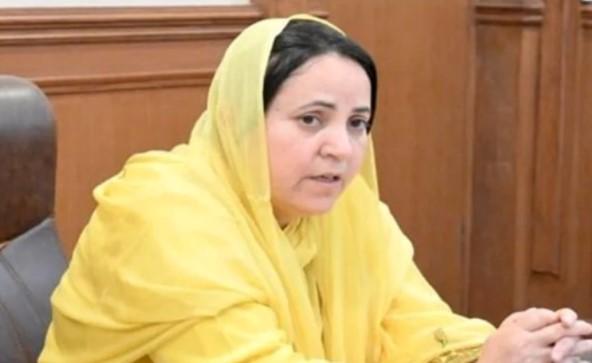
The Union Territory has been declared “Fully Literate” under the Centre’s ULLAS-Nav Bharat Saaksharta Karyakram, with Education Minister Sakina Itoo highlighting a literacy figure of 98.43 per cent at a Teachers’ Day programme in Srinagar.
Itoo made the announcement at the Sher-i-Kashmir International Convention Centre (SKICC), crediting teachers, education officers, volunteers and, most importantly, adult learners who took part in literacy programmes across the Union Territory. Her announcement was also described as a historic achievement in her public message on the occasion.
The achievement is significant. But there is an important detail behind the headline.
The ULLAS milestone is linked to the programme’s assessment of people who had been identified as non-literate and brought into adult literacy programmes. It should not be confused with a claim that 98.43 per cent of every person living in J&K, across all age groups, is now literate.
That distinction matters because the latest Periodic Labour Force Survey, or PLFS, places J&K’s literacy rate for people aged seven and above at 82.0 per cent in 2023-24.
So what exactly has J&K achieved, and why does the “fully literate” declaration matter?
What the ULLAS milestone actually means
ULLAS stands for Understanding of Lifelong Learning for All in Society. It is the name associated with the Centre’s Nav Bharat Saaksharta Karyakram, an adult education programme aimed at people aged 15 years and above who missed or did not complete formal schooling.
The programme is not limited to teaching someone how to read a sentence or write their name.
The government’s expanded definition of literacy includes the ability to read, write and perform basic computation with understanding, alongside practical life skills such as digital and financial literacy. The Centre has also established 95 per cent literacy as the benchmark for treating a State or Union Territory as “fully literate” under the ULLAS framework.
That is an important point.
“Fully literate” in the ULLAS framework does not mean that every single individual has achieved 100 per cent literacy. It is an administrative benchmark designed to recognise States and UTs that have crossed the prescribed threshold.
J&K crossed that threshold.
The September announcement was not the beginning of the story
The timing of the latest announcement can be slightly confusing.
On September 4-5, Education Minister Sakina Itoo publicly highlighted the 98.43 per cent figure and described J&K as a fully literate Union Territory. Reports from the Teachers’ Day event at SKICC say the minister referred to earlier district-level literacy declarations and the eventual completion of the process across the UT.
But J&K had already entered the national list of fully literate States and UTs in early August.
On August 4, Lieutenant Governor Manoj Sinha announced that J&K had joined the league of fully literate States and UTs under ULLAS. At that time, the figure cited was 99.09 per cent, based on the assessment of identified non-literate learners.
The reported assessment numbers were striking: 1,80,317 people were identified as non-literate, while 1,78,680 successfully cleared the assessment, giving a success rate of 99.09 per cent for that cohort.
That means the September announcement is best understood as a reaffirmation and celebration of the wider achievement, rather than the first moment when J&K crossed the ULLAS full-literacy benchmark.
Why 98.43% and 99.09% both appear in reports
This is where headlines can easily create confusion.
The 99.09 per cent figure reported in August refers to the proportion of identified non-literate learners who successfully passed the relevant ULLAS assessment.
The 98.43 per cent figure was cited by Education Minister Sakina Itoo in her September announcement as the literacy figure associated with the ULLAS-NBSK achievement.
They should therefore not automatically be treated as contradictory figures.
They can represent different stages, cohorts or measurements within the wider literacy programme.
The distinction becomes even more important when compared with the PLFS.
According to the Ministry of Statistics and Programme Implementation’s PLFS 2023-24 report, J&K’s literacy rate among people aged seven and above was 82.0 per cent, with male literacy at 89.6 per cent and female literacy at 73.8 per cent.
That does not cancel the ULLAS achievement. It explains it.
The two exercises measure different things.
One assesses progress among targeted adult learners under a specific literacy programme. The other estimates literacy across the broader population.
A long journey from the 2011 Census
Jammu and Kashmir’s education story has changed considerably over the past decade and a half.
The 2011 Census recorded the literacy rate of the then undivided Jammu and Kashmir state at about 68 per cent. Since then, the education system has expanded, school access has improved and multiple literacy and adult education programmes have attempted to reach people who remained outside formal schooling.
But progress has never been uniform.
Mountainous terrain, scattered settlements, difficult winters and limited access in some remote areas have historically made educational outreach more complicated. The region’s prolonged conflict also disrupted normal life, including schooling and educational continuity.
Adult literacy presents an additional challenge because a person who has spent decades outside the formal education system cannot simply be treated like a schoolchild entering Class 1.
The teaching has to fit around work, family responsibilities, age and daily life.
That is where programmes such as ULLAS become important.
The people behind the percentage
The most revealing part of the J&K announcement may not be the percentage at all.
It is the emphasis on teachers, volunteers and learners.
Itoo credited teachers, officers, volunteers and learners for taking literacy efforts into communities across the mountains of Kashmir and the plains of Jammu.
That reflects the basic reality of adult education.
A government can design a scheme, print learning material and set an assessment target. But an adult learner still has to be persuaded to attend, taught patiently and supported long enough to acquire usable skills.
In remote communities, that can mean bringing learning opportunities closer to where people live instead of expecting them to travel to conventional educational institutions.
The success of ULLAS in J&K therefore says something about community participation as much as government policy.
Literacy is more than reading a newspaper
There is another reason the achievement deserves attention.
Modern literacy is increasingly about functionality.
Can someone read a medicine label?
Can they understand a bank document?
Can they complete a government form?
Can they recognise a digital payment message?
Can they understand a basic financial transaction?
Can they access information without depending entirely on another person?
These seemingly ordinary abilities can dramatically change a person’s independence.
The Centre’s revised definition of literacy explicitly includes digital and financial literacy alongside reading, writing and numeracy.
For an older learner, learning to read may therefore be only the first step.
The bigger goal is to make that ability useful in everyday life.
Why the milestone matters for J&K
The educational implications stretch beyond literacy itself.
Better access to opportunities
A person who can read and calculate independently is better positioned to engage with vocational training, government schemes, banking, employment applications and continuing education.
For younger adults, literacy can become a bridge towards further skills training.
For older adults, it can provide greater independence in daily life.
Greater participation in the digital economy
Jammu and Kashmir, like the rest of India, is increasingly dependent on digital systems.
Banking, payments, government services, travel bookings, education platforms and employment applications are moving online.
Basic literacy is therefore becoming inseparable from digital participation.
The next challenge will be making sure that newly literate adults are not left behind by the speed of technological change.
Stronger communities
Literacy also has a social dimension.
People who can independently access information are better equipped to understand public services, health information, legal rights and government programmes.
That can strengthen participation at the community level.
But the real education challenge begins now
There is a temptation to treat a “fully literate” declaration as the final chapter.
It is not.
In fact, it may be the point where the more difficult work begins.
The difference between basic literacy and meaningful learning is enormous.
A person may learn to read a simple sentence but still struggle with complex information. Someone may know basic arithmetic but have difficulty managing a bank account. A newly literate adult may be able to fill out a form but remain unfamiliar with online government services.
That is why the next phase should focus on retention, quality and lifelong learning.
The ULLAS framework itself is built around this broader idea of continuing education rather than literacy as a one-time achievement.
Itoo also framed the milestone as the beginning of another phase rather than the end of the education journey.
The gender gap cannot be ignored
The broader PLFS figures offer another important reminder.
J&K’s 2023-24 literacy rate for people aged seven and above was 82.0 per cent overall. Male literacy stood at 89.6 per cent, while female literacy was 73.8 per cent.
That gap matters.
Even while celebrating the ULLAS achievement, policymakers will need to ensure that women and girls do not remain disproportionately excluded from higher levels of education, digital skills and employment.
A literacy campaign can open the door. It cannot, by itself, guarantee equal educational outcomes.
That requires sustained investment in schools, secondary education, higher education, vocational training and employment opportunities.
From literacy to skills: the next logical step
Jammu and Kashmir’s economy has several sectors where education and skills can make a direct difference.
Tourism, information technology, handicrafts, horticulture, healthcare, hospitality and the wider service economy all require different levels of technical and digital competence.
The question now is how the UT converts its literacy achievement into human capital.
That means linking adult learners with:
- vocational education
- digital literacy
- financial literacy
- skill-development programmes
- continuing education
- entrepreneurship opportunities
- open and distance learning
- employment-oriented training
A literate population creates possibilities. Skills determine how many of those possibilities become real opportunities.
A milestone, but not a finish line
There is genuine reason for Jammu and Kashmir to celebrate.
For a region where geography, conflict and social disruption have repeatedly complicated educational access, bringing adult learners into a structured literacy programme is not a small administrative achievement.
The ULLAS milestone also places J&K among the States and UTs recognised as fully literate under the Centre’s benchmark. It became the 10th State/UT to achieve the distinction, according to reports citing the ULLAS framework.
But the headline number should not obscure the more complicated educational picture.
J&K’s latest PLFS literacy estimate remains far below 98 or 99 per cent because it measures the wider population differently.
Both stories can be true at the same time.
One tells us that J&K has crossed the government’s ULLAS benchmark for full literacy through its adult education effort.
The other reminds us that the broader education journey is far from over.
And perhaps that is the most useful way to understand the Teachers’ Day announcement.
J&K has not finished its literacy journey. It has reached an important milestone on it.
The next measure of success will not simply be how many adults can read and write. It will be whether those newly acquired abilities translate into better learning, stronger livelihoods, greater digital independence and more equal opportunities.
That is where the real test of J&K’s education transformation begins.