Mehbooba Mufti’s House Arrest Claim Adds New Twist to J&K Outsourcing Jobs Row
By: Javid Amin | 01 July 2026
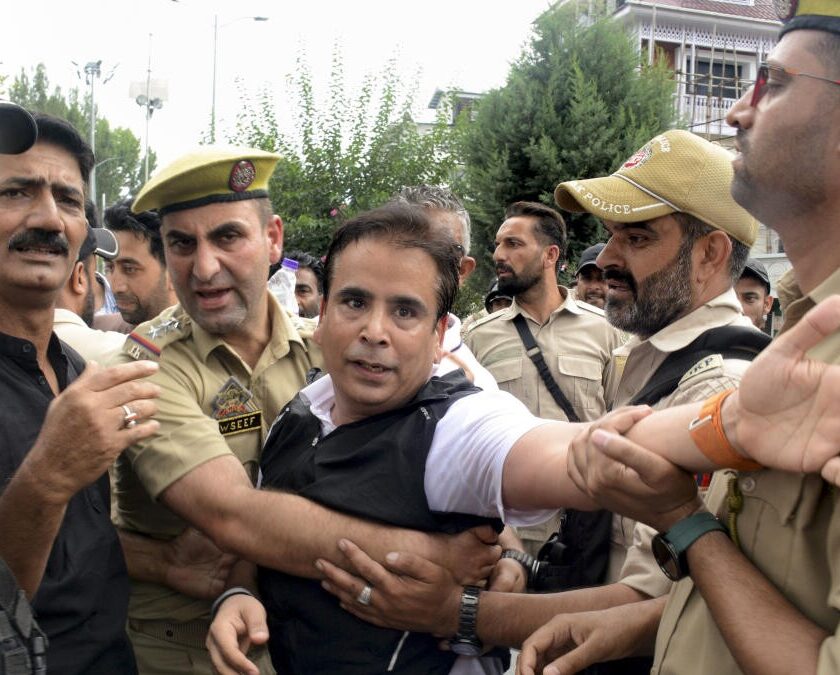
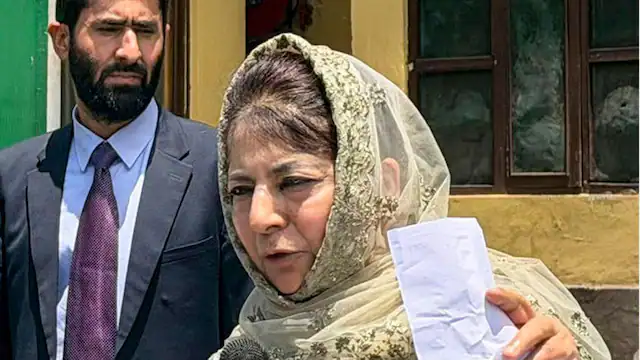
The controversy over outsourcing of jobs in Jammu and Kashmir has taken a sharper political turn after Peoples Democratic Party (PDP) president Mehbooba Mufti claimed that she was placed under house arrest in Srinagar while attempting to participate in protests against the government’s recruitment policy.
The allegation has added a new dimension to an already heated political battle involving the PDP, Bharatiya Janata Party (BJP), and the National Conference-led Jammu and Kashmir government.
The dispute, which began over the government’s decision to use private agencies for certain job requirements, has now expanded into a wider debate over democratic rights, unemployment, recruitment transparency and political accountability.
Mehbooba Mufti’s Allegation: “Prevented From Joining Protest”
Mehbooba Mufti alleged that security restrictions prevented her from leaving her residence and joining demonstrations planned by PDP workers against the outsourcing policy.
According to her, the move amounted to restricting her democratic right to protest and raise concerns about issues affecting unemployed youth.
The PDP leadership has argued that peaceful protests are an important part of democratic expression and that attempts to stop political demonstrations raise concerns about freedom of assembly.
However, restrictions imposed by authorities during political protests are generally justified by administrations on grounds such as maintaining public order and preventing disruptions.
PDP’s Protest Campaign Against Outsourcing Policy
The PDP had planned protests across parts of Jammu and Kashmir, targeting what it describes as a flawed recruitment system.
The party has repeatedly accused the NC-led government of promoting a model that sidelines traditional recruitment procedures.
PDP’s main allegations include:
Outsourcing Bypassing Competitive Recruitment
The party argues that government employment should primarily be provided through transparent examinations conducted by recognised recruitment bodies.
It claims that hiring through private agencies reduces public scrutiny and creates uncertainty for candidates preparing for competitive exams.
Concerns Over Local Youth Opportunities
The PDP has highlighted concerns among young job seekers who believe outsourcing may reduce their chances of securing stable government employment.
The party has framed the issue as a question of fairness and equal opportunity.
“Backdoor Hiring” Allegation
Opposition parties have used the phrase “backdoor hiring” to question whether contractual recruitment creates opportunities outside established merit-based systems.
The government has rejected these allegations.
Government’s Position: Outsourcing Is Not Illegal Recruitment
The NC-led administration has defended its outsourcing policy, stating that it is designed to improve efficiency and fill immediate manpower requirements.
Government officials maintain that:
- Outsourcing is different from regular government recruitment.
- Contractual hiring is used for specific operational needs.
- Selection procedures follow established rules.
- There is no compromise with merit.
The administration argues that waiting for lengthy recruitment processes for every manpower requirement can affect public service delivery.
Opposition Unity: PDP and BJP Target NC Government
The outsourcing controversy has created an unusual political situation where both PDP and BJP have increased pressure on the ruling NC administration.
While their political narratives differ, both parties have raised questions about transparency and recruitment practices.
PDP’s Focus
The PDP has concentrated on youth employment, fairness and alleged political influence in hiring.
The party presents the issue as a struggle for unemployed graduates seeking equal opportunities.
BJP’s Position
The BJP has criticised the government from an administrative perspective, questioning whether outsourcing practices are being handled effectively and transparently.
Together, the criticism has increased political pressure on the NC government.
Democratic Rights Debate After House Arrest Claim
Mehbooba Mufti’s allegation has shifted part of the discussion from jobs to civil liberties.
The PDP argues that restricting political leaders from joining peaceful demonstrations weakens democratic participation.
The government and security agencies, however, often point to maintaining law and order as a key responsibility during protests and politically sensitive situations.
The controversy reflects a recurring challenge in Jammu and Kashmir politics:
How can authorities maintain public order while ensuring space for democratic disagreement?
Youth Unemployment: The Real Issue Behind the Political Fight
Beyond political accusations, the outsourcing debate connects with a deeper concern — employment opportunities for young people.
For many graduates in Jammu and Kashmir, government jobs remain among the most desirable career options due to limited private-sector opportunities.
The controversy has intensified because job seekers are not only questioning recruitment methods but also demanding a predictable and transparent employment system.
Key concerns include:
- Fair competition
- Long-term job security
- Transparent selection processes
- Equal access for all candidates
Political Fallout: Outsourcing Becomes a Major J&K Issue
The jobs controversy has now become a central political narrative in Jammu and Kashmir.
The current political equation is:
| Issue | Position |
|---|---|
| NC Government | Defends outsourcing as efficient and transparent |
| PDP | Calls it unfair and damaging for youth opportunities |
| BJP | Attacks government over recruitment management |
The debate is likely to continue as opposition parties push for more details on outsourcing contracts and recruitment procedures.
What Happens Next?
The coming days may determine whether the controversy remains a political confrontation or leads to policy changes.
The government could face growing demands to publish recruitment data, clarify outsourcing guidelines and explain safeguards against misuse.
For opposition parties, the issue provides a platform to highlight unemployment concerns and challenge the government’s credibility.
At the heart of the debate remains a question that affects thousands of young people:
Can Jammu and Kashmir build a recruitment system that combines administrative efficiency with transparency, fairness and public trust?
The answer could shape the future of employment politics in the region.