Iltija Mufti Accuses NC of Selling J&K’s Power to NHPC: Energy Sovereignty Row Explained
By: Javid Amin | 03 April 2026
Power, Politics, and Perception in Kashmir
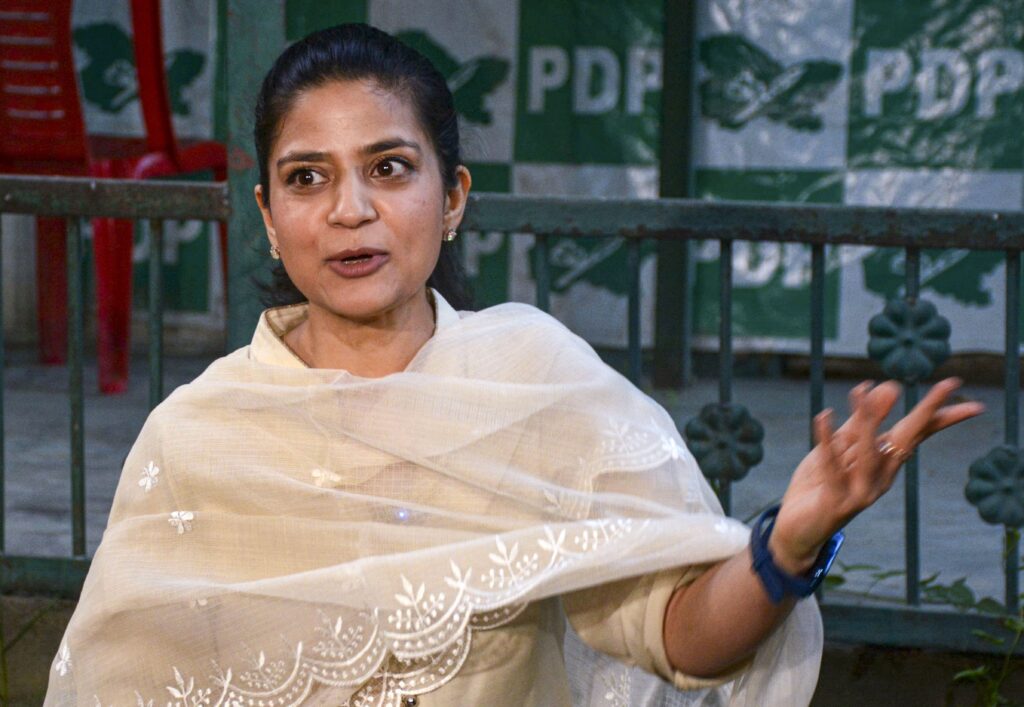
A fresh political storm has erupted in Jammu & Kashmir after Iltija Mufti accused the Jammu and Kashmir National Conference (NC) of having “sold J&K’s power twice over.” Her allegation targets successive NC-led governments under Farooq Abdullah and Omar Abdullah, claiming they transferred key hydroelectric assets to the National Hydroelectric Power Corporation (NHPC) at “throwaway prices.”
At the heart of the controversy lies a potent and emotive question:
Why does a resource-rich region like J&K still struggle with expensive electricity and power shortages?
The Core Allegation: What Iltija Mufti Claims
“Selling Power Twice Over” — A Political Charge
Iltija Mufti’s argument is structured around two key phases:
Phase 1: 1996 — Farooq Abdullah Government
- Alleged transfer of eight hydroelectric projects to NHPC
- Projects reportedly handed over under terms critics describe as unfavorable to J&K
- Accusation: Public assets were treated like transferable commodities
Phase 2: Omar Abdullah’s Tenure (2009–2014)
- Alleged transfer of two additional projects
- Criticism for failing to fulfill electoral promises to reclaim earlier projects
The Central Claim
J&K now:
- Does not control a significant portion of its hydropower generation
- Buys back electricity generated from its own rivers at higher tariffs
Fact Check & Context: How Hydropower in J&K Actually Works
To evaluate the claim, it is essential to understand the structural framework.
Why Projects Were Transferred to NHPC
Historically, many hydroelectric projects in J&K were developed by NHPC due to:
- High capital requirements
- Technical expertise constraints
- Risk-sharing mechanisms
At the time, the state government often lacked:
- Financial capacity for large dam construction
- Access to national-level engineering resources
Ownership vs Revenue Sharing
While NHPC operates many projects:
- J&K typically receives free power (around 12–15%)
- Additional power is supplied at regulated tariffs
However, critics argue:
- The free power share is insufficient
- Long-term revenue loss outweighs short-term gains
Timeline: Hydropower Politics in J&K (1996–2026)
1996 — NC Returns to Power
- Farooq Abdullah government signs agreements with NHPC
- Multiple projects transferred for development and operation
2000s — Growing Public Discontent
- Rising perception that J&K is not benefiting proportionately
- Election promises begin to include “project reclamation”
2009–2014 — Omar Abdullah Era
- Omar Abdullah government faces pressure to renegotiate
- Allegations of additional project transfers intensify political criticism
2015 Onwards — PDP Raises Issue
- People’s Democratic Party repeatedly demands return of projects
- Energy sovereignty becomes a campaign theme
2026 — Iltija Mufti Revives Debate
- Issue resurfaces sharply ahead of electoral activity
Economic Impact: The Cost of External Control
1. High Power Purchase Costs
J&K:
- Purchases power during peak demand
- Faces seasonal shortages, especially in winter
2. Revenue Leakage
- Hydropower profits largely accrue to NHPC
- Limited reinvestment within the region
3. Fiscal Stress
- Electricity subsidies strain government finances
- Power sector losses remain significant
Energy Reality Check: Abundance vs Shortage
Hydropower Potential
J&K’s river systems—including:
- Chenab
- Jhelum
- Indus tributaries
…offer massive generation capacity.
Ground Reality
Despite this:
- Power cuts remain common
- Winter deficits are acute
- Dependence on external supply persists
This paradox fuels the political narrative of “resource mismanagement.”
Political Dimensions: PDP vs NC Narrative War
PDP’s Strategy: Economic Nationalism at Regional Level
By framing the issue as “selling power,” PDP aims to:
- Tap into economic grievances
- Build a narrative of betrayal vs protection
- Position itself as the defender of local resources
NC’s Likely Defense
Though not directly quoted here, NC traditionally argues:
- Transfers were pragmatic decisions
- Projects would not have materialized otherwise
- Benefits include infrastructure and revenue sharing
Public Sentiment: Trust Deficit and Resource Anxiety
Growing Perception
Many residents feel:
- Natural resources are not benefiting locals
- Policy decisions have favored external control
Emotional Weight
The issue is not just economic—it is:
- About identity
- About ownership
- About fairness
Energy Sovereignty: The Emerging Political Keyword
What It Means
Energy sovereignty implies:
- Local control over generation
- Fair revenue distribution
- Affordable electricity for residents
Why It Matters Now
- Rising electricity costs
- Increasing political awareness
- Electoral mobilization around economic issues
Risks & Future Outlook
1. Policy Renegotiation Pressure
Future governments may face demands to:
- Revisit NHPC agreements
- Increase J&K’s share
2. Legal & Financial Constraints
Renegotiation is complex due to:
- Long-term contracts
- National-level policy frameworks
3. Political Polarization
The issue may:
- Deepen PDP–NC rivalry
- Dominate election campaigns
Expert Lens: Pragmatism vs Political Framing
From a policy standpoint, the debate boils down to:
| Perspective | Argument |
|---|---|
| Critics (PDP) | J&K lost control of its own resources |
| Defenders (NC) | Without NHPC, projects may not exist today |
Both positions carry partial validity:
- Economic grievance is real
- Historical constraints were also real
Key Takeaways
- Iltija Mufti has accused NC of transferring hydropower assets at unfavorable terms.
- The National Hydroelectric Power Corporation plays a central role in J&K’s power sector.
- The controversy reflects a deeper issue of energy sovereignty and resource control.
- Political narratives are intensifying ahead of elections.
- Public sentiment is increasingly focused on economic fairness and accountability.
Conclusion: A Debate Bigger Than Politics
The hydropower controversy in Jammu & Kashmir is not just about past decisions—it is about the future.
A future where:
- Resource-rich regions demand greater control
- Citizens expect equitable benefits
- Political parties must balance pragmatism with accountability
Final Word
Iltija Mufti’s charge has reignited a long-standing debate—but it also raises a fundamental question:
Can Jammu & Kashmir convert its natural wealth into real economic empowerment for its people?
The answer will shape not just political outcomes—but the region’s development trajectory for decades to come.