Iran Deletes Kashmir Thank-You Posts After Backlash | India Aid, Pakistan Sensitivity Explained
By: Javid Amin | 25 March 2026
When Gratitude Turns Geopolitical: Iran’s Social Media U-Turn Explained
In a striking example of how even humanitarian gestures can become entangled in geopolitics, Iran’s embassy in India quietly deleted social media posts thanking India and “the kind people of Kashmir” for their contributions to war-hit Iran.
What appeared to be a simple act of diplomatic gratitude quickly escalated into a regional controversy—triggering backlash from Pakistan-based users and exposing the fragile fault lines surrounding Kashmir.
The episode underscores a broader reality: in contested regions, even words of thanks are rarely neutral.
The Timeline: From Appreciation to Deletion
Aid Surge from Kashmir
Following recent US-Israeli strikes on Iran, communities—particularly in Shia-majority areas of Jammu & Kashmir—mobilized one of the largest grassroots humanitarian campaigns in recent years.
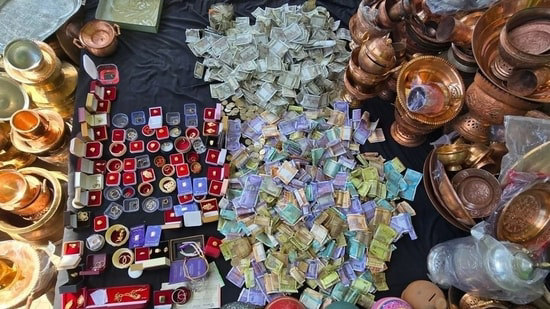
- Donations included cash, jewellery, livestock, and household valuables
- Estimates suggest contributions exceeding ₹600 crore
- Collections intensified around Eid-ul-Fitr, amplifying participation
This was not a state-driven initiative—it was a community-led, door-to-door mobilization, reflecting deep religious and cultural solidarity.
Iran’s Embassy Responds
Iran’s diplomatic mission in New Delhi publicly acknowledged the support, thanking both India and Kashmir in posts shared on X.
The tone was emotional and appreciative, emphasizing:
- Cross-border solidarity
- Shared cultural and religious bonds
- Humanitarian compassion during crisis
Backlash and Deletion
However, the inclusion of “Kashmir” triggered sharp criticism from Pakistan-based users online.
The objection was rooted in a long-standing geopolitical dispute:
- Pakistan views Kashmir as a contested territory
- Any foreign acknowledgment implying it is part of India often draws strong reaction
Within hours, the posts were deleted—without formal clarification.
Why It Matters: Diplomacy in a Contested Space
1. The Kashmir Sensitivity
Kashmir remains one of the most politically sensitive regions in the world.
For decades:
- India administers the region as an integral part of its territory
- Pakistan disputes this status internationally
As a result, even indirect references—such as thanking “Kashmir” separately—can be interpreted as taking a position.
2. Iran’s Diplomatic Tightrope
For Iran, the situation presents a delicate balancing act:
- It values India’s humanitarian support and economic ties
- It also maintains strategic and regional relations with Pakistan
Deleting the posts reflects a classic diplomatic maneuver:
Neutralize controversy without formally choosing sides
However, such moves often carry unintended consequences—particularly in public perception.
3. India’s Perspective
From India’s standpoint, the deletion raises uncomfortable questions:
- Does it undermine recognition of contributions from Jammu & Kashmir?
- Is Iran yielding to external pressure?
While there has been no official escalation, the episode introduces subtle friction in India–Iran relations, especially at a time of heightened regional tensions.
4. Pakistan’s Interpretation
For Pakistan, the deletion is viewed as a symbolic diplomatic win.
It reinforces:
- Its stance on Kashmir’s disputed status
- Its ability to influence narratives beyond formal diplomacy
Human Stories Behind the Headlines: Kashmir’s Aid Movement
Beyond geopolitics lies a deeply human story.
In towns and villages across Kashmir:
- Families donated life savings and heirloom jewellery
- Farmers contributed livestock
- Even children gave pocket money and personal belongings
Iran’s embassy later highlighted these contributions—especially from children—framing them as symbols of pure humanitarian compassion.
This narrative shift—from geopolitics to human empathy—was a deliberate attempt to reclaim moral ground.
Iran’s Messaging Shift: From Gratitude to Resistance Narrative
While deleting the posts, Iran simultaneously amplified another message—this time from its military establishment.
On March 25, Iran’s Air and Space Forces issued a statement:
- Thanking Kashmiris for their support
- Vowing retaliation for the killing of a senior leader
- Accompanied by imagery of a Shahed drone
Shahed Drones: Symbolism and Strategy
What Are Shahed Drones?
Shahed-136 and similar systems are:
- Low-cost, long-range unmanned aerial vehicles
- Designed as “kamikaze” or loitering munitions
- Capable of swarm deployment
Why They Matter
These drones have become central to Iran’s military doctrine:
- Cost-effective against advanced defense systems
- Difficult to intercept in large numbers
- Widely used in asymmetric warfare
By pairing gratitude with drone imagery, Iran sends a layered message:
Humanitarian support is part of a broader “resistance” narrative.
The Security Lens: Rising Concerns in India
The scale and nature of the donation drive have triggered scrutiny within India.
Key Concerns
- Transparency: How are funds being collected and transferred?
- Oversight gaps: Informal networks lack regulatory monitoring
- Diversion risks: Potential misuse for non-humanitarian purposes
Authorities are increasingly examining whether:
- Financial flows comply with regulations
- Donations remain strictly humanitarian
Why This Matters
In conflict-sensitive regions like Kashmir:
- Even legitimate aid can be politically reframed
- External narratives can alter domestic perception
- Security agencies must balance trust and vigilance
Geopolitical Implications: A Multi-Stakeholder Impact
India
- Appreciates humanitarian solidarity
- Concerned about diplomatic optics and security risks
Pakistan
- Gains narrative leverage
- Reinforces its Kashmir position
Iran
- Gains moral legitimacy
- Risks over-politicizing humanitarian aid
Kashmiri Donors
- Demonstrate unity and compassion
- Feel slighted by deletion and politicization
Global Powers
- Monitor how humanitarian channels intersect with conflict narratives
The Optics War: Narratives Matter as Much as Actions
This episode highlights a critical truth in modern geopolitics:
Perception is policy.
Iran’s actions—thanking, deleting, reframing—are not contradictions.
They are adaptive responses to competing pressures.
- Thank India → Maintain goodwill
- Delete Kashmir reference → Avoid alienating Pakistan
- Highlight children → Emphasize humanitarian angle
- Use drone imagery → Reinforce resistance narrative
Each move targets a different audience.
Key Takeaways: Lessons from the Controversy
1. Humanitarian Aid Is No Longer Apolitical
Even grassroots charity can become entangled in geopolitical narratives.
2. Kashmir Remains Hyper-Sensitive
Any international reference—explicit or implied—can trigger diplomatic ripples.
3. Iran Is Balancing, Not Choosing
Its actions reflect strategic neutrality rather than alignment.
4. Narratives Shape Outcomes
How aid is framed can be as important as the aid itself.
5. Security Oversight Will Intensify
Transparency will determine whether such campaigns retain credibility.
Conclusion: A Gesture of Compassion in a Contested World
What began as a powerful story of solidarity—people helping people across borders—has evolved into a complex geopolitical episode.
Kashmir’s aid drive showcased:
- Community unity
- Religious and cultural empathy
- Human generosity at scale
Yet, Iran’s handling of the situation reveals the constraints of international diplomacy.
Gratitude, in this context, is not just an expression—it is a calculation.
As tensions continue across regions—from South Asia to the Middle East—the episode serves as a reminder:
In geopolitics, even kindness is rarely free from consequence.