Special Train Between Katra and Srinagar to Run on January 27–28: A Lifeline During Kashmir’s Winter Disruptions
By: Javid Amin | 24 January 2026
When winter tightens its grip on Kashmir, connectivity becomes more than a logistical concern—it becomes a lifeline. Heavy snowfall, landslides, and freezing temperatures routinely cut off the Valley from the rest of the country, leaving thousands of passengers stranded and supply chains stretched.
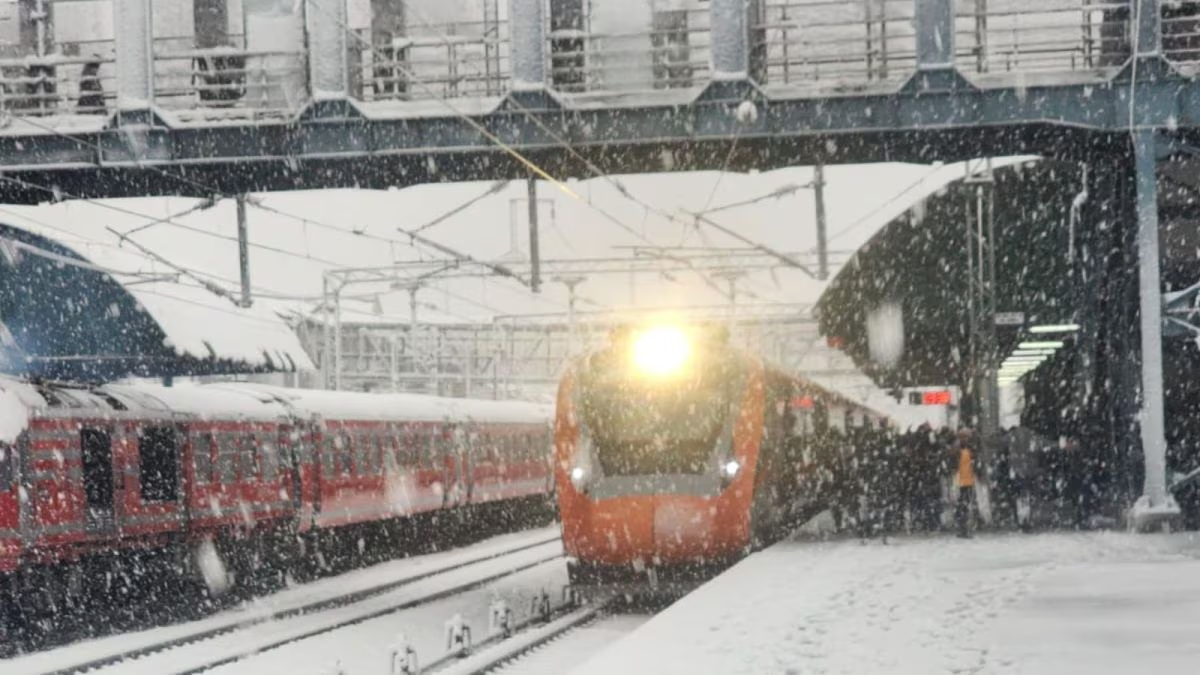
Against this backdrop, officials have announced that a special train service between Katra and Srinagar will operate on January 27 and 28, 2026, offering crucial relief to passengers affected by prolonged weather-related disruptions.
The move comes as the Srinagar–Jammu National Highway (NH-44)—the region’s primary road artery—remains shut for the third consecutive day, with hundreds of vehicles stranded and travel plans thrown into disarray.
Why This Special Train Matters Now
A Corridor Under Pressure
The Katra–Srinagar rail corridor, accessed via Banihal, has increasingly emerged as the most dependable mode of transport during winter months. While roads buckle under snowfall and landslides, rail services—though limited—often remain operational or can be restored faster.
With NH-44 closed and flight demand surging beyond available capacity, the special train is not merely an additional service; it is a strategic intervention to prevent isolation.
Key Details at a Glance
🚆 Special Train Schedule
-
Route: Katra ↔ Srinagar (via Banihal)
-
Dates: January 27 and January 28, 2026
-
Nature: Temporary special service
-
Objective: Passenger relief and congestion management
Officials have clarified that the service is being operated after assessing passenger backlogs and weather forecasts, ensuring safe and coordinated movement.
Snowfall and the Annual Connectivity Crisis
NH-44: The Achilles’ Heel
The Srinagar–Jammu National Highway is the only all-weather road link connecting the Kashmir Valley with the rest of India. However, in practice, it is highly vulnerable to:
-
Heavy snowfall
-
Avalanches
-
Landslides, particularly near Ramban and Banihal
The current closure has resulted in:
-
Long queues of trucks carrying essentials
-
Stranded tourists and students
-
Delayed medical travel
Each day of closure compounds economic and humanitarian stress.
Air Travel: Operational but Overburdened
While Srinagar Airport remains operational, officials confirm:
-
Flight demand has surged sharply
-
Airfares have spiked
-
Seat availability remains limited
For many stranded passengers—especially daily wage earners, students, and small traders—air travel is simply not affordable, making rail connectivity indispensable.
Railways as the Winter Backbone of Kashmir
The Strategic Importance of the Katra–Banihal–Srinagar Link
Over the past few winters, the rail corridor has quietly become:
-
A fallback for stranded commuters
-
A supply line for essentials
-
A stabilising force during prolonged road closures
The decision to introduce special services reflects a maturing crisis-response mechanism, where railways are deployed proactively rather than reactively.
Who Benefits the Most?
1. Stranded Passengers
Tourists, students, government employees, and local residents who were stuck due to highway closure can now plan safer travel.
2. Essential Supply Movement
Rail services support the transport of:
-
Medicines
-
Packaged food
-
Critical goods required in the Valley
Even limited freight movement helps stabilise local markets during disruptions.
3. Vulnerable Groups
Elderly passengers and those with medical needs benefit from a more predictable and safer mode of transport compared to road travel in extreme weather.
Ground Feedback: Relief Mixed With Urgency
Passenger groups and local transport observers describe the announcement as:
-
“Timely”
-
“Necessary”
-
“Still not enough”
Many argue that while special trains offer immediate relief, winter schedules must be expanded structurally, not episodically.
The Larger Picture: Seasonal Disruptions and Infrastructure Gaps
A Recurring Pattern
Every winter, Kashmir witnesses:
-
Road closures
-
Flight cancellations
-
Supply bottlenecks
Yet emergency measures are often temporary rather than systemic.
Why Rail Becomes the Default Solution
Railways offer:
-
Higher reliability during snowfall
-
Lower operational risk than highways
-
Greater passenger capacity than flights
However, limited frequency remains a challenge.
Administrative Signal: Assurance in Crisis
Beyond logistics, the announcement carries symbolic weight.
A Message of Responsiveness
Officials see the special train as a reassurance to citizens that:
-
Connectivity will not be abandoned
-
Public inconvenience is being acknowledged
-
Institutional mechanisms are in place during emergencies
In a region where weather disruptions quickly translate into public anxiety, such signals matter.
Economic Implications of Connectivity Disruptions
Impact on Trade and Markets
Highway closures disrupt:
-
Vegetable and fruit supplies
-
Fuel movement
-
Construction material flow
Rail connectivity helps soften price volatility, particularly in urban markets.
Tourism Fallout
Winter tourism already operates under uncertainty. Connectivity breakdowns further discourage visitors, affecting livelihoods in:
-
Hotels
-
Transport services
-
Local retail
Lessons From Previous Winters
Past winters have shown that:
-
Delayed interventions worsen backlogs
-
Early rail augmentation reduces chaos
-
Clear communication prevents panic travel
The January 27–28 special train appears to draw from these lessons.
What Happens After January 28?
Officials indicate that:
-
Further special services may be considered
-
Decisions will depend on weather conditions
-
Passenger demand will be continuously assessed
However, no long-term winter timetable expansion has been announced yet.
Public Expectations Going Forward
Passengers and civil society groups are calling for:
-
Pre-planned winter rail schedules
-
More frequent special trains
-
Integrated road–rail emergency planning
-
Transparent passenger advisories
Expert View: Rail Is No Longer Optional for Kashmir
Transport analysts note that climate variability has made:
-
Road-only dependence unsustainable
-
Emergency planning essential
Railways are increasingly becoming the spine of winter mobility in Jammu & Kashmir.
Conclusion: A Temporary Train, A Permanent Need
The special Katra–Srinagar train running on January 27 and 28, 2026, is more than a stopgap arrangement. It reflects a broader truth about Kashmir’s winter reality: connectivity must be resilient, redundant, and responsive.
As climate patterns grow more unpredictable, such interventions will likely move from exception to expectation.
For now, the special train stands as a timely lifeline—one that eases hardship, restores movement, and reminds stranded passengers that the Valley is not cut off, even when the snow piles high.