Rising Power Bills Amid Long Outages: Why Kashmir’s Electricity Consumers Are Losing Patience
By: Javid Amin | 30 October 2026
Smart Meters, Higher Tariffs and Winter Shortages Have Changed the Power Equation in Jammu and Kashmir, but Consumers Still Want One Basic Answer: Where Is the Reliable Electricity They Are Paying For?
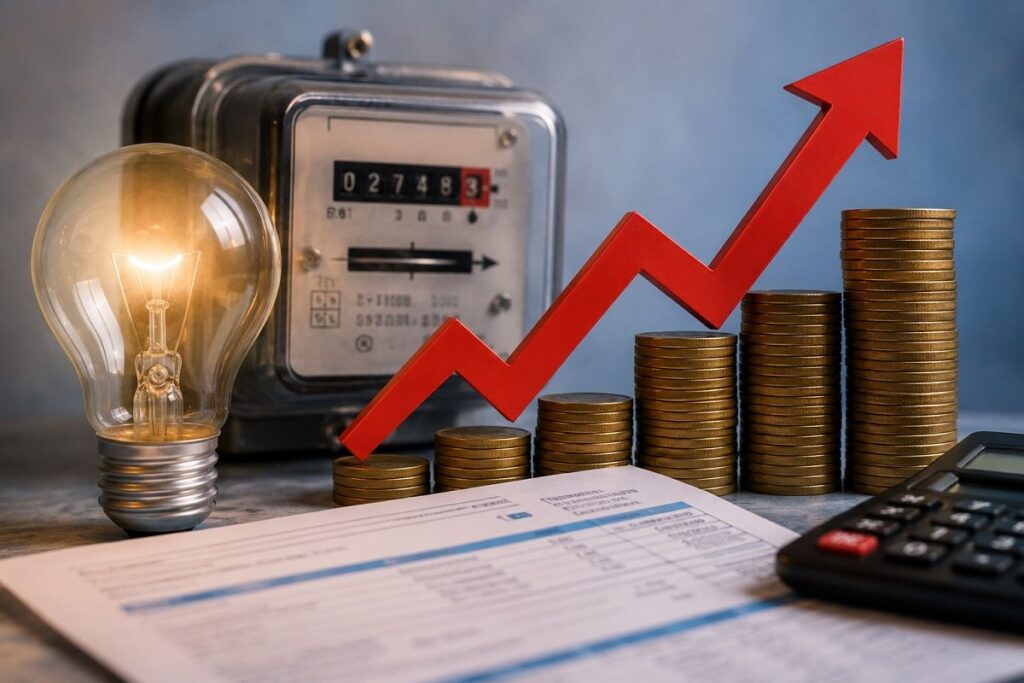
Srinagar, October 31: For thousands of households across Kashmir, electricity has become an increasingly expensive necessity. The arrival of smart meters, revised tariff rates and consumption-based billing has changed how families pay for power. Yet, for many consumers, one part of the experience has remained frustratingly familiar: prolonged power cuts, unscheduled outages, voltage fluctuations and winter restrictions.
The frustration is particularly visible as temperatures begin to fall and households prepare for another long winter. Electric heaters, geysers and other appliances become essential parts of daily life, pushing electricity consumption upwards. At the same time, consumers are receiving bills that can be substantially higher than what they were accustomed to paying a decade or two ago.
The debate is no longer limited to whether electricity should be metered or whether consumers should pay according to their consumption. Those questions are increasingly being replaced by a more fundamental concern: if electricity billing has become more transparent and revenue collection has improved, why has dependable power supply not become equally visible in consumers’ daily lives?
There is an economic explanation behind Kashmir’s changing electricity bills. The region has historically struggled with distribution losses, inadequate revenue recovery, expensive power purchases and a financially stressed electricity distribution system. Smart meters and tariff revisions are part of an attempt to address these problems.
But there is another side to the story. Better billing cannot, by itself, guarantee better electricity supply. Consumers are entitled to ask whether improvements in revenue collection are being matched by improvements in infrastructure, supply hours, maintenance and accountability.
That gap between financial reforms and everyday experience lies at the heart of Kashmir’s growing electricity debate.
From Fixed Bills to Consumption-Based Electricity: How Kashmir’s Power System Changed
To understand the anger surrounding electricity bills, it is important to look beyond the latest tariff revision. Kashmir’s electricity system has undergone a gradual but significant transformation over the past two decades.
The earlier system was characterised by limited metering, fixed-rate connections in many areas, weak revenue collection and substantial dependence on government subsidies. The newer system places greater emphasis on measuring actual consumption, reducing commercial losses and recovering a larger share of the cost of supplying electricity.
The transition has not been without consequences for households.
2005–2010: The Era of Fixed Charges and Limited Metering
During much of the 2000s, a considerable number of domestic consumers in Kashmir were either unmetered or did not have reliable consumption-based billing.
Many households paid fixed monthly charges linked to their connection category or sanctioned load. Actual consumption was not consistently reflected in every bill.
For ordinary families, this arrangement often meant relatively predictable electricity expenses, even when consumption increased during winter.
However, the apparent affordability concealed serious structural weaknesses.
-
Electricity consumption was not accurately recorded across the entire distribution network.
-
Revenue recovery remained inadequate.
-
Unauthorised connections and electricity theft contributed to commercial losses.
-
Distribution infrastructure struggled to meet growing demand.
-
The difference between the cost of purchasing electricity and the revenue collected from consumers had to be supported through government assistance and other financial arrangements.
It is important to distinguish between what households remember paying and what the official tariff structure actually prescribed. There was no single fixed monthly rate applicable to every domestic household across Kashmir.
Nevertheless, the broader economic problem was real: the electricity distribution system was not recovering enough revenue to meet its expenditure.
2010–2015: Financial Stress Continues Despite Subsidies
The next phase did not bring a fundamental solution.
Government support continued to keep electricity affordable for many households, but the underlying problems of inadequate metering, technical losses and poor revenue collection remained.
Kashmir’s dependence on electricity purchased from outside the region also made the financial position complicated.
Although Jammu and Kashmir possesses substantial hydropower potential, its own generation has not been sufficient to meet the region’s overall electricity demand throughout the year.
Consequently, the distribution companies have had to depend on power purchases from external sources, particularly when local generation cannot meet demand.
This created a difficult financial equation:
-
Consumers expected affordable electricity.
-
The distribution system required substantial investment.
-
Power purchases created recurring expenditure.
-
Revenue recovery remained below the amount required to cover costs.
The gap was increasingly difficult to sustain without government support.
2016–2020: The Push Towards Better Metering and Accountability
The government gradually intensified efforts to improve electricity accounting.
Metering, feeder monitoring, energy audits and technology-based interventions became important elements of power-sector reform.
The objective was straightforward: electricity supplied to a distribution area needed to be measured, consumption needed to be recorded and revenue collection needed to improve.
However, the transition also exposed a problem that had remained less visible under the older billing arrangements.
When households began receiving bills based more closely on actual consumption, many discovered that their electricity usage was considerably higher than what their earlier fixed payments suggested.
For consumers accustomed to predictable monthly expenses, the change was difficult.
But metering itself did not create electricity consumption. It made previously unrecorded or inadequately measured consumption more visible.
2021–2026: Smart Meters Reshape Electricity Billing
The most visible transformation has taken place through the expansion of smart electricity meters under the Prime Minister’s Development Package (PMDP) and the Revamped Distribution Sector Scheme (RDSS).
The scale of installation is significant.
According to figures presented by the Jammu and Kashmir Government in the Legislative Assembly in February 2026, 12,36,507 smart meters had been installed across the Union Territory.
The government subsequently reported 13,28,733 installations in March 2026, comprising:
-
KPDCL (Kashmir): 6,52,548 meters.
-
JPDCL (Jammu): 6,76,185 meters.
These figures demonstrate how quickly the metering network has expanded. They also show why the experience of electricity billing is changing for households across both divisions.
Smart meters offer several advantages:
-
More accurate recording of electricity consumption.
-
Better monitoring of distribution networks.
-
Reduced dependence on manual meter readings.
-
Improved identification of abnormal consumption and losses.
-
Greater transparency in billing and payment records.
However, a smart meter is primarily a measurement and monitoring device. It does not independently generate electricity, increase the capacity of a transformer or repair an overloaded distribution line.
That distinction is central to understanding the current controversy.
Metering reform can improve billing without automatically improving the quality or duration of electricity supply.
Jammu and Kashmir Electricity Tariff 2026–27: What Consumers Are Paying Now
One important development behind the current debate is the latest tariff revision approved by the Joint Electricity Regulatory Commission (JERC) for Jammu and Kashmir and Ladakh.
In its Order No. 06 of 2026, dated August 20, the Commission approved an average tariff increase of 6.83 per cent. The revised rates became applicable to electricity consumption from September 1, 2026, and are scheduled to remain in force until March 31, 2027, subject to further regulatory orders.
Domestic electricity tariff for metered consumers
| Monthly consumption slab | Energy charge |
|---|---|
| First 200 units | ₹2.45 per unit |
| 201–400 units | ₹4.20 per unit |
| Above 400 units | ₹4.60 per unit |
| Fixed charge | ₹10 per kW per month |
These are the approved subsidised domestic rates. The applicable fixed charges and other bill components must also be considered when calculating the final amount.
The revised rates represent an increase over the previous schedule, under which the corresponding energy charges were ₹2.30, ₹4 and ₹4.35 per unit, while the fixed charge was ₹8 per kW per month.
What does this mean for an ordinary household?
Consider a household consuming 500 units in a month.
Under the telescopic tariff structure, its basic energy charges would be calculated as follows:
| Consumption | Calculation | Amount |
|---|---|---|
| First 200 units | 200 × ₹2.45 | ₹490 |
| Next 200 units | 200 × ₹4.20 | ₹840 |
| Remaining 100 units | 100 × ₹4.60 | ₹460 |
| Total energy charges | ₹1,790 |
For a household with a sanctioned load of 2 kW, the monthly fixed charge would add another ₹20.
Illustrative calculation: ₹1,810 before applicable electricity duty, fuel adjustments or other charges and adjustments. Actual bills depend on the connection category, sanctioned load and applicable billing provisions.
This is an important distinction: the highest tariff slab does not apply retrospectively to every unit consumed. The tariff is telescopic, meaning each portion of consumption is charged at its respective slab rate.
Nevertheless, households using large quantities of electricity during winter can see their bills rise substantially.
Why Electricity Bills Rise Sharply During Kashmir’s Winter
Winter is perhaps the most important factor in understanding Kashmir’s electricity consumption.
Unlike many other parts of India, where electricity demand is heavily influenced by summer cooling, Kashmir experiences a major domestic consumption surge during the colder months.
As temperatures fall, electricity becomes essential for heating, hot water and maintaining comfortable indoor conditions.
The number of appliances used by households has also increased considerably.
1. Electric room heaters
Electric heaters are among the biggest contributors to winter electricity consumption.
A 2,000-watt heater consumes approximately two units of electricity for every hour of operation.
If used for four hours daily over 30 days, it consumes:
A household using two such heaters can therefore add approximately 480 units to its monthly consumption if both operate for the same duration.
This alone can push a household into a higher consumption bracket.
2. Electric geysers
Water heaters are another major contributor.
A 2,000-watt geyser operating for two hours daily can consume approximately 120 units over a 30-day period.
Actual consumption depends on the appliance’s thermostat, water temperature, storage capacity, insulation and frequency of use.
3. Growing dependence on electrical appliances
Compared with households two decades ago, many families now use a wider range of electrical equipment.
These include:
-
Refrigerators and deep freezers.
-
Washing machines.
-
Induction cooktops.
-
Electric kettles.
-
Water heaters.
-
Multiple televisions.
-
Computers and other electronic equipment.
-
Electric heating appliances.
Individually, these appliances may not appear to consume much electricity. Collectively, however, they can significantly increase monthly consumption.
4. Changing household requirements
Kashmir’s household electricity needs have also changed with urbanisation, changing lifestyles and the expansion of electrical appliances into rural areas.
More people depend on electricity for everyday activities that were previously managed through alternative arrangements.
The result is a growing gap between household electricity requirements and the expectations created by older fixed-rate billing arrangements.
But there is an important social dimension here: in a region where winter temperatures can become extremely low, electricity consumption is not always discretionary. For elderly people, children, patients and households without alternative heating arrangements, reliable power can be a basic requirement rather than a lifestyle choice.
The Other Side of the Crisis: Kashmir’s Electricity Distribution Losses Remain High
The financial condition of the electricity distribution system provides an important explanation for why authorities continue to push metering, enforcement and tariff reforms.
But official figures also reveal that the problem is far from solved.
The KPDCL Annual Energy Audit Report for 2024–25 provides a particularly revealing picture of the Kashmir Valley’s electricity distribution system.
KPDCL: Key figures from the 2024–25 energy audit
33.65%
Aggregate technical and commercial losses
38.47%
Transmission and distribution losses
10,695.20
Million units entering distribution network
6,581.22
Million units billed
KPDCL reported aggregate technical and commercial (AT&C) losses of 33.65 per cent in 2024–25, down from 40.65 per cent in the preceding financial year.
This represents meaningful progress. However, the same audit reported distribution losses of 38.47 per cent, indicating that a substantial portion of electricity entering the distribution network was not accounted for as billed energy.
The report also identified ageing infrastructure, inadequate modern technology and weaknesses in billing efficiency as continuing challenges.
What exactly are AT&C losses?
AT&C losses are not simply electricity disappearing through damaged wires.
They combine two broad problems:
Technical losses: Electricity lost during transmission and distribution because of resistance in conductors, overloaded equipment, transformer inefficiencies and other physical limitations.
Commercial losses: Electricity supplied but not properly billed or recovered financially. These may arise from unauthorised consumption, defective metering, inaccurate billing and poor revenue collection.
This distinction matters because installing smart meters can help address commercial losses, but reducing technical losses requires physical improvements to the distribution network.
Replacing old conductors, upgrading transformers, improving substations and strengthening overloaded feeders are equally important.
Losses are declining, but the financial challenge remains
The Jammu region has also recorded improvements.
A Power Development Department response placed JPDCL’s AT&C losses at 43.26 per cent in 2021–22, declining to 33.40 per cent in 2024–25. The provisional figure for December 2025 was 31.45 per cent.
The broader picture is therefore not one of complete failure. There has been measurable progress in revenue collection and loss reduction.
However, the remaining losses are substantial enough to continue putting pressure on the distribution companies.
For consumers, the important question is whether the benefits of these reforms will eventually translate into fewer interruptions, better voltage and more dependable electricity.
Government’s Position: Subsidies Are Still Protecting Consumers
The government’s argument is that electricity tariffs in Jammu and Kashmir do not reflect the entire cost of supplying power.
The administration continues to provide substantial financial support to keep the burden on consumers lower than it would otherwise be.
Information presented in the Jammu and Kashmir Legislative Assembly in September 2026 provides a clearer picture.
According to the Power Development Department’s reply to a question by MLA Sajad Gani Lone:
-
The revised tariff is expected to generate an additional ₹251 crore in revenue during 2026–27.
-
The government said it would provide more than ₹4,500 crore in subsidy towards power purchase costs.
-
Outstanding electricity dues against Jammu and Kashmir and Central Government departments stood at ₹4,385.30 crore.
-
Revenue collected from domestic consumers in Kashmir rose from ₹1,238.07 crore in 2024–25 to ₹1,455.90 crore in 2025–26.
These figures reveal another side of the electricity debate.
Consumers are not the only parties responsible for the financial condition of the power sector. Outstanding dues from government departments also represent a substantial amount that needs to be recovered.
This raises a legitimate question of accountability: why should ordinary households face increasing pressure to pay their electricity bills while large institutional arrears remain outstanding?
The government must demonstrate that recovery efforts are being applied consistently across consumer categories.
The 200 units of free electricity promise
Another important development concerns eligible Antyodaya Anna Yojana (AAY) households.
The government informed the Assembly that the scheme providing 200 units of free electricity to eligible households is being implemented through a rooftop solar model under the PM Surya Ghar: Muft Bijli Yojana.
However, as of the September 2026 Assembly reply, the tendering process was still under evaluation. Benefits were to begin after the rooftop solar systems were commissioned.
This distinction is important. An announced benefit and an operational benefit are not the same thing.
For economically weaker households, the actual date of implementation matters far more than the announcement.
The Biggest Question: Why Do Power Cuts Continue Despite Smart Metering?
This is where the public debate becomes particularly complicated.
The expansion of smart meters and improved revenue collection have not eliminated the operational difficulties faced by electricity consumers.
There are several reasons why interruptions can continue even after billing systems become more efficient.
1. Electricity demand exceeds available supply at certain times
Kashmir’s winter electricity demand can rise sharply because of heating requirements.
When demand exceeds the electricity available to the distribution system, authorities may have to implement scheduled load management.
The situation becomes particularly difficult during prolonged cold spells, when thousands of households depend on electrical heating.
2. Ageing distribution infrastructure
An efficient billing system cannot compensate for an outdated distribution network.
Old transformers, overloaded feeders, damaged conductors and inadequate local infrastructure can affect the quality and continuity of electricity.
Even when sufficient electricity is available at the grid level, weaknesses in the distribution network can prevent it from reaching households reliably.
3. Voltage fluctuations
Consumers frequently distinguish between having electricity and having electricity of usable quality.
Low voltage can affect heaters, refrigerators, water pumps and other appliances. Repeated fluctuations may also increase the risk of equipment damage.
For a household paying according to actual consumption, unreliable voltage adds another dimension to the frustration.
4. Maintenance and weather-related disruptions
Snowfall, rain, falling trees, damaged lines and equipment failures can interrupt supply.
Such interruptions are not always avoidable. However, the speed of restoration, quality of maintenance and availability of field staff remain important measures of utility performance.
5. Feeder-wise supply management
Electricity distribution is organised through feeders, substations and local distribution networks.
Consequently, supply conditions can differ considerably between neighbouring areas.
A locality connected to a stronger feeder may experience fewer interruptions than another area facing overloading or infrastructure deficiencies.
This is why general claims about uninterrupted supply across the Valley should be assessed against actual feeder-wise performance.
A Significant Contradiction: More Revenue, But Where Is the Service Improvement?
The government’s own figures show that electricity-sector reforms are producing financial results.
Smart-meter installations have increased. Revenue collection has improved. AT&C losses have declined.
Yet the consumer experience cannot be evaluated through revenue figures alone.
A distribution company may improve its billing efficiency without immediately resolving local transformer shortages or feeder overloading.
Similarly, an increase in electricity collections does not automatically mean that every additional rupee has been invested in infrastructure in the same locality.
This is where public accountability becomes essential.
Consumers need access to information that connects the financial performance of electricity utilities with the actual quality of service.
For example:
| What should be measured | Why it matters |
|---|---|
| Daily supply hours | Shows actual electricity availability |
| Feeder-wise interruptions | Identifies areas facing repeated outages |
| Voltage quality | Measures whether supply is usable |
| Transformer failure frequency | Reveals infrastructure weaknesses |
| Average restoration time | Measures emergency response |
| Consumer complaint disposal | Tests grievance redressal |
| Revenue reinvestment | Shows whether financial improvements support infrastructure |
Without such information, consumers are left comparing their bills with their personal experiences, while utilities rely on financial and operational statistics that may not tell the complete story.
What Needs to Change Before Another Winter?
The electricity debate in Kashmir should not end with arguments over smart meters or tariff rates.
The region needs a broader improvement strategy that connects billing reforms with reliable electricity delivery.
1. Publish feeder-wise electricity supply data
Consumers should be able to access accurate information about scheduled supply hours, unscheduled outages and restoration times.
This would help distinguish planned load management from avoidable technical failures.
2. Upgrade overloaded transformers
Local transformer capacity needs to reflect actual electricity demand, particularly in densely populated residential areas.
Repeated transformer failures should trigger technical investigations and capacity upgrades rather than temporary repairs alone.
3. Strengthen the distribution network
Replacing ageing conductors, upgrading substations and reducing technical losses should remain priorities.
Smart meters must be accompanied by physical improvements to the electricity infrastructure.
4. Introduce transparent billing grievance mechanisms
Consumers should have a simple mechanism to challenge abnormal bills, defective meter readings and unexplained consumption increases.
Every complaint should receive a reference number, a defined resolution period and a clear explanation of the outcome.
5. Make government departments accountable for outstanding dues
The reported ₹4,385.30 crore in outstanding dues against government departments deserves serious attention.
Recovering institutional arrears is an important part of improving the financial health of the power sector.
6. Protect economically vulnerable households
Winter electricity expenses can place considerable pressure on low-income families.
Subsidies and targeted assistance should reach eligible households in a timely and transparent manner.
7. Publish independent performance assessments
The government and distribution companies should regularly disclose information about supply reliability, financial performance, losses and infrastructure investments.
Independent monitoring would help establish whether improvements in billing are being matched by improvements in service.
Kashmir’s Electricity Debate Is About More Than Money
There is little doubt that Jammu and Kashmir’s electricity system needs financial reform.
An arrangement in which electricity is consumed without adequate measurement, bills are not recovered and distribution losses remain high cannot remain sustainable indefinitely.
Smart meters, better revenue collection and rational tariffs are therefore important parts of the solution.
But financial sustainability cannot become the only measure of success.
Electricity is not an ordinary consumer product in Kashmir. During winter, it is closely connected with heating, education, healthcare, household safety and everyday living conditions.
A family receiving a higher bill is entitled to expect transparent accounting. A family facing repeated power cuts is equally entitled to expect an explanation and a realistic improvement plan.
The government, meanwhile, must balance three competing responsibilities: keeping electricity affordable, ensuring financial stability for distribution companies and providing reliable power.
None of these objectives can be achieved in isolation.
The real test of Kashmir’s power reforms will not be the number of smart meters installed or the increase in revenue collected. It will be whether households can switch on their heaters, geysers and lights without constantly worrying about the next outage or the next electricity bill.
The question facing the administration and power distribution companies is therefore straightforward:
If consumers are being asked to pay according to every unit they consume, can the electricity system deliver dependable service with the same level of accountability?
Until that question receives a convincing answer, Kashmir’s electricity debate is unlikely to disappear.