Omar Abdullah Hints at ‘Cloudburst’ Political Message After Eid, Focus on Youth & Self-Reliant J&K
By: Javid Amin | 06 May 2026
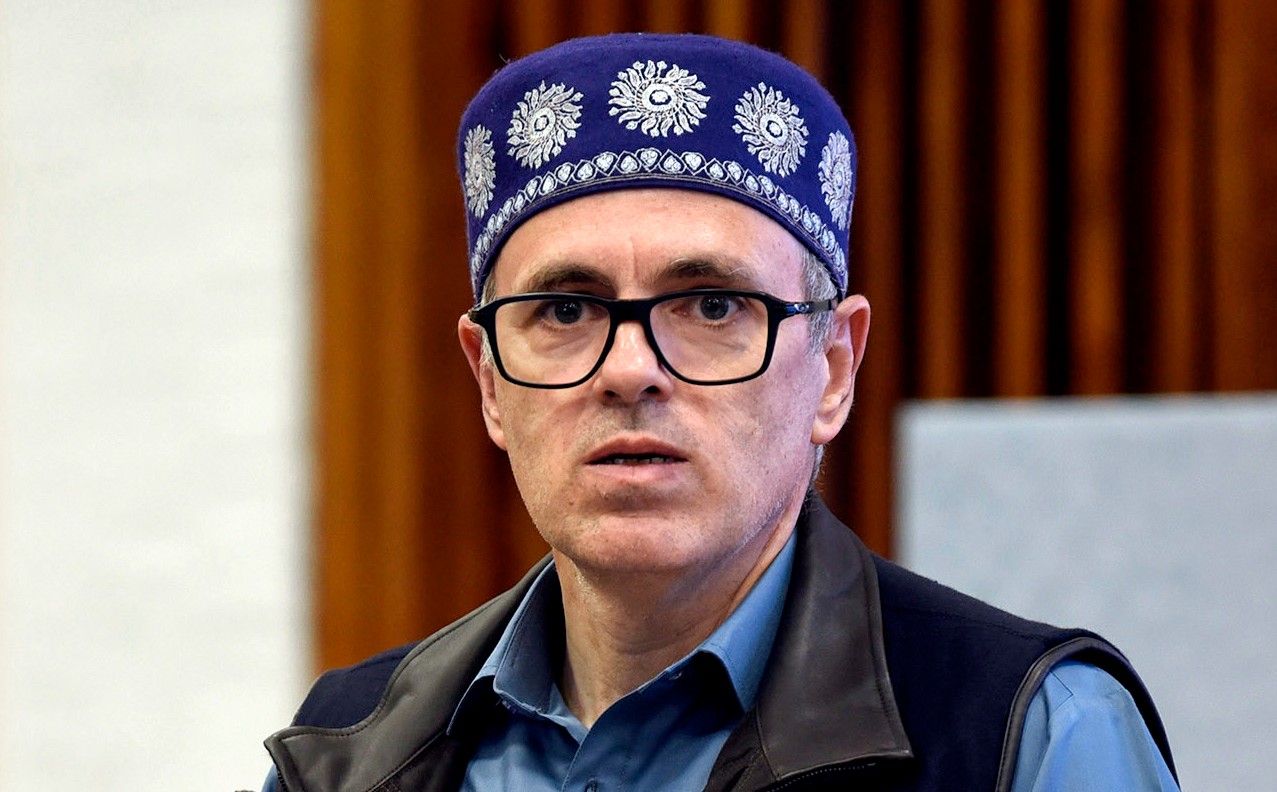
Omar Abdullah has hinted at a major political and developmental announcement after Eid, setting off speculation across Jammu and Kashmir about the National Conference’s next political move in the post-Revocation of Article 370 era.
Speaking at a function in Tangmarg on May 6, 2026, Omar Abdullah deliberately avoided making overt political remarks in what he described as an academic setting. Yet his carefully chosen words immediately drew attention.
“Trust me, I want to burst like a cloudburst.”
The statement, dramatic and loaded with political anticipation, has fueled expectations that the NC leader may unveil a broader political roadmap after Eid, likely at a major public gathering expected after May 28.
More Than a Speech? Why Omar’s ‘Cloudburst’ Remark Matters
In Kashmir’s political culture, symbolic language often carries layered meaning. Omar Abdullah’s “cloudburst” remark appears designed to convey:
- A buildup of political messaging waiting to be released
- A potentially aggressive response to rivals and critics
- A shift from cautious governance language to mass political mobilization
The timing is equally significant.
With:
- BJP intensifying attacks on regional parties,
- PDP sharpening identity politics, and
- debates around statehood and autonomy continuing,
the National Conference appears to be preparing a renewed public narrative.
Youth at the Center of Omar Abdullah’s Vision
Despite the political suspense, Omar Abdullah gave clear indications about the themes likely to dominate his upcoming message: education, employment, and self-reliance.
Addressing students and educators, he stressed that young people remain central to Jammu and Kashmir’s future.
The Core Problem He Highlighted
Many families in Kashmir continue to send children outside the region for higher education, often at enormous financial cost due to limited local institutional capacity.
Omar’s argument is clear:
J&K cannot become economically stable unless it becomes educationally self-sufficient.
Private Universities Push: A New Education Strategy
One of the most significant policy developments is the recently passed Private University Bill.
What the Government Plans
- Encourage private investment in higher education
- Expand university infrastructure within J&K
- Reduce dependence on outside institutions
Regions like Tangmarg have reportedly been identified as suitable destinations for future educational institutions because of climate, geography, and tourism potential.
Political Significance
This is not just an education policy—it is also a political message:
- Retain local talent
- Reduce economic drain
- Build long-term regional capacity
The move allows NC to frame itself as focused on institution-building rather than symbolic politics alone.
Employment Agenda: Jobs, Entrepreneurship & Mission Yuva
Omar Abdullah also highlighted employment generation as a key pillar of his government’s approach.
Government Employment Target
The administration aims to create:
- 20,000–25,000 government jobs this year
This is intended to:
- Reduce unemployment pressures
- Address youth frustration
- Provide immediate economic relief
Mission Yuva & Self-Employment
Beyond government recruitment, the focus is shifting toward entrepreneurship.
Key Features
- Easier access to loans for young entrepreneurs
- Support for tourism-related businesses
- Encouragement for small-scale enterprises and startups
Programs like Mission Yuva are designed to move the economy toward:
self-employment rather than dependence solely on state jobs
A Push for Self-Reliant Kashmir?
Perhaps the most politically important theme emerging from Omar Abdullah’s recent remarks is the idea of self-reliance.
This marks an interesting shift in NC’s language.
Historically, regional politics in Kashmir often revolved around:
- autonomy,
- constitutional safeguards, and
- Centre–state relations.
Now, Omar appears to be blending those themes with:
- economic empowerment,
- youth-led growth, and
- local capacity building.
The messaging suggests an attempt to reposition NC as:
both a defender of identity and a governance-driven developmental force.
Political Context: Why the Timing Matters
The expected post-Eid announcement comes amid several political developments:
| Issue | Political Impact |
|---|---|
| Statehood Debate | Pressure on Centre and regional parties |
| BJP Expansion | NC seeks stronger grassroots narrative |
| PDP Criticism | NC trying to reclaim political initiative |
| Youth Unemployment | Growing frustration across regions |
| Post-370 Politics | Need for a new political vocabulary |
Omar Abdullah also dismissed rumors of internal dissent within NC, insisting the party remains united.
This suggests the upcoming event could serve multiple purposes:
- reassure party cadres,
- energize supporters, and
- define NC’s next political phase.
Could This Be NC’s Post-370 Repositioning?
Political observers believe the “cloudburst” speech may represent more than a routine address.
It could potentially:
- redefine NC’s post-2019 strategy,
- sharpen attacks on BJP,
- counter PDP’s identity-based politics, and
- project Omar Abdullah as a governance-oriented but politically assertive leader.
Unlike older autonomy-centric rhetoric, the emerging tone combines:
- development,
- dignity,
- employment, and
- regional empowerment.
What Omar Abdullah Seems to Be Signaling
| Focus Area | Likely Message |
|---|---|
| Youth | Jobs and opportunities |
| Education | More universities in J&K |
| Economy | Self-reliance and entrepreneurship |
| Politics | Stronger NC narrative after Eid |
| Governance | Practical reforms over symbolic slogans |
Conclusion: Waiting for the ‘Cloudburst’
Omar Abdullah’s remarks have succeeded in doing exactly what political messaging is designed to do:
create anticipation.
Whether the post-Eid address becomes a transformative political moment or simply another speech will depend on:
- the substance of the announcement,
- implementation of promised reforms, and
- how effectively it connects with young voters.
But one thing is already clear:
the National Conference is preparing to shift from defensive politics to a more assertive public posture in Jammu and Kashmir’s rapidly evolving political landscape.