100 Days, 13 Lakh Addicts: Can Kashmir Actually Win This War?
By: Javid Amin | 03 May 2026
A Campaign at a Crossroads
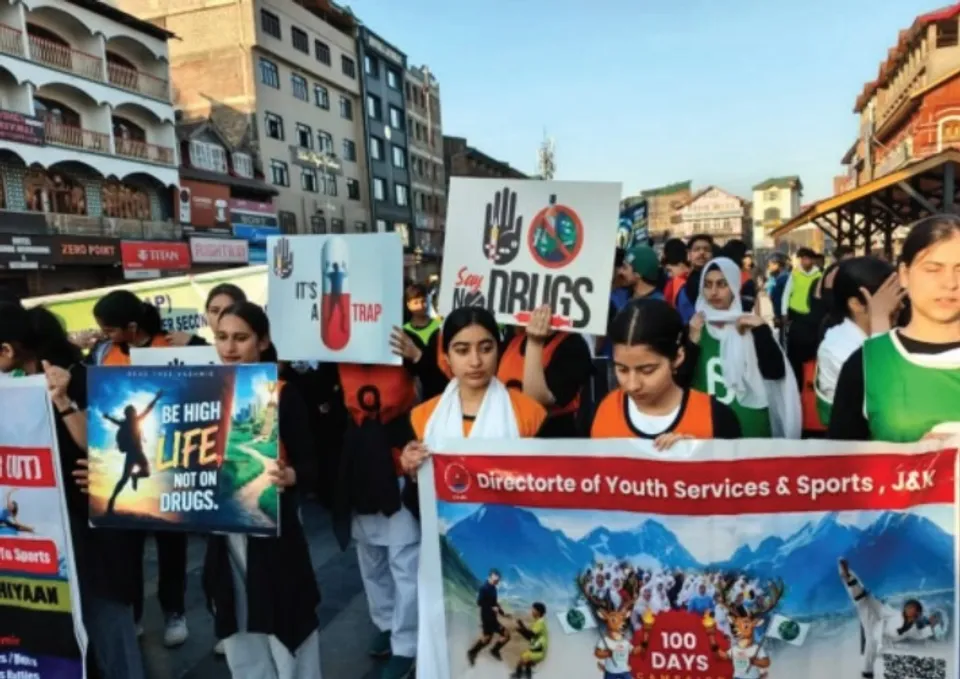
As the Nasha Mukt Kashmir campaign completes 100 days in Jammu and Kashmir, it stands at a defining moment. What began as a mass awareness movement has now evolved into a full-scale socio-economic and public health challenge.
Ground reports, combined with official estimates, suggest that over 13 lakh people across the Union Territory are battling some form of substance addiction. The numbers are not just statistics—they represent families in distress, a struggling youth population, and a system under pressure.
The core question is no longer about intent, but execution and consistency.
The Stark Reality: A Generation at Risk
Kashmir’s addiction crisis is increasingly youth-driven. A majority of those affected fall within the 16–35 age group—a demographic that should ideally be driving the region’s future.
Instead, many find themselves caught in a cycle shaped by:
- Unemployment and limited economic mobility
- Mental health challenges and unresolved trauma
- Social isolation and lack of structured engagement
Substance abuse, in this context, becomes less of a choice and more of an escape from systemic stagnation.
The Expanding Spectrum of Addiction
From Cannabis to Chemical Dependency
The region is no longer dealing with limited, traditional substance use. The spectrum now includes:
- Opioids and heroin
- Prescription drug abuse (painkillers, sedatives)
- Synthetic narcotics
Medical professionals warn that opioid dependency, in particular, is fast becoming a silent epidemic.
Supply vs Enforcement
Despite crackdowns, drugs remain accessible. This highlights gaps in enforcement, cross-border monitoring, and local distribution networks, making supply reduction an uphill battle.
Policy Contradictions: A Crisis of Credibility
At the heart of the campaign lies a contradiction that cannot be ignored.
- Users of illegal substances often face criminal charges and social stigma
- Meanwhile, alcohol continues to be legally sold and regulated
This selective approach raises a fundamental concern:
Is addiction being treated as a crime or as a health condition?
Such inconsistencies weaken public trust and discourage individuals from seeking help.
The Unspoken Reality: Alcohol — The ‘Mother of All Addictions’
Often described by public health experts as the “gateway” or “mother of all addictions,” alcohol continues to exist in a policy grey zone in Jammu and Kashmir.
A Convenient Silence
- Alcohol is legally available through licensed outlets
- It contributes steady revenue to the government
- Its consumption is often socially normalized
This creates a paradox: a campaign against drugs that excludes the most widely consumed addictive substance.
Why Ignoring Alcohol is Risky
- Entry Point: Many users begin with alcohol before transitioning to stronger substances
- Health Burden: Linked to liver disease, mental health disorders, and domestic issues
- Policy Gap: Weakens the scientific and ethical foundation of anti-drug efforts
The Political Economy of Addiction
The reluctance to address alcohol head-on reflects a deeper dilemma:
Can a region truly aim for a drug-free future while relying on alcohol as a revenue stream?
Until this question is addressed, the campaign risks appearing selective and incomplete.
The Treatment Gap: Infrastructure vs Reality
Limited Access
- Rehabilitation centers remain insufficient and unevenly distributed
- Rural populations face serious accessibility issues
- Facilities are often overburdened and under-resourced
The Stigma Barrier
Addiction is still widely viewed as a moral failure, not a medical condition—delaying intervention and recovery.
Beyond Numbers: A Deep Social Impact
The ripple effects of addiction extend far beyond individual users:
- Families face financial and emotional strain
- Youth potential is lost to dependency
- Communities experience rising instability
- Healthcare systems are pushed to their limits
This is not just a drug crisis—it is a societal stress test.
The Way Forward: From Awareness to Action
To make Nasha Mukt Kashmir meaningful, the strategy must evolve.
1. Treat Addiction as Healthcare, Not Crime
Shift toward rehabilitation-first policies, reducing fear and encouraging treatment.
2. Include Alcohol in the Policy Framework
Adopt a substance-neutral approach that addresses all forms of addiction consistently.
3. Strengthen Rehabilitation Systems
Expand infrastructure, funding, and trained personnel across both urban and rural areas.
4. Invest in Youth
Focus on:
- Skill development
- Sports and cultural engagement
- Employment generation
5. Community-Led Change
Empower families, educators, and local institutions to reduce stigma and support recovery.
The Final Question: Reform or Rhetoric?
Kashmir’s battle against addiction is not just about eliminating drugs—it is about restoring identity, dignity, and opportunity.
The first 100 days of Nasha Mukt Kashmir have sparked awareness. But awareness alone cannot solve a crisis of this magnitude.
The real test lies ahead:
Will the campaign evolve into a consistent, evidence-based reform movement—or remain a well-intentioned slogan?
Because until every form of addiction—including alcohol—is addressed honestly,
the vision of a truly “Nasha Mukt Kashmir” will remain unfinished.