Mehbooba Mufti Questions Omar Abdullah’s Silence on Budgam Law University Promise
By: Javid Amin | 09 May 2026
Budgam Law University Row Intensifies as Mehbooba Questions Omar Abdullah’s ‘Silence’
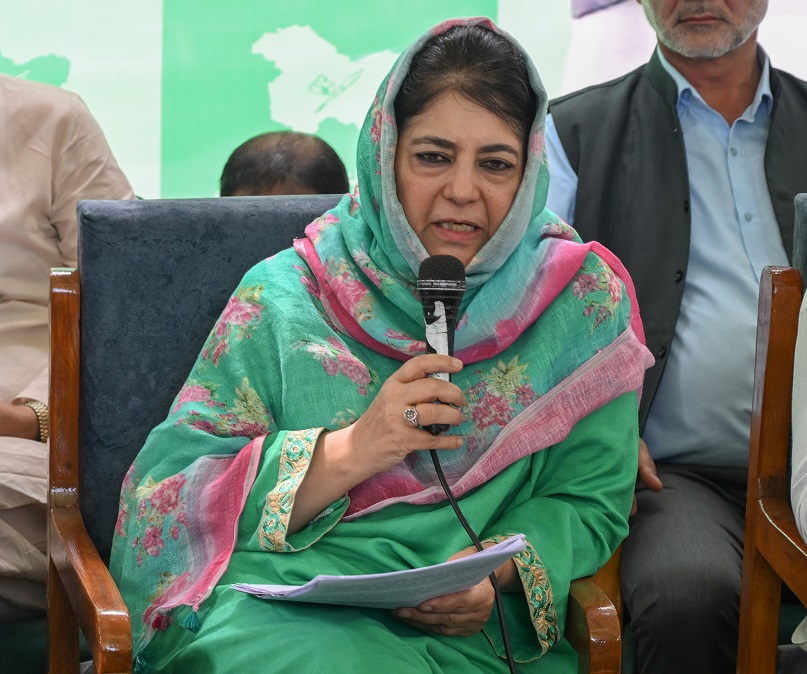
A fresh political confrontation has emerged in Jammu and Kashmir after Mehbooba Mufti accused Chief Minister Omar Abdullah of remaining silent on the establishment of a proposed law university in Budgam — a project that had reportedly figured prominently in the Jammu and Kashmir National Conference election manifesto.
The issue has quickly evolved beyond a simple infrastructure debate, turning into a larger political contest over governance, credibility, and youth aspirations in the Union Territory.
For the opposition Peoples Democratic Party, the alleged delay or silence surrounding the university has become symbolic of what it calls the ruling government’s failure to deliver on promises made during elections.
Mehbooba’s Charge: ‘Silence Reflects Indifference’
Mehbooba Mufti alleged that the continued silence over the proposed law university reflects official indifference toward the educational and developmental aspirations of Budgam’s youth.
According to her:
- The promise was publicly highlighted during campaigning
- Expectations were raised among students and families
- No visible progress has followed after coming to power
She accused the government of betraying public trust and suggested the issue fits into a broader pattern of administrative neglect and governance failures.
Without directly naming ministers or officials, Mehbooba also hinted at a wider environment where political promises allegedly collapse under inefficiency and corruption.
PDP Sharpens Attack Over Education Promises
The criticism was further amplified by Zuhaib Yousuf, who questioned why the government has failed to act on what he described as a clear manifesto commitment.
“Budgam was promised a law university, but the promise remains on paper. This is yet another example of how the NC misleads the people,” he said.
The remarks reflect the Peoples Democratic Party strategy of framing the issue as not just administrative delay, but a breach of political accountability.
Why the Budgam Law University Matters
The controversy carries significance because education remains one of the most emotionally and politically sensitive issues in Jammu and Kashmir.
Budgam’s Longstanding Concerns
Residents and student groups in Budgam have frequently argued that:
- The district lacks adequate higher education infrastructure
- Students often migrate outside the district for specialised courses
- Educational investment has historically remained uneven
Despite its central geographic location, Budgam has often voiced concerns about being overlooked in major institutional development projects.
For many students, a law university would represent:
- Expanded professional opportunities
- Reduced educational migration
- Greater local academic infrastructure
- Increased employment prospects
Education Becomes a Political Battleground
The issue also highlights how educational promises are increasingly shaping political discourse in Jammu & Kashmir.
Why Education Has Political Weight
In a region facing:
- High youth unemployment
- Limited professional opportunities
- Competitive examination pressure
- Growing migration for studies
education infrastructure is viewed not merely as development, but as a pathway to dignity, empowerment, and social mobility.
Political parties therefore understand that promises linked to universities, colleges, and jobs resonate deeply with young voters.
Omar Abdullah’s Silence Under Scrutiny
What has intensified the controversy is not merely the allegation itself, but the perceived absence of a direct response from Omar Abdullah or the administration regarding the status of the proposed institution.
Opposition parties are using this silence strategically to suggest:
- Lack of seriousness toward manifesto commitments
- Administrative inertia
- Weak implementation mechanisms
In politics, especially in Jammu & Kashmir’s highly sensitive atmosphere, silence is often interpreted as politically significant.
Public Sentiment: Frustration Among Students and Families
The debate has found resonance among sections of students and civil society groups in Budgam.
Common Concerns Being Raised
- Limited access to specialised higher education
- Financial burden of studying outside the district
- Delays in implementation of educational projects
- Growing distrust toward political promises
For many young people, the issue is less about party politics and more about whether opportunities promised during elections will ever materialise.
Larger Political Implications
Analysts believe the controversy may have broader consequences for the political narrative in Jammu & Kashmir.
For PDP
The party seeks to:
- Position itself as a defender of youth aspirations
- Highlight gaps between promises and delivery
- Build pressure around governance accountability
For NC Government
The ruling administration faces:
- Questions about manifesto implementation
- Increasing opposition scrutiny
- Risk of perception that commitments remain symbolic rather than actionable
At a time when governance credibility is already under pressure from debates over unemployment, outsourcing, and administrative transparency, the education issue adds another politically sensitive layer.
The Bigger Question: Promise vs Delivery
The Budgam law university debate ultimately reflects a larger governance dilemma in Jammu & Kashmir — the widening gap between political promises and implementation.
In regions where education is deeply tied to social mobility and economic survival, delays or silence surrounding such commitments can generate frustration far beyond party lines.
For students and families, the issue is not abstract policy; it is about future opportunities.
Editorial Analysis
Mehbooba Mufti’s criticism of Omar Abdullah is about more than one proposed university in Budgam. It taps into a growing public sentiment that electoral promises in Jammu & Kashmir often generate hope but rarely translate into visible institutional change.
When education becomes a campaign slogan without follow-through, the fallout is not merely political embarrassment — it deepens public distrust, especially among youth already struggling with unemployment and uncertainty.
In Kashmir’s evolving political landscape, silence on educational commitments can become politically louder than speeches themselves.
Key Highlights
| Aspect | Details |
|---|---|
| Main Issue | Delay/silence on Budgam law university |
| Criticism Raised By | Mehbooba Mufti and PDP leaders |
| Target | Omar Abdullah-led NC government |
| Core Concern | Failure to fulfil manifesto promises |
| Public Impact | Student frustration and migration concerns |
| Political Significance | Education emerging as key battleground |